
If you're shopping for the best 1000W LED grow lights right now, here's the short answer: focus on actual input wattage, verified PPF output (µmol/s), and efficiency (µmol/J) rather than any "equivalent" marketing number on the box. The best fixture for your space is the one that hits your canopy's PPFD target at a practical hanging height, covers your full footprint uniformly, dims smoothly, and runs cool enough not to cook your room. Everything below will help you nail all of that before you spend a dollar.
Best 1000W LED Grow Lights: How to Choose the Right One
Marcus Rutherford
2 Apr 2026
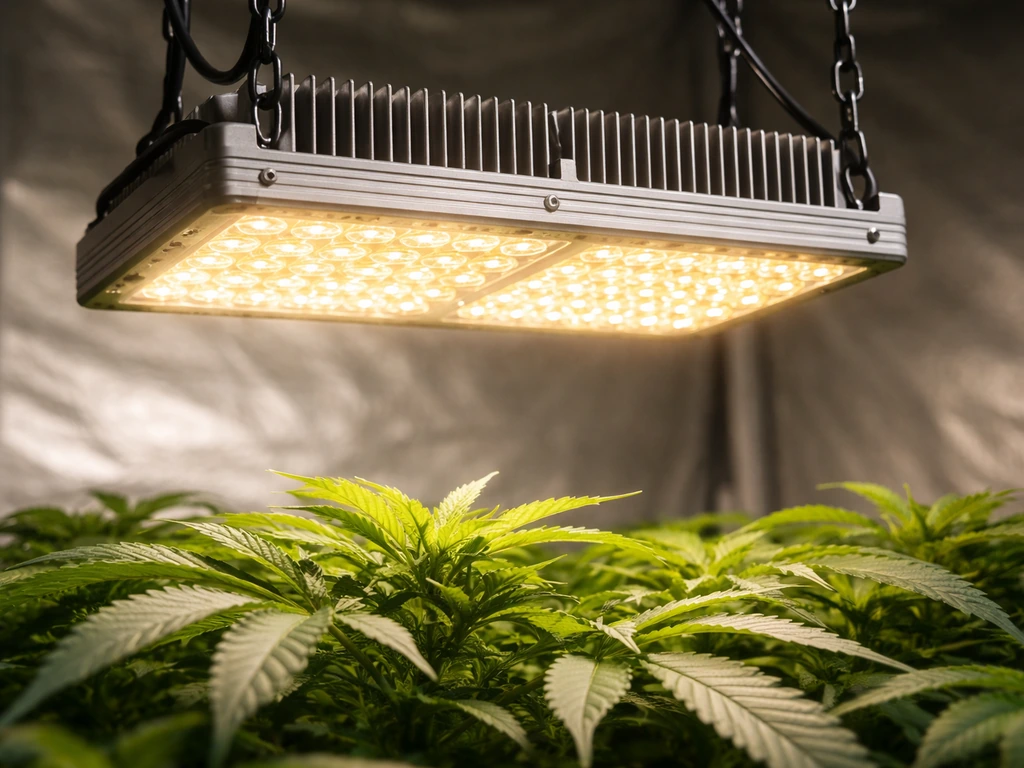
What '1000W' actually means for LED grow lights
This is where most buyers get tripped up. When a manufacturer calls a light a "1000W LED," they might mean one of three very different things: (1) the fixture actually draws ~1000W from the wall, (2) it's marketed as a "1000W HPS equivalent" but draws far less, or (3) it's a fixture class where actual draw varies by voltage. Mars Hydro, for example, labels its FC-E1000W as a 1000W-class product while openly documenting that it draws 870–890W at 100–120V and 970–1010W at 180–277V. That's not a gotcha, it's just honest voltage-dependent behavior, but it means the number on the label is not the number you'll see on your kill-a-watt meter.
"HPS replacement" language is even murkier. A fixture sold as a "1000W HPS replacement" might draw only 400–600W from the wall. That can actually be a great thing for efficiency, but you need to cross-check PPF output, not just wattage, to know whether it truly replaces the photon output of a 1000W HPS (which typically delivers around 1700–2000 µmol/s depending on the lamp). If you want a deeper breakdown of specific models in this class, the best LED grow lights 1000w roundup is a good companion to this guide.
The cleanest way to cut through the noise: look for the PPF number (total photosynthetic photon flux in µmol/s) and the PPE number (photon efficacy in µmol/J). The Atlantic Grow 1000W spec sheet, for instance, publishes PPE of 2.7 µmol/J and PPF of 2700 µmol/s, which gives you a concrete benchmark to compare against competing fixtures. A true 1000W-draw fixture running at 2.7 µmol/J produces 2700 µmol/s. If another brand claims 1000W and 3000 µmol/s but its actual draw is only 800W, that implies 3.75 µmol/J, which would be exceptional. Verify it against an independent test before trusting it.
How to choose the best 1000W light for your grow space
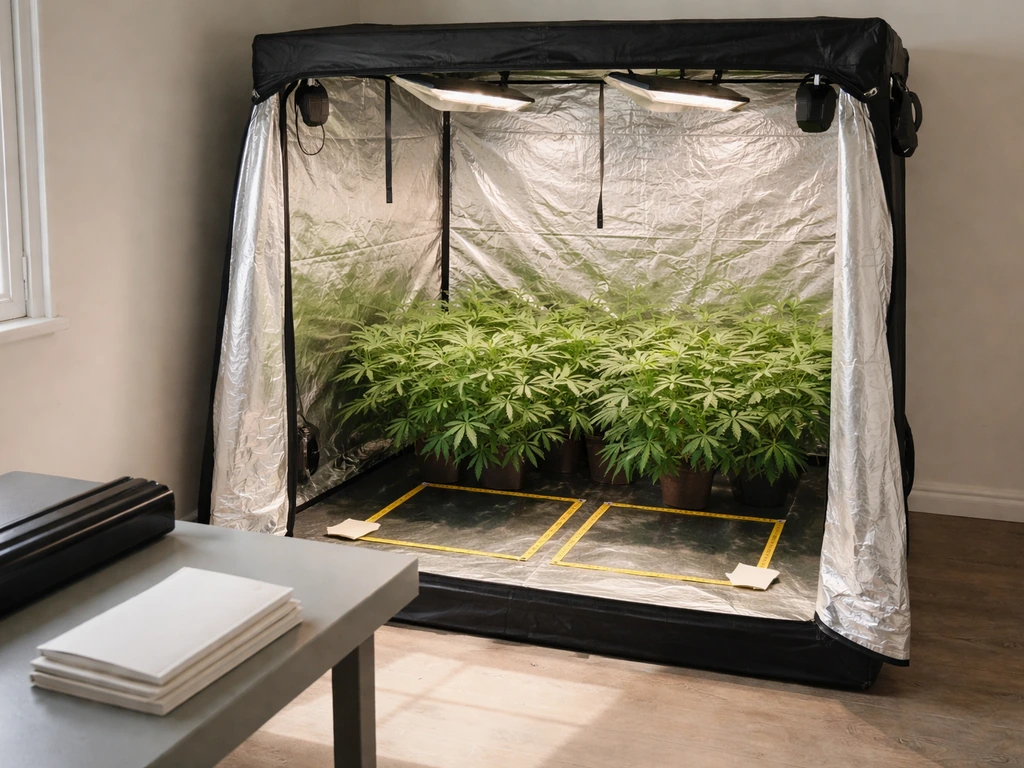
The single most important decision is matching the fixture's effective coverage area to your actual canopy footprint. Mars Hydro, for example, explicitly positions the FC1000W/FC-E1000W for a 4x6 ft flowering footprint. That's 24 square feet. If you're growing in a 4x4 tent (16 sq ft), a 1000W-class fixture will be overkill at full power and you'd either dim it significantly or risk heat stress. Conversely, trying to cover a 5x5 or larger space with a single 1000W unit will leave the edges light-starved during flower.
Before you shortlist models, write down: your canopy footprint in feet, your target PPFD during flower (typically 800–1000+ µmol/m²/s for most photoperiod crops), your ceiling height (which limits mounting options), and your budget. Those four inputs immediately eliminate most mismatches. If your space is a smaller tent, you may actually get better results with a well-specced, efficient fixture at lower wattage, and the best 100w led grow light guide covers that end of the spectrum for reference on what efficiency benchmarks look like at smaller scales.
Wattage-to-footprint quick reference
| Canopy Size | Recommended True Draw | Target Flower PPFD | Typical Fixture Class |
|---|---|---|---|
| 3x3 ft (9 sq ft) | 300–400W | 600–900 µmol/m²/s | 300–400W class |
| 4x4 ft (16 sq ft) | 500–650W | 800–1000 µmol/m²/s | 600W class |
| 4x6 ft (24 sq ft) | 800–1000W | 800–1000 µmol/m²/s | 1000W class |
| 5x5 ft (25 sq ft) | 900–1100W | 800–1000 µmol/m²/s | 1000–1200W class |
| 4x8 ft (32 sq ft) | 1200–1500W | 800–1000 µmol/m²/s | Two 700W units or one 1500W |
Spectrum and performance metrics that actually matter
Full-spectrum LED in 2026 is table stakes. Almost every 1000W-class fixture worth buying covers 380–780nm, hitting the core photosynthetically active radiation (PAR) window. The real differentiation comes from what's added beyond the baseline: UV-A (380–400nm), far-red (700–740nm), and how those supplemental channels are controlled. Far-red in particular accelerates flowering and improves canopy penetration through the Emerson enhancement effect. Some fixtures fold these into a fixed spectrum; higher-end units let you control them independently.
Heliospectra's DYNA is an extreme example of what's possible on the spectral control side, with nine individually addressable wavelength channels spanning UVA (380nm) through far-red (735nm). That kind of granularity is research-grade and priced accordingly, but it illustrates the design logic that even more affordable full-cycle fixtures are increasingly borrowing from. Reviewing the <a data-article-id="17">DYNA Technical Specifications</a> shows exactly how spectrum channel breakdown is documented when manufacturers do it right, and it's a useful template for what to ask of any brand you're evaluating.
For most growers, the practical spectrum checklist looks like this: confirm the fixture covers 380–780nm, check whether far-red (720–740nm) is present in measurable quantities rather than just listed as a feature, and verify whether UV-A is a real diode channel or just a marketing footnote. Some quantum board designs, like the UPLUX 240W Q-Board, explicitly specify enhanced deep-red, far-red, and UV-A channels with a documented 380–780nm range, which is the kind of spec transparency to look for across any wattage class. If a brand won't publish spectral distribution data or a spectral power distribution (SPD) chart, treat that as a red flag.
On efficacy: the current industry benchmark for quality 1000W-class LED fixtures sits at 2.5–2.8 µmol/J. Anything below 2.3 µmol/J in 2026 is behind the curve. Anything claiming above 3.0 µmol/J without independent test data to back it up deserves serious skepticism. For broader context on what makes a best full spectrum 1000w led grow light stand out from the pack, the spectrum breakdown there goes deeper into diode choices and red-to-blue ratios by crop stage.
Coverage, mounting height, and uniformity expectations
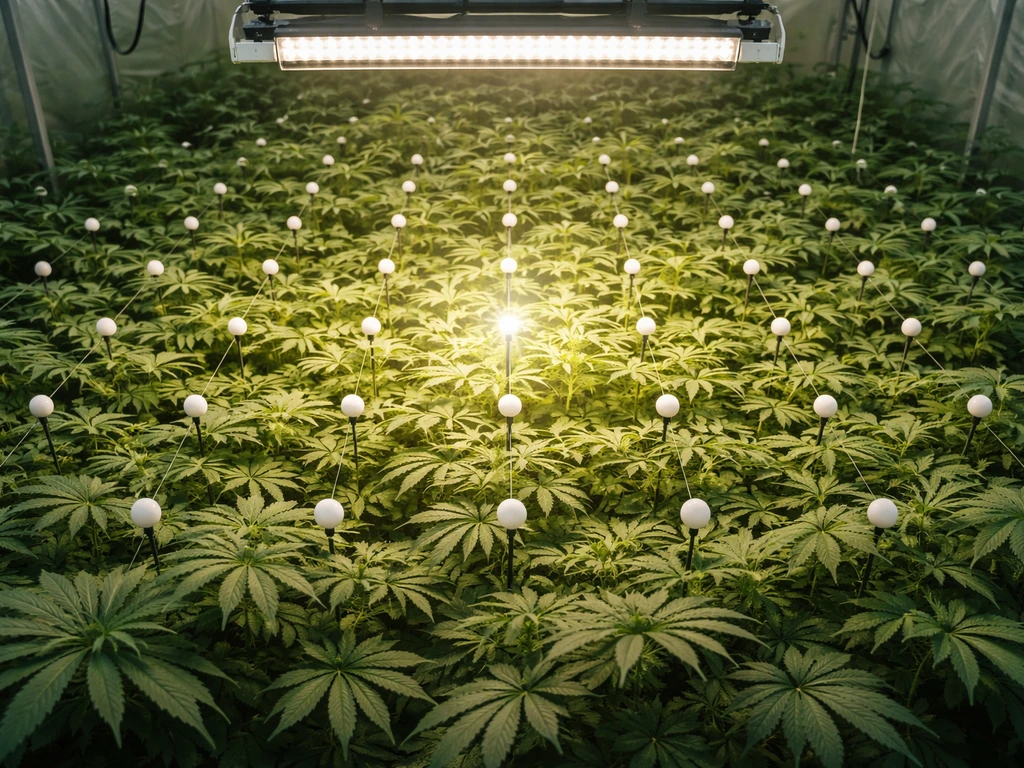
A PPFD center reading means almost nothing on its own. What you need is a PPFD map: readings taken at a grid of points across the canopy at a specific hanging height. Manufacturers like Mars Hydro publish these for the FC-E1000W on the product page, which lets you see edge-to-center variation before you buy. Third-party sources like Coco For Cannabis have independently measured and plotted PAR and ePAR results for fixtures like the best led grow light to replace 1000w hps, which makes real PPFD distribution much easier to verify against manufacturer claims.
Uniformity ratio is the number to watch: it's typically expressed as the minimum PPFD across the canopy divided by the average. A ratio above 0.7 is considered acceptable for commercial production; above 0.8 is good. Bar-style fixtures like the FC-E1000W tend to distribute light more evenly across a rectangular footprint compared to single-panel quantum boards, which is one reason they've become popular for rolling tables and commercial racks.
Mounting height directly controls both PPFD intensity and coverage area. Raising the fixture increases uniformity and coverage but drops PPFD; lowering it intensifies the center while increasing edge falloff. A practical height guide covering exactly this tradeoff explains that PPFD should always be measured at canopy level with a calibrated meter like an Apogee, not estimated from a chart. The <a data-article-id="21">PPFD-to-DLI logic and conversion</a> framework is also worth bookmarking because dimming a fixture to 70% changes both your instantaneous PPFD and your daily light integral, and you need to account for both when dialing in a grow cycle.
For flowering cannabis, tomatoes, and other high-light crops, target PPFD ranges are well documented: approximately 600–1000 µmol/m²/s covers most productive growth phases, with some strains tolerating up to 1200–1500 µmol/m²/s under CO2 supplementation. Telos Lighting's dynamic PPFD modeling includes a "Flower (1000 µmol/m²/s)" row as a standard planning benchmark, which aligns with what most growers are targeting. If your 1000W fixture can't hit 800 µmol/m²/s across your full canopy footprint at a sane mounting height, it's undersized for your space.
Dimming, controls, efficiency, and heat and installation considerations
Dimming capability is non-negotiable in a 1000W-class fixture. You'll want to reduce intensity during seedling and early veg stages, dial back output on hot days, and fine-tune DLI without changing your photoperiod. The two standard control interfaces are 0–10V and RJ45/PWM. Spec sheets from brands like Greenlite and VoltGrow explicitly document "0–10V dimming" alongside PPF output data, including 0–100% dimming in fine increments. Always confirm the control method matches your controller or timer before buying, especially if you're planning to run multiple fixtures.
Mars Hydro's FC series supports dimming via a dimming box and allows daisy-chaining of up to 30 units, with cloud and app-based schedule control available on smart FC models. That's useful for commercial setups but means you should verify what PPFD your canopy actually receives at each dim level rather than assuming linear scaling. A 50% dim on a 1000W fixture does not always mean 50% of peak PPFD at the canopy, because intensity distribution changes with power output on some driver/diode combinations.
On heat: a true 1000W draw produces significant thermal load. LED fixtures are far more efficient than HPS, but they still convert a meaningful portion of input power to heat. Bar-style and quantum board designs with passive aluminum heatsinks handle this well in most grow tents if you have adequate exhaust. Sealed driver housings and IP65 ratings (common on commercial fixtures like the FC-E1000W) protect against humidity condensation. Confirm your space has enough airflow to keep ambient temps below 80°F (27°C) at canopy level, or factor in additional inline fan capacity.
Electrical requirements for a true 1000W-draw fixture are straightforward but worth double-checking. A 1000W fixture on 120V draws roughly 8.5–9A. A standard 15A circuit handles one comfortably; a 20A circuit lets you run one and add fans, a controller, and other accessories. At 240V, the same fixture draws around 4.2A, which is far more efficient for wiring in larger rooms. Always check the spec sheet for input voltage range, rated current, power factor, and THD before connecting to your electrical panel. The Atlantic Grow 1000W spec sheet is a good example of the level of electrical detail a manufacturer should be providing.
Top recommendation criteria and how to compare models quickly
When I'm comparing 1000W-class fixtures side by side, I use a short list of non-negotiable criteria. PPF (µmol/s) and PPE (µmol/J) come first, sourced from spec sheets not product page headlines. Then I look at actual power draw (wall watts at the voltage I'll be running), followed by coverage footprint, PPFD map availability, dimming method, safety certifications, and warranty. For a detailed breakdown of how specific models stack up against these criteria, the best 1000 watt led grow light comparison lays it out model by model.
Safety certifications matter more than many buyers realize. ETL, CE, UKCA, RoHS, and DLC listings all verify that the fixture has been independently tested for electrical safety, component compliance, and in DLC's case, energy performance. Mars Hydro, for example, lists CE, ETL, RoHS, UKCA, and IP65 ratings on the FC-E1000W, and dealer pages often confirm DLC listing as well. If a fixture has none of these and is priced suspiciously low, the driver and diodes are almost certainly unverified. A 5-year warranty (which Mars Hydro offers on their 1000W-class units) is another signal of manufacturer confidence in the build.
| Criterion | What to Look For | Red Flag |
|---|---|---|
| True input wattage | Documented wall draw at your voltage | Only lists 'equivalent' wattage |
| PPF (µmol/s) | 2500+ µmol/s for true 1000W class | No PPF published anywhere |
| PPE (µmol/J) | 2.5–2.8+ µmol/J | Below 2.3 µmol/J in 2026 |
| PPFD map | Grid map at rated hanging height | Only center-point reading provided |
| Spectrum | 380–780nm with far-red documented | Vague 'full spectrum' with no SPD chart |
| Dimming | 0–10V or RJ45, 0–100% range | On/off only or undocumented method |
| Certifications | ETL, CE, DLC, or equivalent | No third-party safety listing |
| Warranty | 3–5 years minimum | Under 1 year or not stated |
Common buying mistakes and a buyer's checklist
The most expensive mistake is buying based on the wattage number in the product title. A light called "1000W" on Amazon might draw 200W from the wall and produce 400 µmol/s, which is fine for veg in a small tent but will stunt flower production in a 4x4 or larger space. Always find the actual power draw and PPF output before adding to cart. If a brand won't publish those numbers on their spec sheet or product page, skip it entirely.
The second most common mistake is ignoring uniformity. A fixture with impressive peak PPFD at center can still leave 30–40% of your canopy light-starved if the distribution is poor. This is especially common with single-COB or older panel designs. Check the PPFD map and look for edge readings, not just the center peak. For independent cross-checks, community test data (like the Pepper Geek reviews that independently measure power draw and PPFD behavior on fixtures where manufacturers haven't fully substantiated their claims) can surface real-world performance data that brand pages won't show you.
A third mistake is not accounting for DLI, which ties PPFD to photoperiod duration. If you're running 18-hour veg cycles, your daily light integral at a given PPFD can easily exceed what a crop needs, meaning you could dim the fixture significantly, save electricity, and get the same or better results. Understanding how <a data-article-id="22">PPFD and DLI measurement tools from Apogee</a> work, and actually using one in your space, will pay for itself in power savings and better plant response within a few cycles.
Here's the complete pre-purchase checklist to work through before finalizing any 1000W-class LED purchase:
- Confirm actual wall wattage at your input voltage (120V or 240V) from the spec sheet, not the product title.
- Find the PPF (µmol/s) and PPE (µmol/J) values and compare them against the benchmarks above.
- Download or request the PPFD map at the hanging height you plan to use, and check edge uniformity.
- Verify the spectrum range includes far-red (720–740nm) and UV-A if you need them, with actual SPD data.
- Confirm the dimming method (0–10V, RJ45, app) matches your controller or planned setup.
- Check that the fixture carries ETL, CE, DLC, or equivalent third-party safety certification.
- Verify the warranty length (aim for 3 years minimum, 5 years preferred).
- Calculate whether your electrical circuit can handle the load, including fans and other accessories.
- Look for independent PPFD test data from third-party reviewers or community forums, not just manufacturer materials.
- Match the fixture's stated coverage footprint to your actual canopy size before committing.
One final thought: the 1000W LED category has genuinely excellent options in 2026 at multiple price points. The gap between mid-tier and premium fixtures has narrowed considerably as driver efficiency and diode technology have matured. What separates a confident purchase from a regrettable one is almost always documentation, not price. If a manufacturer publishes honest spec sheets, a real PPFD map, and third-party certifications, they're telling you they stand behind the product. That transparency is worth as much as any single performance spec when you're making a multi-year investment in your grow room.
FAQ
If a light says 1000W, should I assume it draws 1000W from the wall?
Not always. The “best 1000w led grow lights” category usually means a class of fixtures, not a single fixed wall draw. Before buying, confirm the input wattage at your specific voltage (some models publish ranges like 870 to 1010W depending on 100 to 120V vs 180 to 277V). Then verify the PPF (µmol/s) so you can compare photon output fairly.
What’s the fastest way to tell if a ‘1000W’ LED is actually worth it for flower?
Yes, and it matters for cost and performance. Use PPF (µmol/s) and PPE (µmol/J) to compare, then cross-check whether the light can hit your target PPFD at your real mounting height across the whole footprint. Without a PPFD map, a “high PPF” claim can still hide steep edge falloff or a center-biased pattern.
How do I size a 1000W LED for a 4x4, 5x5, or larger tent without guessing?
Start from your canopy area and your goal PPFD, then choose a fixture that can maintain that PPFD at a sensible height. A helpful shortcut is to treat the published coverage area as the manufacturer’s best-case uniformity target, then plan to dim rather than forcing intensity if your tent is smaller. For example, if a 1000W-class unit is rated for 4x6, running it hard in a 4x4 increases heat and makes uniformity harder to manage.
Why is center PPFD misleading when choosing among 1000W LEDs?
Use the PPFD map, not a single center number. A PPFD center reading can look great while the edges lag, which shows up in the uniformity ratio (minimum divided by average). If the map includes edge points at the canopy, you can estimate whether you will have 30 to 40% light-starved zones, which often leads to uneven flowering.
Does dimming a 1000W LED to 50% always cut PPFD in half?
Because dimming is not guaranteed to scale linearly. Some drivers and diode arrays change behavior as output drops, so 50% power may not equal 50% canopy PPFD. If you can, look for PPFD maps at multiple dim levels, or use a meter to confirm your actual PPFD after you dial the dimming to your target DLI.
How should I use PPFD vs DLI when setting veg and flower schedules?
Ideally, plan your schedule around DLI and your photoperiod, not around PPFD alone. Your plants “see” total photons over time, so two growers with the same PPFD but different light hours can get very different results. If you already have a photoperiod, use DLI targets to decide how much to dim rather than assuming your first-week settings will hold.
What dimming detail should I double-check before purchasing a 1000W LED?
If the fixture uses 0 to 10V or PWM, make sure your controller and dimming interface match the fixture’s expected input. For 0 to 10V systems, also confirm whether the fixture expects linear mapping from 1 to 10V or another convention, since that affects where “max brightness” actually lands. Buying a fixture with a different dimming method than your timer/controller can leave you stuck at full output.
How do I sanity-check the efficiency (PPE) claims on a 1000W LED?
A real PPE number is the key, but only if it corresponds to credible power draw. If a brand gives high PPE without publishing measured input power and PPF under actual operating conditions, treat it as optimistic marketing. The practical approach is to compute implied PPE using the published PPF and your confirmed wall watts, then compare it to the brand’s own stated efficiency.
Do I really need an IP-rated 1000W LED if my grow area is humid?
Yes, especially in humid or sealed rooms. Look for IP65 or equivalent protection for the LED modules and drivers, and check whether the driver is adequately vented or sealed to prevent condensation. Even with IP ratings, you still need to manage airflow so ambient temps and humidity do not creep up near the canopy.
What electrical specs matter most for running a true 1000W LED safely?
Plan for it like a real high-watt appliance, even though LEDs are efficient. A true 1000W draw can pull roughly 8.5 to 9A at 120V, which is typically fine for a dedicated 15A circuit, but you should still account for fans, dehumidifiers, and controllers. At 240V, current is much lower, which can simplify wiring in larger setups.
How can I tell if far-red and UV-A are real features or marketing?
Spectral ‘presence’ claims are not the same as spectral ‘dose.’ Confirm whether far-red and UV-A are measurable channels and whether the manufacturer provides a spectral distribution or at least a documented channel breakdown. If UV-A or far-red is only mentioned vaguely, assume the contribution could be small, and prioritize fixtures that publish how much and at what wavelengths.
What’s the tradeoff between hanging height, uniformity, and room heat with 1000W LEDs?
Coverage uniformity and airflow interact. If a fixture is over-sized for your space and you run it at higher output, the extra heat can force you to keep temperatures lower, which may reduce allowable hanging height and worsen uniformity. For best results, match coverage first, then fine-tune height and dimming so your room stays within safe canopy-level temperatures.
If a 1000W LED is certified (ETL/DLC/CE), can I ignore PPF and PPFD?
Use certifications as a risk filter, not as a performance guarantee. ETL, CE, UKCA, RoHS, and DLC listings indicate independent checking of safety and certain performance aspects, but they do not automatically ensure the PPF or PPFD map is accurate. You still need the photon data, plus the PPFD distribution at your intended mounting height.
When should I rely on community or third-party testing instead of the manufacturer’s data?
Third-party tests can be especially useful when the manufacturer does not provide a PPFD map across a grid or does not state the input wattage clearly. However, compare under matched conditions (same voltage, same dim level, same hanging height) because a test done under different setup parameters may not translate directly to your grow tent.
Could a 600W or 800W LED outperform a 1000W LED in my small tent?
It can, depending on your footprint and target PPFD. A well-designed lower-watt fixture with higher efficiency can sometimes outperform a “1000W-class” unit that cannot distribute photons well over your specific canopy area. If your space is small and you will dim the 1000W heavily, you may lose some efficiency benefits, so it can be worth comparing lower watt options with full PPFD maps.
What should I do if a seller won’t show spec sheets or PPFD maps for a 1000W LED?
If a brand refuses to publish PPF, PPE, actual input power, or spectral distribution, you are buying blind on the most important variables. Your best next step is to request the spec sheet or independently measured data from the seller, then walk away if they cannot provide it. In this category, lack of documentation is a stronger red flag than the price alone.
Should I measure PPFD in my tent even if the manufacturer provides a PPFD map?
Use a calibrated meter if you can, especially to confirm your final settings after installation. Manufacturer maps are done at specific hanging heights and assumptions, but real tents have airflow differences, reflective surfaces, and uneven mounting. Measuring at multiple points across your canopy is the quickest way to confirm you are meeting your target PPFD and uniformity.
Next Articles
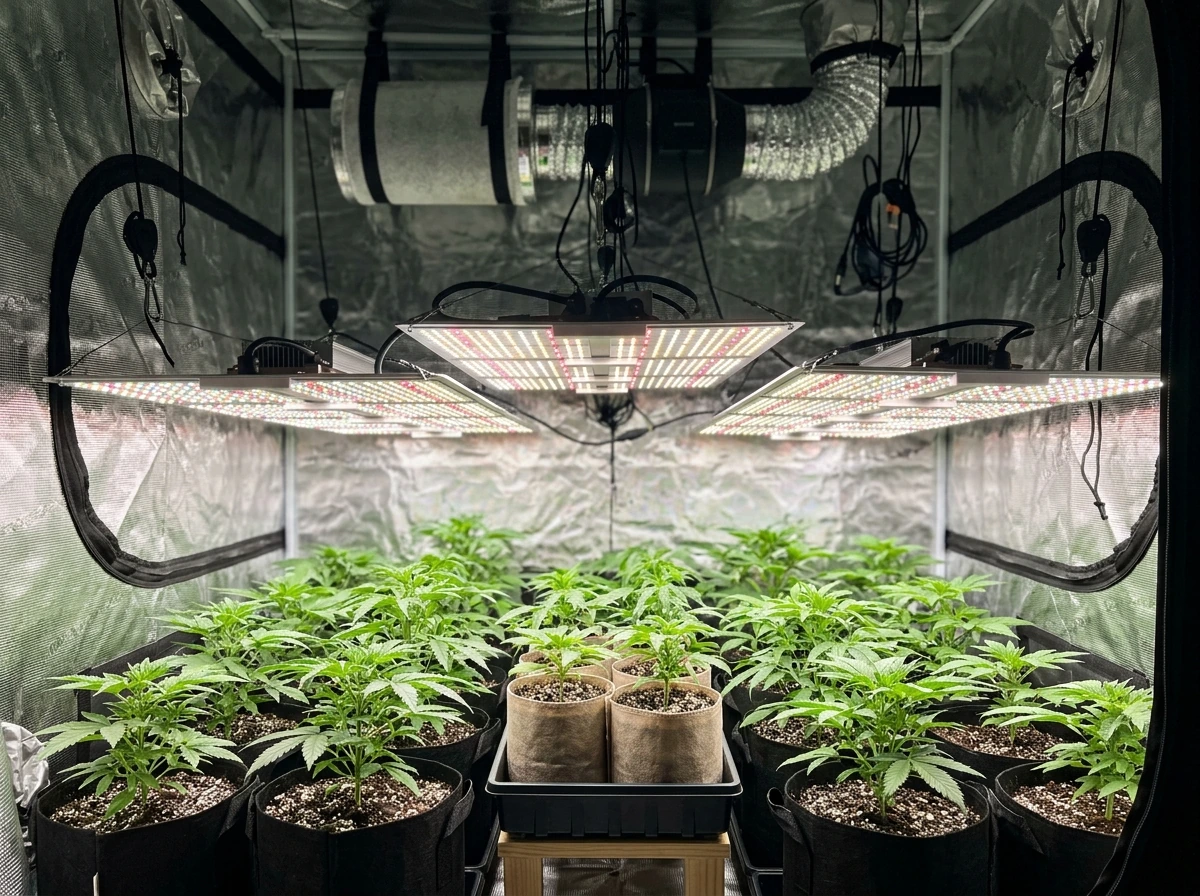
Top LED Grow Lights: How to Choose Best Models for Your Setup
Choose top LED grow lights with PAR, coverage, spectrum, watts, heat, dimming and warranty, plus best model picks by set
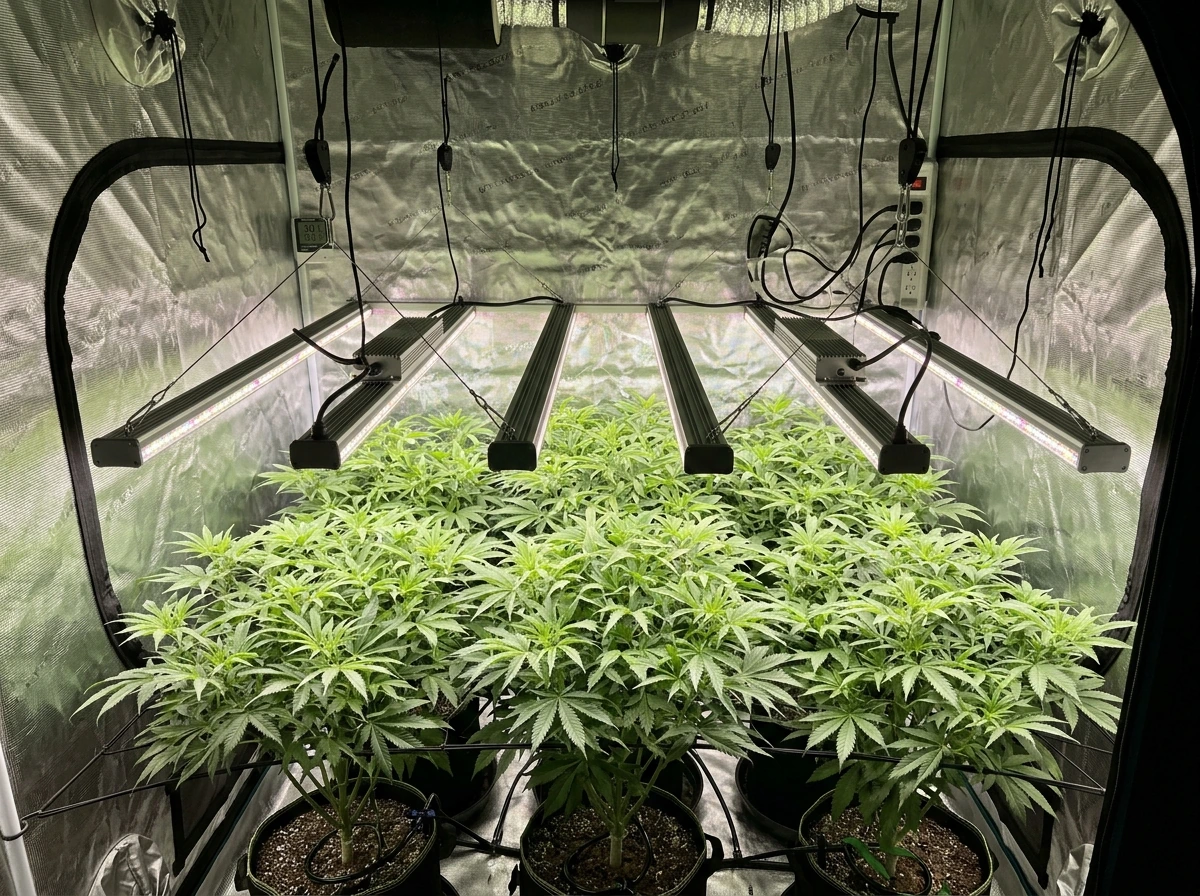
Best Bar LED Grow Lights: Buying Guide by Tent Size and PPFD
Pick the best bar LED grow lights by tent size and PPFD, with practical specs, sizing, and installation tips.
Top Rated LED Grow Lights: Best Picks by Budget and Space
Top rated LED grow lights picks by budget and space, with spec checklist to choose full-spectrum, coverage, wattage