The term 'LED grow bulb' covers two very different things, and getting that straight upfront will save you from buying the wrong product entirely. It can mean a bulb-style LED grow light designed to screw into a standard E26 socket (like a PAR30 or BR30 you'd put in a floor lamp or track fixture), or it can loosely refer to any LED grow light in general. This guide focuses primarily on the first category, the actual screw-in bulb format, but it also helps you decide when a proper panel or bar fixture is what you actually need instead.
Best LED Grow Bulb: How to Choose the Right One
Marcus Rutherford
24 Mar 2026
What a grow light bulb actually is
A grow light is any light source used to drive plant photosynthesis, but not all grow lights are bulbs, and not all bulbs are grow lights. A 'grow light bulb' specifically refers to an LED lamp in a standard bulb form factor (PAR30, PAR38, BR30, or similar) with a screw-in base (almost always E26 in the US) that is designed to emit the wavelengths plants actually use for photosynthesis, primarily in the 400-700 nm range known as PAR (photosynthetically active radiation). These are physically interchangeable with regular bulbs in most fixtures, which is exactly their appeal.
Examples you'll actually find on shelves include the Soltech Vita (a PAR30, 20W, E26 bulb), the GE PAR38 grow bulb (32W actual draw), the Feit PAR38 selectable-spectrum bulb, the Viribright BR30 E26, and the SANSI PAR25 30W. These are real lamp products with real specs, not panel fixtures or bars. The reason the terminology gets confusing is that plenty of marketing uses 'grow bulb' to describe any LED grow light, including full fixture panels. If you're shopping and a product called a 'grow bulb' weighs several pounds and has its own power supply hanging off it, you're looking at a fixture, not a bulb.
Do grow light bulbs actually work?
Yes, with a big caveat: they work well for a narrow range of scenarios. A 20W PAR30 grow bulb like the Soltech Vita outputs roughly 26 µmol/s of PPF (photosynthetic photon flux, the plant-relevant output metric that actually matters, not lumens). A 32W PAR38 like the GE unit pushes around 50 µmol/s. These are real numbers, and they produce real photosynthesis in plants sitting close to the source. For a single plant, a small herb garden on a countertop, or a supplemental light in a window with low winter sun, a quality grow bulb works well.
Where they fall short is coverage. PPFD (µmol/m²/s, the intensity at a specific point on the canopy) drops off fast with distance and spread. A PAR38 bulb might hit a solid 300 µmol/m²/s directly underneath at 12 inches, which is enough for seedlings and leafy greens, but that hotspot is small, maybe 30-40 cm across. Move out from center or raise the height and you lose intensity quickly.
Compare this to what a dedicated LED panel can deliver: a well-designed bar or quantum board can cover a 4x4 tent with 600-900 µmol/m²/s across the entire footprint. For reference, lettuce needs about 250-350 µmol/m²/s with a daily light integral (DLI) of 14-16 mol/m²/day, and fruiting crops like tomatoes want PPFD of 400-600+ and a DLI pushing 20-30 mol/m²/day. A single bulb won't get you there for anything larger than a pot or two.
The honest comparison: grow light bulbs work better than a regular incandescent or a cool-white LED bulb because they actually target the right wavelengths. But they are not a replacement for a purpose-built grow fixture when you're trying to cover meaningful canopy area or push plants through a productive flowering stage.
How to choose the right LED grow bulb
PPF and PPFD, not lumens
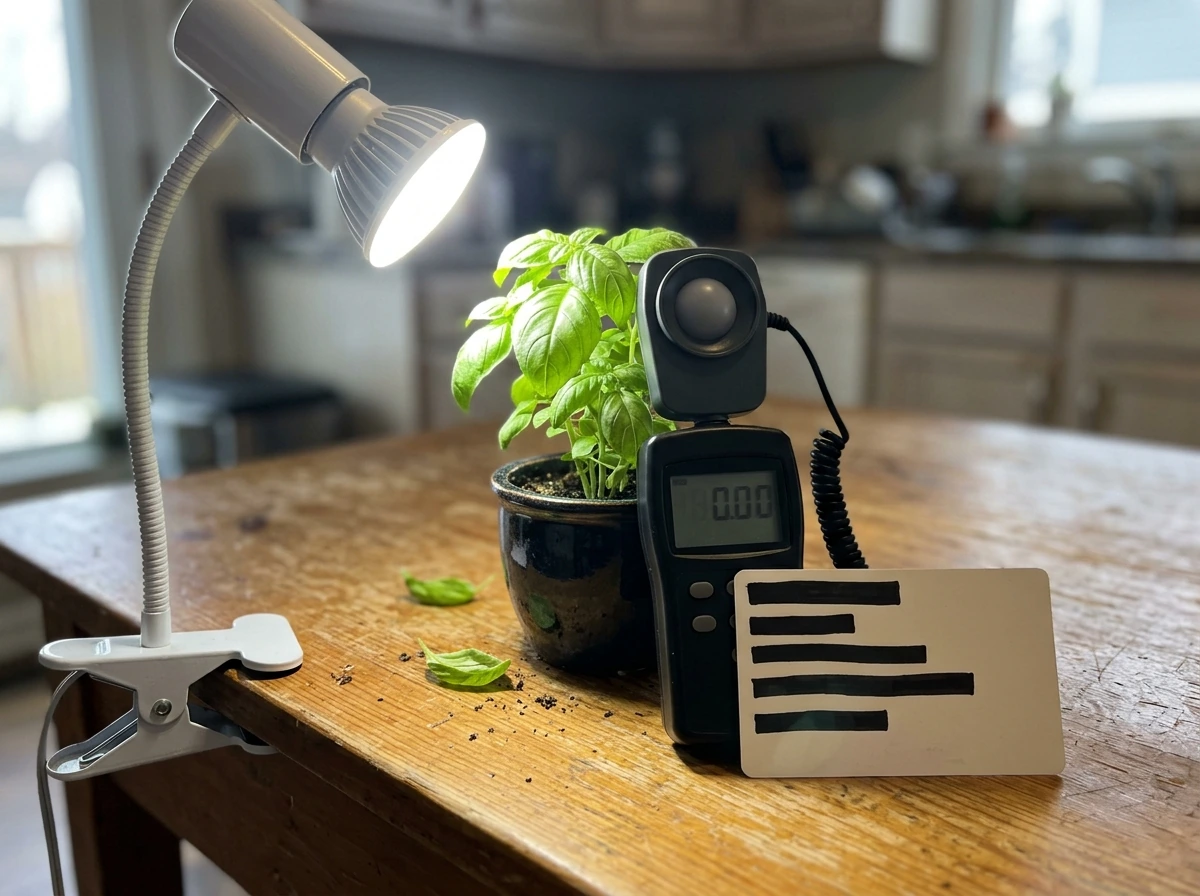
Lumens measure brightness for human eyes. Plants do not have human eyes. The number you want is PPF (total photosynthetic photon flux in µmol/s) for the whole bulb, or PPFD (µmol/m²/s) at a stated distance for the coverage area you're working with. Any manufacturer that lists only lumens and CRI without a PPF or PPFD figure is hiding the ball. Good products, like the Soltech Vita, explicitly state 25.95 µmol/s PPF. Demand this number before buying.
Spectrum and color temperature
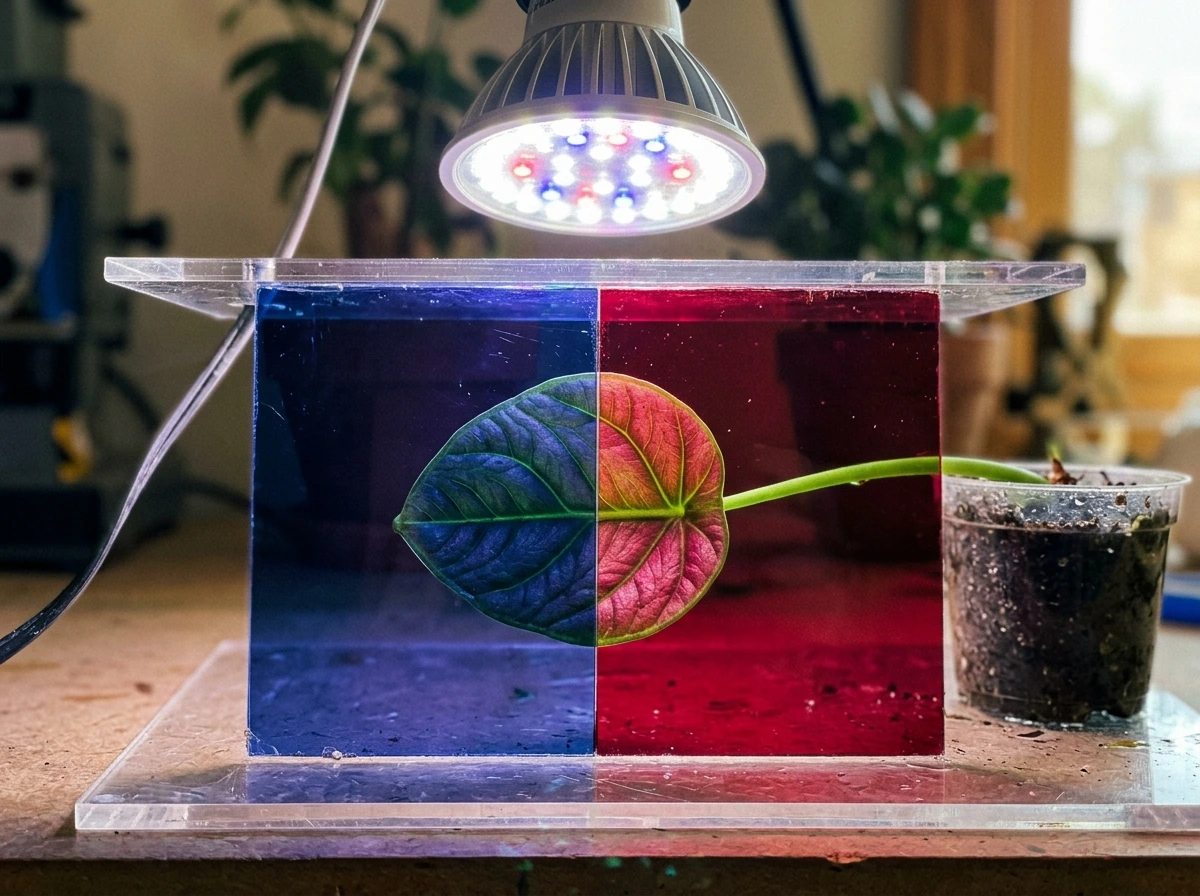
Full-spectrum grow bulbs targeting 3000K-4000K color temperature cover both the red (620-700 nm) and blue (400-500 nm) bands that drive vegetative growth and flowering respectively. The Soltech Vita runs at 3000K with CRI 98, which produces a warm white light that looks pleasant in a living space while still delivering usable PAR. Some bulbs, like the Feit PAR38 selectable spectrum, let you switch between a more blue-heavy spectrum for veg and a more red-heavy one for flowering. For flowering plants or fruiting crops, you want more red. For seedlings and leafy greens, a balanced or slightly blue-weighted spectrum works well.
Wattage and efficiency
Photosynthetic photon efficacy (PPE) in µmol/J is the efficiency metric for grow lighting, the plant equivalent of lumens-per-watt. The DLC sets a baseline of roughly 1.9 µmol/J for products to qualify for rebates, and top-tier dedicated fixtures can push 2.5-3.0+ µmol/J. Bulb-style grow lights typically land in the 1.0-1.8 µmol/J range, which is lower than dedicated panels but still functional for the coverage they're designed for. The Soltech Vita at 20W and 26 µmol/s works out to about 1.3 µmol/J. That is not a flagship efficiency number, but it is honest and appropriate for a bulb-form-factor product used at close range.
Coverage area
Match the bulb's beam angle and PPF to the area you need to cover. PAR30 bulbs with narrow beams (roughly 25-40 degrees) concentrate output in a tight column, good for a single tall plant or a spot-light setup. PAR38 bulbs tend to be wider and push more total PPF, covering slightly more area but still not more than a square foot or two at adequate intensity. BR30 bulbs spread light broadly but at lower intensity per square meter. For anything beyond a 60x60 cm canopy, you're stacking multiple bulbs or switching to a panel.
Driver quality and dimming
Bulb-style grow lights typically have integrated drivers, meaning the driver circuitry is inside the bulb and not replaceable. Better quality bulbs use flicker-free constant current drivers. Most consumer bulbs in this format are not dimmable (and those that are require compatible dimmer switches, not just any dimmer), so check the spec sheet before assuming dimming is supported. For plants, flicker matters less than it does for video work, but a poorly designed driver shortens bulb life and can cause inconsistent output.
Best LED grow bulbs by grow scenario
Single plants and small herb gardens
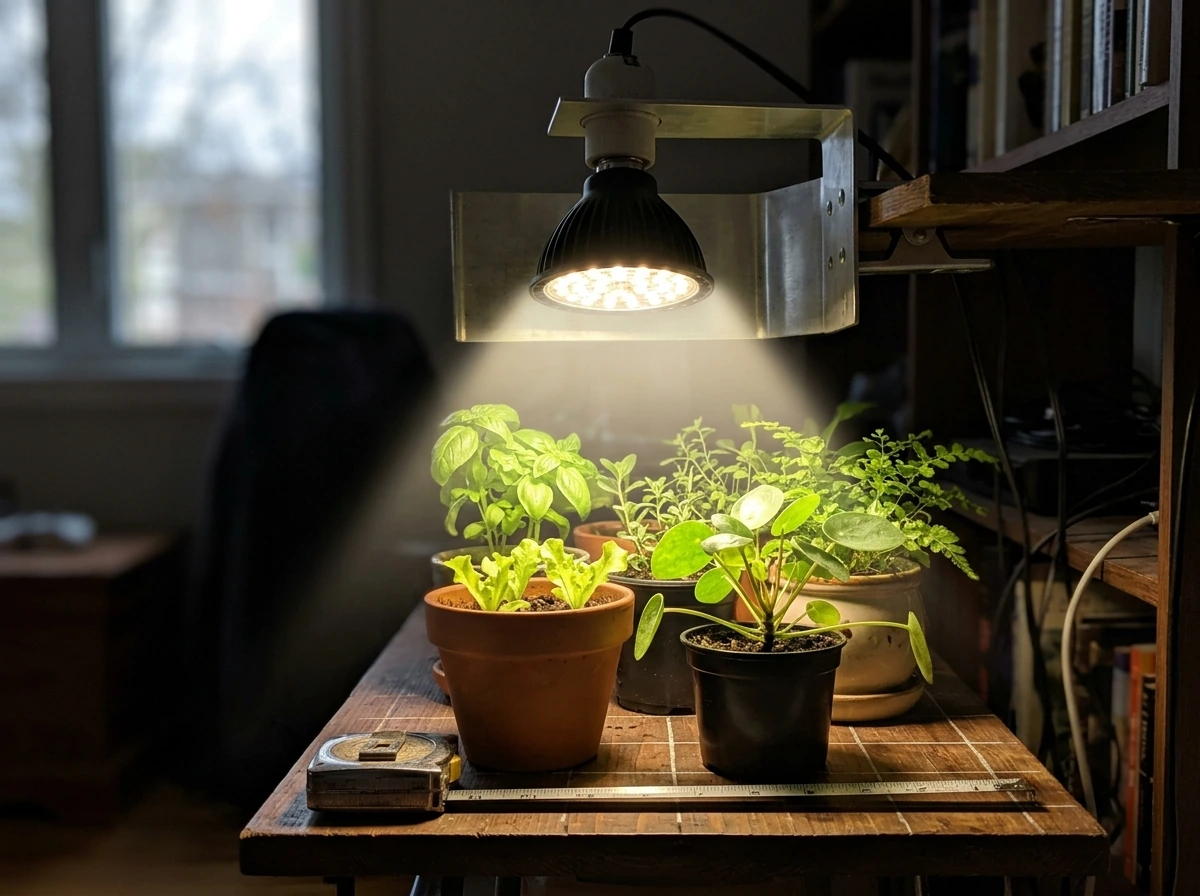
This is where grow bulbs genuinely shine. For one to three plants on a shelf, a windowsill with poor natural light, or a small herb garden on a kitchen counter, a 20-32W PAR30 or PAR38 bulb hung 12-18 inches above the canopy does the job well. The Soltech Vita (20W, PAR30, E26, 26 µmol/s PPF, 3000K, CRI 98) is purpose-built for this.
Its warm white spectrum makes it tolerable in a living space, unlike purple-blasting grow lights that look industrial in a home. The SANSI PAR25 30W is another option with a higher wattage for a slightly larger footprint. Place the bulb directly overhead, keep it 12-16 inches from the top of the plant, and run it 14-16 hours per day for leafy greens or herbs.
Small grow tents (2x2 to 3x3)
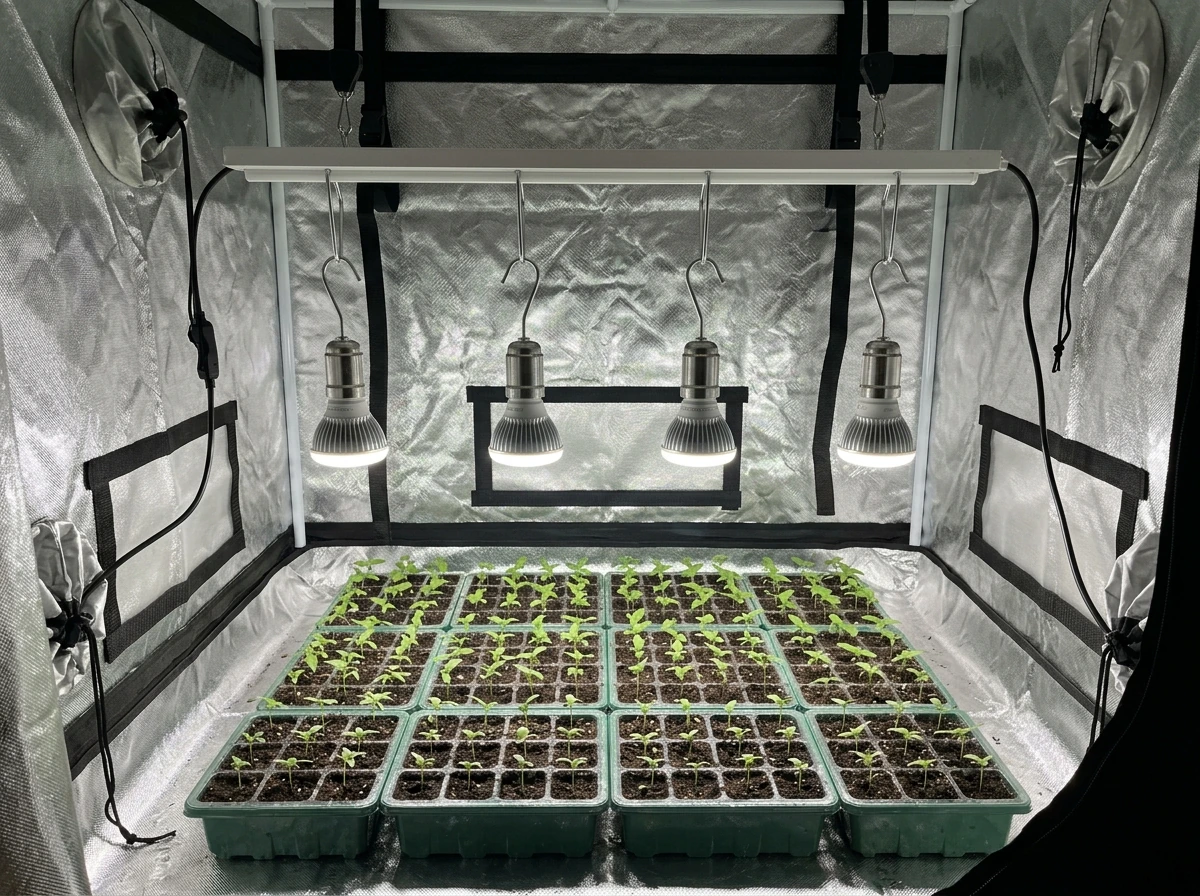
A 2x2 tent can technically be managed with multiple grow bulbs, but you will need at least 3-4 PAR38 bulbs arranged in a multi-socket fixture or lamp cluster to approximate the canopy coverage and intensity a proper panel delivers at a fraction of the setup complexity. For a 2x2, a 100-150W dedicated LED panel is honestly a cleaner solution. If you're committed to bulbs for budget or convenience reasons, cluster 3-4 GE-style PAR38 units (32W each) in an e-socket cluster strip, which gives you roughly 150-200 µmol/s combined PPF at roughly 12 inches, sufficient for leafy greens and herbs in that footprint.
4x4 tents and larger
Grow bulbs are not the right tool for a 4x4 tent, full stop. A 4x4 canopy (16 square feet) needs 400-600 µmol/m²/s uniformly distributed across that area just to support vegetative growth, and 600-900+ for flowering crops. You would need more than a dozen PAR38 bulbs to approach this, at which point cost, heat load, and complexity are all worse than buying a single quality LED panel or bar fixture sized for the space. For 4x4 grow tent recommendations, that's a separate category covered in our guides to full LED grow fixtures. If you want the best results, this is where shoppers often start comparing the best LED grow light options on Amazon best led grow lights amazon.
Seedlings and clones
Seedlings need low-to-moderate PPFD, roughly 100-300 µmol/m²/s. A single PAR30 or PAR38 grow bulb at 18-24 inches is actually well matched to this stage. Run it 16-18 hours per day, keep temps in the 65-80°F range, and you'll get healthy seedling development without burning delicate tissue. The Vita or a comparable PAR30 is a solid choice here because its lower total PPF becomes an advantage rather than a limitation.
Vegetative and flowering stages in single-plant grows
For a single plant you're taking from seedling through veg and into flowering, a selectable-spectrum PAR38 (like the Feit selectable-spectrum unit) lets you shift toward more red output for the flowering stage without swapping bulbs. This is a genuine advantage over fixed-spectrum bulbs. Alternatively, you can use a 3000K (warmer/redder) bulb for flowering and a 4000-5000K (cooler/bluer) bulb for veg if your fixture allows easy swaps.
| Scenario | Recommended Form Factor | Approx. Wattage Needed | Key Metric to Check |
|---|---|---|---|
| 1-3 potted plants, shelf/counter | PAR30 or PAR38 E26 bulb | 20-32W per bulb | PPF (µmol/s) at stated distance |
| Seedlings and clones | PAR30 E26 bulb | 20W, 18-24" height | PPFD 100-300 µmol/m²/s |
| Small herb garden (60x60 cm) | PAR38 E26 bulb or 2x PAR30 | 32-64W total | Uniform PPFD at canopy level |
| 2x2 tent, leafy greens | Multi-socket bulb cluster or small panel | 100-130W total | PPF total, coverage uniformity |
| 4x4 tent, any crop | Dedicated LED panel or bar fixture | 300-600W | PPE (µmol/J), PPFD map |
Compatibility and setup: sockets, fixtures, heat, and installation
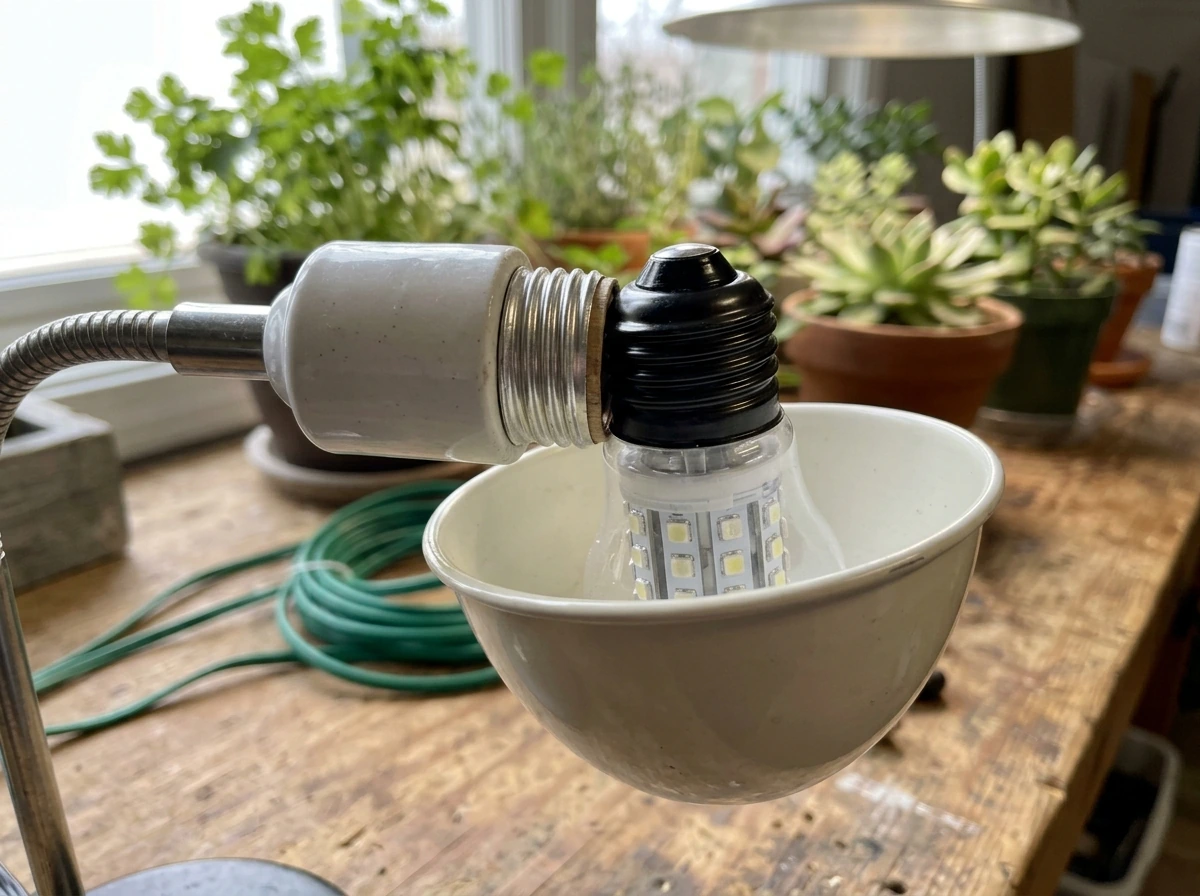
Socket types and base compatibility
Nearly every grow bulb sold for home use in the US uses an E26 medium screw base, which fits the same socket as a standard household bulb. This includes the Soltech Vita, the GE PAR38 grow bulb, the Viribright BR30, and the Feit PAR38. Some international products use E27, which is dimensionally close but not always interchangeable, so check that if you're buying from overseas. The bulb shape (PAR30, PAR38, BR30) affects whether the bulb physically fits inside a recessed can or a fixture with a small opening, so measure your fixture's neck opening before ordering a PAR38 if you're using an enclosed housing.
Fixtures, reflectors, and optics
The fixture you put the bulb in changes how light is directed to the plant. A bare socket with no reflector wastes light in all directions. A simple cone reflector hood concentrates output downward and can meaningfully increase the PPFD your plant receives without changing the bulb at all. Soltech specifically designs stands and pendants to pair with the Vita, and the fixture choice affects efficiency more than most buyers realize. If you're using a basic clamp light or a track fixture, add a reflector if one is available. Avoid enclosed fixtures that trap heat (more on that below).
Heat and safety
LED grow bulbs run far cooler than HID or incandescent alternatives, but they still generate heat at the base and driver. The Soltech Vita at 20W is genuinely low-heat; the GE PAR38 at 32W runs warmer. Never use a grow bulb in a fully enclosed fixture rated for lower wattage, and match the bulb to the fixture's rated maximum wattage. [Look for UL 8800 listing on horticultural lighting products](https://www.
ul. com/services/horticultural-lighting), which is the current safety standard for this category. Other relevant marks include UL 1993 for self-ballasted LED lamps and ETL listing. UL also explains that horticultural luminaires can be certified (listed) under UL 8800, and that certified products are further evaluated for photobiological safety to reduce optical injury risk [UL 1993 for self-ballasted LED lamps](https://code-authorities.
ul. com/about/inspection-resources-for-code-authorities/cannabis-extraction-equipment/indoor-horticulture-lighting-a-budding-industry/). The California DGS and similar bodies consistently recommend only using listed (UL- or ETL-certified) products for any electrical installation. Unmarked no-name grow bulbs from unknown sellers should be treated with caution regardless of how compelling the PPF claims look.
Installation tips
- Start with the bulb at the manufacturer's recommended hang height (usually 12-18 inches for PAR30/PAR38 grow bulbs) and adjust based on how your plants respond over the first 1-2 weeks.
- Use a simple light meter or a smartphone app (they are not perfectly accurate but useful for relative comparisons) to check PPFD at canopy level if the manufacturer does not provide a PPFD chart.
- Set a timer for consistent photoperiods: 16-18 hours on for seedlings and leafy greens, 18 hours for veg-stage plants, and 12 hours for triggering flowering in photoperiod-sensitive species.
- Keep the bulb clean: dust on the lens reduces output, and grow environments can be humid. Wipe down the lens with a dry cloth every few weeks.
- Check the bulb's rated wattage and maximum operating temperature against your fixture before installation.
How to spot quality and avoid common mistakes
The single biggest mistake buyers make is trusting lumen and watt ratings without checking PPF or PPFD. A 100-watt regular LED bulb can have 10,000+ lumens but almost no useful PPF because it emits the wrong wavelengths for plant photosynthesis. Conversely, a cheap purple grow bulb might state '1000W equivalent' on the box when its actual draw is 15W. That is not a comparable unit of anything meaningful.
Here is what to look for on a product page or spec sheet before you buy:
- PPF stated in µmol/s (or PPFD at a specific distance in µmol/m²/s): if this number is missing, ask for it or move on.
- Actual wattage draw (not 'equivalent' wattage): the real watts the bulb pulls from the wall.
- Safety certification: UL 8800, UL 1993, ETL, or equivalent NRTL mark. No listing mark is a red flag.
- Base type confirmed as E26 (or E27 if international): do not assume.
- Spectrum or color temperature: 2700-4000K covers useful PAR bands; supplemental red (660nm) or blue (450nm) chips add horticultural value.
- Third-party test report availability: DLC-listed products have publicly available photometric test data. Brands that offer LM-79 or horticultural photometric (LLIA) reports from accredited labs are being transparent.
- Warranty: at minimum one year for a grow bulb; two years is better and signals manufacturer confidence in component quality.
Avoid bulbs that list only lumens, use terms like '1000W equivalent,' rely entirely on marketing photos with no spec sheet, or lack any safety certification mark. The DLC's qualified products list (QPL) for horticultural lighting sets a baseline PPE of around 1.9 µmol/J and requires real photometric testing, so a DLC-listed product gives you some independent verification. Most consumer bulb-style grow lights are not DLC-listed (the program is more relevant to fixture-class horticultural products), so for this category, a UL or ETL mark plus a published PPF figure is the practical minimum bar.
Sizing your light to your space and picking your final option
The practical sizing process is straightforward. First, measure your grow area. Second, decide on your target PPFD based on what you're growing: 100-300 µmol/m²/s for seedlings, 200-400 for leafy greens and herbs, 400-600 for vegetative fruiting crops, 600-900+ for flowering and fruiting stages. Third, check the bulb's PPF and beam angle to estimate coverage at the height you plan to hang it. Most reputable manufacturers provide a PPFD chart showing intensity at specific distances and positions.
If you need to cover a single plant or a small cluster on a shelf, a PAR30 or PAR38 E26 grow bulb is a legitimate, practical, cost-effective solution. The best LED grow light bulbs balance PPF, PPFD coverage, and spectrum so your plants get enough usable light without overpaying best led plant grow light. The Soltech Vita at 20W and 26 µmol/s PPF is the clearest example of a well-documented, honest product in this category. For slightly more coverage intensity, the GE-style PAR38 at 32W and 50 µmol/s PPF moves the needle.
If you find yourself calculating that you need four or more bulbs to cover your space, you've crossed into territory where a dedicated LED panel or bar fixture (the kind covered in our best LED plant grow light and best indoor led grow light reviews) is the more sensible purchase, both on cost and on performance per square foot.
For full guidance, see our best indoor led grow lights reviews to compare bulb versus panel options and pick the right model for your setup. best led plant grow light. best led grow lights amazon
One last practical note: if you're buying from an online marketplace and want to know where to buy LED grow lights with confidence, stick to established horticultural brands with direct product pages, spec sheets, and contact information rather than unbranded marketplace listings. The spec sheet is the product. If there isn't one, that tells you something important about what you're actually buying.
FAQ
Can I dim the best LED grow bulb with a regular household dimmer?
You usually cannot. In most cases, bulb-style grow lights have an integrated driver, and any dimming requires a compatible control (for example, a specific dimmer model or protocol). If the listing does not explicitly say “dimmable” and specify the approved dimmer type, assume it is not safe to dim and stick to on/off scheduling.
Will an E26 LED grow bulb fit inside my recessed can or enclosed lamp housing?
Yes, because many bulbs use the same E26 base but different beam angles and reflector designs. Before buying, confirm the bulb’s physical diameter and the PAR-series size (PAR30 vs PAR38 vs BR30) will clear your recessed can or fixture neck opening, and that the fixture can handle the bulb’s watt draw at full power.
How do I calculate the right bulb height so I do not burn plants?
It depends on your goal, but the rule of thumb is that “PPFD at your canopy” matters more than the bulb’s “PPF” alone. Use the manufacturer’s PPFD chart or real measurements if available, then raise or lower the bulb to avoid hotspots, since beam angles of PAR30 versus PAR38 create very different intensity patterns across the top of the plants.
What is the fastest way to spot a bad or overhyped grow bulb listing?
Not reliably. If the label only provides lumens, or if it uses marketing claims like “1000W equivalent” without a stated PPF or PPFD figure, it is hard to predict plant performance. A quick decision aid is to require a published PPF (µmol/s) or a PPFD map at known distances before you compare wattage or beam size.
If I buy a selectable-spectrum PAR38, do I need to change the hanging height when switching from veg to bloom?
If your bulbs have selectable spectrum, you still need to consider intensity (PPFD). Use the red-heavy setting for flowering, but do not assume it will be “stronger” or “weaker,” you must watch for light stress, and keep the same height schedule unless the manufacturer provides different PPFD for each setting.
How many hours per day should I run a screw-in LED grow bulb?
For most home bulb setups, start at about 14 to 16 hours per day for leafy greens and herbs, and increase cautiously for seedlings if they are not stretching. If you see canoeing, bleached upper leaves, or rapid drying, reduce daily hours or distance rather than increasing intensity.
At what stage can I bring the bulb closer, seedlings to veg?
Seedlings typically tolerate lower PPFD, but the failure mode is usually “too close” rather than “too much spectrum.” Keep the bulb farther during early growth, then bring it closer gradually while monitoring for slow, stunted growth or leaf tip browning, which can indicate light or heat stress.
Is 3000K always better for flowering than 4000K or 5000K?
Color temperature does not replace spectrum verification. Warm white (3000K) can be perfectly fine for many flowering transitions, but the most useful details are the PPF value, any reported band balance, and whether the manufacturer states the wavelengths are designed for PAR use. If two bulbs have similar PPF but one has a lower efficiency, the “higher K” one may still not perform better.
What safety and certification checks should I do before installing a grow bulb?
Look for an independently testable safety mark and category for horticultural or LED lighting, not just “CE” or vague claims. In bulb form, UL or ETL listing matters, and you should also avoid using a grow bulb in a fully enclosed fixture that is not rated for the bulb’s wattage and heat. Treat unknown no-name listings as higher risk even if the PPF marketing looks impressive.
If I use multiple grow bulbs in one area, how do I prevent uneven lighting?
Yes, especially in multi-bulb setups, because drivers can create uneven spacing and hotspots. If you cannot measure PPFD, overlap coverage carefully by arranging bulbs so their high-intensity zones overlap modestly, and avoid placing bulbs so far apart that the corners receive much lower intensity than the center.
Do screw-in LED grow bulbs still need ventilation?
Check your ventilation and fixture rating, because “LED cool” does not mean “no heat.” Even at 20 to 32W, the base and driver area warms up, and enclosed or poorly ventilated fixtures can shorten lifespan. If your bulb spec sheet gives a maximum ambient temperature, do not exceed it.
How do I compare operating cost between different grow bulb wattages and brightness claims?
Many bulbs support better performance than “equivalent watt” claims, but you still have to budget electricity and heat over time. A practical decision aid is to compare energy cost per season using the actual watt draw, then confirm that the PPF supports your target PPFD for the area and height you can realistically maintain.
Next Articles
Best Indoor LED Grow Lights Reviews 2026: Buying Guide
2026 best indoor LED grow lights reviews plus buying guide: PPF PPFD coverage, spectrum, costs, setup tips
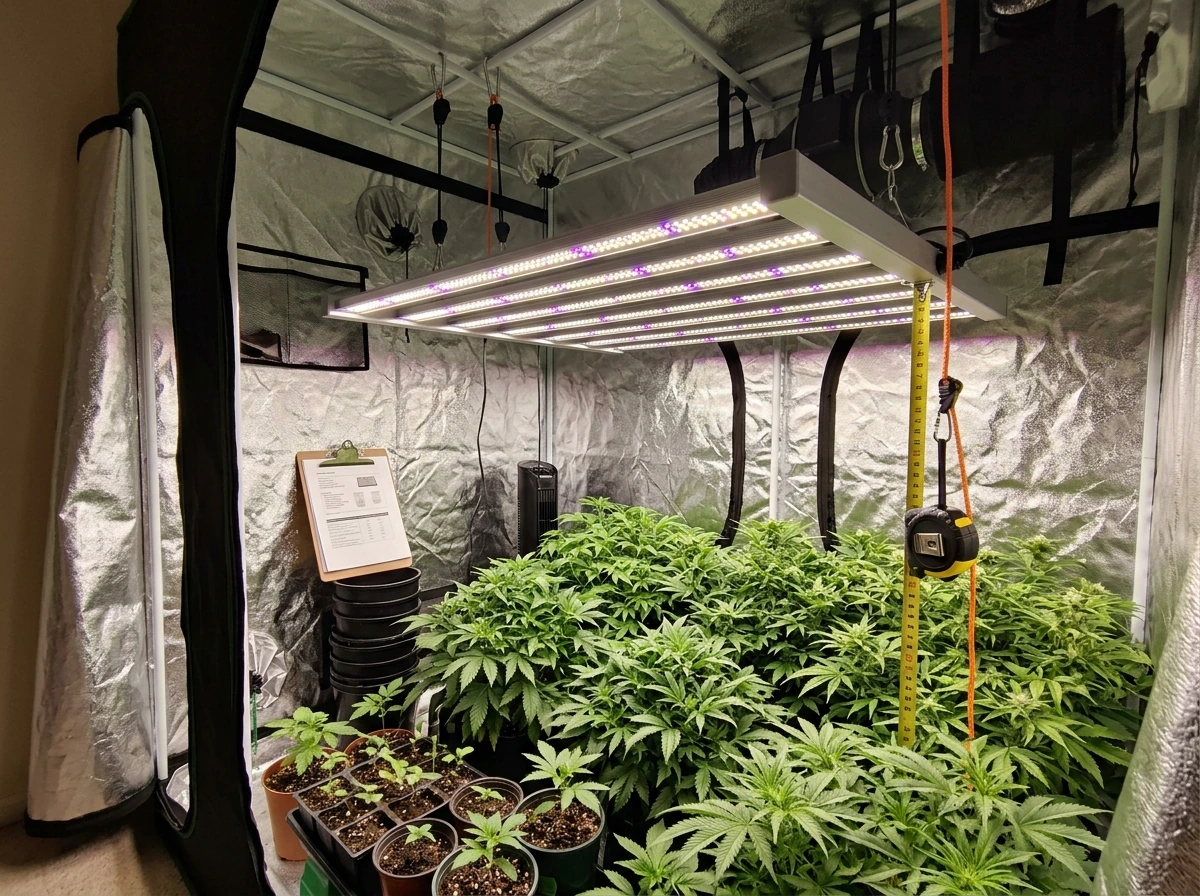
Best LED Grow Lights on Amazon: Buying Guide for Any Setup
Step-by-step guide to choose the best Amazon LED grow lights by PPFD, coverage, wattage, height, spectrum, and safety.
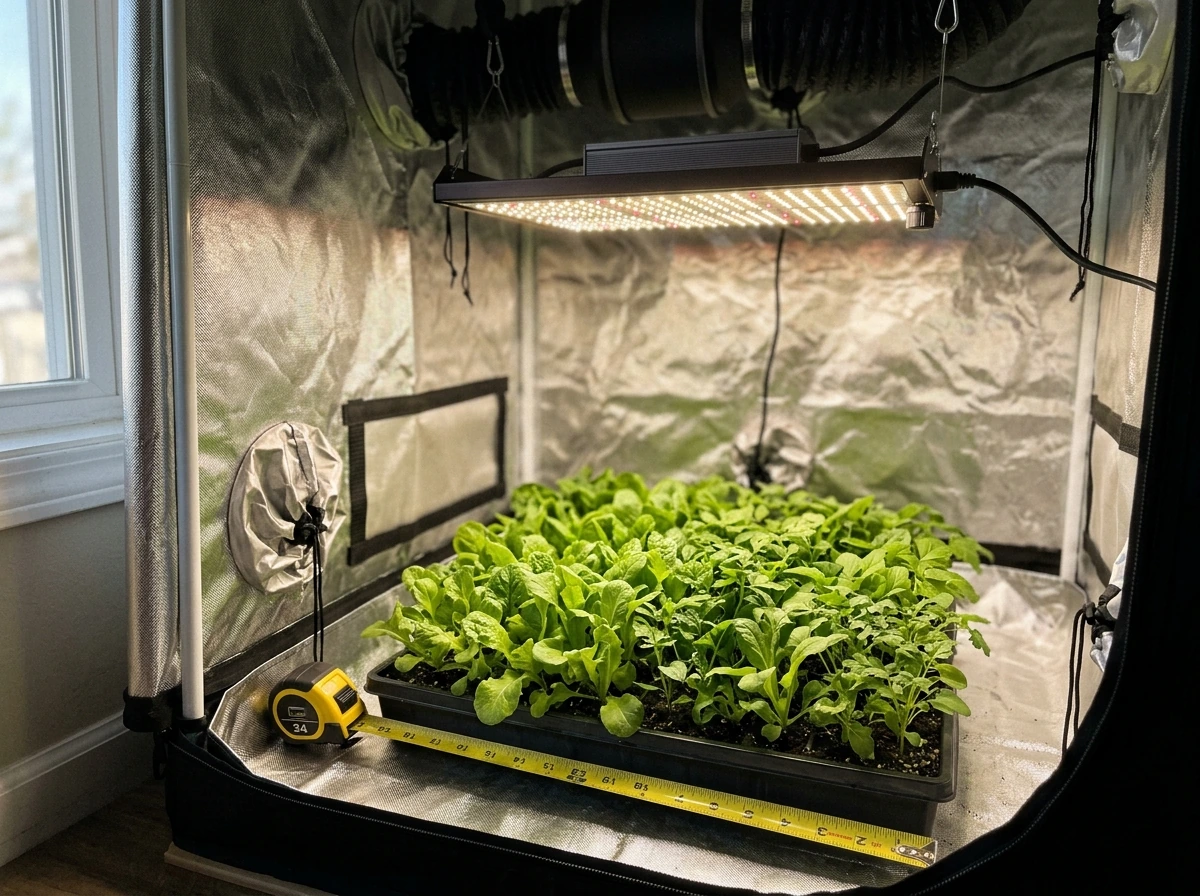
Best LED Plant Grow Light: Buying Guide by Grow Space
Best LED grow light buying guide by grow tent size: PPF/PAR specs, coverage, spectrum, dimming and plant match.