
If you searched 'top LED grow lights 2020,' you're probably in one of two situations: you're researching what the best lights were back then (maybe to evaluate a used purchase or a legacy fixture), or you're using 2020-era buying language and want to know which lights are actually worth buying right now. Either way, the answer is the same starting point: forget lumens, focus on PPF and efficacy, match the light to your actual grow space, and make sure the fixture has proper certifications and real dimming capability. This guide walks you through all of it.
Top LED Grow Lights 2020 Buying Guide for Today
Marcus Rutherford
24 Mar 2026
What 'Top' Meant in 2020 (and Why It Still Matters)
In 2020, the LED grow light market was going through a real shift. The previous generation of blurple panels (cheap diodes, low efficacy, exaggerated 'equivalent wattage' claims) was getting replaced by quantum board and bar-style fixtures with Samsung LM301B/H diodes, Meanwell drivers, and legitimately useful efficacy numbers. 'Top' in that era meant a few specific things: high photosynthetic photon efficacy (PPE) measured in µmol/J, honest coverage claims, full-spectrum output useful across both veg and flower, dimmable drivers, and build quality that justified a 3-5 year warranty. UL 8800, the safety standard for horticultural lighting equipment in the U.S. and Canada, was published in August 2019 and was the new benchmark for certified fixtures going into 2020. The DesignLights Consortium (DLC) horticultural qualified products list (Hort QPL) formalized this further by requiring UL 8800 certification as part of Version 2.0 of its technical requirements, which shaped what 'legitimate' fixtures looked like in the 2020 ecosystem.
The practical takeaway: a 'top 2020' LED grow light had to hit around 2.5 µmol/J or better in efficacy, carry actual safety certification, support 0-10V or 0-100% dimming, and provide honest spectral data. Anything below that threshold was a budget compromise, not a top-tier Today in 2026, the bar has moved up (2.8-3.2+ µmol/J is now achievable in quality fixtures), but the evaluation framework is the same. If you're looking at a 2020-era fixture on the used market, apply the same checklist: certified, dimmable, real efficacy number, honest coverage map.
Match the Light to Your Grow Space First
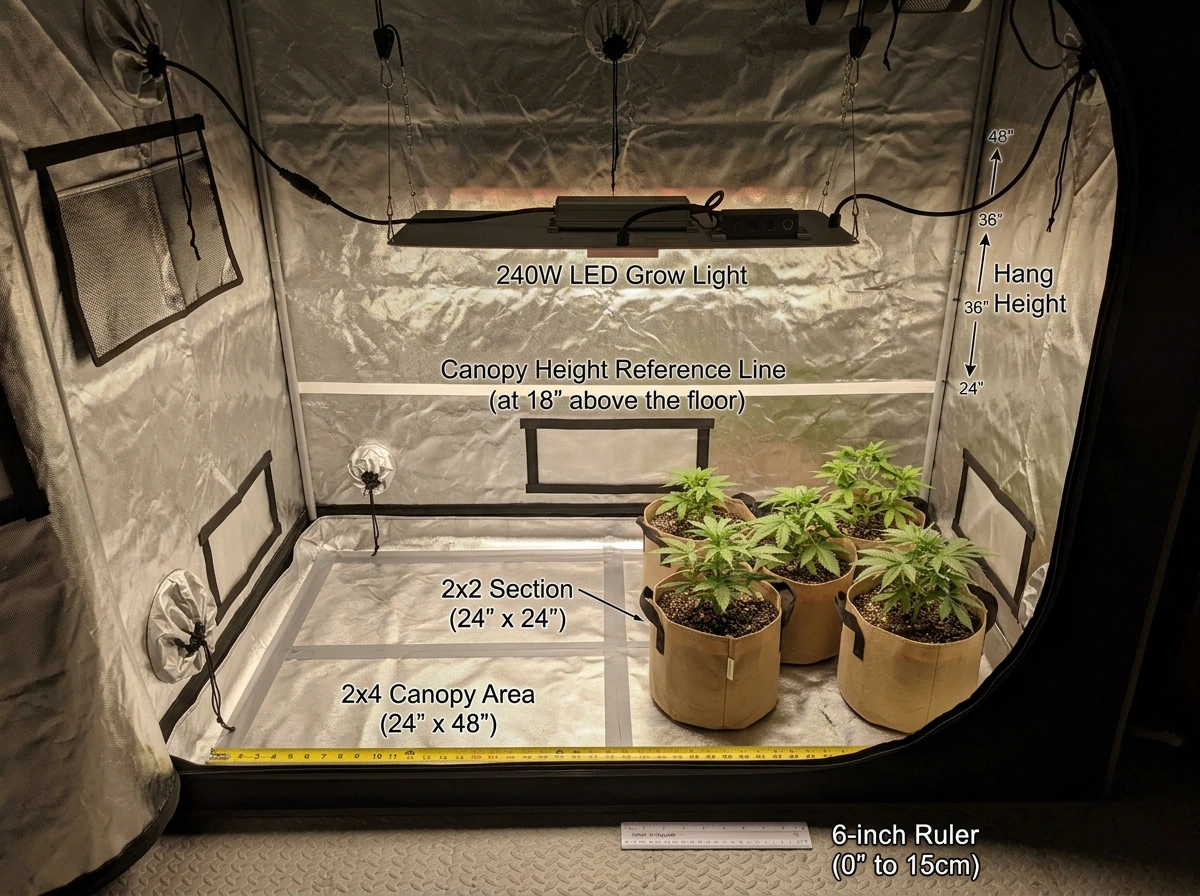
Before you look at any fixture spec, lock down your grow space dimensions and your target crop stage. These two variables determine everything else. A 2x2 tent vegetating lettuce needs a completely different fixture than a 4x4 tent flowering cannabis. Getting this wrong is the single most common and most expensive mistake growers make.
The standard target PPFD (photosynthetic photon flux density, measured in µmol/m²/s at canopy level) for vegetative growth is roughly 400-600 µmol/m²/s. For flowering/fruiting crops, you're typically targeting 600-900 µmol/m²/s, and high-light crops like cannabis in late flower can use 900-1200+ µmol/m²/s if CO2 is supplemented. Here's a practical size-to-wattage starting point for typical flowering targets:
| Tent Size | Canopy Area (sq ft) | Target PPFD (flower) | Recommended True Wattage |
|---|---|---|---|
| 2x2 | 4 sq ft | 600-800 µmol/m²/s | 100-150W |
| 3x3 | 9 sq ft | 600-900 µmol/m²/s | 200-300W |
| 4x4 | 16 sq ft | 600-900 µmol/m²/s | 400-500W |
| 5x5 | 25 sq ft | 700-900 µmol/m²/s | 600-700W |
| 4x8 | 32 sq ft | 700-900 µmol/m²/s | 800-1000W |
These are true wattage numbers (wall draw), not the inflated 'equivalent' or 'max' numbers you see in old marketing. Always verify the actual wall-draw wattage in the spec sheet, not the headline figure in the product name. A light called the 'SF4000,' for example, doesn't actually draw 4000W. The true draw is what you're paying for in electricity and what determines real output.
For commercial or multi-fixture layouts, the math gets more complex. You need to account for edge falloff and inter-fixture spacing. Tools like Hydrobuilder's coverage calculator include a canopy efficiency factor specifically to model the PPFD drop at the edges of each fixture's footprint. A realistic canopy efficiency assumption for tight multi-fixture rows is around 80-85%, meaning you should plan for roughly 15-20% less average PPFD than the peak center reading. Build that buffer into your layout before you buy.
How to Read Specs That Actually Matter
This is where most buyers get tripped up, especially when looking at 2020-era fixtures or comparing them to current options. Here are the numbers that matter and what to do with them.
PPF and Photosynthetic Photon Efficacy (PPE)
PPF (photosynthetic photon flux) is the total rate of photon output within the 400-700 nm PAR range, measured in µmol/s. This is the fixture's total 'light power,' defined by ANSI/ASABE S640, the standard used by both UL and DLC for horticultural lighting measurement. PPE (photosynthetic photon efficacy) is PPF divided by input watts, giving you µmol/J. This is your efficiency number. In 2020, a top-tier fixture was hitting 2.5-2.7 µmol/J. The HLG Greenhouse Pro FS, for example, lists 2.85 µmol/J. Current Spider Farmer SF-series specs show up to 3.14 µmol/J in recent versions. If a 2020-era fixture claims efficacy under 2.0 µmol/J, it's not competitive regardless of other features.
PPFD Maps vs. Coverage Claims
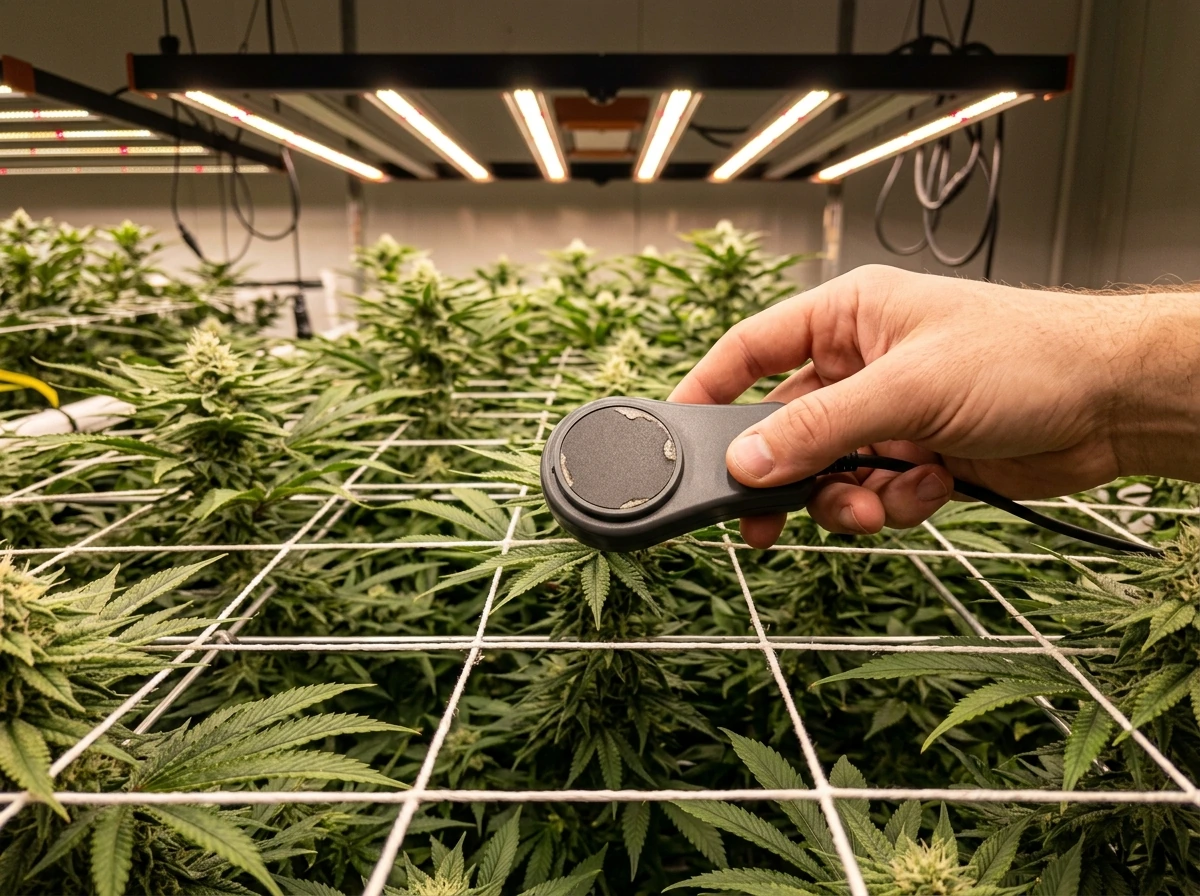
PPFD is what actually lands on your canopy. A PPFD map shows you the distribution across a measured grid at a specific hang height and in a specific environment. This is critical: a Philips GreenPower fixture tested at 4 feet hang height in a 4x4 white tent with 60% wall reflectance will produce a very different PPFD map than the same fixture at 24 inches in a mylar tent. Manufacturer coverage claims are only meaningful when they specify hang height and test conditions. If a spec sheet just says 'covers 4x4,' ask what PPFD that delivers at what height. DLC's reporting requirements address this directly by requiring full spectral and photometric distribution data rather than single-number coverage claims, which is why DLC-listed fixtures are more trustworthy than uncertified alternatives.
Dimming
Real dimming matters for two reasons: controlling intensity during early veg or seedling stages, and managing heat in enclosed spaces. Look for 0-10V or 0-100% continuous dimming. The HLG Greenhouse Pro FS uses an RJ11 cable for 0-10V dimming control. The California LightWorks SolarSystem series offered 3-channel 0-100% dimming with a controller. Spider Farmer SF-series fixtures include digital display dimming at 0-100%. What you want to avoid is stepped dimming (50%/75%/100% only) or no dimming at all, which was common in cheaper 2020 fixtures and is a real limitation in practice.
Safety Certifications
UL 8800 and DLC Hort QPL listing are the two benchmarks to check. UL 8800 covers construction and environment-resistance requirements specific to grow environments (humidity, splashing, plant material). ETL listing to UL 8800 is equivalent to UL listing. The HLG Greenhouse Pro FS, for example, carries ETL Listed UL 8800, UL 1598, and CSA standard references. A fixture without any UL 8800 or ETL equivalent certification is a liability in a humid grow environment. For commercial operations in particular, uncertified fixtures can create insurance and permitting issues.
Driver Quality and Thermal Design
Meanwell drivers (HLG or ELG series) are the standard for quality fixtures. They're reliable, dimmable, and field-repairable. Cheaper fixtures use generic or in-house drivers that often fail first. Thermal design matters because LED efficacy drops as junction temperature rises. Look for passive heatsinks on bar/strip designs or active cooling (fans) on high-density panel builds. Well-designed fixtures in the 400-600W range can run passively. Above that, active cooling is often necessary and you need to factor in fan noise and failure risk.
Top LED Grow Light Picks by Use Case
These picks are organized by grow scenario, not just brand preference. For each, the 2020-era models that were genuinely top-tier and the current equivalents that replaced them are both worth knowing.
Budget-Conscious: 2x2 to 3x3 Veg and Flower
Spider Farmer SF series (SF-1000 for 2x2, SF-2000 for 2x4 to 3x3) hit the sweet spot of price and performance. The SF-series spec sheets list efficacy around 2.7-3.1 µmol/J depending on the generation, 0-100% dimming with digital display, and coverage maps that match the tent sizes honestly. These weren't top-tier certifications in 2020 (most lacked DLC listing), but the diode and driver quality punched above their price. For veg-only use, these are hard to beat on a budget. For flower, step up the wattage: an SF-2000 at 200W true draw in a 2x4 will hit flowering PPFD targets. In a 3x3, you want the SF-4000 (true draw closer to 450W) or a competing 240W quantum board.
Performance Tier: 4x4 Full-Spectrum Veg and Flower
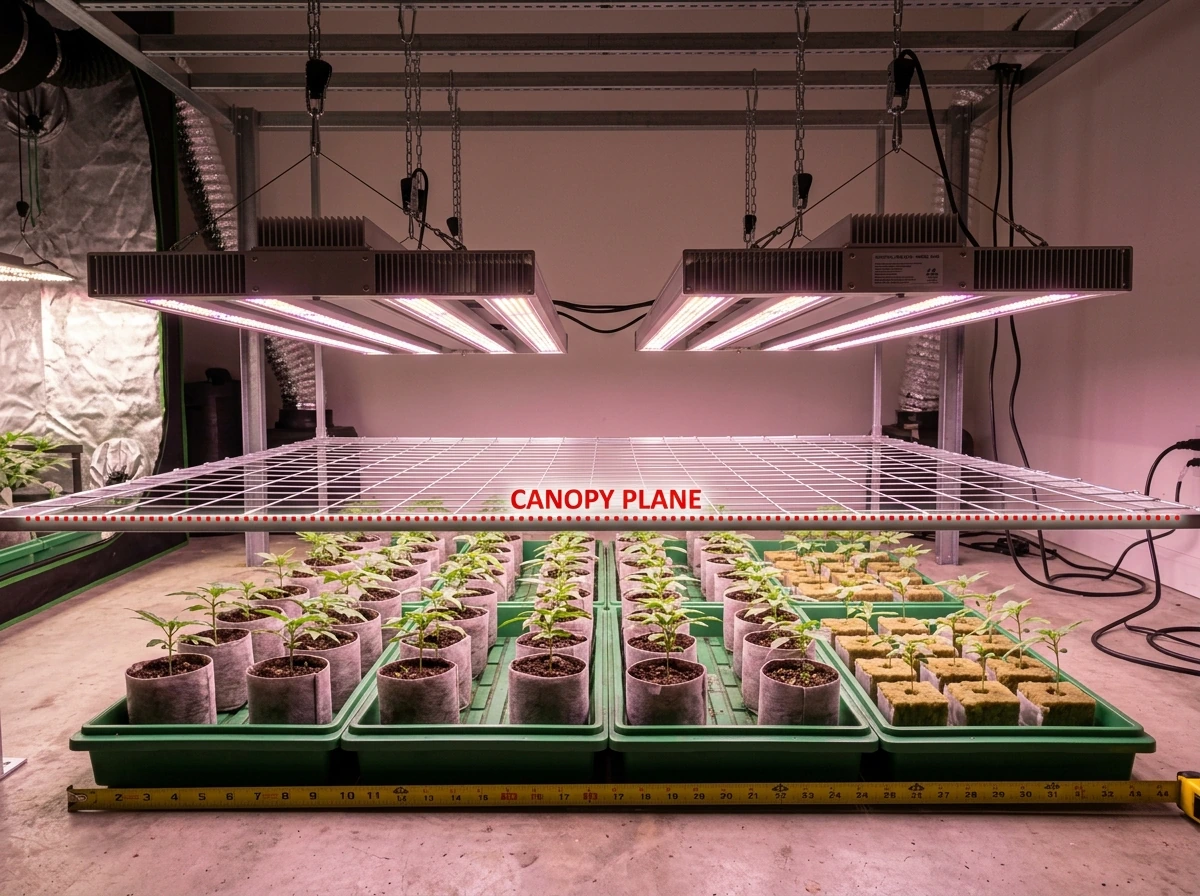
The HLG 650R and HLG Scorpion Diablo were the 2020-era performance benchmarks for 4x4 tents. The Greenhouse Pro FS line (with 2.85 µmol/J, ETL UL 8800 certification, 5-year warranty, and 0-10V dimming) represents the certified-and-reliable end of HLG's lineup. For a 4x4 flower tent targeting 800-900 µmol/m²/s, a 500-650W true-draw fixture from a certified brand is the right call. Mars Hydro FC-E series and Growers Choice ROI-E series competed directly in this space and all offered bar-style form factors with measured PPFD in the high 700s to low 900s in real-world testing at typical hang heights.
High-Performance / Commercial: 4x8 and Multi-Fixture Layouts
For 4x8 rooms or commercial canopy rows, bar-style fixtures (single units covering 4x8) or multi-fixture strategies with identical units spaced uniformly are the practical choices. The California LightWorks SolarSystem series represented the programmable-controller end of the market in 2020, with per-channel spectrum control and verified PPF output. Current commercial-grade options from Fluence, Gavita, and Signify's GreenPower line sit at this tier today, all with DLC QPL listing and full PPF/PPE data. For multi-fixture commercial layouts, always use the same model and generation across the canopy, plan uniformity based on measured center-to-center spacing, and budget for a canopy efficiency factor of 80-85% when calculating average PPFD.
Full-Spectrum vs. Targeted Spectrum
Most 2020-era top picks used broad-spectrum white LEDs (typically 3000K-3500K for flower, 5000K-6500K for veg, or mixed phosphor blends) with added deep red (660nm) and sometimes UV/far-red supplementation. This full-spectrum approach works well across both veg and flower, which is why single fixtures covering both stages became the standard. Fixtures with separate veg/bloom switches (a feature common on 2019-2020 blurple panels) are mostly obsolete because the switch usually just cuts power rather than meaningfully changing spectrum. If you're running a single fixture through the full cycle, a 3000K-3500K dominant full-spectrum fixture with red supplementation is the practical choice.
Bar vs. Panel vs. Quantum Board: What Form Factor Actually Changes
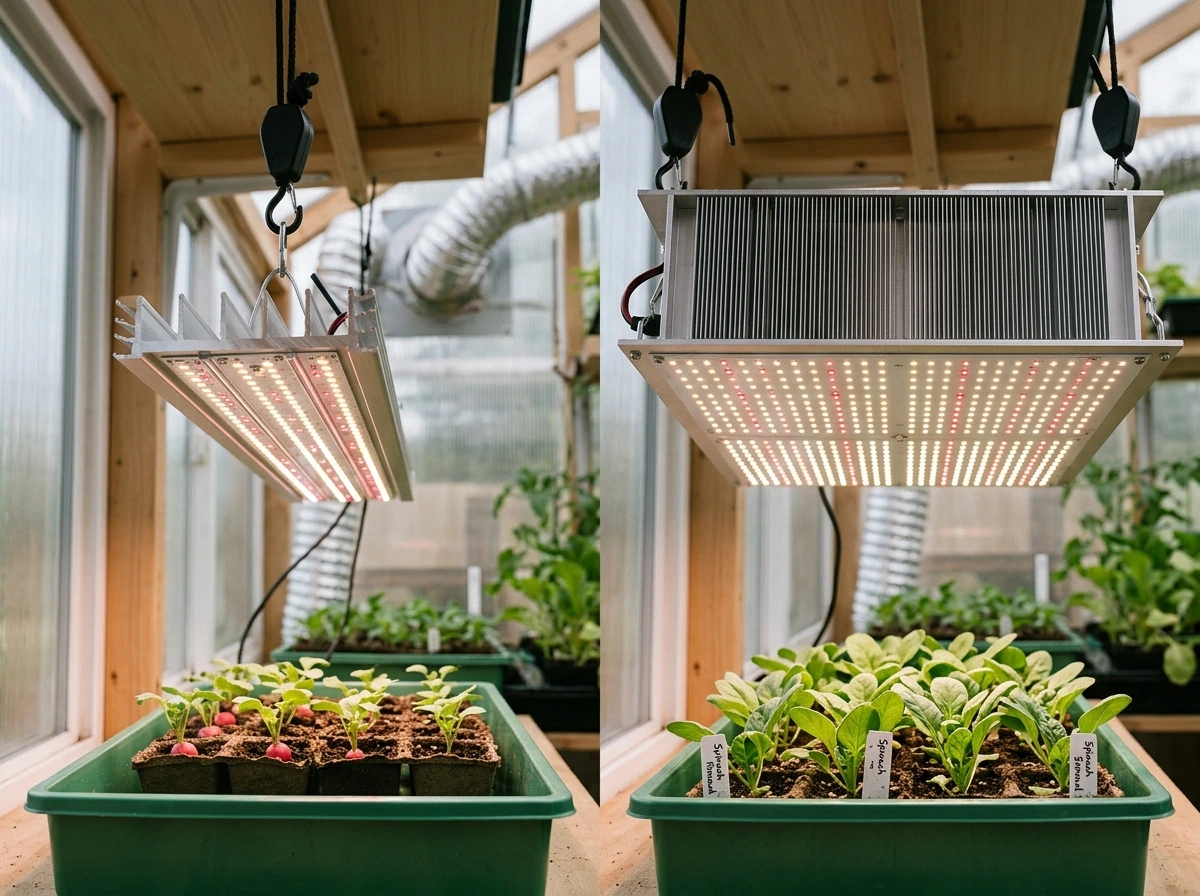
The form factor debate matters more than most buyers realize, and it's not just about aesthetics.
| Form Factor | Uniformity | Heat Distribution | Best For | Mounting Complexity |
|---|---|---|---|---|
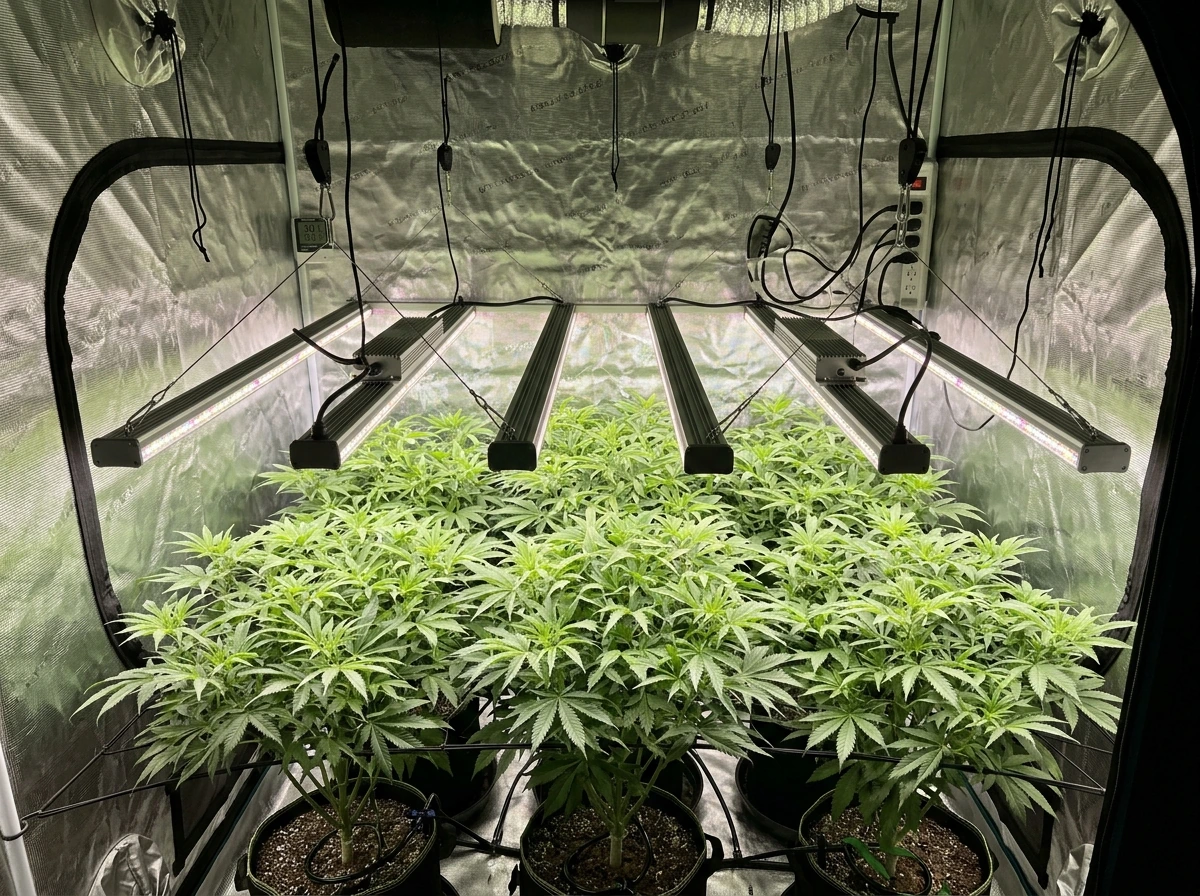
| Bar/Strip | Excellent (distributed diodes) | Excellent (spread across bars) | 4x4+ tents, commercial rows | Moderate (multi-point hang) |
| Quantum Board (single panel) | Good at optimal height | Good (passive heatsink) | 2x2 to 4x4 tents | Simple (single hang point) |
| COB Panel | Variable (hot spots possible) | Requires active cooling often | Specialty / older setups | Simple but needs height management |
Bar-style fixtures distribute diodes across multiple thin bars, which dramatically improves canopy uniformity compared to a single panel emitting from one dense array. The MDPI research on indoor farming uniformity confirms that achieving truly uniform lighting is difficult with centralized panel designs at a given distance, while distributed architectures help. The trade-off is installation complexity: a bar fixture needs multiple hang points and often a ratchet reel setup per bar, which adds time during setup and adjustments.
Mounting height is the other critical variable. Most quantum boards and bar fixtures perform best between 18-30 inches above canopy during flower, and 24-36 inches during veg. The Philips test data showing PPFD maps was generated at 4 feet (48 inches) hang height in a 60%-reflective white tent. Your actual tent reflectance and hang height will produce different results. If you're in a Mylar tent (95%+ reflectance), you'll get more reflected photons contributing to canopy PPFD, so you can sometimes dim the fixture slightly or raise it for better uniformity. In a flat-white painted room with 85% reflectance, you need to account for the difference.
Common Mistakes and What to Do About Them
Trusting Marketing Coverage Numbers
A fixture that 'covers 4x4' may only deliver 400 µmol/m²/s at the edges of that 4x4 at the stated hang height, which is a veg-only number. Always look for actual PPFD maps with stated hang height and test conditions. If a manufacturer doesn't publish one, look for third-party testing, like the protocol Coco for Cannabis uses, which measures a defined grid and reports average PPFD with hang height specified. Anything else is a marketing number.
Oversizing or Undersizing
Oversizing sounds harmless (just dim it down, right?) but creates real problems. A 1000W fixture crammed into a 3x3 tent at full power generates heat that a typical tent exhaust fan can't handle, and even dimmed to 50%, the non-uniform heat distribution from a centralized fixture creates hot spots. Undersizing is more common and just means you'll never hit flowering PPFD targets, so you spend the same electricity for less yield. Use the wattage table above and size for your flower target, not your veg stage.
Poor Dimming Behavior
Some fixtures have dimming that cuts out below a certain percentage, flickers, or requires a specific controller protocol (0-10V vs PWM). If your light flickers when dimmed, check the driver spec against your dimmer or controller signal type. Spider Farmer's SF-series manual, for example, specifies the dimming protocol and range; verify your controller matches before assuming the fixture is defective.
Ignoring Thermal Management in the Grow Room
LED fixtures still produce heat, just less of it as infrared radiation and more as convective heat from the heatsink. In an enclosed tent, a 500W fixture can raise ambient temperature 10-15°F above room temperature without adequate exhaust airflow. Plan your inline fan CFM for at least 1 full air exchange per minute in the tent volume, and factor in additional CFM capacity if your fixture doesn't have active cooling. Passive bar fixtures run cooler to the touch but still transfer heat to the air.
ROI Expectations
Premium fixtures (HLG, Growers Choice, Fluence) carry 3-5 year warranties and genuinely higher efficacy, which means lower electricity cost per gram of yield over a multi-year grow cycle. The ROI calculation only makes sense if you're running the light consistently (multiple cycles per year) and can actually capture the electricity savings. For a hobbyist running one or two grows per year in a 2x2, the $200-300 savings on a premium fixture vs. a quality budget option may take 4-5 years to recover in electricity savings. For commercial operations running lights 16-18 hours per day, the efficacy premium pays off much faster. Be honest about your run schedule before paying the premium.
Your Buying Checklist and Next Steps
Before you click buy on anything, work through this checklist in order:
- Define your grow space: exact tent/room dimensions and ceiling height. Calculate your canopy area in square feet and meters.
- Set your PPFD target: 400-600 µmol/m²/s for veg, 600-900 for flower, 900-1200+ for CO2-supplemented flower.
- Calculate your wattage need: use the table above as a starting point, then verify against PPF output and efficacy of specific fixtures.
- Check the fixture's PPF and PPE: at minimum 2.5 µmol/J for a 2020-era top pick, 2.8+ for current top picks. Get the wall-draw wattage, not the model name number.
- Verify safety certification: look for UL 8800, ETL Listed to UL 8800, or DLC Hort QPL listing. This is non-negotiable for humid grow environments.
- Confirm dimming type: 0-10V or 0-100% continuous. Check that your controller or dimmer matches the driver's protocol.
- Review a real PPFD map: find one with stated hang height and tent reflectance. If the manufacturer doesn't publish one, find a third-party measurement. Average PPFD across the map, not just the peak center value, is what matters.
- Check warranty: 3 years minimum, 5 years for premium tier. This reflects the manufacturer's confidence in driver and diode longevity.
- Plan your mounting: single-point hang for panels, multi-point for bars. Budget for appropriate ratchet reels and rope hangers rated for the fixture weight.
- Set your hang height: start at 24-30 inches above canopy for flower, 30-36 for veg, then adjust based on measured PPFD at canopy level (a cheap PAR meter is worth the investment for this).
If you're comparing specific current fixtures and want deeper side-by-side specs, If you're comparing specific current fixtures and want deeper side-by-side specs, the site's main guide on top LED grow lights covers current picks without the 2020-era context, and the best bar LED grow lights guide is the right next stop if you've already decided on that form factor. For year-specific comparisons, the 2021 and 2022 top LED grow light guides trace how efficacy benchmarks and feature sets evolved from the 2020 baseline covered here.
The bottom line: whether you're evaluating a 2020-era fixture or shopping for something new today, the same questions decide whether a light is actually top-tier. How many µmol/J does it actually produce at the wall? What does the PPFD map look like at your hang height? Is it certified for a grow environment? Can you dim it properly? Everything else, including the brand name, the color temperature branding, and the wattage model number, is secondary to those four answers.
FAQ
If I buy a “top 2020” light used, how do I verify the actual performance is still there?
No. “Max” or “equivalent wattage” claims from older 2020 listings are often marketing. Use the fixture’s listed wall-draw (input) wattage and, if available, its PPF/PPE data measured to the ANSI/ASABE S640 framework. If the seller only provides output in vague terms like “covers 4x4” with no PPFD map or efficacy number, treat it as a red flag for a used purchase.
What should I look for when a spec sheet says “covers 4x4” (or “covers 2x2”)?
Ask for the hang height used to generate the PPFD map and the test environment (tent reflectance, board color, and whether the map is for veg or flower settings). A “4x4 coverage” line without a PPFD grid at a specific height is not enough. If the manufacturer does not publish both hang height and testing conditions, you cannot accurately compare it to another fixture.
If a 2020 fixture lists strong µmol/J, will it still perform the same in a hot tent?
Efficacy (µmol/J) is measured at a defined drive current and temperature, so it only helps if you know the fixture will operate in its intended conditions. In hot tents, output can drop due to higher LED junction temperatures, even for quality drivers. For practical budgeting, plan on slightly lower real-world PPFD than the brochure map if your exhaust airflow is limited or if you see frequent high-heat behavior at full power.
Can I use any dimmer or grow controller with a 0-10V or 0-100% dimmable LED grow light?
0-10V and 0-100% dimming ratings are not interchangeable with every controller signal. Confirm whether the fixture expects 0-10V, and whether the controller is truly continuous dimming or uses stepped levels. Also check the dimming protocol type, some fixtures are sensitive to signal form, and certain drivers can flicker if paired with the wrong dimming method.
Should I always choose a bar-style light over a quantum board for better uniformity?
Yes, but only if you can demonstrate uniformity improvements match your canopy needs. Bar-style fixtures generally help with edge uniformity, but you must hang them correctly and keep consistent spacing across the footprint. If you cannot install multiple hang points accurately, a panel-style fixture that has a published PPFD map at your actual hang height may outperform a “more uniform on paper” bar you hang inconsistently.
Are veg/bloom switch lights from the 2020 era worth it if I plan to run one light for the whole cycle?
Usually, no. “Veg/bloom switch” features on many older 2019-2020 blurple style units often change power or segment activation without delivering a meaningful spectrum shift. If you want stage-specific results, prioritize full-spectrum fixtures that let you dim smoothly and consider fixtures with verified spectrum control rather than relying on a simple switch that only cuts intensity.
How do I calculate how many lights I need for a multi-fixture setup without under-lighting the edges?
Use PPFD targets for your stage and then back-calculate your required light output, but do not assume center PPFD equals average canopy PPFD. For multi-fixture layouts, apply a canopy efficiency factor (the article cites about 80 to 85%) and plan spacing so overlapping coverage does not create under-lit corners. If you skip this step, you can end up with good center growth but weak edges and inconsistent yields.
If my light is just “UL listed,” is that enough for a grow tent environment?
No, not directly. Water and humidity do not affect the optics the same way as they affect safety, so you still need the right safety certification for wet or humid environments. For grow tents, prioritize UL 8800 via direct listing or ETL to UL 8800 equivalents, and verify the fixture is intended for horticultural use, not only standard indoor lighting.
Will 2020-era lights flicker or become unstable when dimmed for seedlings?
Not necessarily, and this is a common mistake when comparing used 2020 lights. Many premium drivers and diodes tolerate dimming well, but older drivers can have minimum dimming thresholds, and some setups can introduce flicker. If you dim below the supported range, you may see reduced stability, reduced output, or control incompatibility, so confirm the supported dimming range and whether flicker is reported in the manual.
What warranty checks should I do before buying a 2020-era LED grow light secondhand?
For a 3-5 year warranty in 2020 models, it still matters whether the warranty is transferable and whether the seller can provide proof of purchase. Many warranties are tied to the original owner, and used returns can be limited. Before buying used, confirm warranty terms, and verify the fixture has intact thermal condition, no visible board damage, and functioning dimming.
When should I choose passive vs active cooling for a tent grow?
Noise can be a selection criterion, not an afterthought. If the fixture uses active cooling (fans), verify expected fan behavior at your intended dimming level, because some designs change fan speed only at full load. Also plan for failure risk, and keep spare parts or at least a clear service pathway so a fan failure does not force you to scrap the fixture mid-cycle.
What are my options if the brand does not publish a PPFD map for the light?
If the manufacturer does not provide a PPFD map, you can still reduce uncertainty by using third-party test protocols, but only if they report the same hang height and comparable reflector conditions. Avoid relying on marketing claims like “average PPFD” without a grid, or comparisons that do not match your setup. If you cannot confirm testing conditions, treat the fixture as a riskier buy and size with a buffer (slightly higher output) so you do not miss flowering PPFD targets.
Next Articles
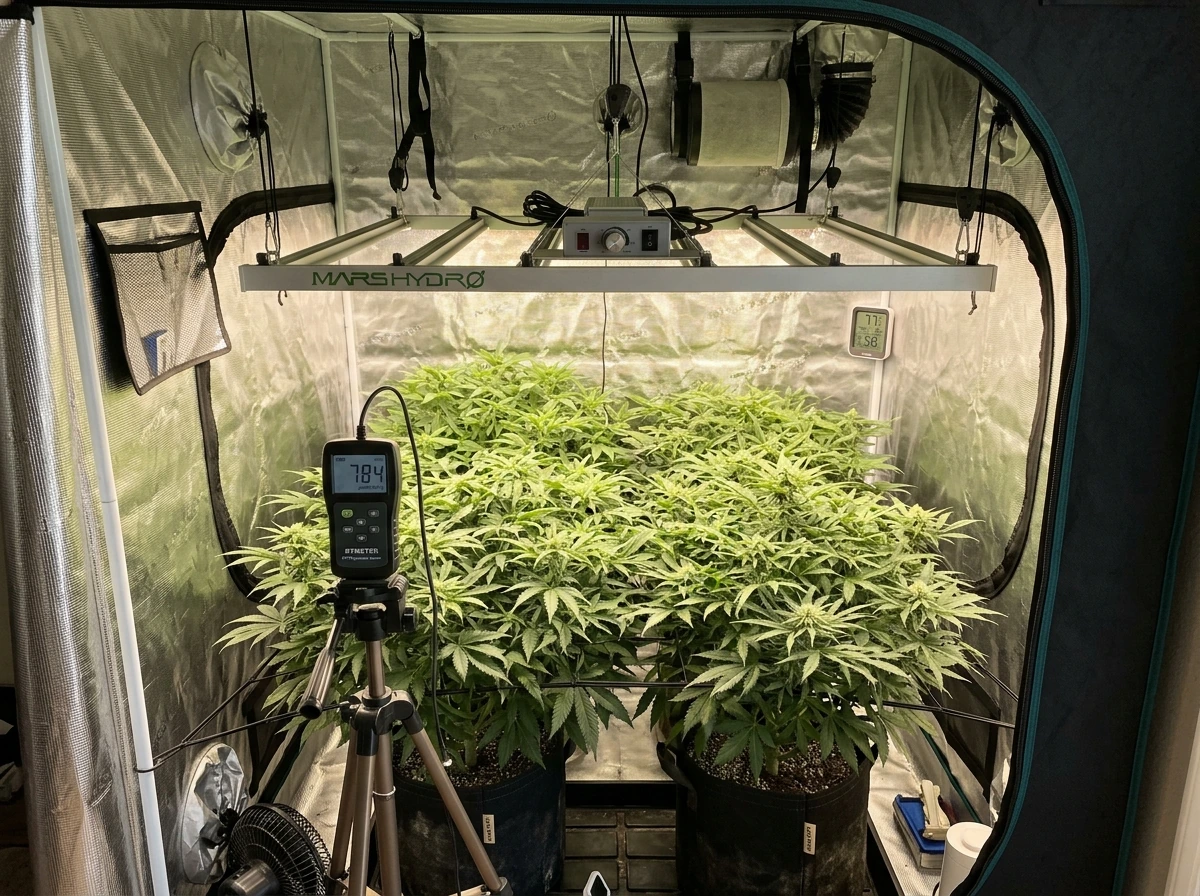
Top LED Grow Lights 2022: Buyer Guide by Space and Stage
Buy top LED grow lights from 2022 using PPFD, coverage, spectrum, efficiency, and setup tips for each grow space size.
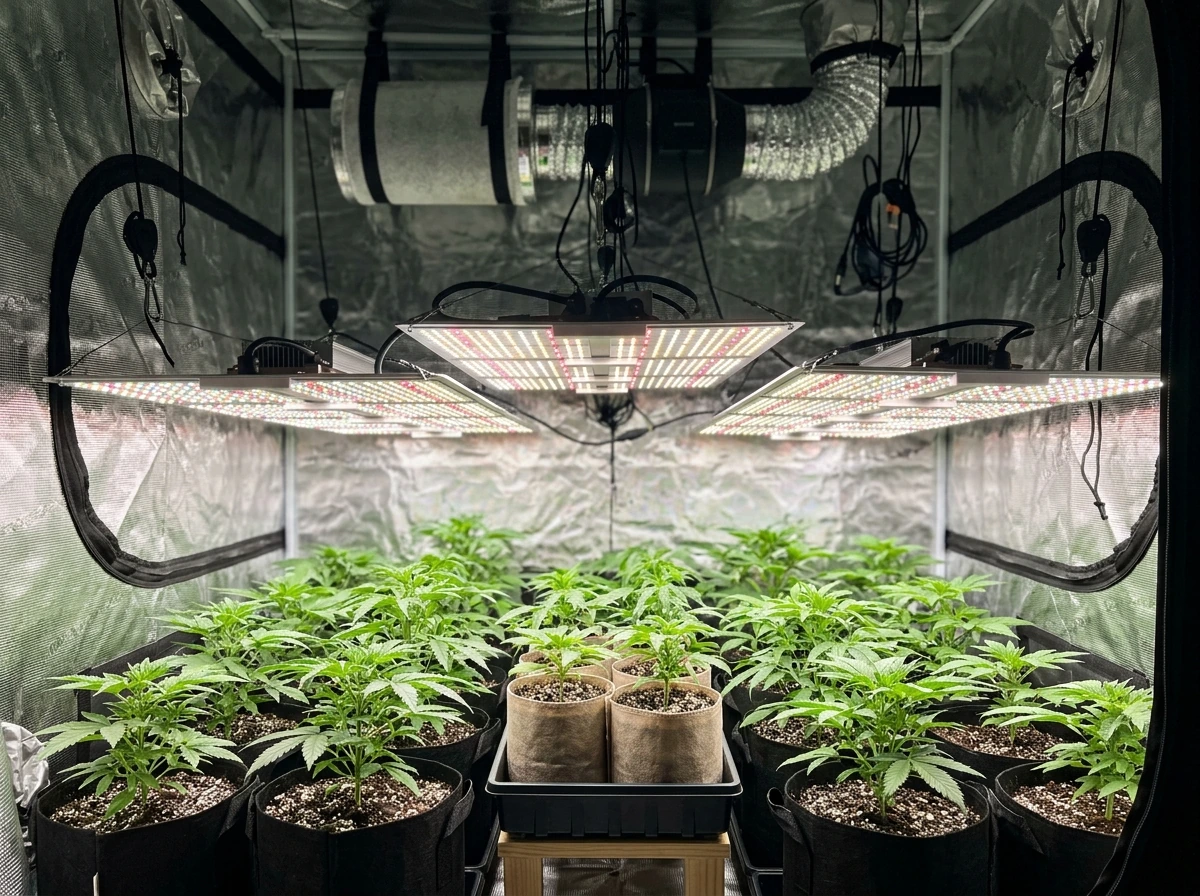
Top LED Grow Lights: How to Choose Best Models for Your Setup
Choose top LED grow lights with PAR, coverage, spectrum, watts, heat, dimming and warranty, plus best model picks by set
Best Bar LED Grow Lights: Buying Guide by Tent Size and PPFD
Pick the best bar LED grow lights by tent size and PPFD, with practical specs, sizing, and installation tips.