
The best 1000 watt LED grow light for most home tent growers in 2026 is a true 1000W-draw fixture (not a '1000W equivalent') delivering at least 2.7 µmol/J efficiency, a full-spectrum quantum board design, and solid dimming control. If you're covering a 4x4 to 5x5 footprint and want to flower heavy without cooking your canopy, that's the class of light that actually delivers. The harder question is figuring out which specific fixture earns that label honestly, because the LED grow light market is still full of inflated wattage claims that can waste your money and stunt your plants.
Best 1000 Watt LED Grow Light Guide: Coverage, PPFD, Setup
Marcus Rutherford
4 Apr 2026
What '1000W LED' actually means
Here's the part that trips up almost every buyer: the watt number on the box is not necessarily the watt number at the wall. LED manufacturers use two very different figures, and they rarely make the distinction obvious. 'Equivalent wattage' is a marketing comparison to old HPS bulbs. A light labeled '1000W HPS equivalent' might only draw 400-500W from your outlet. That's not necessarily bad, but it is misleading if you're trying to compare output.
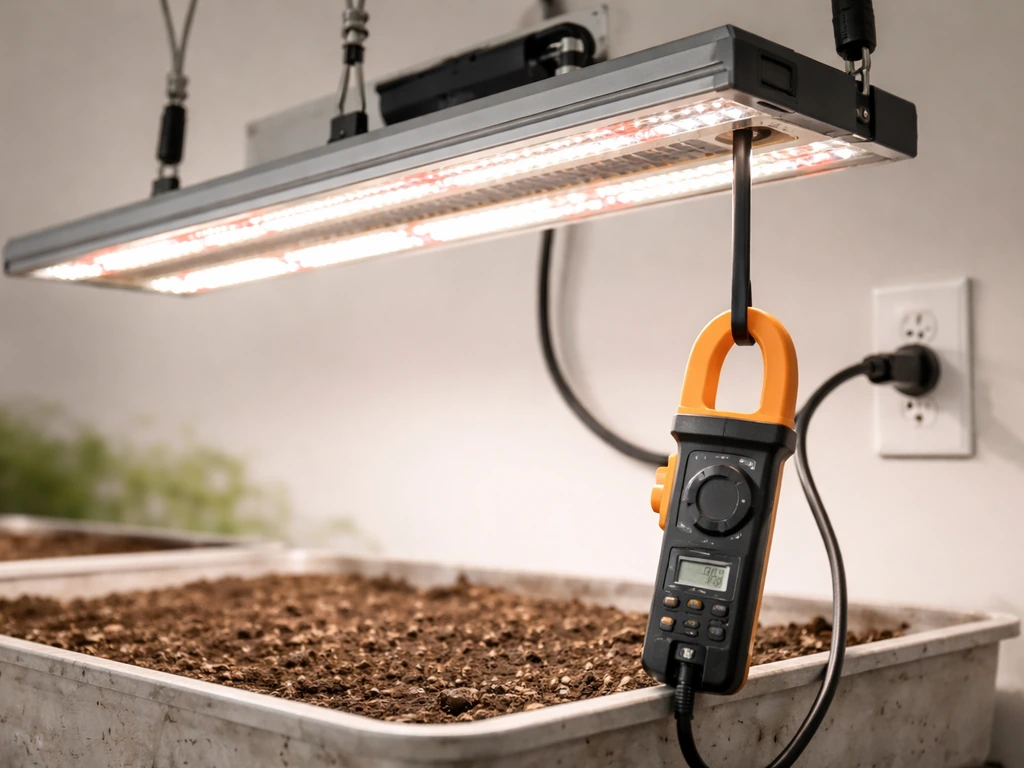
True input power, also called wall draw or actual wattage, is what the fixture actually consumes from your electrical circuit. The Spider Farmer SE1000W, for example, lists its input power draw as '1000W ±5% @ AC100-277V' on its product page. That's a genuine 1000W fixture. Similarly, Mars Hydro specifies the FC-1000W driver and fixture power as '1000W +5% @ AC220~277V' in their FC Series manual. When a brand publishes those numbers transparently, that's a good sign. When they don't, dig into the spec sheet before buying.
Driver efficiency is the other piece people overlook. Even at 1000W wall draw, a lower-quality driver wastes some of that power as heat inside the driver housing rather than converting it into photons. A good Samsung LM301H or similar diode setup paired with a Meanwell or equivalent driver typically converts 95%+ of input power into usable light output. Cheaper builds can run 85% or lower, which means you're paying for electricity that heats a driver enclosure, not your canopy.
The quick way to check: look for PPE (photon efficacy) measured in µmol/J. A 1000W fixture should be hitting 2.7 µmol/J or better to be considered competitive in 2026. Anything below 2.5 µmol/J is lagging, and anything below 2.0 µmol/J is genuinely outdated technology.
Matching the light to your grow space
Coverage area is probably the most misunderstood spec in grow light marketing. Manufacturers quote coverage numbers in ideal conditions at maximum dimming from an ideal height, and those numbers rarely translate to your actual tent. A true 1000W quantum board fixture is well-suited for a 4x4 flowering footprint (16 sq ft) or a 5x5 vegetative footprint (25 sq ft). Trying to flower a 5x5 with a single 1000W unit is possible but you'll see PPFD drop-off at the corners, especially if the light lacks secondary optics.
Your plant stage matters as much as your square footage. Seedlings and clones need 100-250 µmol/m²/s. Vegetative growth wants 400-600 µmol/m²/s. Flowering, especially with CO2 supplementation, can push to 800-1200 µmol/m²/s or higher. A dimmable 1000W fixture lets you run at 40-50% during veg and ramp up to 100% for flower, which is why dimming isn't a luxury feature, it's a practical necessity for full-cycle grows.
If you're running a larger room setup and wondering whether a single 1000W unit scales, the honest answer is: not far. For 8x8 rooms and beyond, you're better off thinking in multiples. That's where the best LED grow lights in the 1000W class start to be evaluated as a fleet rather than a solo fixture, and spacing uniformity becomes as important as peak PPFD.
Features that actually matter when comparing fixtures
Spectrum
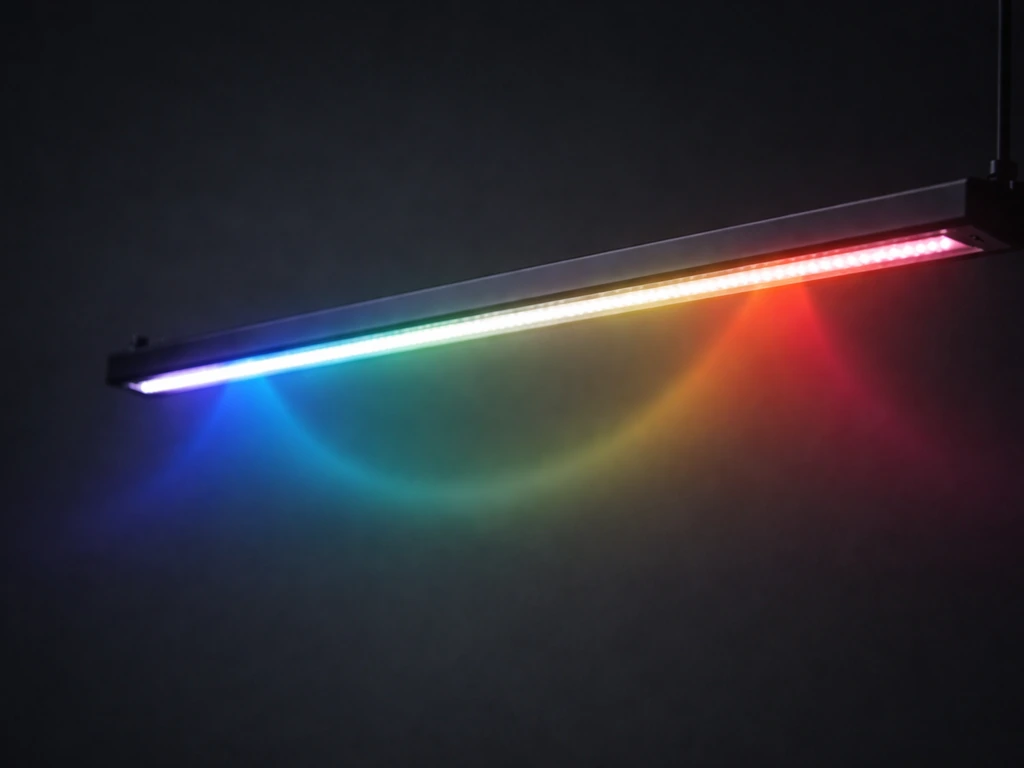
Full-spectrum designs that cover 380-780nm with strong peaks in the red (650-665nm) and blue (440-460nm) bands are the standard expectation in 2026. Some fixtures add far-red (720-740nm) to trigger the Emerson effect and speed up flowering transitions, and that's a genuinely useful addition if supported by real diode output rather than a marketing label. UV supplementation (280-380nm) can increase terpene and resin production, but check whether UV diodes are actually present in the fixture or just mentioned in marketing copy. If you want to dig into what a well-designed spectrum looks like across specific use cases, a closer look at the best full spectrum 1000W LED grow lights breaks down which designs actually deliver across the full wavelength range.
PPFD and measurement claims
PPFD (photosynthetic photon flux density) is measured in µmol/m²/s and tells you how much usable light hits a specific point. Always check whether the manufacturer's PPFD map was measured at the center only or as an average across the footprint. Center readings can be 30-50% higher than edge readings on poorly designed fixtures. A reputable brand will publish a full grid map at a specific hanging height, typically 18 to 24 inches above canopy. If only a single peak number is listed, treat it skeptically.
Dimming and driver quality
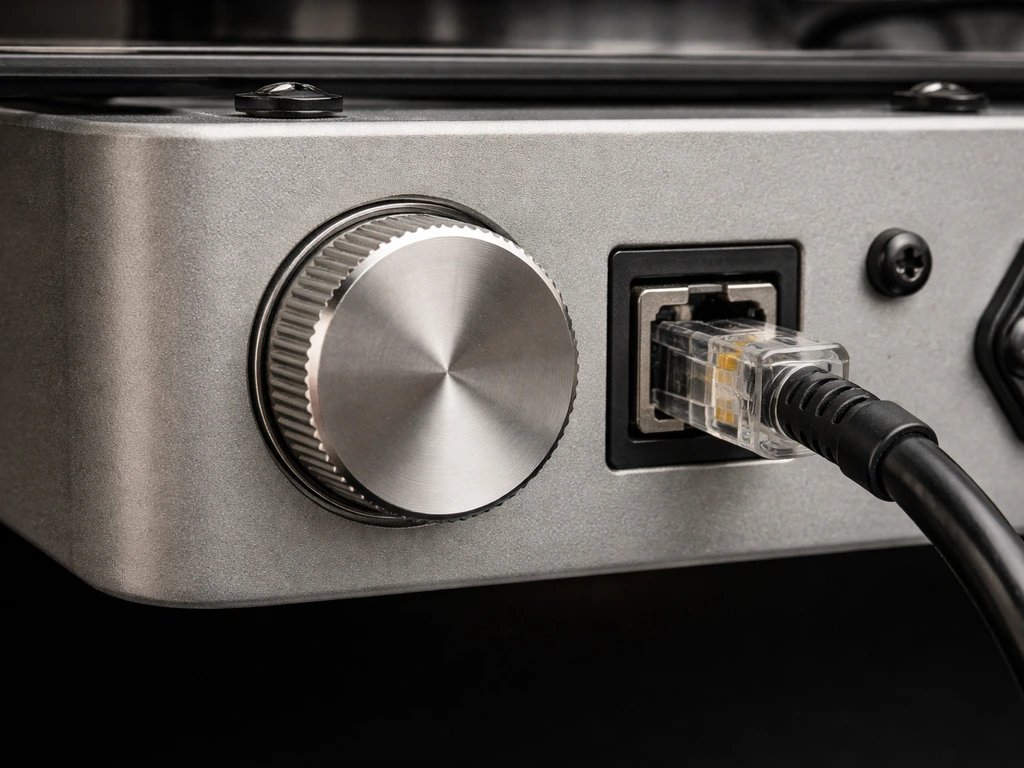
A quality 0-10V dimming interface or knob-based control lets you tune output precisely across plant stages. Some 1000W fixtures now support RJ-11 or wireless daisy-chaining for multi-light controllers, which is a meaningful convenience in multi-light rooms. Meanwell HLG drivers are the gold standard for reliability and efficiency. Proprietary drivers from budget brands can work fine, but their longevity track record is shorter and replacement parts are often unavailable.
Coverage footprint and optics
Bare quantum boards spread light broadly with a wide beam angle (120-150 degrees), which is great for canopy coverage but means less penetration into a dense canopy. Fixtures with secondary lenses or reflector cups focus light more narrowly, increasing depth penetration but reducing edge uniformity. Neither design is universally better; it depends on whether you're running a single-tier screen-of-green style canopy or trying to push light into taller plants.
Electrical efficiency
At 1000W actual draw running 18 hours a day, you're consuming 18 kWh per day per fixture. At a U.S. average of roughly $0.16/kWh in 2026, that's about $2.88 per day or roughly $87 per month per light. Efficiency gains from 2.5 µmol/J to 2.9 µmol/J don't reduce your power bill directly (you're still drawing 1000W), but they mean more photons per watt are hitting your plants instead of being wasted as heat. That matters for yield per dollar spent on electricity over a full grow cycle.
Best 1000W LED options matched to real grow setups
Best for a 4x4 tent (flowering)
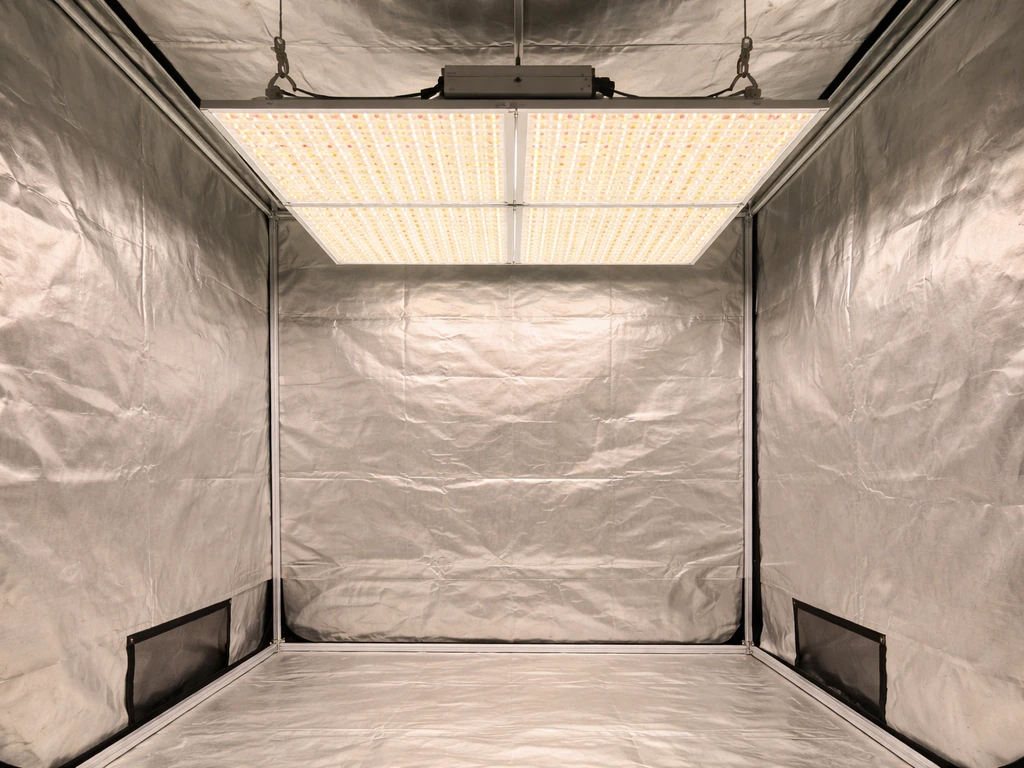
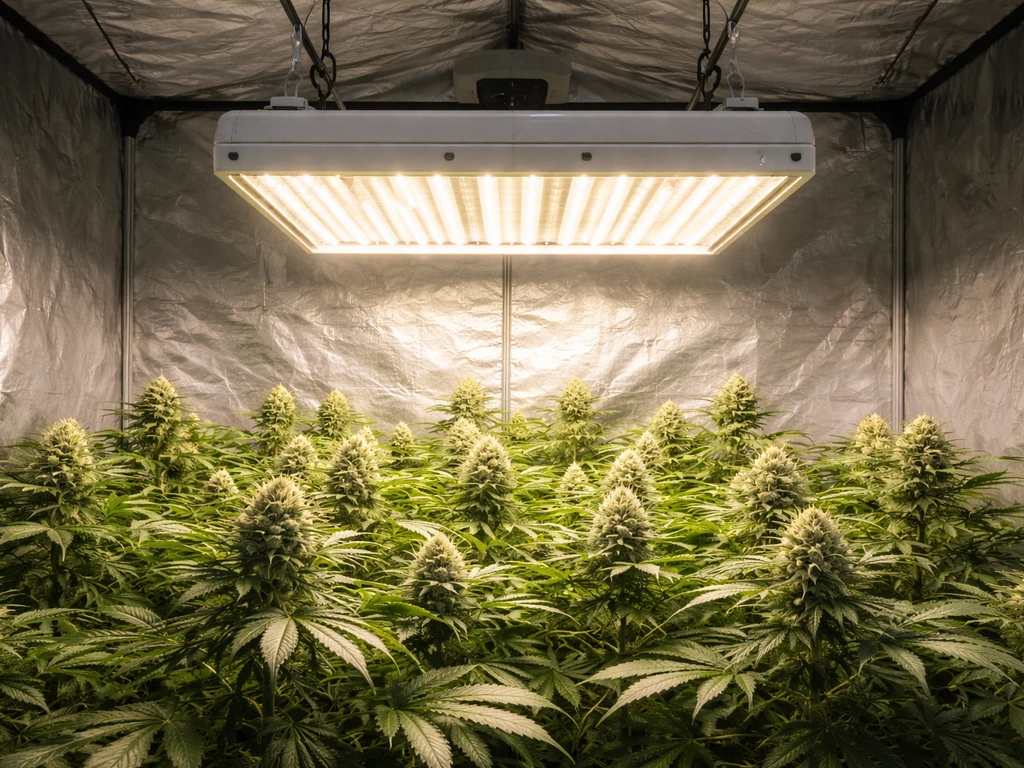
A single true 1000W fixture is ideal for a 4x4 flowering tent. You want a quantum board design with Samsung LM301H or LM301B diodes, 2.7+ µmol/J efficacy, and reliable dimming. The Spider Farmer SE1000W and Mars Hydro FC1000W EVO both fit this profile. The Mars Hydro FC1000W EVO is specifically positioned for high-PPFD environments, including CO2-supplemented grows, which makes it a strong pick if you're pushing intensity. If your priority is value without sacrificing core performance, the top-rated 1000W LED grow lights include options that hit the right specs without overpriced premium branding.
Best for a 5x5 tent (veg or mixed-stage)
Covering a 5x5 with a single 1000W unit works well for vegetative growth but can leave corners underlit during flower. If you're committed to a 5x5 flower footprint, consider a fixture with a bar-style or multi-bar design that spreads light more evenly across the square footage, or run two smaller units to get better edge-to-edge uniformity. Dimming both units together via a controller keeps management straightforward.
Best for larger rooms and commercial scaling
In multi-light commercial setups, the priority shifts from peak PPFD to consistency, reliability, and control integration. Bar-style 1000W fixtures that can be daisy-chained to a centralized controller reduce setup complexity significantly. Look for fixtures with IP65 or higher water resistance ratings if humidity management is a challenge, and verify that warranty terms cover commercial use, since some brands restrict warranties to personal/hobby use only. Anyone switching from legacy HPS infrastructure should also look at LED grow lights designed specifically to replace 1000W HPS, since those comparisons often include real yield-per-watt data from growers who've made the transition.
Best for budget-conscious single-light grows
If you're growing in a small space and don't need the full 1000W footprint, it's worth considering whether a smaller fixture serves you better. A well-built 100W light in a compact tent can outperform a bloated 1000W budget fixture simply because it's running efficient diodes at appropriate density for the space. For anyone evaluating that trade-off, the best 100W LED grow lights represent the other end of the wattage spectrum and are worth reviewing to understand what quality looks like at any power level.
Setting up your 1000W LED the right way
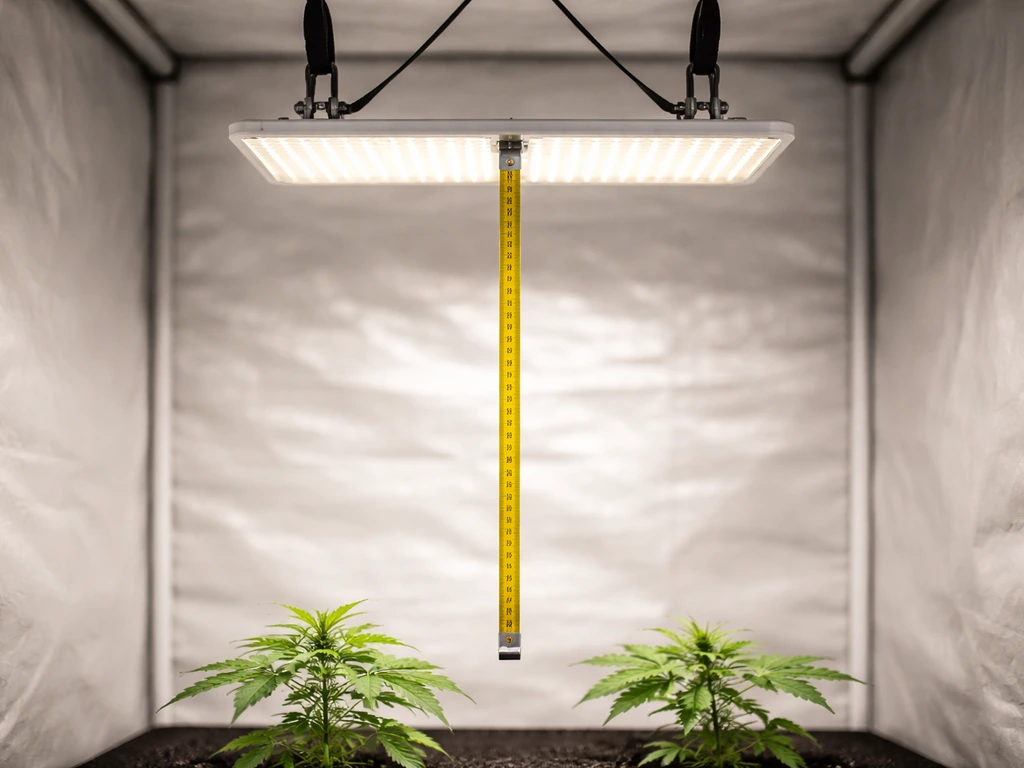
Mounting height is the most common setup mistake. At full power (1000W), most quantum board fixtures should hang 18-24 inches above the canopy during flower. During seedling and early veg stages, raise to 30-36 inches or dim to 40-50% to avoid light stress. Always start higher and lower gradually while watching for upward leaf curl (too much light) or stretchy, spindly growth (not enough).
Heat management at 1000W is a real concern. Even efficient LED fixtures push 200-300W of heat into your grow space. A properly sized inline fan and carbon filter setup is non-negotiable. For a 4x4 tent, a 6-inch inline fan rated at 400+ CFM handles both odor control and heat extraction at 1000W. Measure your canopy temperature with a digital thermometer at plant height: 75-82°F is the target range. If you're consistently above 85°F at canopy level, airflow is your problem, not the light.
Spacing matters if you're running multiple 1000W fixtures in a room. Overlap coverage zones by 20-30% at the recommended hanging height to avoid dark spots between fixtures. In a commercial row setup, fixtures should be spaced to maintain PPFD uniformity within 20% across the entire canopy surface. Use the manufacturer's PPFD grid map as the baseline and measure with a quantum sensor at multiple points to verify.
Timers and controllers are worth investing in properly. An 18/6 light cycle for veg and 12/12 for flower is standard, and a programmable timer with surge protection is the minimum. If you're running multiple dimmable fixtures, a centralized controller that lets you ramp intensity on a schedule can meaningfully improve efficiency over a grow cycle. Sunrise/sunset ramp programs reduce plant stress during light transitions and are available on most mid-to-high-tier 1000W controllers.
Checking real-world performance before and after you buy
Before you finalize a purchase, run through this checklist against the manufacturer's marketing claims. It takes about 10 minutes of research and can save you from a fixture that underperforms or fails early.
- Find the actual wattage at the wall: look for input power in the spec sheet, not the product name. If the listing only says '1000W equivalent,' ask the seller or find the spec sheet directly.
- Check the PPFD map: is it a full grid or just a center measurement? A single peak number without distance and footprint context is not a useful data point.
- Verify efficacy in µmol/J: anything under 2.5 µmol/J should require a significant price justification. Under 2.0 µmol/J, walk away.
- Confirm driver brand: Meanwell, Inventronics, or a well-documented proprietary driver with published specs. Anonymous 'high-efficiency driver' language is a yellow flag.
- Look for third-party grow reports or community testing: manufacturer numbers are almost always optimistic. Real-world grower measurements within 10-15% of claimed PPFD are acceptable. More than 20% off is a problem.
- Check the warranty terms: 3-5 years is standard for quality fixtures. Less than 2 years on a 1000W fixture is a signal that the brand doesn't have confidence in its own product lifespan.
- After installation, measure canopy temperature at plant height after 30 minutes of full-power operation: above 85°F means your ventilation setup needs adjustment before running a full cycle.
Plant response is your ultimate performance indicator. Healthy plants under a well-dialed 1000W LED show tight internodal spacing during veg, dark green leaves without yellowing or bleaching, and strong lateral branching. During flower, you want compact bud structure forming within the first two weeks of 12/12, with resin development visible by week 4-5. If your plants are stretching toward the light after the first week of flower, PPFD is too low. If you're seeing bleached or bleach-adjacent tips at the top of the canopy, you're either too close or running too hot.
What to pay and what to avoid
In 2026, a genuinely competitive true 1000W LED grow light from a reputable brand runs $400-700. Below $300 for a claimed 1000W fixture, you're almost certainly looking at inflated wattage numbers, lower-grade diodes, or a driver that won't survive 3 grow cycles. Above $700, you're paying for premium brand positioning, advanced controllers, or specialized features (like high-end UV supplementation or IP67 waterproofing) that matter in some scenarios but not all.
| Budget Range | What You Typically Get | Watch Out For |
|---|---|---|
| Under $300 | 250-500W actual draw marketed as '1000W', lower-tier diodes, basic drivers | Inflated wattage claims, no PPFD maps, short warranty |
| $300-$400 | True 600-800W fixtures occasionally labeled as 1000W equivalent, some quality diodes | Mismatched spec claims, limited dimming range |
| $400-$700 | True 1000W wall draw, Samsung or equivalent diodes, Meanwell or quality driver, full dimming, 3+ year warranty | Some brands overstate PPFD; verify with third-party data |
| $700+ | Premium brands, advanced controller integration, specialty spectrums, IP-rated builds | Premium pricing doesn't always mean better core photon output; compare µmol/J first |
The pitfalls to avoid are consistent regardless of budget. First, ignore the watt number in the product name and focus only on input power in the spec sheet. Second, don't buy based on coverage area claims alone because a '5x5 coverage' claim means nothing without a published PPFD map at that footprint. Third, be cautious with brands that have no grow community presence, no real user reviews beyond retailer platforms, and no published IES or PPFD test data. The LED grow light market has matured enough that legitimate brands publish real numbers. The ones that don't have a reason for it.
The bottom line: a true 1000W LED grow light is a serious piece of equipment that can genuinely outperform legacy HPS in the same footprint while running cooler and more efficiently. But only if you buy a fixture that actually draws 1000W, runs quality diodes at 2.7+ µmol/J, and gives you dimming control to manage intensity across your grow cycle. That combination exists at a reasonable price point in 2026. You just have to look past the marketing to find it.
FAQ
How can I tell if a “1000W” LED grow light is truly drawing 1000 watts, not “equivalent”?
Check for a stated input power spec (often listed as “actual wattage,” “input power draw,” or a voltage range with a watt tolerance). If the listing only says “1000W” or “HPS equivalent,” you should treat it as uncertain until you find a spec sheet showing the real draw at your wall voltage.
What measurement should I trust more, the listed PPE/efficacy (µmol/J) or the brand’s coverage size (like “5x5”)?
Trust the published PPFD test data and grid map more than coverage claims. Coverage dimensions can be marketing targets, while PPFD maps reveal center versus edge drop-off at a specific hanging height and dimming level.
If the manufacturer gives a single PPFD peak number, how do I estimate what my corners will get?
You cannot reliably infer corners from one peak value. Look for a grid map, or look for the stated “center-to-edge uniformity” or average-at-footprint number. If none exists, plan to adjust hanging height and expect reduced corner intensity, especially for dense flower canopies.
Can I use a 1000 watt LED grow light for seedlings without bleaching them?
Yes, but do it with dimming and increased hanging height. Start around 40 to 50 percent output (or higher hanging height) and ramp up after the plants show no upward leaf curl or stress. Many growers also raise the light 30 to 36 inches early, then gradually lower.
What’s the safest mounting height approach if I’m unsure about the fixture’s beam angle or optics?
Start higher than you think and only lower in small steps. A practical method is to begin at the upper end of the recommended range for flower, then observe leaf response for a few days. Broad-beam boards may need less height change, while narrow optics may require more caution to avoid top bleaching.
Do I need to run a 1000W LED at 100 percent during flowering, or will dimming help yields too?
Dimming can still help. If your goal is high quality and you avoid canopy bleaching, you can often run below full power once your room, CO2 level, and canopy height are dialed in. The key is hitting target PPFD at the canopy without creating hot spots that reduce uniform bud development.
How do I handle humidity and condensation if my tent is in a colder room?
Focus on airflow across the fixture area, not just the grow canopy. Use a properly sized inline fan, avoid blocking intake vents, and ensure the fixture has an appropriate water and dust rating for your environment. Cold rooms can cause condensation, even when the overall humidity seems manageable.
What inline fan size should I use for a 4x4 at 1000W, and what if my temperatures still run high?
Follow the manufacturer’s ventilation guidance as a baseline, then measure canopy temperature directly with a digital thermometer at plant height. If you are consistently above your target range (for example, above 85°F at the canopy), increase fan capacity, improve ducting, or reduce heat sources elsewhere, not just “more light.”
Why is my canopy temperature within range but my plants still look stressed or clawed?
Canopy temperature alone does not guarantee correct light intensity or airflow distribution. Check PPFD at multiple points, confirm you are not too close at full power, and ensure air movement reaches the entire canopy (not just the top). Overly dry air can also cause stress that looks similar to light stress.
Is it better to buy one 1000W light or two smaller lights for a 5x5 tent?
Often, two fixtures improve edge-to-edge uniformity because you can overlap coverage zones intentionally. If you use a single 1000W unit for a 5x5 flower footprint, be prepared for corner underlighting unless the fixture has a bar or multi-bar layout and confirmed PPFD uniformity across the area.
How should I space lights when I’m using multiple 1000W fixtures in the same room?
Use the PPFD grid map as the primary reference and space so uniformity stays within your acceptable tolerance. If no map exists, overlap coverage by a meaningful amount at the recommended hanging height and verify with a quantum sensor. Then adjust by raising/lowering or changing output rather than only changing spacing.
What should I look for in dimming controls if I plan scheduled ramps (sunrise/sunset)?
Confirm what dimming protocol the driver supports (for example, 0-10V) and whether the controller can ramp smoothly without sudden jumps. Also check compatibility if you plan multi-light setups, especially whether the fixture supports reliable daisy-chaining and how many units a controller can handle.
Do I need IP65 or higher water resistance for a tent grow with a carbon filter?
Not automatically, but it’s valuable in high-humidity tents, especially if you frequently run humidifiers or have condensation. If humidity spikes or you mist near the lights, an IP65-style rating and good venting help reduce long-term reliability issues. Still, avoid direct water spray on electronics.
How do I evaluate warranty terms for commercial or intensive use?
Read the warranty for usage limits, sometimes brands restrict coverage to personal or hobby use. If you are running multiple cycles per year or using higher humidity environments, prioritize fixtures with clear warranty language that matches your operating conditions, and keep proof of purchase and model numbers.
Are secondary optics (narrowing the beam) always better for dense canopies?
Not always. Narrow optics can increase penetration into thicker plants, but they may reduce uniformity at the edges if spacing and height are not dialed in. Wide-beam quantum boards can cover the canopy more evenly but may require careful height and dimming to avoid under-penetration in tall structures.
What’s the easiest way to verify if my electricity bill estimate is reasonable?
Use your actual measured input power if possible (a plug-in power meter), then multiply by your daily hours. If your fixture claims “± tolerance,” account for that. Remember that efficiency changes photons per watt, it does not reduce the watt draw if the fixture is running at the same power level.
When should I measure with a quantum sensor, and where should I measure?
Measure at the hanging height you actually plan to run and at multiple canopy points, not just the center. A useful approach is center plus several edge points, then compare to the manufacturer’s test conditions (same dimming level and height). Adjust output or height until your readings are consistent across the footprint.
Next Articles
Best 1000W LED Grow Lights: How to Choose the Right One
Guide to picking the best 1000W LED grow light by real draw, coverage, PPFD, spectrum, efficiency, and safe setup
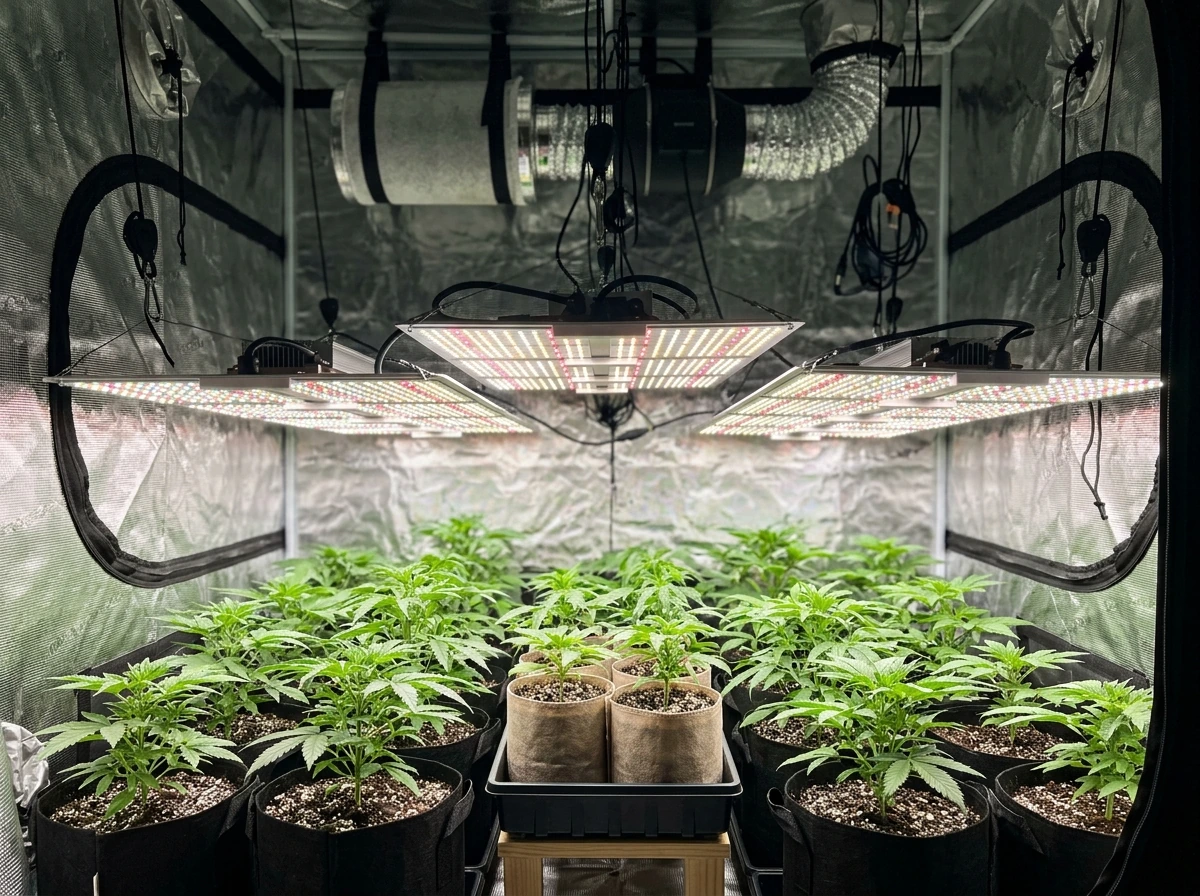
Top LED Grow Lights: How to Choose Best Models for Your Setup
Choose top LED grow lights with PAR, coverage, spectrum, watts, heat, dimming and warranty, plus best model picks by set
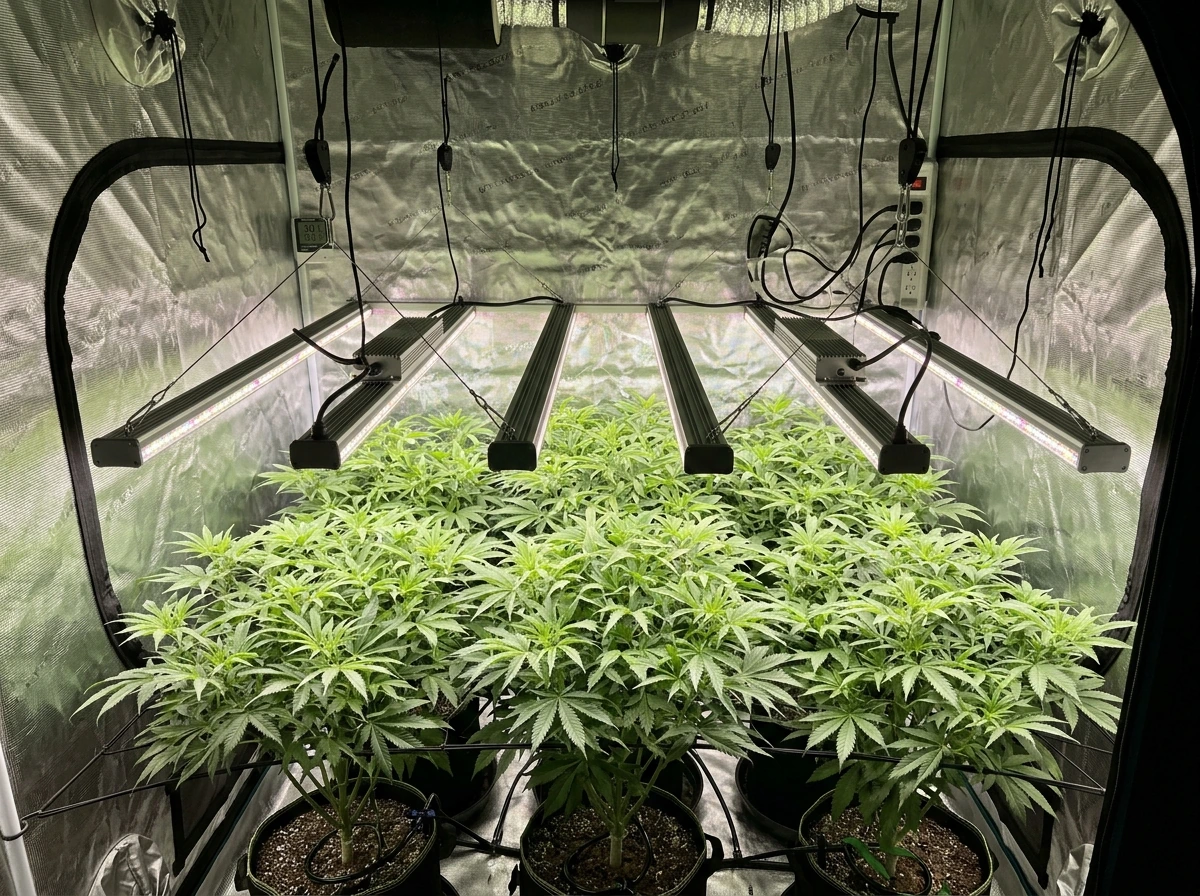
Best Bar LED Grow Lights: Buying Guide by Tent Size and PPFD
Pick the best bar LED grow lights by tent size and PPFD, with practical specs, sizing, and installation tips.