
The best LED grow light for you is the one that delivers the right amount of photosynthetic light across your actual grow footprint, runs efficiently enough to keep your electricity bill reasonable, and comes with real data backing up its performance claims. That sounds simple, but the market is flooded with fixtures making big numbers look impressive on packaging while delivering mediocre results in practice. This guide cuts through that noise and gives you a direct answer based on your space, budget, and goals.
Top Rated LED Grow Lights: Best Picks by Budget and Space
Marcus Rutherford
2 Apr 2026
What 'Top Rated' Actually Means for LED Grow Lights
Most grow light 'ratings' online are a mix of Amazon star averages and paid review placements. Neither tells you whether a light actually grows plants well. Real performance comes down to a handful of measurable specs, and if a manufacturer won't publish them, that alone is a red flag.
The number that matters most is photosynthetic photon efficacy, or PPE, measured in µmol/J. This tells you how many usable light particles the fixture produces for every watt of electricity consumed. The DesignLights Consortium (DLC) horticultural qualified products list (QPL) requires a minimum PPE of 1.9 µmol/J for a fixture to qualify, and that threshold is a useful floor. Anything below it is essentially inefficient by current standards. Top-tier fixtures from established brands hit 2.5 to 3.0+ µmol/J. When a manufacturer only gives you wattage and a vague 'equivalent HPS' claim, they're hiding the real number because it's not competitive.
Independent certification is your next credibility filter. DLC QPL status is tied to defined testing under ANSI/IES LM-79 and LM-80 frameworks and a published qualified products process, making it a much stronger efficacy signal than a manufacturer's own marketing sheet. DLC horticultural qualified products are tested using ANSI/IES LM-79 and related DLC testing and reporting requirements, and the resulting performance data is used for inclusion and listing [ANSI/IES LM-79 and LM-80 frameworks](https://designlights. org/wp-content/uploads/2024/11/DLCHORT-Technical-Requirements-V4-0DRAFT1_11072024.
pdf). ETL/Intertek certification (including the newer ETL Horti certification) is another meaningful third-party mark, indicating the fixture has met independent horticultural and environmental suitability standards. The best lights in 2026 carry at least one of these, and the top performers carry both. If a product page shows no DLC listing and no independent test data, treat the specs as unverified.
Beyond efficacy, the specs that actually determine grow outcomes are: total PPF output (µmol/s, the total photon flux of the fixture), PPFD at canopy level at your specific hanging height (ideally shown as a mapped grid, not just a center-point number), coverage footprint at target PPFD, spectrum composition (specifically the ratio of blue to red to far-red and whether UV and IR are included), driver quality and dimming capability, thermal management, and warranty length. A fixture that scores well across all of these is genuinely top rated. One that scores well on just one or two is a marketing highlight reel.
Match the Right Light to Your Grow Space and Goal
Before picking any fixture, nail down three things: your canopy footprint in square feet, your target crop type (vegetative greens vs. flowering cannabis vs. fruiting tomatoes, for example), and whether you're growing in a tent, a room, or a commercial bay. These three variables narrow your options dramatically.
Coverage by tent size
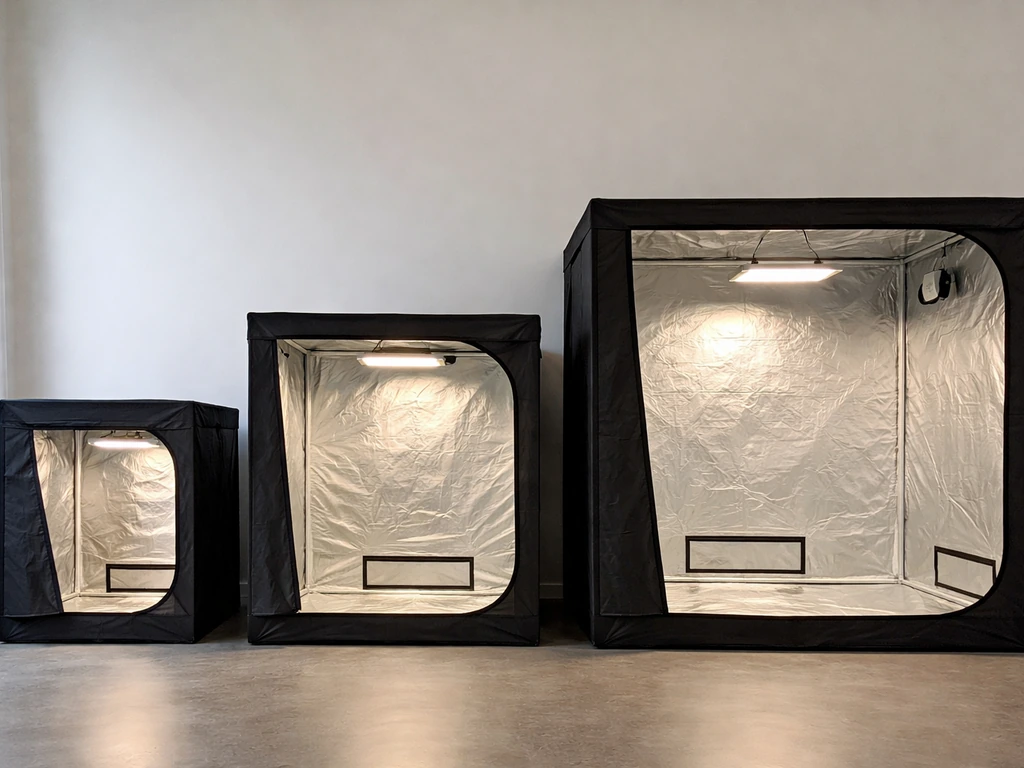
For a 2x2 tent (4 sq ft), you want roughly 200 to 250 true watts from a quality fixture running at 2.5+ µmol/J. For a 3x3 tent (9 sq ft), plan on 300 to 400 watts. A 4x4 tent (16 sq ft) is the most common hobbyist size and typically requires 500 to 650 watts from a well-built panel, or two smaller fixtures. A 4x8 or 5x5 runs best with 800 to 1,000 watts, either from a single large bar-style fixture or paired panels. For commercial operations running multiple 4x4 or 5x5 bays, the calculation scales linearly, but driver efficiency and thermal management matter even more because lights run continuously.
Target PPFD depends on what you're growing. Leafy greens and herbs thrive at 200 to 400 µmol/m²/s. Vegetative cannabis and most fruiting crops want 400 to 600 µmol/m²/s. Flowering cannabis in the push phase performs best at 800 to 1,200 µmol/m²/s, provided CO2 is supplemented. Always check a fixture's published PPFD map, not just the center-point peak, because the edges of your canopy need adequate coverage too. Manufacturers like Sanlight publish full PAR test data and PPFD plots for their EVO series, which is the level of transparency you should expect from any premium fixture before buying.
Spectrum: full-spectrum vs. targeted
Full-spectrum white-LED fixtures (often called quantum board or bar-style lights) are the right default choice for most growers in 2026. They cover the full 380 to 780nm range that plants use, with a profile similar to natural sunlight, and the best ones include UV and IR supplementation for terpene development and stem elongation.
SANlight evaluates PPFD and quantity using an extended measuring range from 380 nm to 780 nm that includes UV and far red, which helps capture the full usable spectrum for plants 380 to 780nm range. Targeted red/blue 'blurple' fixtures are largely obsolete for serious growing.
If you're supplementing a greenhouse with natural light or running an inter-canopy lighting setup, narrow-band red LEDs still have a place, but for primary lighting in a tent, go full-spectrum.
Top Picks by Form Factor
LED grow lights come in several distinct form factors, and the right one depends on your setup. Here's how each category performs in practice.
Quantum board panels
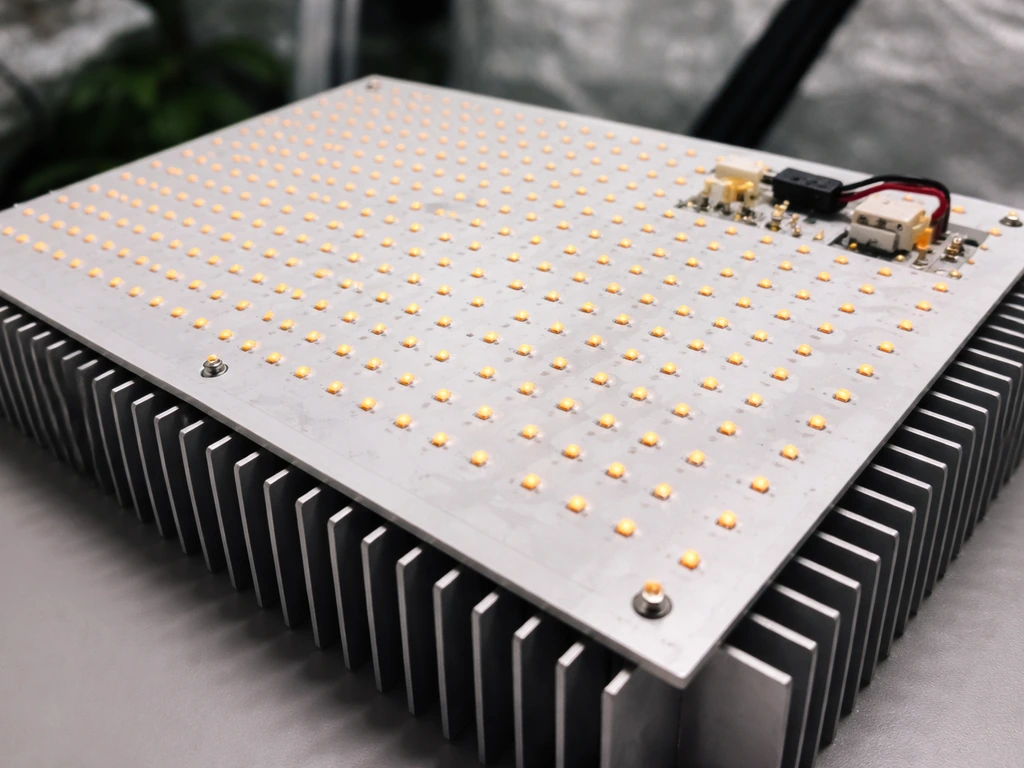
Quantum board panels are the dominant form factor for tent growing in 2026 and for good reason. They use high-density Samsung LM301H or equivalent diodes arranged on a flat board with a passive or low-profile heatsink, delivering even PPFD distribution and excellent efficacy. Fixtures like the HLG 350R Spec and Mars Hydro FC-E Series run at 2.5 to 2.8 µmol/J and cover 4x4 spaces comfortably. The HLG 650R is the go-to for a 5x5. These are the workhorses of the home tent market and represent the best balance of performance, longevity, and value.
Bar-style LED fixtures
Bar-style fixtures use multiple LED strips spread across a frame, which improves light uniformity even further than a single panel. The Spider Farmer SE Series and Gavita Pro 1700e LED are strong examples. The Gavita in particular is popular for commercial operations because of its build quality, dimming precision, and the fact that it's DLC listed. Bar lights tend to run slightly cooler per diode than boards because the heat is distributed across more surface area. They're ideal for 4x8 and 5x5 footprints, or for commercial row configurations.
Screw-in grow bulbs and PAR-style lamps
LED grow bulbs in standard E26/E27 screw bases and PAR-style LED grow lamps (PAR20, PAR30, PAR38 form factors) serve a specific and limited role: supplemental lighting, small propagation setups, or single-plant grows. LED grow bulbs are accessible and low-cost, but their total PPF output is too low to flower most plants effectively in anything larger than a solo cup or a tiny propagation tray.
PAR38 LED grow lamps from Active Grow and similar brands are better quality than the generic options, but still best used as supplemental lighting rather than primary coverage. If your main question is which grow bulb to buy for a single succulent or herb pot on a windowsill, these work fine. For anything beyond that, move up to a panel or bar.
Tube lights (T5 LED replacements)
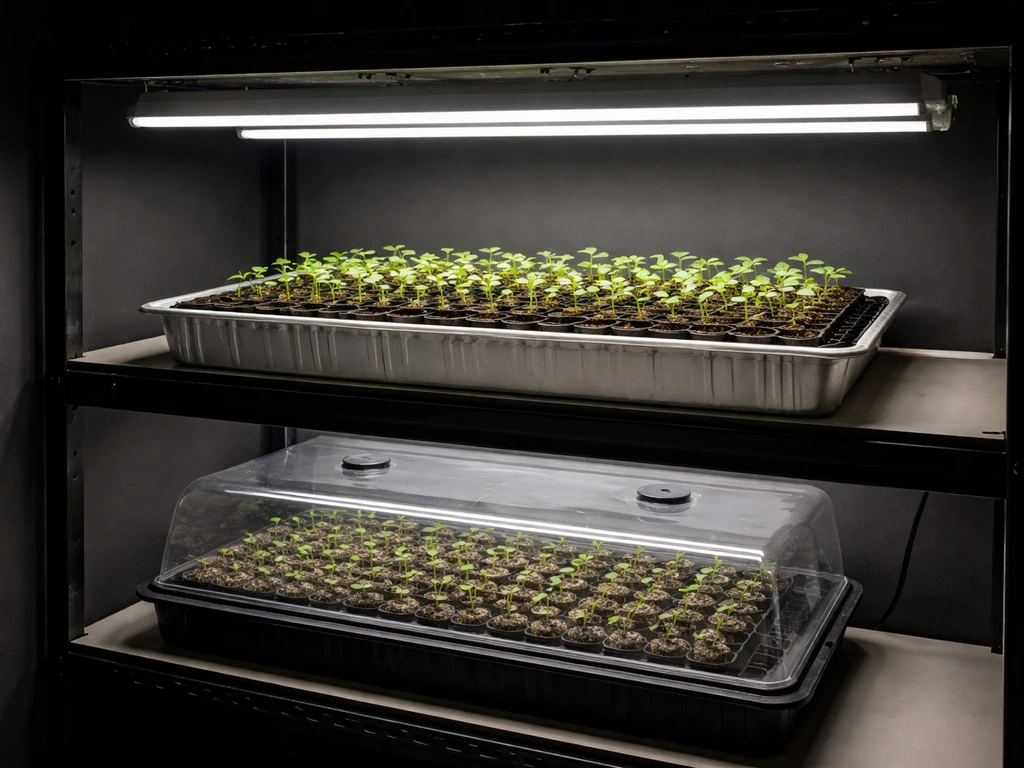
T5 LED grow tubes are popular for seedling trays, cloning racks, and microgreen production. They produce low-intensity, very uniform light across a shallow canopy, which is exactly what you want for delicate early-stage plants. The best options use full-spectrum phosphor-converted LEDs and run at low heat. They're not a flowering solution, but for propagation and veg starts, T5 LED grow lights are highly practical and much more efficient than fluorescent T5s they replace.
Grow kits, grow boxes, and full setups
Complete grow kits bundle a tent, light, ventilation, and sometimes nutrients into one purchase. They're a legitimate option for first-time growers who want to avoid compatibility headaches. The trade-off is that the included light is often a mid-tier panel that gets the job done but isn't the best available for the money if bought separately. If you're starting from zero and want simplicity, a kit makes sense. If you already have a tent and just need the light, buy the fixture separately and allocate more of your budget to it. LED grow tent kits from brands like AC Infinity and Mars Hydro typically include decent Samsung-diode lights and are worth evaluating on a component-by-component basis before buying.
Who Makes the Best LED Grow Lights: Brand Overview
The LED grow light market has consolidated around a group of brands that consistently deliver verified performance. Here's where the credible manufacturers stand in 2026.
| Brand | Country of Manufacture | Key Strengths | Best For | DLC Listed |
|---|---|---|---|---|
| HLG (Horticulture Lighting Group) | USA (designed), assembled in USA/China | High efficacy, strong warranty, active R&D | Home tents, serious hobbyists, commercial | Yes |
| Gavita (Hawthorne) | Netherlands/USA | Commercial durability, dimming precision, support ecosystem | Commercial operations, large tents | Yes |
| Spider Farmer | China | Strong value, Samsung diodes, improving certifications | Budget-to-midrange tents | Select models |
| Mars Hydro | China | Wide model range, kit bundles, decent efficacy | Beginner to mid-level tent grows | Select models |
| AC Infinity | China/USA | Strong ecosystem integration, good build quality | Hobbyists wanting smart controls | Select models |
| Sanlight | Austria | Best-in-class PPFD transparency, rigorous published data | European market, data-driven growers | Yes |
| Fluence (formerly Fluence Bioengineering) | USA | Top-tier commercial R&D, spectral engineering | Large-scale commercial, research | Yes |
| Active Grow | USA | ETL Horti certified, specialty in full-spectrum supplemental | Greenhouse supplemental, specialty crops | Yes |
HLG and Gavita are the two names that come up most consistently when commercial growers and serious hobbyists compare notes. HLG built its reputation on open-source quantum board designs and has maintained it through consistent performance upgrades. Gavita's commercial pedigree from the HPS era carried over cleanly into their LED line. Spider Farmer and Mars Hydro are the dominant value-tier players.
They've improved significantly over the past three years as Samsung LM301H diodes became commoditized. Neither matches HLG watt-for-watt on efficacy or warranty, but for a grower on a tighter budget, the gap is smaller than it used to be. Fluence serves a different market segment: large commercial, vertical farming, and research applications where spectral tuning and uniformity at scale matter more than unit price.
One thing to watch: several Chinese factories rebrand the same hardware under many different names. If you see an unknown brand with a suspiciously similar spec sheet to a Spider Farmer or Mars Hydro product at a lower price, it's likely the same PCB with a different label. That's not always bad, but you lose any brand-level warranty accountability. Stick with brands that have a real customer service track record before chasing the cheapest option.
Best Value vs. Best High-End: What to Buy for the Money
The value-versus-performance calculation has shifted meaningfully in the last two years. Budget fixtures have gotten better. Premium fixtures have gotten more expensive. The gap exists, but it's smaller than the price difference suggests in some categories.
Best value picks (under $200 for a 4x4)
The Spider Farmer SF-4000 and Mars Hydro TSW 2000 consistently land in the sub-$200 to $250 range for 4x4 coverage and deliver 2. 4 to 2. 6 µmol/J efficacy using Samsung LM301H diodes with Meanwell-equivalent drivers. These are genuinely good lights.
They're not marketing hype. The main trade-offs are warranty length (typically 3 years vs. 5 years for HLG), customer service responsiveness, and the fact that neither is DLC listed across their full product range. For a first grow or a secondary tent, these represent the best honest value in the market right now.
Cheap LED grow lights further down the price ladder do exist, but below roughly $100 for a 4x4-claiming fixture, efficacy drops significantly and you're back to unverified specs territory.
Best mid-range picks ($200 to $500)
This is where AC Infinity Cloudforge and the HLG 350R Spec live. The HLG 350R hits 2.7 µmol/J, is built in the USA, comes with a 5-year warranty, and the company publishes independent test data. It's $100 to $150 more than a Spider Farmer equivalent, and that premium is justified if you're planning to grow long-term. The AC Infinity Cloudforge panels integrate neatly with their controller ecosystem, which is a real benefit if you're running a smart tent with automated climate controls.
Best high-end picks ($500 and up)
For a 4x4 to 5x5 hobbyist tent with no budget ceiling, the HLG 650R or a Gavita 1700e LED are the benchmarks. For commercial operations, Fluence SPYDR 2p or the Gavita Pro line is where most serious facilities land. These fixtures are DLC listed, run at 2.8 to 3.1 µmol/J, and come with commercial-grade drivers and thermal management. The cost-per-gram of yield over a 5-year fixture lifespan often makes these cheaper than replacing budget fixtures twice. If you're running a 1000 watt LED grow light equivalent footprint for commercial production, the Gavita and Fluence options are where the ROI math works out over time.
Value comparison at a glance
| Tier | Example Fixture | Approx. Price (4x4 coverage) | Efficacy (µmol/J) | Warranty | DLC Listed |
|---|---|---|---|---|---|
| Budget | Mars Hydro TSW 2000 | $150–$200 | ~2.4 | 3 years | No |
| Budget | Spider Farmer SF-4000 | $200–$250 | ~2.5 | 3 years | Select models |
| Mid-range | AC Infinity Cloudforge T6 | $250–$350 | ~2.6 | 3 years | Select models |
| Mid-range | HLG 350R Spec | $300–$400 | ~2.7 | 5 years | Yes |
| High-end | HLG 650R | $550–$650 | ~2.8 | 5 years | Yes |
| High-end / Commercial | Gavita Pro 1700e LED | $700–$900 | ~2.9 | 5 years | Yes |
| Commercial | Fluence SPYDR 2p | $1,000+ | ~3.0+ | 5 years | Yes |
Where to Buy and What to Verify Before You Order
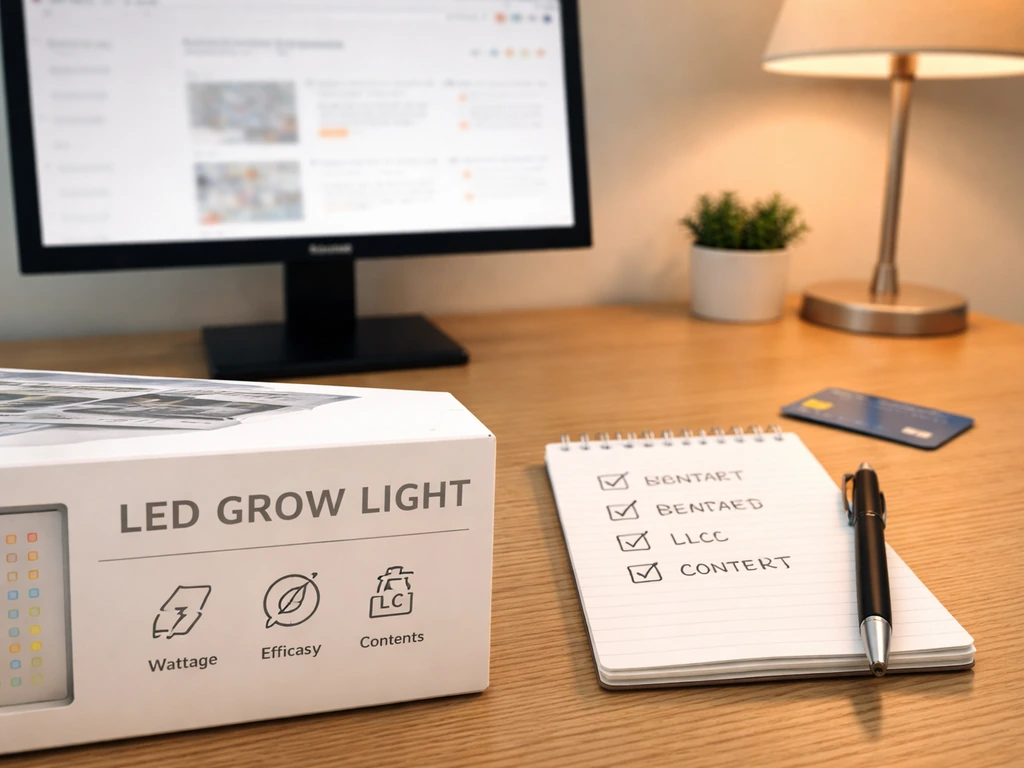
Amazon is the most convenient place to buy LED grow lights and also the most heavily gamed. Fake reviews, inflated wattage claims, and counterfeit products from legitimate brand names are all real problems on the platform. You can use Amazon safely if you follow a few rules. First, always buy from the brand's own storefront, not a third-party reseller listing.
Second, check that the ASIN matches what the brand lists on their official website. Third, cross-reference the specs against the manufacturer's spec sheet. If the Amazon listing shows a higher wattage or lumen output than the brand's own site, something is wrong. For high-value fixtures ($300+), buying directly from the manufacturer's website or from authorized distributors like BuildASoil, Growers House, or Hydrobuilder is worth the peace of mind, even if prices are marginally higher.
When evaluating any listing, run this verification checklist before purchasing:
- Confirm PPE (µmol/J) is published and matches an independent or DLC-verified figure, not just a manufacturer claim.
- Check whether the fixture appears on the DLC Horticultural QPL at dls.cleanenergyaccelerator.com (free public search).
- Look for ETL, UL, or CE safety certifications listed on the product page and verify the certification number on the certifying body's website.
- Confirm driver brand: Meanwell and Inventronics are the benchmark commercial driver brands. Generic or unnamed drivers are a longevity risk.
- Check the PPFD map or PAR data: it should show a grid of measurements across the coverage area at a specified hanging height, not just a single peak number.
- Read the warranty terms in full: 3 years is the current minimum for a reputable product, 5 years is the standard for premium fixtures. Understand the RMA process before buying.
- For Amazon purchases: verify you're buying from a fulfilled-by-brand or authorized seller listing, not a third-party re-seller with no return history.
If you're comparing a listing on Amazon to a 'for sale' ad on a growing forum or Craigslist, apply even more scrutiny. Used grow lights depreciate quickly and LEDs do degrade over time (typically 3% to 5% lumen depreciation per year at rated drive current). Ask for the fixture's hours of use and check the diodes visually for yellowing or burn marks. A used HLG at 60% of retail with 1,000 hours on it is still a reasonable buy. A used no-name panel at 40% off with no documentation is not.
One more point on spectrum verification: if you want to confirm a fixture's spectral output before committing, look for manufacturers who publish spectrometer data or PAR maps from third-party testing labs. This is standard practice among premium brands and is increasingly common even among mid-range manufacturers. If a brand has never published a spectrometer plot or an independent PPFD map for any of their products, that tells you something important about how seriously they take performance accountability.
Your Next Steps: Putting This Into Practice
Start with your space and work backward. Measure your canopy footprint, decide on your crop type, and set a target PPFD range. Then calculate the wattage you need based on 50 to 65 true watts per square foot for flowering crops, or 30 to 45 watts per square foot for veg and greens. Match that to a budget tier from the comparison table above, and prioritize fixtures that are either DLC listed or come with published third-party PPFD data.
For a standard 4x4 flowering tent in 2026, the honest recommendation is this: if you have $300 to $400, buy the HLG 350R Spec. If you have $200 to $250, buy the Spider Farmer SF-4000 or Mars Hydro FC-E3000. If you have under $200, buy the best Spider Farmer or Mars Hydro you can find in that range and accept you're getting good-not-great efficacy. Don't buy anything that can't show you a PPFD map and a PPE spec. That single rule eliminates most of the garbage on the market.
Spectrum-wise, go full-spectrum for any primary light. If you're running a dedicated veg space and want to optimize for blue-heavy spectrum to keep internode spacing tight, some manufacturers offer veg-specific spectrum variants, but a quality full-spectrum panel with a dimmer set to 70 to 80% during veg does the same job. For installation, hang the fixture at the manufacturer's recommended height for your target PPFD, use a light meter or a free PPFD app calibrated to your fixture if possible, and adjust from there. How far LED grow lights should be from plants is a question with a real answer that varies by fixture output and crop stage, so check the manufacturer's hanging height chart for your specific model rather than guessing.
Finally, thermal management matters more than most new growers expect. Even the most efficient LED fixture produces heat, and in a sealed tent that heat accumulates. Make sure your ventilation is sized to handle both the ambient heat and the fixture's thermal output. A fixture running at 600 watts will produce roughly 2,000 BTU/hr of heat regardless of how efficient it is, because all electrical energy eventually becomes heat in a closed system. That's not a reason to avoid high-power fixtures, it's just a reason to match your exhaust fan capacity to your total heat load before you turn everything on.
FAQ
If a “top rated led grow lights” listing shows high PPE, should I still worry about coverage and hanging height?
Yes. PPE and watts are device-level efficiency metrics, but PPFD at canopy level depends on distance and beam spread. Prefer fixtures that include a PPFD grid/map at a stated mounting height, then match that to your planned hanging height or adjust with a light meter to confirm edge coverage, not just the center peak.
How do I convert fixture wattage into the watts I should expect to pay for each month?
Use real draw (input watts), then multiply by hours per day and your electricity rate. Example: a 600 W fixture run 12 hours/day is 7.2 kWh/day (0.6 kW × 12). Over 30 days that’s 216 kWh before tax and rate changes. If dimming is available, the controller setting affects actual draw, so confirm power at the dim level.
What’s the biggest red flag if a light has good marketing but no DLC listing?
Lack of third-party test evidence. If the product page has no DLC status and no published PPFD map or PPE from independent testing, treat claims like watt-to-watt performance as unverified. Also watch for “equivalent HPS” phrasing without giving PPF, PPFD, or PPE numbers.
Do I need UV and far-red, or is full-spectrum enough for good results?
Full-spectrum often covers the basics, but supplemental UV and far-red can matter for certain outcomes. If you’re chasing terpene intensity or tighter morphology, look for models that explicitly state UV and far-red inclusion and provide spectrum or photo-biological intent. If you’re prioritizing yield and consistency on a budget, full-spectrum without dedicated UV/IR is usually still a solid primary choice.
Can I use two smaller “top rated led grow lights” instead of one large fixture?
Often yes, and it can improve uniformity. Two fixtures allow better grid coverage, especially in 4x8 and 5x5 footprints, and reduce the distance extremes that can happen with a single big unit. Just ensure the manufacturer’s PPFD map supports overlapping coverage, or test with a meter at canopy height after installing.
What dimmer range should I look for in a tent light?
A useful dimmer should maintain spectral and output consistency, not just reduce current blindly. Check whether the manufacturer provides dimming percentages and whether PPFD changes track proportionally. For veg, dimming to roughly 70 to 80% is common, but confirm your target PPFD with a grid or meter because some fixtures dim less predictably.
Are “quantum board” lights always better than bar-style lights?
Not automatically. Quantum boards often excel in cost and clean coverage for common tent sizes, while bar-style fixtures can deliver even distribution over larger or commercial footprints. The deciding factor is verified PPFD coverage at your canopy level plus real PPE and good thermal design, not the name of the form factor.
How accurate are PPFD apps and free tools for verifying light output?
They can be directionally useful, but accuracy varies by sensor calibration and whether the app is calibrated for your exact spectrum. For best results, use a true PPFD meter when possible, or confirm the app reading by comparing it to manufacturer PPFD map targets for the same hanging height and dim setting.
What does LED “degradation” mean, and should I buy new or used?
It means output slowly drops over time at rated drive current, commonly estimated around a few percent per year depending on thermal stress and driver behavior. Used lights can be fine if they have documentation and reasonable hours, but verify condition and request age, total runtime, and prior dim settings. Also assume warranty may not transfer depending on the brand.
If I’m buying on Amazon, how can I avoid counterfeit or wrong-spec products?
Buy from the brand’s own storefront, verify the ASIN matches the brand’s official listing, and cross-check PPE, PPF, and any PPFD map availability against the manufacturer’s spec sheet. If the Amazon page inflates wattage or output compared with the manufacturer’s site, skip it, since that mismatch often signals incorrect or re-labeled hardware.
What warranty length matters most for top rated LED grow lights?
Warranty plus service quality. A longer warranty (for example, 5 years) is valuable, but only if the company actually replaces drivers and boards reliably and responds quickly. For budget brands with shorter coverage, consider whether you can afford a potential replacement during a multi-year tent operation.
How do I choose target PPFD if I switch crops or grow in stages?
Use a crop-stage plan. Many growers run a lower PPFD for vegetative growth and step up for flowering or push phases, rather than keeping one constant setting. If you switch crops, re-check recommended PPFD ranges and then recalibrate hanging height or dimmer settings to hit canopy targets before the transition.
Next Articles
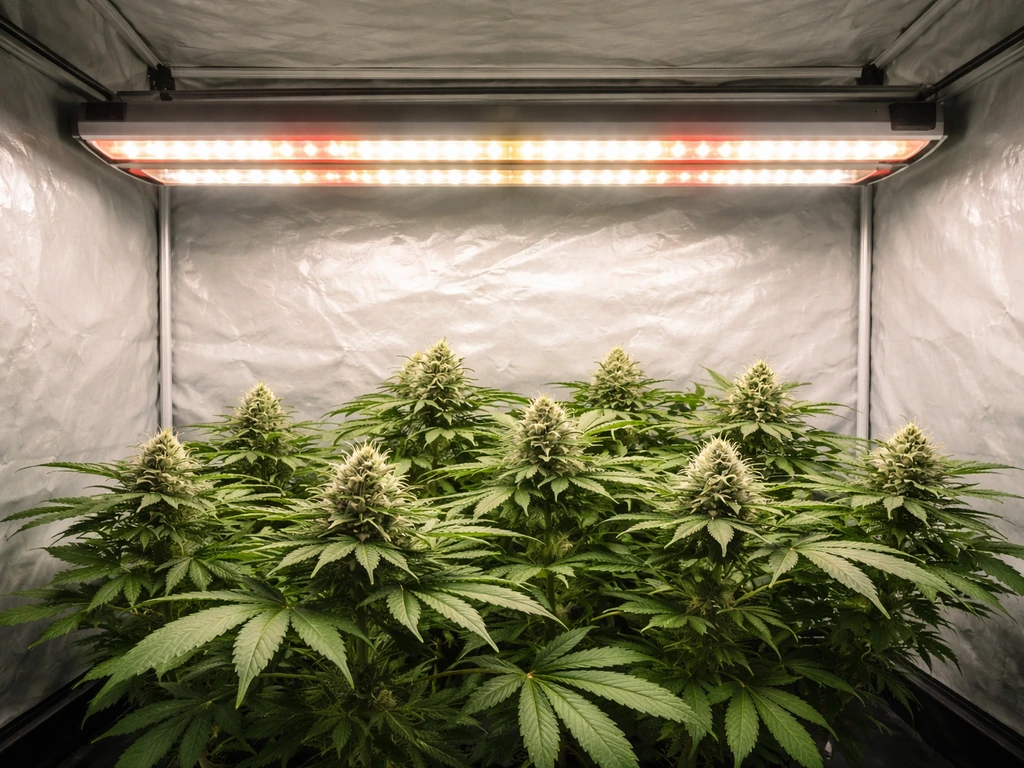
Best Full Spectrum 1000W LED Grow Lights: Buyer Guide
Buy the best full spectrum 1000W LED grow light with spec-to-decision tips on PPFD, coverage, wattage, and tent fit.
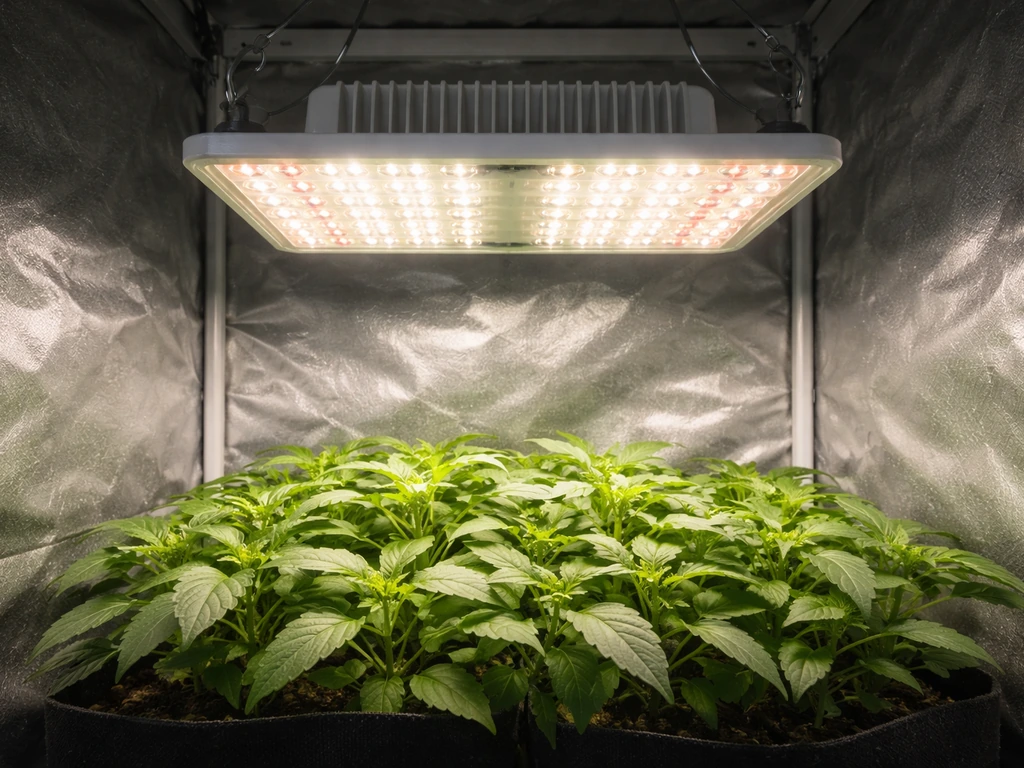
Best 100W LED Grow Light: How to Choose the Right One
Choose the best 100W LED grow light with PPFD coverage, spectrum, efficiency, dimming, heat, and setup tips.
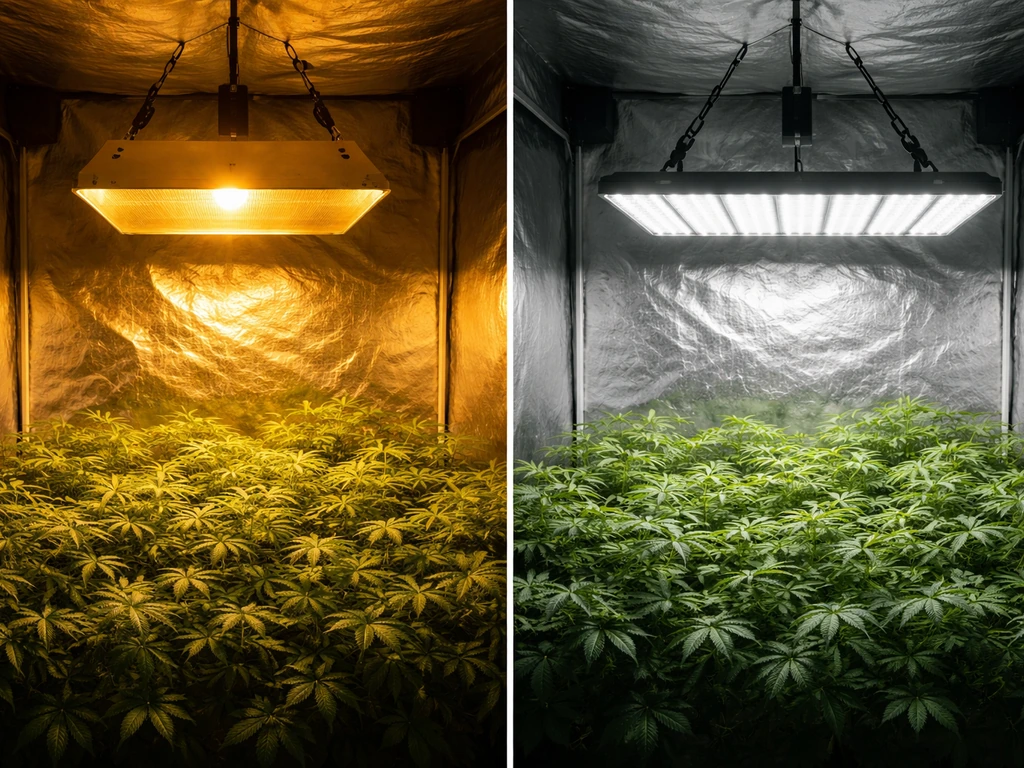
Best LED Grow Light to Replace 1000W HPS: Sizing Guide
Sizing and buying guide to replace a 1000W HPS with the right LED using PPFD, layout, mounting, and spectrum for yields.