A top-shelf LED grow light is not the most expensive one in the catalog. It's the one that delivers verified photon output, holds its spectrum over multiple grow cycles, covers your canopy evenly, and runs cool enough that it doesn't become your biggest heat problem. If you can confirm those four things with real numbers, you're looking at a top-shelf fixture. If a brand can't show you independent lab data, walk away.
Top Shelf LED Grow Lights: Buyer Guide and Specs Checklist
Marcus Rutherford
9 Apr 2026
What "top shelf" actually means in LED grow lights
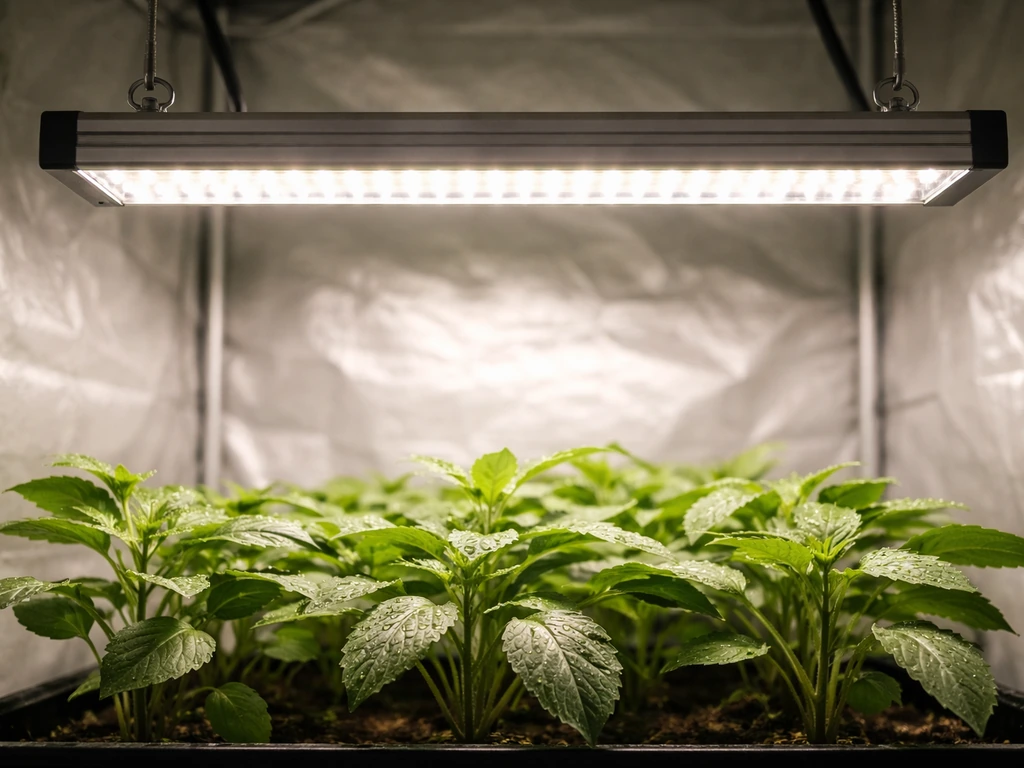
The phrase gets thrown around constantly, but it has a measurable definition if you know what to look for. A top-shelf LED grow light checks off all of the following: high photosynthetic photon efficacy (PPE, measured in µmol/J), independent third-party testing, a quality driver (Meanwell or equivalent), a thermal design that keeps diode junction temperatures low, a spectrum backed by spectral quantum distribution (SQD) data rather than vague color labels, dimming or control capability, and a warranty that actually means something.
The efficacy number is the fastest filter. Budget lights from three years ago were hitting 2.0 to 2.3 µmol/J. Today, anything worth calling top shelf should clear 2.7 µmol/J, and the best fixtures are pushing 2.9 to 3.1 µmol/J. The Spider Farmer SE5000, for example, is rated at a PPE of 2.9 µmol/J with a PPF of 1420 µmol/s for a 4x4 footprint. Those are numbers you can verify and compare directly. That's what top shelf looks like on paper.
Build quality matters just as much as diode specs. Top-shelf fixtures typically carry IP65 or IP66 ratings for moisture resistance, ETL or UL listing for electrical safety, and drivers that are rated for the operating temperatures your grow room will actually see. Some premium bar-style systems advertise IP66 and ETL/UL compliance, but always verify the specific fixture and driver ratings rather than assuming the whole unit shares the same rating as one component. Marketing copy loves to use component ratings as if they apply to the whole system.
Spectrum labeling is another area where "top shelf" gets diluted. Listing colloquial color names like "red," "blue," and "white" tells you almost nothing useful. Reputable manufacturers publish spectral quantum distribution data in standardized formats (aligned with TM-33-18), which lets you see exactly what wavelength bins you're getting and in what proportions. If a brand's spec sheet just says "full spectrum" with a stock rainbow graphic, that's a red flag regardless of price.
Matching the light to your space
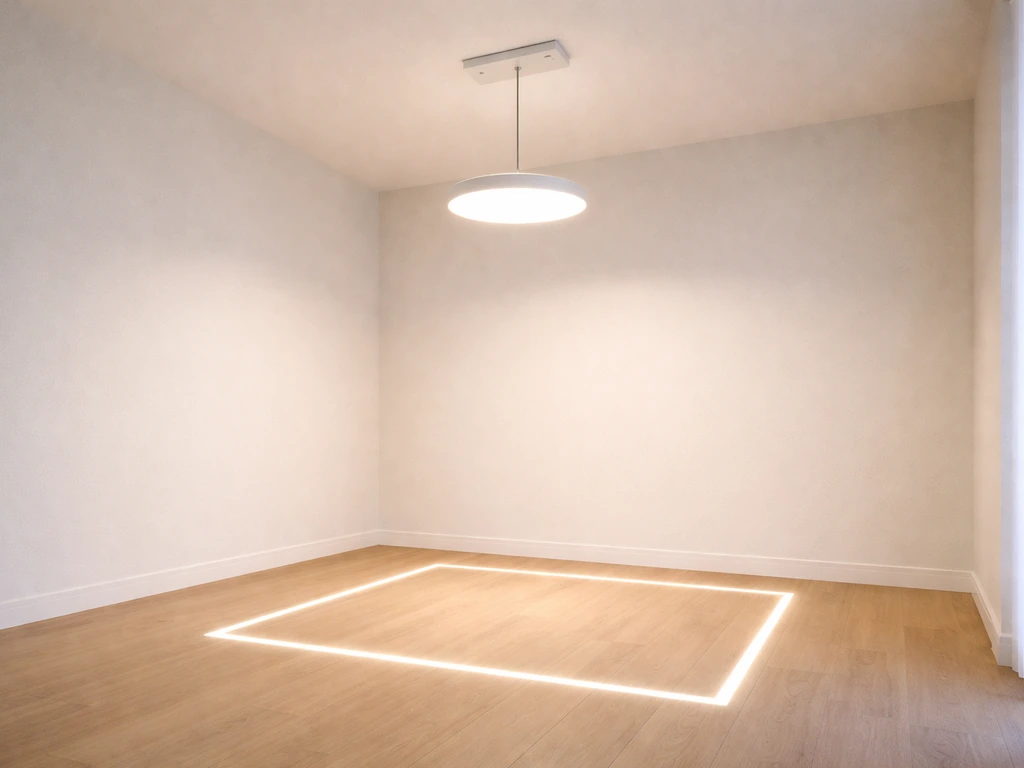
Coverage is the number one spec buyers get wrong. Manufacturers list a "coverage area" that is almost always the maximum footprint at a generous hanging height with dimmed output. Real flowering coverage is smaller. A light rated for a 5x5 at full output and 24 inches might only deliver adequate PPFD for a 4x4 canopy when you tighten the hanging height and push to full power during flower. Plan your purchase around your flowering footprint, not your veg footprint.
Here's how to think about wattage-to-coverage as a starting point. These are real-draw watts, not "equivalent" watts, paired with the flowering footprint they reliably cover at 2.5 to 2.9 µmol/J efficiency.
| Tent/Space Size | Target Real-Draw Watts | Target PPF (µmol/s) | Recommended Light Type |
|---|---|---|---|
| 2x2 (4 sq ft) | 100–150W | 270–400 µmol/s | Single compact panel or small bar |
| 2x4 (8 sq ft) | 200–250W | 540–700 µmol/s | Single bar or mid-size panel (e.g., Mars Hydro SP-3000 at 727 µmol/s) |
| 3x3 (9 sq ft) | 250–300W | 675–820 µmol/s | Single mid-size bar or panel |
| 4x4 (16 sq ft) | 400–500W | 1100–1420 µmol/s | Single large bar or dual mid-size (e.g., SE5000 at 1420 µmol/s) |
| 4x8 (32 sq ft) | 800–1000W | 2200–2800 µmol/s | Two large bars or commercial bar array |
| 5x5 (25 sq ft) | 600–700W | 1650–1900 µmol/s | Large bar array or single high-output panel |
These are flowering targets. For veg, you can run 30 to 50 percent less intensity, which is exactly why dimming capability matters so much. A light you can dial back to 50 percent for seedlings and ramp up to full for late flower is worth far more than one that runs at a fixed output.
The specs that actually matter (and how to read them)
PPF, PPFD, and efficacy
PPF (photosynthetic photon flux, in µmol/s) is the total photon output of the fixture. PPFD (photosynthetic photon flux density, in µmol/m²/s) is what lands on your canopy at a specific distance. Manufacturers love to advertise peak PPFD numbers taken at the center of the canopy at close range. That number can be two to three times higher than the average PPFD across your full canopy. What you want is average PPFD at your intended hanging height across the full footprint. Uniformity matters just as much as peak intensity. The Mars Hydro SP-3000, for example, specifically claims enhanced PPFD uniformity and edge-to-edge distribution for a 2x4 footprint, which is the right claim to make. Ask for the PPFD map, not just the peak number.
Efficacy (PPE, µmol/J) is your operating cost metric. A fixture drawing 480W at 2.5 µmol/J puts out 1200 µmol/s. The same draw at 2.9 µmol/J gives you 1392 µmol/s. Over a 12-hour flowering cycle, 365 days a year, that efficiency difference compounds into real money and real plant performance. Always calculate PPF divided by real-draw watts to verify the efficacy claim yourself.
Spectrum and spectral reporting
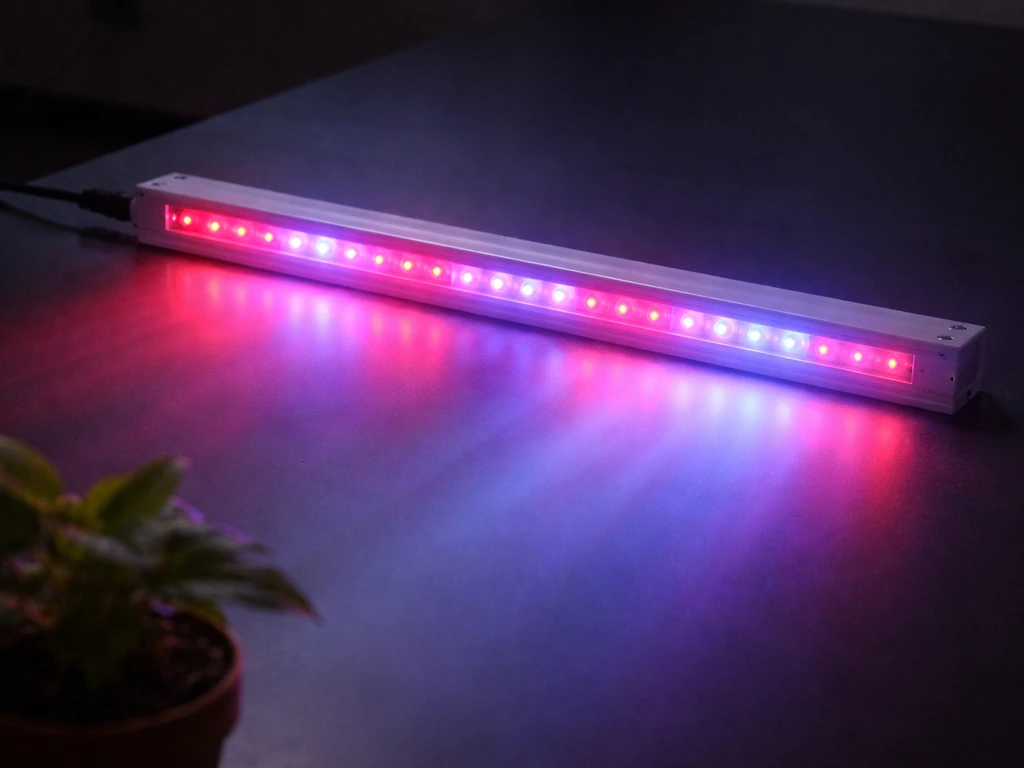
Plants respond most to red wavelengths (roughly 630 to 680 nm) for photosynthetic growth, while blue (400 to 500 nm) drives morphology and can influence secondary metabolite production. Research on light quality and plant response consistently points to red as the primary growth driver. A top-shelf full-spectrum fixture delivers a red-dominant output with sufficient blue for plant structure and spectrum completeness. The ratio matters, and you can only evaluate it properly with wavelength bin data from standardized testing, not a marketing graphic.
Independent testing and certifications
This is where most buyers skip a critical step. Performance claims should be backed by ANSI/IES LM-79 testing, which is the fixture-level photometric test standard that DLC (DesignLights Consortium) horticultural qualification requires. LM-79 measures total PPF, photosynthetic photon intensity distribution (PPID), and spectral quantum distribution at a snapshot in time. For long-term output projection, IES TM-21 takes LM-80 LED chip test data and projects depreciation (like L70, the point at which output drops to 70 percent). Reputable manufacturers use independent certified laboratory testing rather than in-house measurements. Philips' guidance on evaluating LED grow light performance claims says it plainly: check whether the numbers come from independent certified labs, and ask specifically about photon flux depreciation rather than relying on marketing lifetime numbers.
Driver quality and dimming
The driver is the component most likely to limit your fixture's useful life. Meanwell HLG-series drivers are the industry benchmark for horticultural LED applications. They run cool, handle wide input voltage ranges, and are rated for 50,000+ hours of operation. Dimming capability (0 to 10V or PWM) lets you match light intensity to growth stage and manage heat load. A fixture without dimming is a significant limitation for a multi-stage grow room. Some top-tier systems add daisy-chain control or app-based scheduling, which matters more the larger your setup gets.
Matching light to grow stage and plant type
Not all growth stages need the same photon intensity, and running full power during seedling stage is one of the most common mistakes new growers make. Here's a practical framework by stage.
- Seedling/clone (0–2 weeks): 100–200 µmol/m²/s PPFD. Dim to 20–30 percent output. Hanging height 24–30 inches. Full-spectrum light is ideal; keep blue content present for compact internodal spacing.
- Early veg (weeks 2–4): 200–400 µmol/m²/s PPFD. Dim to 40–60 percent. You can drop hanging height incrementally as the canopy fills.
- Late veg (weeks 4–8): 400–600 µmol/m²/s PPFD. 60–80 percent output. Red-dominant spectrum supports faster vegetative development.
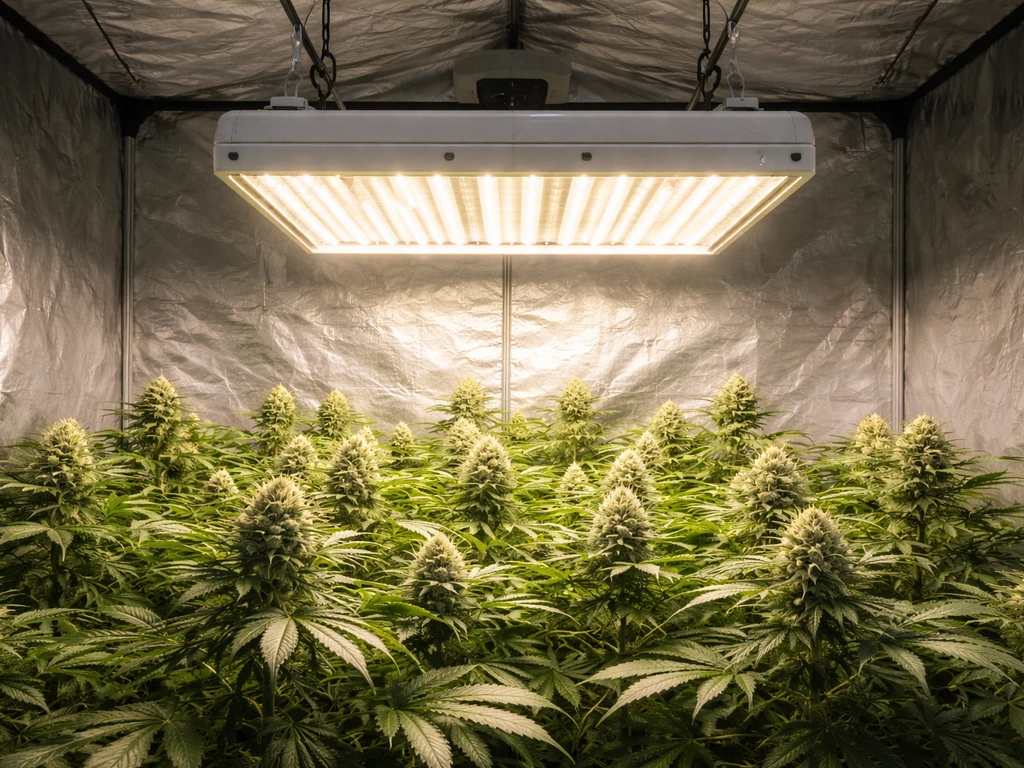
- Flower (weeks 1–8+): 600–900 µmol/m²/s PPFD average across canopy. Full or near-full output. Lower hanging height to 16–20 inches depending on fixture. Mars Hydro recommends starting at 20 inches for SP-series and moving to 16 inches by peak flower.
- Late flower/ripening: Some growers reduce blue and increase red emphasis or add UV/far-red supplemental lighting. If your fixture has spectrum control, this is where it earns its cost.
For plants that are particularly sensitive to light intensity (like cannabis in flower or tomatoes setting fruit), always work from a PPFD map rather than a coverage-area label. The Spider Farmer SE-Series user manual explicitly frames hanging height guidance around target PPFD by growth stage, which is the right approach. Coverage should never be treated as a static wattage-to-tent rule.
If you're running a mixed garden with seedlings and mature plants in the same space, you need either separate lighting zones or a fixture with strong enough dimming granularity to manage different sections. Alternatively, a well-designed bar-style LED grow light lets you spread bars across the canopy and adjust individual bars for more uniform intensity across mixed-height plants.
Installation, hanging height, and heat management
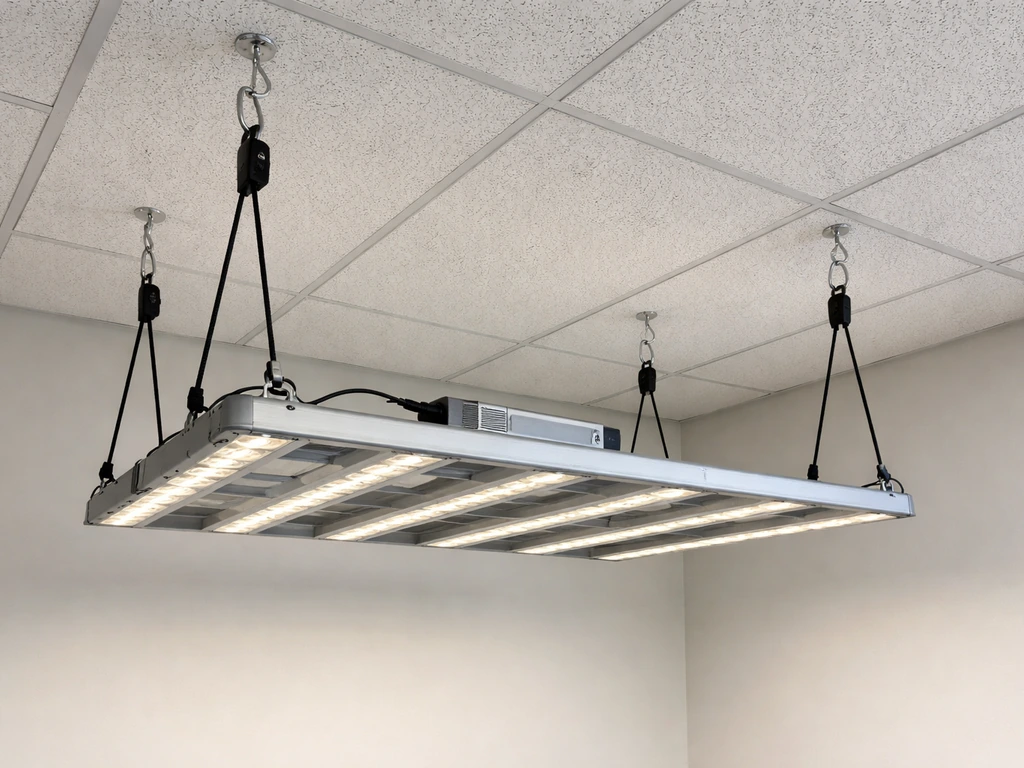
Installation mistakes cause more underperformance than spec problems do. Here's what to get right from the start.
- Use adjustable rope ratchets rated for at least twice your fixture weight. Bar arrays can weigh 15 to 30 pounds and get heavier with any added accessories. Don't use zip ties or single anchor points.
- Start at the manufacturer's recommended hanging height, then use a PAR meter to map your actual canopy PPFD before committing to a height for the full cycle.
- Manage heat at the fixture level first. Top-shelf bars and panels use passive aluminum heatsinks with fin designs that dissipate heat without fans. If your fixture runs hot to the touch on the heatsink, check your ambient temperature and air circulation before blaming the light.
- Canopy temperature is more critical than air temperature. Keep canopy temps between 75°F and 85°F (24°C–29°C) for most flowering crops. If your fixture raises canopy temps above 85°F, raise the hanging height or add airflow before increasing intensity.
- Power circuit planning: a 480W fixture at 120V draws roughly 4 amps. A 1000W bar array draws about 8.5 amps at 120V. Plan your circuit loads with 20 percent headroom. Running at 90 percent of breaker capacity continuously causes failures and creates safety hazards.
- Verify your specific fixture's IP rating and ETL/UL listing before installing in a humid environment. Don't assume the driver's IP rating covers the whole fixture enclosure.
- For tents larger than 4x4, consider your light distribution pattern before buying. A single large panel concentrates intensity at the center. A bar array spreads it more evenly. Uniformity is critical for canopy consistency.
Buying mistakes that are easy to avoid
These are the errors I see most often from buyers comparing high-end options for the first time.
- Buying on "equivalent watts": There is no standard definition for equivalent watts in LED marketing. Only actual power draw in watts matters. If a brand advertises a "1000W equivalent" without listing actual draw, that's a hard pass.
- Trusting peak PPFD instead of average PPFD: A 1500 µmol/m²/s center reading sounds impressive. If the edges of your canopy are getting 400 µmol/m²/s, your plants are not getting uniform light and your yield will show it.
- Ignoring depreciation: A fixture rated at 2.9 µmol/J at hour zero might be at 2.4 µmol/J after 20,000 hours without good LED quality and thermal management. Ask about LM-80 data and TM-21 projections if you're buying for multi-year use.
- Over-lighting seedlings and clones: Running full power during propagation causes light stress, stretching (paradoxically, from attempting to shade), and bleaching. Dim the light or raise it significantly during early stages.
- Skipping the uniformity check: A PPFD map from the manufacturer should show a gradient from center to edge. If they don't publish one, ask. If they won't provide it, treat performance claims skeptically.
- Mixing spectrum without a plan: Adding UV or far-red supplemental lighting can genuinely improve terpene profiles and yield, but randomly mixing spectrum sources without knowing your baseline PPFD and spectrum recipe creates unpredictable results.
- Assuming DLC listing means top-shelf performance: DLC listing means a fixture met baseline testing requirements. It's a floor, not a ceiling. A DLC-listed fixture at 2.5 µmol/J and a top-shelf fixture at 2.9 µmol/J are not the same thing, even though both are listed.
How to compare options and make a decision today
When you're ready to compare specific fixtures, run through this checklist in order. It filters out bad options fast and surfaces the real contenders quickly.
- Confirm actual power draw (watts): not equivalent, not max theoretical. Real watts at the wall.
- Calculate or verify PPE (µmol/J): divide published PPF by actual draw. Anything below 2.5 µmol/J is not top shelf by today's standards.
- Check for independent LM-79 test data or DLC horticultural listing: this confirms PPF and PPID numbers were measured under credible, standardized conditions.
- Request or find the PPFD map for your specific tent size and target hanging height: look at uniformity across the footprint, not just peak center values.
- Verify spectral data: look for wavelength bin reporting or SQD data, not just a "full spectrum" label or a rendered graphic.
- Confirm driver brand and dimming capability: Meanwell HLG is the benchmark. Dimming range should cover at least 10–100 percent.
- Check IP rating and safety certifications (ETL/UL) for your environment: especially important for high-humidity tents.
- Review warranty terms: top-shelf manufacturers offer 3 to 5 year warranties on fixtures and drivers. Anything under 2 years on a premium-priced light is a warning sign.
- Ask about LM-80/TM-21 data if multi-year performance matters to you: this tells you how fast the fixture's output will depreciate over time.
For a 4x4 flower tent today, the Spider Farmer SE5000 at 480W actual draw, 1420 µmol/s PPF, and 2.9 µmol/J PPE is one of the strongest spec-for-spec options available and fits the checklist above well. For a 2x4 setup, the Mars Hydro SP-3000 (727 µmol/s PPF, strong uniformity claims for the 2x4 footprint, and clear hanging height guidance) is a solid match. Both are well-documented and have manufacturer guidance you can actually use for setup.
If you're still working through which style of fixture fits your space, comparing panels versus bars is a worthwhile detour before committing. A good starting point is reviewing top LED grow lights across different form factors and wattages to see how specific models stack up on the same specs before you narrow down to one.
The bottom line: top-shelf LED grow lights are defined by verifiable numbers, not price tags or brand reputation. Get the PPE, get the PPFD map, confirm independent testing, and match the light to your actual flowering footprint. Do those four things and you won't over-light, under-light, or waste money on a fixture that looks impressive in a spec sheet but underdelivers in your tent.
FAQ
Do I need a PPFD map from the manufacturer, or is the coverage area and peak PPFD enough?
Coverage labels and center-of-canopy peak readings are usually optimistic, especially as you move away from the middle. Ask for an average PPFD and uniformity data at your intended hanging height, or request a PPFD map for the full footprint, then verify it matches your flowering target rather than veg targets.
How can I sanity-check a claimed PPE (µmol/J) without relying on marketing spreadsheets?
Compute it from the fixture’s real-draw watts and reported PPF (PPE approximates to PPF divided by watts). If a brand reports PPE but uses an unverified watt number, that mismatch is a red flag. Also confirm whether the PPF and watts are measured at the same dimming level and operating conditions.
What dimming range is actually useful for seedlings and late flower?
Look for control that lets you run materially lower than full output, not just a minor reduction. Practical targets are often around half output for early stages and near full for late flower, but the key is granular, stable dimming (0 to 10V or PWM) plus clear guidance for mapping your stage goals to PPFD.
Do I need LM-79 and TM-21 specifically, or will any “certified testing” be fine?
LM-79 is the relevant fixture-level snapshot standard, and TM-21 is how manufacturers justify lumen and photon depreciation projections over time (for example, reaching L70). If they only provide chip-level data or vague lifetime claims, you cannot reliably compare sustained performance across brands.
Are IP65 or IP66 ratings enough for a humid grow room?
Those ratings help, but you still need to verify the entire fixture and all openings, including drivers and cable entry points, are rated for moisture exposure. Also check if the manufacturer specifies safe operating temperatures for the driver, since condensation and heat can combine to shorten useful life.
How do I interpret warranty and “lifetime” claims for top shelf LED grow lights?
Pay attention to what the warranty covers (driver, LEDs, labor) and the duration, not just the existence of a long period. If the warranty does not align with the depreciation curve they cite from TM-21, you may still see significant performance drop before warranty coverage ends.
If two lights have the same footprint rating, why do they still perform differently in real grow tents?
Footprint ratings are usually based on ideal assumptions like hanging height and output level. Differences in diode efficiency, optical design, and the ability to maintain uniform PPFD at the edges often cause one fixture to “meet target” while the other undershoots, even with similar PPF.
What’s the most common mistake when using multiple fixtures in one space?
Overlapping lights can create hotspots if you focus on peak PPFD instead of average and uniformity across the full canopy. Use staging and PPFD maps to set spacing and dimming, and avoid running all fixtures at the same intensity when plant heights vary.
How should I choose between a panel and a bar-style fixture for top shelf results?
Panels often simplify coverage planning for uniform canopies, while bar-style systems can be easier to zone and fine-tune across mixed heights because individual bars may be adjustable. If you expect seedlings and mature plants together, prioritize dimming granularity and adjustability over a marketing-based “coverage” label.
Should I worry more about photon output or temperature ratings for diode and driver longevity?
Both matter, but temperature affects long-term output stability. Ensure the thermal design is tied to real operating conditions, not just lab ambient assumptions, and verify driver operating temperature ratings. A cooler-running fixture can better preserve efficiency and reduce early performance drops.
What do I do if the brand provides LM-79 numbers but no guidance on setup height?
Without hanging height guidance tied to target PPFD by growth stage, your “best case” setup can turn into under-lighting or edge fade. Request the manufacturer’s recommended distances or the PPFD map at your distance, and if they cannot provide it, treat the light as harder to dial in and riskier for your specific tent.
Next Articles
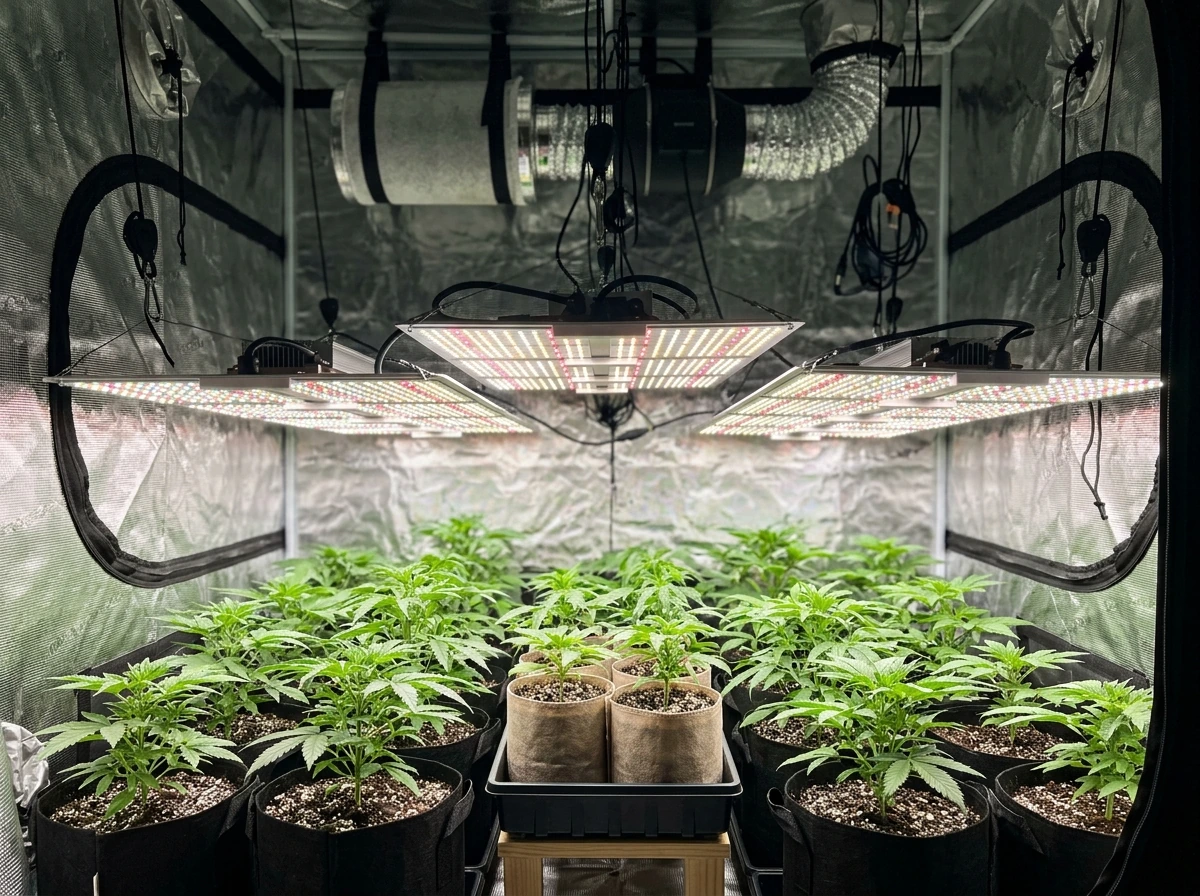
Top LED Grow Lights: How to Choose Best Models for Your Setup
Choose top LED grow lights with PAR, coverage, spectrum, watts, heat, dimming and warranty, plus best model picks by set
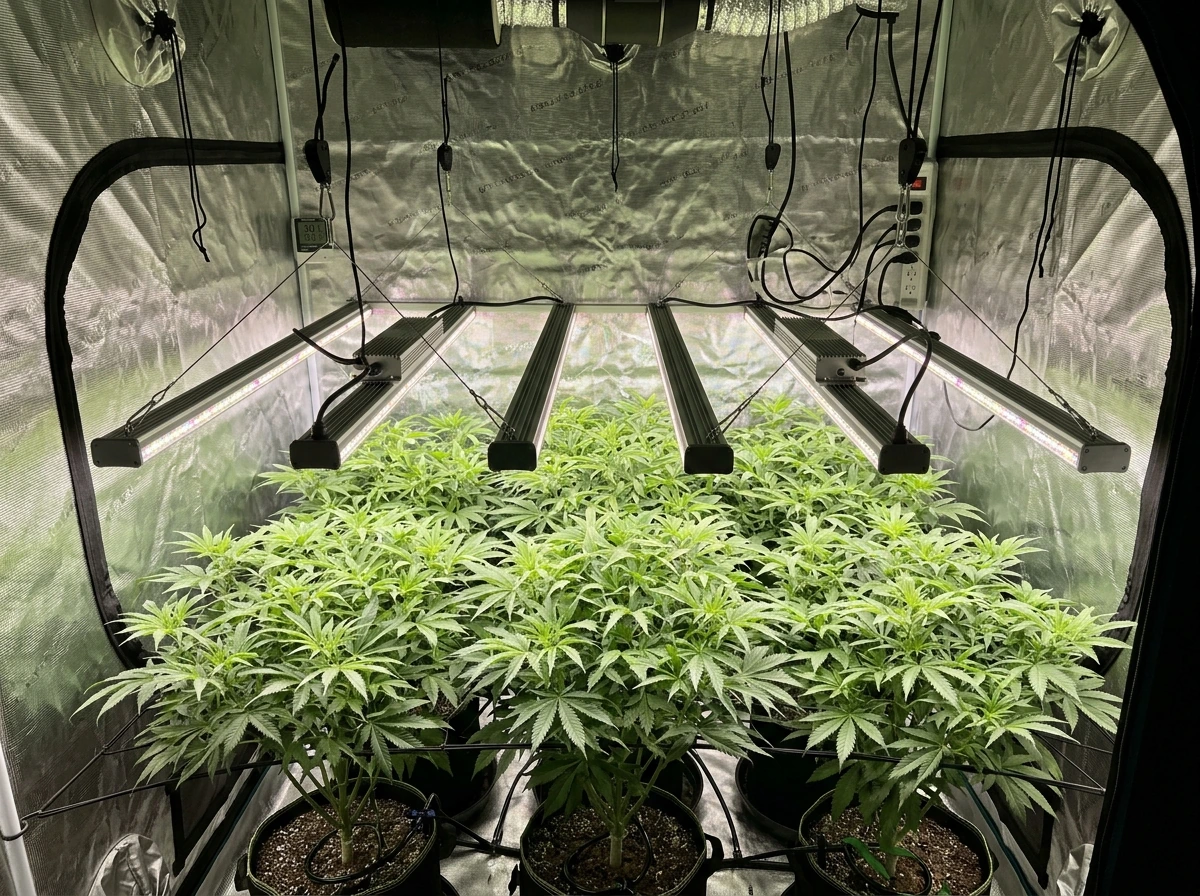
Best Bar LED Grow Lights: Buying Guide by Tent Size and PPFD
Pick the best bar LED grow lights by tent size and PPFD, with practical specs, sizing, and installation tips.
Best 1000 Watt LED Grow Light Guide: Coverage, PPFD, Setup
Choose the best 1000W LED grow light with PPFD, true coverage, setup height, and buying tips for your tent size