
The best 400W LED grow light for most home growers is one that delivers a verified PPF (total photon output) above 1,000 µmol/s, a fixture efficiency (PPE) of at least 2. 5 µmol/J, reliable 0–10V dimming, and a certified driver from a known brand like Mean Well or Sosen. Fixtures like the FloraFlex 400W (PPF: 1,080 µmol/s, PPE: 2. 7 µmol/J) and PerfectPar V400W (PPE: 2.
Best 400 Watt LED Grow Light: Top Picks and Buying Guide
Marcus Rutherford
5 Apr 2026
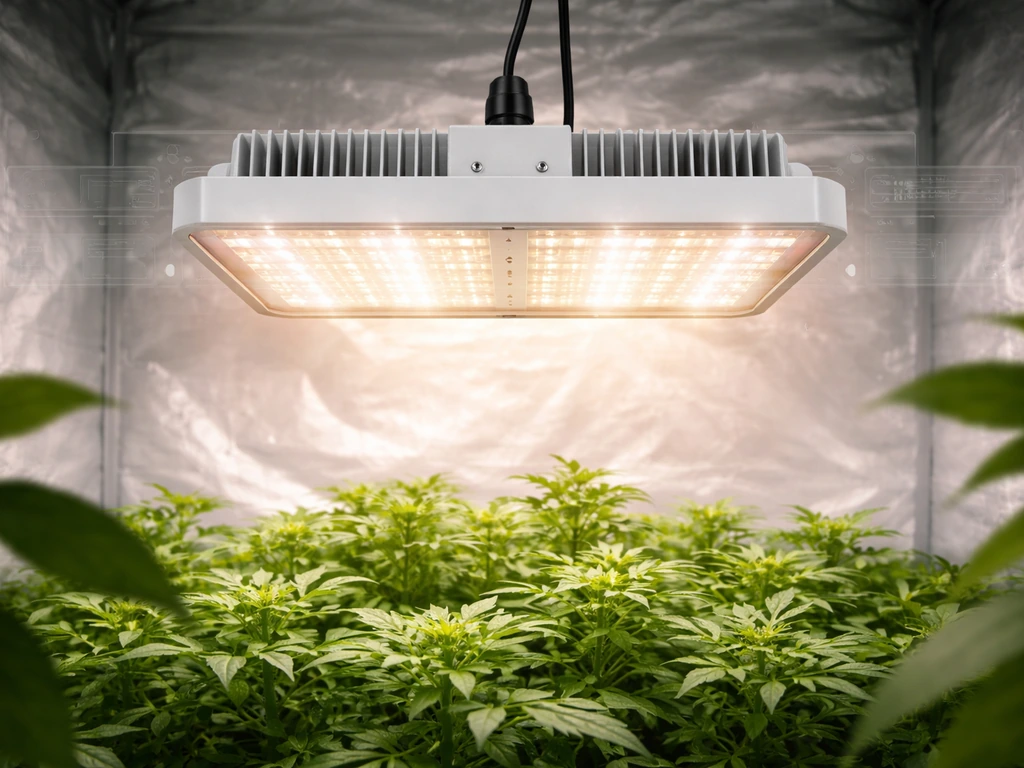
6 µmol/J, PPFD: 1,050 µmol/m²/s) hit that target and come with UL and DLC certifications that budget units rarely have. If you are searching for the best 400w led grow light and want a direct answer: match the fixture's verified PPFD output to your canopy footprint, prioritize efficiency over wattage claims, and do not buy based on lumen ratings.
What to look for in a 400W LED grow light
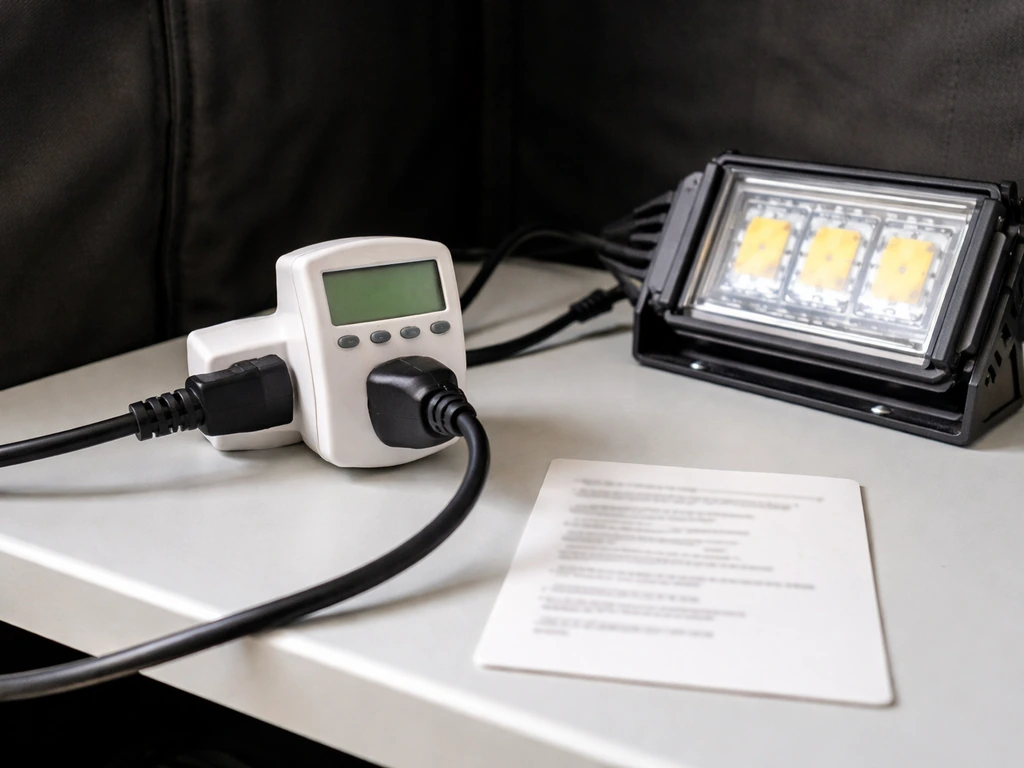
Watts are almost useless as a buying signal on their own. A fixture marketed as 400W might draw anywhere from 340W to 460W at the wall, and two lights at the same wattage can have wildly different photon outputs depending on the diodes, driver, and optics. The specs that actually predict real results are PPF, PPE, PPFD distribution, driver quality, and certifications.
PPF and PPE: the numbers that actually matter
PPF (Photosynthetic Photon Flux) measures the total photons the fixture emits per second in µmol/s. PPE (Photosynthetic Photon Efficacy) measures how efficiently the fixture converts electricity into those photons, expressed as µmol/J. For a 400W-class light, you want PPF above 1,000 µmol/s and PPE at or above 2.5 µmol/J. The FloraFlex 400W hits 1,080 µmol/s PPF and 2.7 µmol/J PPE. The PerfectPar V400W comes in at 2.6 µmol/J. These are the benchmarks. Anything below 2.0 µmol/J in 2026 is a red flag, regardless of the marketing copy. As GrowersHouse points out, using science-forward metrics like PPFD, efficacy, and PAR maps is how you avoid getting ripped off on LED grow lights.
PPFD uniformity across your canopy
PPFD (Photosynthetic Photon Flux Density) is what actually lands on your plants at canopy height. A fixture can have a high total PPF but still produce hot spots and dim corners if its optics are poorly designed. Good uniformity means the PPFD spread across your footprint is consistent enough that all plants receive adequate light, not just those directly under the center. Always ask for or download the manufacturer's PPFD map at your expected mounting height.
ION Lighting even provides a dedicated PPFD one-pager PDF for their 400W fixture, showing measured values at specific heights and a labeled PPFD distribution, which is exactly the kind of documentation you should expect from any serious brand. PPFD uniformity, not peak brightness, determines whether your canopy produces evenly.
Driver quality, dimming, and safety certifications
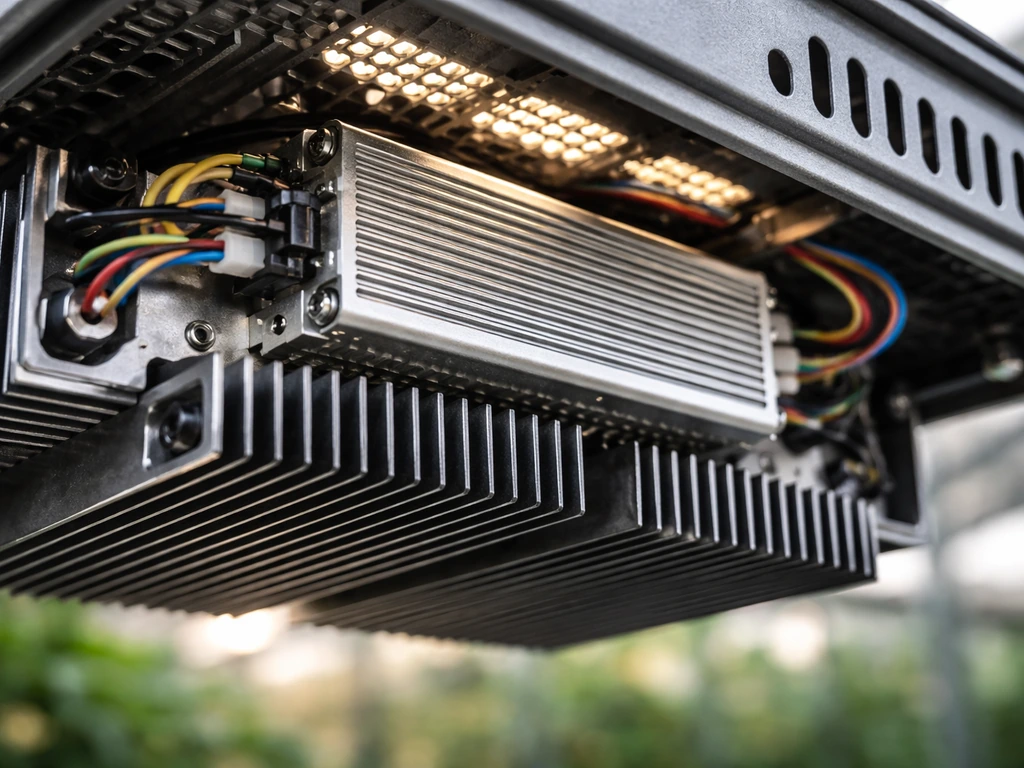
The driver is the component most likely to fail first in a cheap fixture. A quality driver from Mean Well's XLG series or similar professional families includes: power factor above 0. 95 at max load, total harmonic distortion (THD) below 15%, surge protection rated at 4–6kV, and genuine 0–10V (or PWM) dimming.
The Lumen King 400W Eco Line lists 0–10V dimming with RJ inputs and references ETL/DLC/UL certifications and a MeanWell/Sosen driver, which is the kind of spec sheet transparency you should expect. The FloraFlex 400W goes further, with DLC, UL 8800, and UL 1598 certifications listed on the product page. [UL 8800 builds on ANSI/UL 1598](https://code-authorities. ul.
com/about/inspection-resources-for-code-authorities/cannabis-extraction-equipment/indoor-horticulture-lighting-a-budding-industry/) for horticultural lighting by adding construction and environmental-resistance requirements and by including photobiological safety evaluation for optical injury risk. UL Solutions notes that UL 8800 is the UL Standard for horticultural lighting equipment and systems, and it is referenced as a requirement for products to qualify for the DLC Horticultural Qualified Products List.
These are not just stickers; they indicate the fixture has been tested by third parties for electrical safety and performance claims. A vague 'CE certified' label with no specific standard cited is not equivalent.
Spectrum: full-spectrum vs targeted
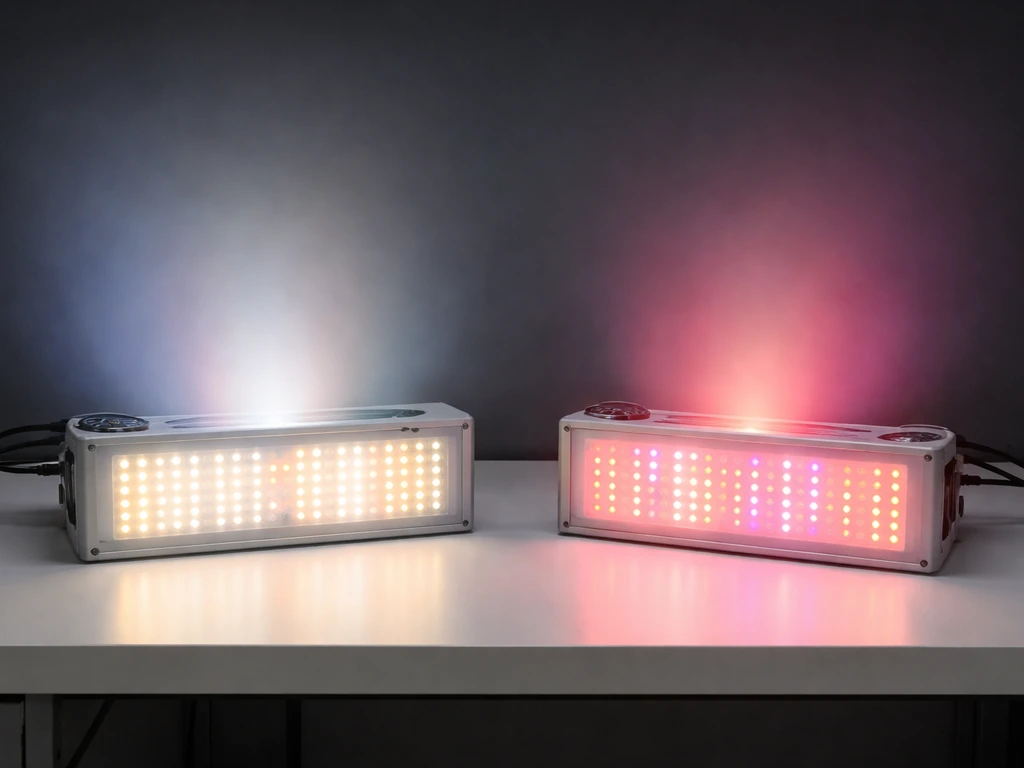
Most modern 400W LEDs use a broadband white phosphor approach that covers roughly 400–700nm with peaks in the blue and red ranges, plus some green and far-red. This full-spectrum approach works across veg and flower without swapping the fixture. Some lights add targeted deep red (660nm) or far-red (730nm) diodes to push flowering response. Understand what your crop actually needs before buying a 'specialized' light. If you are growing one crop type exclusively and want to optimize for it, a targeted spectrum can help. If you run mixed crops or rotate strains, full-spectrum is more practical.
Top picks: best 400W LED grow lights by grow type and budget
These recommendations are based on verified specs, driver quality, certifications, and real-world performance data, not manufacturer claims alone. The 400W class sits between the flexibility of best 300 watt LED grow light options and the heavier output of 500W-plus fixtures. It is the sweet spot for a single 4x4 tent run at optimal PPFD.
| Fixture | True Draw | PPF (µmol/s) | PPE (µmol/J) | Dimming | Certifications | Best For |
|---|---|---|---|---|---|---|
| FloraFlex 400W (277V) | ~400W | 1,080 | 2.7 | 0–10V | DLC, UL 8800, UL 1598 | Commercial/serious hobbyist, 4x4 |
| PerfectPar V400W | ~400W | ~1,040+ | 2.6 | Yes | Listed | Performance-focused home grower |
| Lumen King 400W Eco Line | ~400W | Listed | Listed | 0–10V, RJ | ETL, DLC, UL | Budget-conscious with cert requirements |
| PhotonTek X 465W Pro | ~465W | 1,256 | 2.7 | Yes | Listed | High-output single-tent premium build |
| HyPhotonFlux HPF4000 (~480W) | ~480W | ~1,296+ | 2.7 | Yes | Listed | Pushing max yield in a 4x4 or 5x5 |
For budget growers: the Lumen King 400W Eco Line is the safest budget play because it actually lists certifications and a named driver, which most cheap fixtures avoid. For performance: the FloraFlex 400W is the strongest true 400W option with the most transparent spec sheet and third-party certifications. For those willing to go slightly over 400W for more headroom, the PhotonTek X 465W Pro at 1,256 µmol/s PPF and 2.7 µmol/J efficacy is worth the premium, especially since it maintains efficiency across dimming levels.
Full-spectrum vs specialized: what actually works in veg and flower
Full-spectrum LEDs (broadband white with red supplementation) are the practical choice for 90% of growers. They cover the full PAR range (400–700nm), support both vegetative and flowering stages without any hardware change, and modern versions can hit 2.7 µmol/J efficiency. The era of 'blue for veg, red for flower' is largely over for home growers. If you want to dig into how color temperature affects vegetative growth, the comparison of best 6500K LED grow lights is worth reading, since cooler color temperatures can push tighter internodal spacing during veg.
Specialized flowering lights typically emphasize red (620–660nm) and far-red (700–740nm) output. Research supports that higher red ratios can accelerate flowering and improve DLI accumulation during bloom, but the practical yield difference versus a well-designed full-spectrum light in a correctly dialed environment is smaller than most marketing suggests. Where specialized spectrum matters more is in commercial operations running single-stage crop production where every percentage point of yield counts. For home growers running photoperiod or autoflowering strains through full cycles, full-spectrum is simpler and delivers excellent results.
Coverage and layout: tent size, mounting height, and spacing
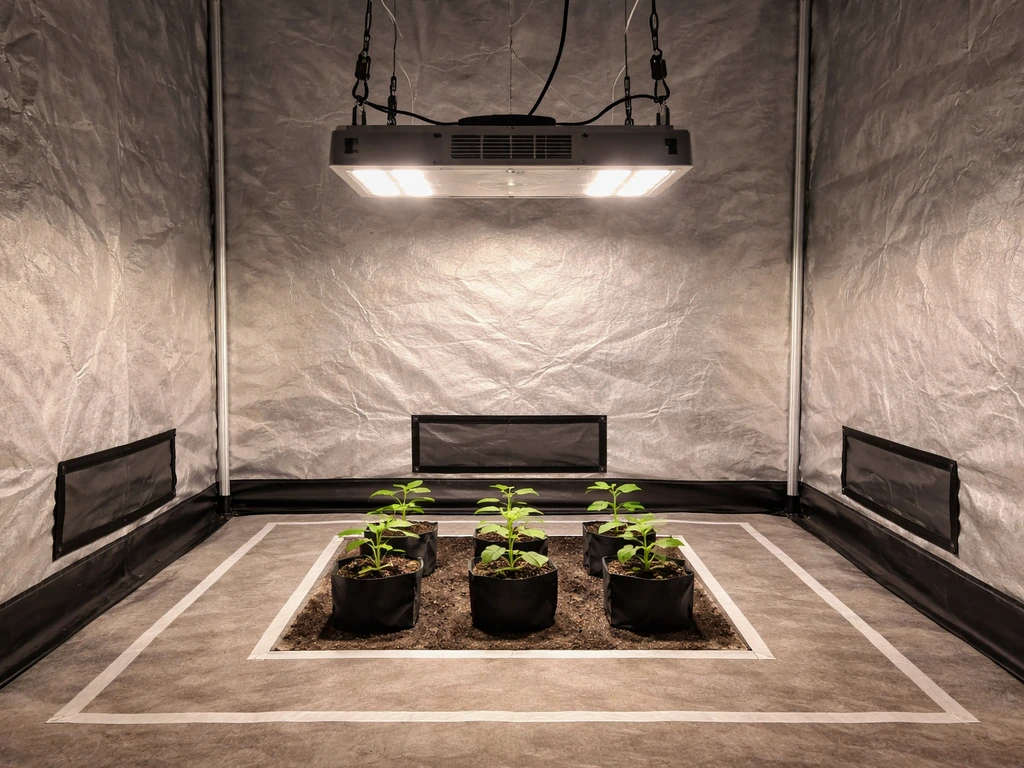
A properly driven 400W LED is designed to cover a 4x4 foot (1.2x1.2m) canopy footprint for flowering, or up to a 5x5 foot footprint for vegetative growth where PPFD requirements are lower. At flower stage, you want 600–1,000 µmol/m²/s at canopy level. At veg stage, 400–600 µmol/m²/s is the target range. Mounting height controls both coverage area and PPFD intensity: raise the light to spread coverage and reduce PPFD; lower it to increase PPFD and tighten the footprint.
For a 400W fixture over a 4x4 tent, standard mounting heights run 18–24 inches above canopy for flowering and 24–30 inches for veg. Always cross-reference the manufacturer's PPFD map at your planned height. The HyPhotonFlux HPF4000 (a 480W-class reference) claims an average PPFD of 1,300 µmol/m²/s at 12 inches over a 4x4 footprint, which is useful as a ceiling-end benchmark; a true 400W light at the same distance will deliver somewhat less, which is why height adjustment is essential.
Multi-light spacing in larger areas
If you are covering a space larger than a 4x4, a single 400W light is not enough. If you need more headroom for a larger space, compare the best 500 watt led grow light options instead of trying to stretch a 400W setup too far. Two 400W lights side by side cover a 4x8 or 5x8 footprint effectively for flower.
Spacing them evenly across the width of the tent and aiming for a center-to-center distance roughly equal to the recommended coverage width of each fixture gives you better uniformity than pushing one light to cover too large an area. For 5x5 or 5x10 grow spaces with higher yield ambitions, stepping up to a best 500 watt LED grow light may be the cleaner solution than trying to stretch a 400W unit.
Real-world efficiency and what to expect from electricity and heat
Real-world measurements often differ from spec sheets. Migrolight's independent review of the Spider Farmer SF4000 (marketed around 400W-class) measured 438W actual draw at the wall and an average PAR of 644 µmol/m²/s in a 4x4 area, calculating system efficiency of about 2.06 µmol/J. This is a real example of how 'wall watts' can exceed listed watts and how real-world PPE can fall below the headline figure. Take manufacturer efficiency claims as a ceiling, not a guarantee.
Electricity cost estimate
At 400W of actual draw running an 18/6 light schedule (18 hours per day), you are consuming about 7. 2 kWh per day. At a US average of $0. 16/kWh, that is roughly $1.
15 per day, or around $35 per month per fixture. Under a 12/12 flowering schedule, it drops to about 4. 8 kWh/day, closer to $23–24 per month. These are useful baseline numbers for budgeting, especially if you are comparing whether to run one 400W light or step up to a <a data-article-id='23509B2A-7E14-4EE4-A33C-E112C29CE588'>best 600 watt LED grow light</a> for a larger space. If you are upgrading beyond a 400W setup, choosing the best 600 watt LED grow light can give you more headroom for coverage and target PPFD.
If you are considering a bigger footprint or higher headroom, also compare this with the best 600 watt led grow light so you can balance coverage and power draw.
Heat output and thermal management
Modern high-efficiency 400W LEDs reject less heat than their HID equivalents, but they still add meaningful thermal load to a small tent. A 2. 7 µmol/J fixture at 400W input converts roughly 30–40% of input energy to heat inside the grow space. In a 4x4x6.
5 foot tent without active exhaust, temperatures will climb significantly. Plan for inline fan exhaust sized for your tent volume, and expect to run it more aggressively during lights-on periods. Some commercial fixtures like Senmatic's FL300 use active cooling with optical lenses specifically to manage thermal output per watt, which is a design approach worth noting when comparing passive-heatsink versus active-cooling LED fixtures.
Passive heatsink designs (the most common in 400W bar-style LEDs) work fine in well-ventilated tents; they struggle in sealed rooms without supplemental cooling.
Buyer checklist and mistakes to avoid
Before you click buy, run through this checklist. It covers the most common buying errors at the 400W level.
- Verify the PPF (µmol/s) and PPE (µmol/J) from a third-party test or detailed spec sheet, not just the product listing headline.
- Check for real certifications: DLC, UL 8800, UL 1598, or ETL. A 'CE' label alone means little for horticultural LED safety.
- Confirm the driver brand (Mean Well, Sosen, or comparable) and dimming type (0–10V or PWM is the standard to look for).
- Download or request the PPFD map at your planned mounting height and compare it against your canopy footprint.
- Calculate actual electricity draw at the wall, not the 'equivalent' or 'replaces X HID watts' marketing language.
- Match coverage claims to your specific growth stage: a 5x5 veg footprint shrinks to a 4x4 flowering footprint for the same fixture.
- Check surge protection specs on the driver: 4–6kV is the standard for professional-grade fixtures.
Common mistakes that cost growers money
- Buying based on wattage alone: two 400W lights with different PPE values will produce very different results. Watts tell you electricity cost, not plant output.
- Oversizing coverage: running a 400W light over a 5x5 or 6x6 footprint during flower drops PPFD below what most crops need for productive bloom.
- Undersizing and burning: mounting a 400W light too close to a small canopy (under 12 inches for most fixtures) risks bleaching and heat stress.
- Ignoring dimming during early stages: seedlings and clones need 200–400 µmol/m²/s, not full power. A light without reliable dimming forces you to raise it impractically high.
- Assuming 'full spectrum' means optimal spectrum: check the actual spectral distribution chart. Some 'full spectrum' LEDs have weak red output that underperforms in flower.
- Skipping the PPFD map: uniformity varies hugely between fixtures. A light with great average PPFD but poor uniformity will produce uneven canopies.
If you are debating between a 400W and a slightly smaller build, the best 300W LED grow lights are a meaningful step down in canopy coverage, better suited to 3x3 tents and smaller. Do not force a 300W into a 4x4 for flower and expect full results.
Setup tips: installation, dimming, and the first week of dialing in
Physical installation
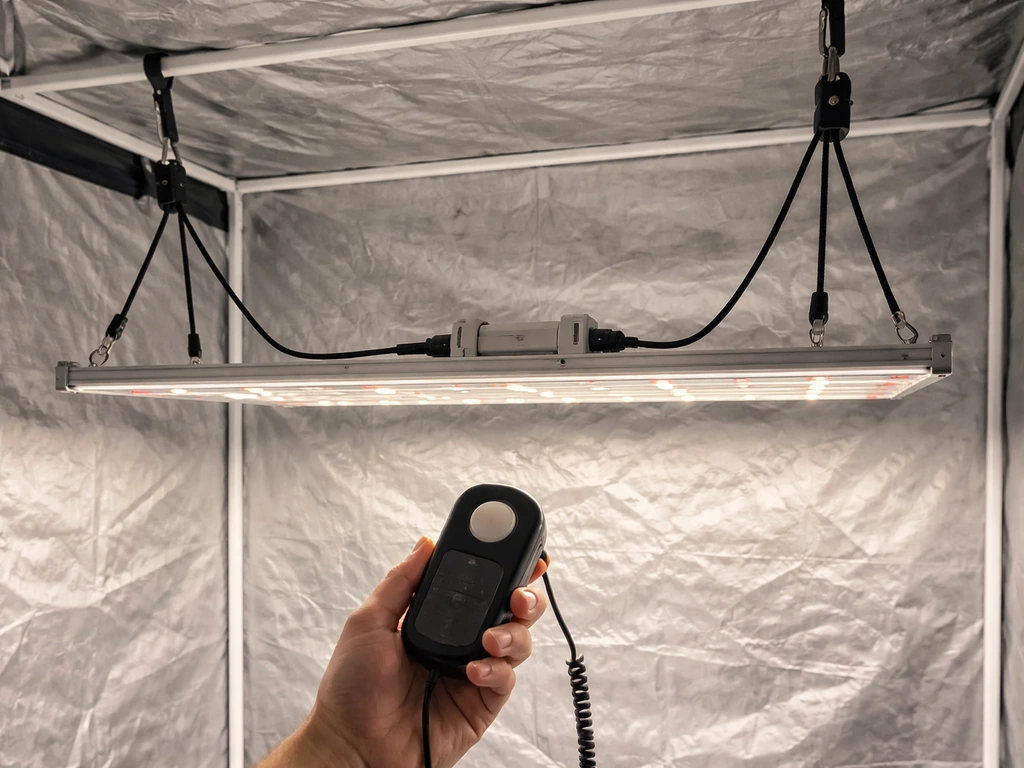
Bar-style and quantum board 400W fixtures almost always hang via adjustable ratchet straps or rope ratchets from the top poles of a grow tent. Mount the fixture level: uneven mounting creates uneven PPFD distribution across the canopy. For a 4x4 tent, center the light over the footprint. If your tent is a 4x8 and you are using two 400W lights, space them evenly at roughly 24 inches from each sidewall, not pushed together in the center.
Dimming: start low, ramp up
Even if your plants are established, do not blast them with 100% output from day one after installing a new fixture. Run at 50–60% output for the first three to five days and watch for any light stress signs: upward leaf curl, bleaching near the top of the canopy, or rapid wilting mid-cycle. Once plants have adjusted, step up to 75% and then full power over the following week. Most quality 400W fixtures with 0–10V dimming hold their PPE efficiency across the dimming range, which is one reason driver quality matters. A poor driver drops efficiency disproportionately when dimmed, costing you photons and money.
First-week dial-in checklist
- Measure actual canopy-level PPFD with a PAR meter or sensor if available. Compare against the manufacturer's PPFD map for the same height.
- Check tent temperature during peak lights-on hours. Target 75–82°F (24–28°C) at canopy for most crops. Adjust exhaust fan speed accordingly.
- Monitor VPD (vapor pressure deficit) alongside temperature, since higher light intensity raises canopy temperature and changes VPD.
- If running 0–10V dimming via controller, test the full dimming range: confirm the light responds smoothly from minimum to maximum without flickering.
- After the first week at dialed-in height and power, take a visual scan of canopy uniformity. If outer plants are noticeably darker green or stretching, the fixture may need to be lowered or the dimmer raised.
For growers who eventually want to scale up, it is worth knowing where the 400W class sits in the broader wattage ladder. If you outgrow a single 400W tent and want to step up significantly, reviewing a best 1500W LED grow light option makes sense for larger commercial-scale rooms. Alternatively, UK growers comparing mid-range options may find value in checking what is available as a best 600W LED grow light in the UK market before committing to a 400W build.
The 400W LED class is mature enough in 2026 that there are genuinely excellent options at multiple price points. The key is skipping past marketing brightness claims and focusing on verified PPF, PPE, a certified driver, and a PPFD map that matches your tent footprint. Get those four things right and a 400W LED will consistently outperform any HID equivalent it replaces while running cooler, cheaper, and longer.
FAQ
Can I trust the “400W” label, or should I verify actual wall draw before buying?
Verify wall draw if the listing does not include a real measured input range, especially for bar-style budget units. If you cannot find a review that measures watts at the wall, treat any low-efficiency PPE claim as unreliable and plan for higher-than-expected electricity use when you run at full output.
What PPFD target should I use when my plants are at different heights in the tent?
Use your tallest and average canopy heights to bracket PPFD, not just the mean. If plants vary a lot, favor mounting height and dimming that bring the top leaves into target range, then accept that lower plants will receive less, because uniformity is limited more by canopy leveling than by the light’s peak numbers.
Do I need a separate spectrum supplement (far-red) for flower with a best 400 watt led grow light?
Usually no if you choose a full-spectrum fixture with an included far-red channel or a spectrum mix that supports flowering PAR. If you want a far-red boost, prefer adjustable far-red (or separate channel control) so you can add it only late in bloom, rather than permanently changing the whole light program.
How important is 0–10V dimming versus just using the light at full power?
Dimming matters because it can reduce light stress during early adjustments and maintain coverage across crop stages without changing hardware. If a fixture claims dimming but does not specify a driver type or genuine 0–10V behavior, efficiency may drop when dimmed, so look for spec-sheet transparency and confirm it is not “dimming by reducing power” only.
If the manufacturer provides a PPFD map, at what mounting height should I evaluate it?
Evaluate it at the exact height you will run in your setup, including any hanging slack from ratchet straps and the fixture’s stated reference point. Small height differences can change PPFD significantly, so do not use a map from a different distance or assume it stays the same when you raise or lower the light.
What’s the practical difference between total PPF and the usable PPFD on my canopy?
PPF is total photons leaving the fixture, while PPFD is what your plants actually receive at canopy level. Two fixtures with similar PPF can produce different coverage due to optics, and the “best” one for your tent footprint is the one whose PPFD distribution matches your canopy area, not the one with the highest total PPF.
Is it better to buy one 400W light and stretch coverage, or use two lights for a larger tent?
For flower, two 400W lights is usually better than pushing one light to cover too much area because you improve uniformity and reduce extreme hot spots and dim corners. As a rule, if you would exceed the fixture’s recommended footprint by a lot, step up the light count or move to a higher wattage system that matches your area.
How do I decide between full-spectrum and “flower-focused” models for home growers?
Pick full-spectrum if you run the same fixture across veg and bloom or rotate multiple crop types, because it reduces setup complexity. Choose flower-focused only if you can control channels and you understand how much your specific cultivar benefits, since many home yield gains depend more on PPFD, DLI, and environment than on small spectrum differences.
Will a passive 400W LED be enough, or do I need active cooling for my tent size?
Passive heatsinks can work if your tent has real airflow and you avoid sealed-room conditions. If your tent tends to run hot, plan on inline exhaust sized for your tent volume, because heat buildup can reduce performance and raise stress for your plants, especially during long lights-on schedules.
What should I look for in certifications if I see both “UL” and “DLC” listed, but the details are vague?
Prefer listings that name specific standards (for safety and performance) and show a driver from a reputable manufacturer. A generic “CE” label without cited standards is weaker for safety assurance, and “DLC” references without clear fixture-family identification are harder to verify.
How should I ramp power after installing a new best 400 watt led grow light?
Start at roughly half to 60% for the first few days, then increase to around 75%, and reach full output after plants show stable leaf posture and no bleaching. If you see upward leaf curl or top canopy bleaching, back off immediately and extend the adjustment period, since photostress can appear within days, not weeks.
What are common mistakes that cause poor results with a 400W LED even when specs look good?
The biggest mistakes are wrong mounting height (not matching the PPFD map), uneven mounting (crooked hang or inconsistent center placement), using lumen-based estimates, and ignoring real uniformity across the footprint. Also avoid pairing a high-efficiency fixture with a poorly ventilated tent, since heat can indirectly limit how well your environment supports that light.
How do I estimate electricity cost for my schedule if my actual wall draw differs from the label?
Use measured wall draw if possible, then multiply by hours per day and your local kWh rate. If you only have a marketing wattage, assume real draw may be higher, then budget using an “at full power” estimate for your highest-intensity periods, since dimming often changes both output and efficiency.
Next Articles
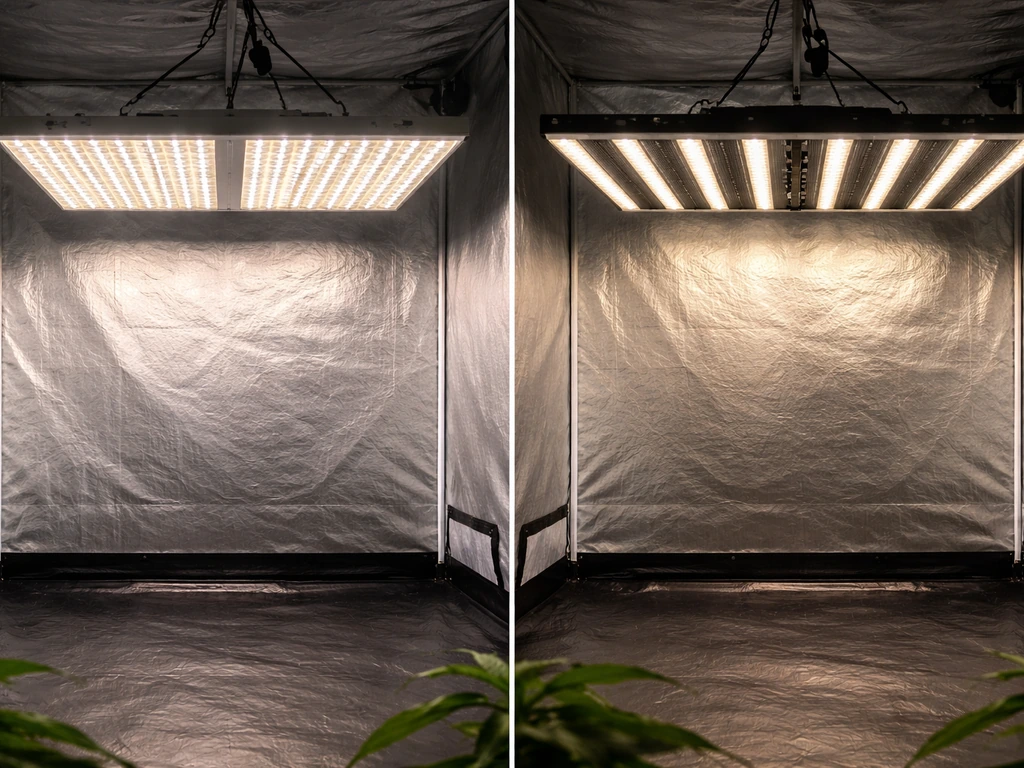
Best 600 Watt LED Grow Light: Buyer Guide and Setup Tips
Compare the best 600W LED grow lights by true power, PPFD coverage, spectra, dimming, and setup height for your tent.
Best Full Spectrum 1000W LED Grow Lights: Buyer Guide
Buy the best full spectrum 1000W LED grow light with spec-to-decision tips on PPFD, coverage, wattage, and tent fit.
Best 100W LED Grow Light: How to Choose the Right One
Choose the best 100W LED grow light with PPFD coverage, spectrum, efficiency, dimming, heat, and setup tips.