
The best 4ft LED grow light for most home growers right now is a full-spectrum bar-style fixture hitting at least 2.5 µmol/J efficiency, with proper 0–10V dimming, a reliable driver like Mean Well HLG series, and a PPFD map that proves real canopy coverage across a 4x4 footprint. If that sentence already makes sense to you, jump to the picks section. If you want to know why those specs matter before you spend $200–$1,000, read on.
Best 4ft LED Grow Light: Buyer Guide for 4x4 Tents
Marcus Rutherford
6 Apr 2026
How to choose the best 4ft LED grow light: specs that actually matter
Wattage is the number manufacturers love to shout, but it is almost meaningless on its own. A 600W fixture with poor-quality LEDs will underperform a 400W light with premium diodes and a better driver. The number that actually predicts your harvest is efficacy, measured in micromoles of photons per joule (µmol/J). Anything above 2.5 µmol/J is competitive in 2026. Mammoth Lighting's 6 Bar and 8 Bar Mint White series both publish efficacy values around 2.8 µmol/J, which is strong for the price class. HLG's Universal Supplement Light reaches 3.07 µmol/J, which is about as high as consumer-grade fixtures get right now.
After efficacy, the next most important spec is PPFD uniformity. Center hotspots are common with single-point fixtures, but bar-style 4-footers spread photons more evenly across the canopy. The catch is that some brands measure PPFD in a tiny 3x3 tent, where wall reflections inflate the edge readings and make coverage look better than it is. Mammoth Lighting explicitly gathers its PPFD data in a 5x5 tent to reduce reflection artifacts, which gives you a more honest picture of what the light actually delivers at your canopy in a real 4x4 grow space.
Dimming quality is the third thing I check. You want 0–10V or 1–10V analog dimming built into the driver, not a cheap PWM controller bolted on afterward. Mean Well HLG-series drivers support multiple dimming methods including 1–10V and PWM depending on the variant. One critical warning: standard AC triac dimmers, like the kind you might use on a wall switch at home, are not compatible with HLG-series drivers. Buy the right controller for your driver, or you risk damaging both.
Finally, look at safety certifications and IP rating. IP65 is the minimum I'd accept for a grow tent where humidity regularly hits 60–80%. IP66 is better if you're running a more aggressive wet environment. UL 8800 or ETL listing confirms the fixture has been evaluated for horticultural lighting safety standards, which matters both for your insurance and your peace of mind.
Best 4-foot LED grow light picks by grow style and budget
Best full-cycle pick for a 4x4: VOLT Grow VL-1
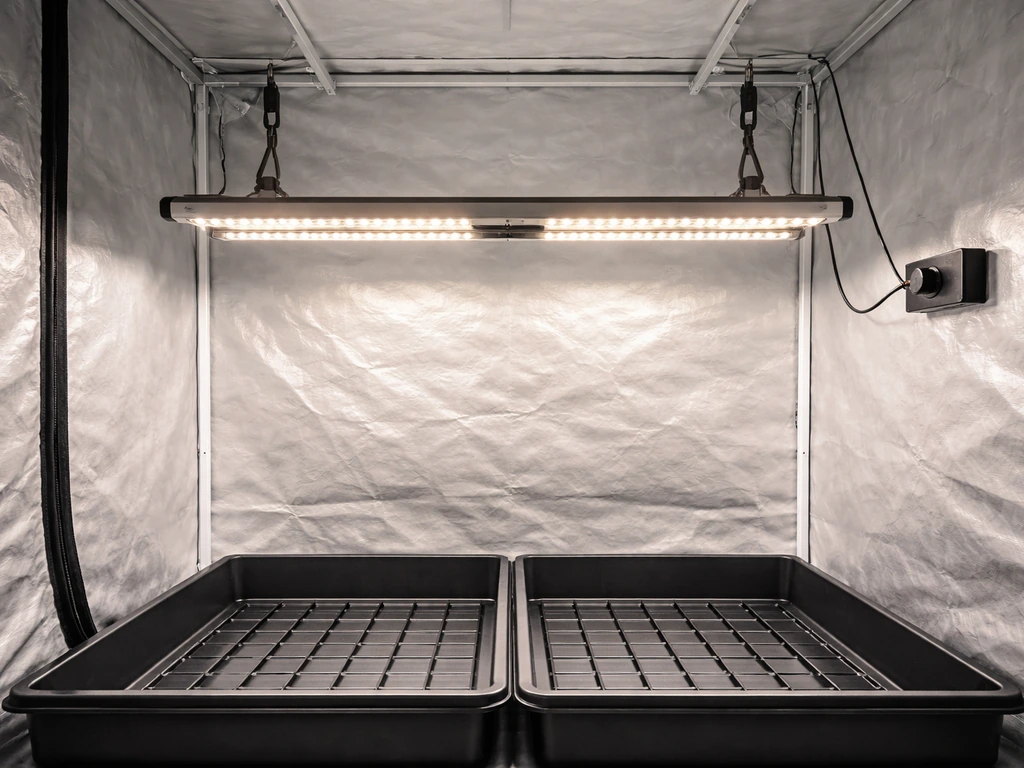
The VOLT Grow VL-1 (440W) is my top recommendation for a single 4x4 full-cycle grow. It ships with IP65 waterproofing, UL listing, a built-in 0–10V dimming knob, a remote, and published PPFD maps specifically for a 4x4 footprint. The PPF output is 1,220 µmol/s, which is enough to push flowering PPFD targets in a 4x4 without cooking the canopy. VOLT Grow's buying guide for its FL-1/VL-1 class targets publishes a PPF of 1,220 µmol/s for the 440W VL-1 and 2,000 µmol/s for the 720W FL-1, along with flowering-stage average PPFD targets. The 5-year warranty is a genuine reliability signal, not a marketing afterthought. It dims in 20% increments using the built-in control, so plan your DLI targets around those steps. If you need more intensity for a 5x5 or a high-light flowering run, the 720W FL-1 from the same brand targets that larger footprint.
Best premium pick: Black Dog LED PhytoMAX-4 24S
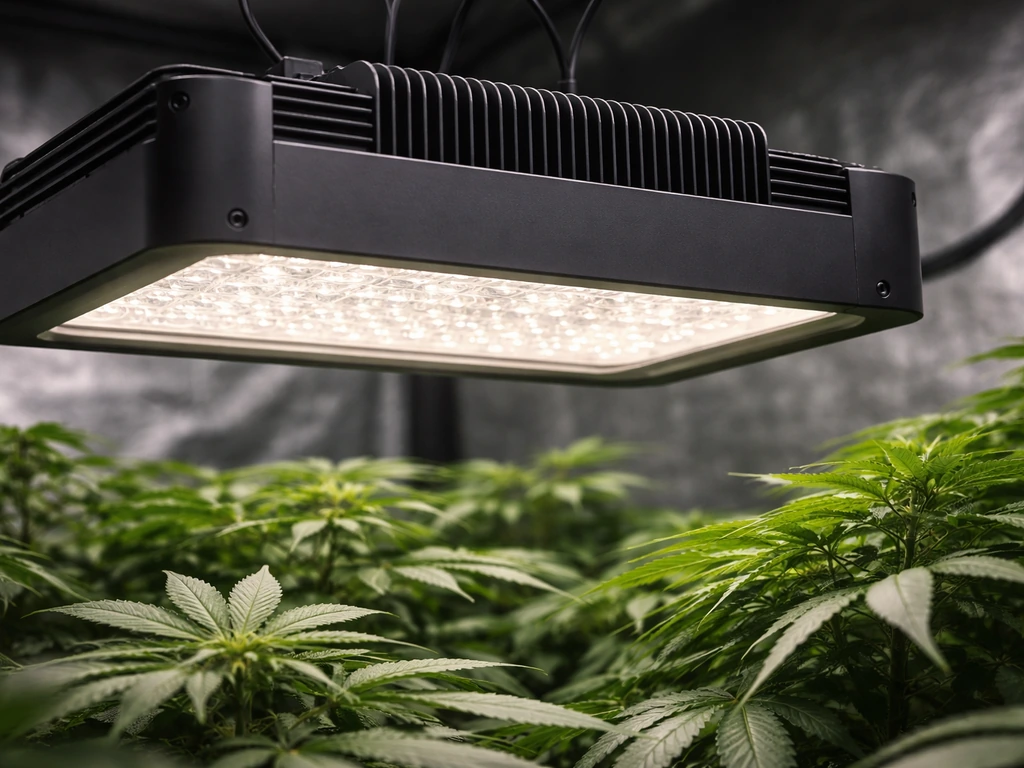
If budget is less of a constraint and you want deep canopy penetration with precise light control, the <a data-article-id="cm9s2yrtj003qpd3qj19vfqqq">Black Dog LED PhytoMAX-4 24S</a> is worth the premium. It dims from 15% to 100% using standard 0–10V controllers, which gives you finer granularity than the VL-1's 20% step increments. Black Dog also publishes PBFD/PPFD/DLI coverage tools and a calculator so you can model your actual hanging height before you ever hang the light. That kind of placement documentation is rare and genuinely useful.
Best budget bar for veg or seedlings: Mokolight GLB003 600W
The Mokolight GLB003 600W uses a Mean Well HLG-320H-54AB driver and dims from 10–100% via a 1–10V input. Published PPFD numbers are 900 µmol/m²/s at 60 cm and 1,800 µmol/m²/s at 30 cm, which gives you a real baseline for hanging height planning. At those intensity levels, this bar can cover a 4x4 through vegetative stage comfortably. For flower, you may want to run it lower or pair it with a second unit. It is a solid value pick if you are not ready to spend VL-1 money.
Best for larger footprints or supplemental use: Spider Farmer SE5000 / SE7000
The <a data-article-id="cm9s2yrtj003rpd3qkbq7dh4e">Spider Farmer SE5000</a> is explicitly rated for 4x4 and 5x5 spaces and uses 0–10V dimming protocol, making it compatible with most commercial grow controllers. The SE7000 is marketed for 4x4 and 5x5 use and includes an EVO PPFD map that shows edge vs center intensity, which is the honest way to evaluate whether your corners are getting enough photons. Both are good choices when you want one bar to cover more than a single 4x4.
Best waterproofing for commercial or wet environments: Treegers GL300W
For growers who need a higher IP rating, the Treegers GL300W carries an IP66 rating and uses a multi-bar plug-and-play design with 0–10V dimming via a compatible dimmer. It publishes PPFD footprint imagery so you can check center vs edge uniformity before buying. The IP66 rating makes it a better fit than most competitors for high-humidity commercial rooms or outdoor-adjacent environments.
Coverage and mounting: sizing a 4ft bar for a 4x4 tent or other footprints
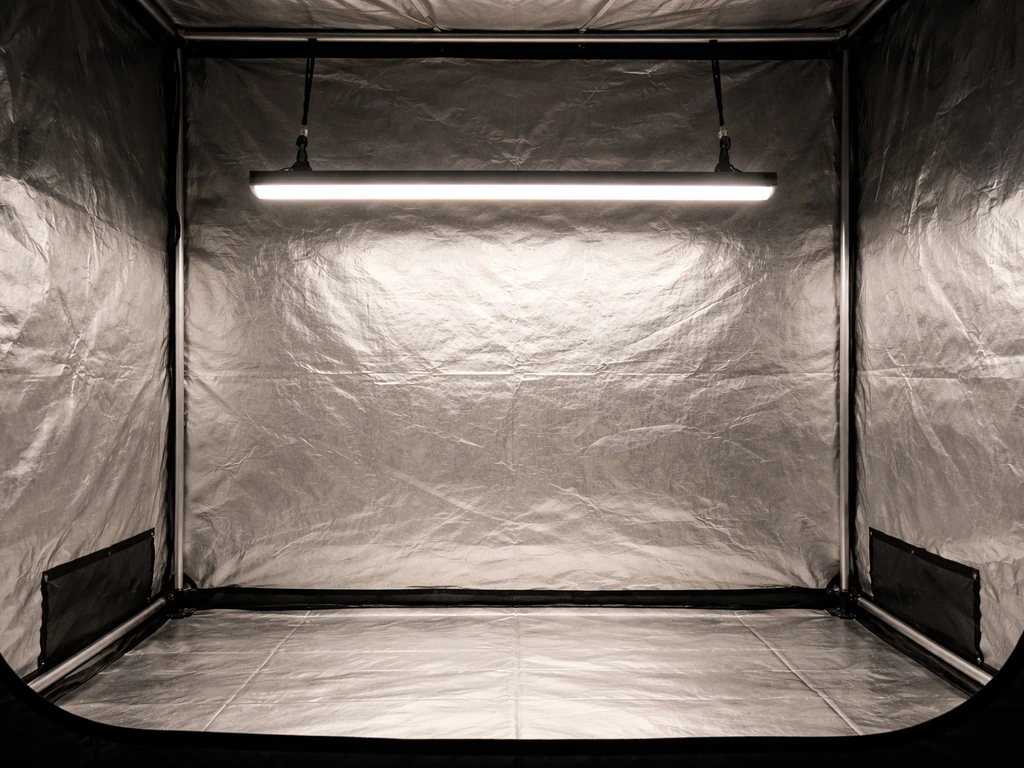
Hanging height is where most growers either get results or lose them. The relationship between height and PPFD is not linear. Dropping your bar from 24 inches to 12 inches above the canopy roughly quadruples the intensity at the center point. That means a light that is marginal at 24 inches can become genuinely excellent at 12–18 inches for flower, or it can bleach your tops if you push it too close without dimming.
Using guidance from Gorilla Grow Tent's 4x4 grow light research as a practical reference, here is what target hanging heights look like for a 600–800W LED bar over a 4x4 canopy:
| Growth Stage | Target PPFD (µmol/m²/s) | Recommended Hanging Height |
|---|---|---|
| Seedling | 200–400 | 24–36 inches above canopy |
| Vegetative | 400–600 | 18–24 inches above canopy |
| Flowering | 600–1000 | 12–18 inches above canopy |
These are starting points, not absolutes. Your specific fixture, tent reflectivity, and plant strain all shift the numbers. Always use your manufacturer's published PPFD map first. For example, <a data-article-id="cm9s2yrtj003spd3qchfnfe1t">Black Dog LED's PhytoMAX-4 SP and SC variants</a> include model-specific hanging height and coverage guidance tied directly to their PBFD/PPFD/DLI calculator, which is the most accurate way to plan placement for those fixtures.
For footprints beyond a 4x4, the math changes. A single 440W VL-1 covers a 4x4 well. For a 5x5, you're looking at the 720W FL-1 or the SE7000 class of bar. For a 3x3, many of the 4-foot bars in the 200–300W range are a better fit and will let you run the light higher with less risk of intensity spikes at the center. A useful frame: the VOLT Grow buying guide uses PPF totals (like the VL-1's 1,220 µmol/s) to help growers check whether the raw photon output matches their canopy area and target PPFD.
Spectrum explained for 4ft bars: full-spectrum vs veg/bloom mixes
Most 4-foot LED bars sold today use full-spectrum white LEDs, sometimes with added red or far-red diodes. This is a good thing. A well-designed full-spectrum board covers 400–700nm (PAR range) with reasonable representation across the blue (400–500nm), green (500–600nm), and red (600–700nm) bands, plus ultraviolet and infrared depending on the fixture. You do not need a separate veg bar and a separate bloom bar if your fixture has a quality full-spectrum output and a proper dimmer.
The old-school approach of separate blue-heavy veg lights and red-heavy bloom lights was largely a workaround for less capable LEDs. Today, a fixture like the VOLT Grow VL-1 or the Black Dog PhytoMAX-4 24S can handle full-cycle grows by simply adjusting PPFD via dimming. VOLT Grow positions their full-cycle lights as capable of dialing intensity from seedling through harvest without swapping fixtures, which matches my experience with quality full-spectrum bars.
The VL-1 spec sheet includes a spectrum profile graph alongside its PPFD maps, so you can actually verify the spectral output rather than trusting marketing language. That kind of documentation is what separates a real full-spectrum fixture from one that just uses the word as branding. When evaluating any bar, ask the manufacturer for the actual spectrum graph and check that red (660nm) and blue (450nm) peaks are present without completely washing out green and yellow wavelengths.
If you want to maximize edge-of-canopy penetration or add far-red for flowering response without replacing your main bar, a high-efficiency supplement bar is worth considering. The <a data-article-id="cm9s2yrtj003tpd3q9b8jk5se">HLG Universal Supplement Light</a> hits 3.07 µmol/J and comes with 0–10V dimming and UL 8800/UL 1598/CSA certifications. It is one of the most efficient supplemental options available right now and pairs well with a main full-spectrum bar in a 4x4.
Performance metrics that predict results: PPFD, efficiency, uniformity, and dimming
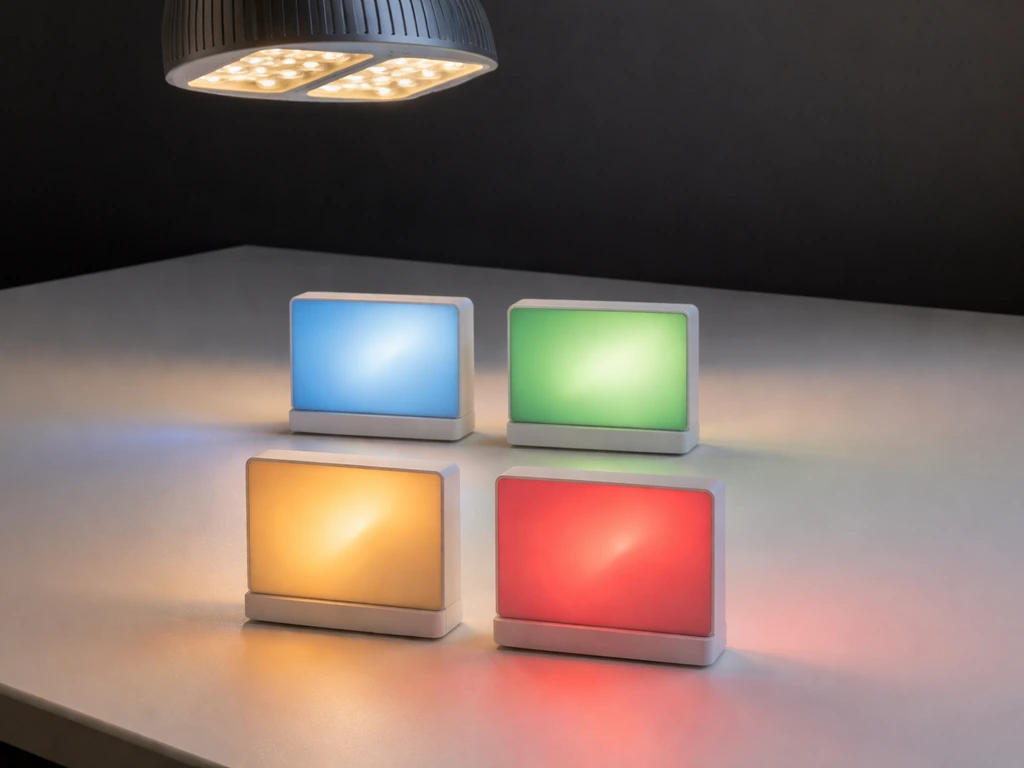
PPFD (photosynthetic photon flux density, measured in µmol/m²/s) is what your plants actually experience at canopy level. It is the number that tells you whether your light is delivering enough photons per second per square meter to drive photosynthesis at the rate you want. VOLT Grow puts practical targets clearly: roughly 600 µmol/m²/s for vegetative growth and up to 1,500 µmol/m²/s for high-intensity flowering. Most full-cycle home grows run 800–1,000 µmol/m²/s at peak flower. Seedlings rarely need more than 200–400.
Uniformity is PPFD's often-ignored companion metric. A light that hits 1,200 µmol/m²/s at center but drops to 400 at the corners is not covering your 4x4, it is covering a 2x2 and leaving the rest to limp along. Bar-style fixtures are structurally better at uniformity than circular or square panels because they spread the source across a longer dimension. Some manufacturers like <a data-article-id="cm9s2yrtj003upd3qlb60pjnm">Mammoth Lighting describe their PAR mapping approach</a> in detail, testing in a 5x5 tent to reduce wall-reflection artifacts. This kind of transparency in testing methodology is something I look for before trusting any coverage claim.
Dimming granularity matters more than most buyers realize. If your dimmer only adjusts in 20% steps (like the VOLT VL-1's built-in knob), you have five intensity positions across the full range. That is workable for most growers but limits your ability to dial in precise DLI targets for light-sensitive cultivars. A fixture with true 0–10V analog dimming from 15% to 100%, like the PhytoMAX-4 24S, gives you continuous control that integrates cleanly with grow room automation. <a data-article-id="cm9s2yrtj003vpd3q3dxq6k7q">Mean Well HLG-series drivers</a> support multiple dimming input types including 1–10V and PWM depending on the specific variant, so always check which method your controller uses before buying.
PPF (photosynthetic photon flux, measured in µmol/s total output from the fixture) is how you sanity-check whether a bar can hit your canopy PPFD target. The math is not perfect, but a 440W fixture putting out 1,220 µmol/s spread over a 4x4 (16 sq ft, or ~1.49 m²) gives you a theoretical average of around 820 µmol/m²/s before losses, which aligns with real-world performance in a reflective tent. A 720W fixture at 2,000 µmol/s over a 5x5 works out similarly. Use PPF as a quick filter before you dig into the full PPFD maps.
Installation, heat, noise, and driver considerations
Bar-style 4-foot LEDs run cooler than blurple panels and older HID setups, but they still generate heat that needs to go somewhere. A 440W fixture dissipates a meaningful amount of heat into your tent. In a sealed 4x4, this can raise ambient temperature by 5–10°F depending on your exhaust setup. The passive heat sinking on most quality bars handles the LED junction temperature fine, but the room-level heat load is real and you need to plan exhaust capacity around it.
Noise is rarely discussed but matters in home grows. Most quality bar lights run passively cooled with no fans, which means zero noise. If your fixture includes an active cooling fan, that is a durability risk (fans fail) and a noise source. I strongly prefer passively cooled bars for home tent use. Check the spec sheet before buying.
Driver quality is the single biggest predictor of long-term reliability. Mean Well HLG-series drivers are the industry benchmark. The Mokolight GLB003 publishes its driver model openly (HLG-320H-54AB), which is a good sign. Fixtures that do not list their driver brand or model are usually using lower-grade components. A good driver also handles voltage fluctuations and protects against short circuits, which matters over a multi-year grow cycle.
On the electrical side, Black Dog LED includes explicit circuit loading guidance with their PhytoMAX-4 fixtures. A 600–800W bar running continuously at full power on a shared 15A circuit is a fire risk. Dedicate a 20A circuit if possible, or at minimum verify that your total circuit load stays under 80% of the breaker rating. This is basic electrical safety but it is the thing most first-time tent growers overlook.
One installation mistake that is more common than it should be: plugging a Mean Well HLG-driven fixture into an AC triac dimmer, like a standard wall dimmer or a cheap inline lamp dimmer. These are not compatible with HLG drivers and can cause flickering, driver damage, or worse. Use only 0–10V or 1–10V compatible controllers with these fixtures. When in doubt, use the dimmer that came with the light or contact the manufacturer before adding third-party control.
Compatibility with your setup: timers, controllers, waterproofing, and hanging height
Most 4-foot LED bars use 0–10V dimming as their control protocol, which is compatible with essentially all major grow room controllers including Autopilot, InkBird, Gavita, and TrolMaster systems. The Spider Farmer SE5000 explicitly lists 0–10V as its control protocol, which confirms compatibility with that ecosystem. If your controller uses a different protocol (PWM, for example), verify the driver accepts it before buying.
Timers are straightforward with LEDs. Standard mechanical or digital timers work fine for on/off cycling. The complication arises if you want to ramp intensity gradually at sunrise/sunset, which requires a smart controller rather than a basic timer. For most home growers, a simple digital timer plus manual dimmer adjustment is enough.
IP rating is the compatibility spec most growers underestimate. A grow tent at 70–80% relative humidity is a high-moisture environment. Condensation can form on fixture surfaces during dark periods, especially in cool rooms. IP65 is the practical minimum for tent use. The VOLT VL-1 carries IP65 and combines it with built-in 0–10V dimming, which is exactly the combination you want for reliable long-term tent operation. The <a data-article-id="cm9s2yrtj003wpd3q2cxz0a2h">Treegers GL300W's IP66 rating</a> gives one step more protection for wetter environments.
Some fixtures marketed as LED grow bars also carry additional certifications worth checking: CBM Lighting's bar fixture spec documentation lists FCC, CE, RoHS, ETL, and DLC certifications alongside IP65 and a 5-year warranty. DLC (DesignLights Consortium) listing can also qualify your purchase for utility rebates in some states, which is worth checking if you are building a larger setup.
Hanging hardware matters more than it gets credit for. Most quality bars include adjustable rope ratchets rated for the fixture weight plus some margin. Verify the rated load on the ratchets before trusting them with a 15–25 lb fixture over your plants. Also check your tent's top bar rating. Heavy bars on thin-framed budget tents have caused collapses.
Hanging height also changes your uniformity profile in ways the PPFD maps don't always make obvious. Raising the light increases the illuminated area but lowers peak PPFD. <a data-article-id="cm9s2yrtj003xpd3qgkdxylqk">Understanding how bar-style distribution smooths out the PPFD map</a> at different heights helps you troubleshoot uneven growth across the canopy. If your corners are consistently underperforming, try lowering the bar 2–3 inches before adding a second fixture.
Buying checklist and quick decision guide
Here is the exact process I'd follow today if I were buying a 4-foot LED grow light for a 4x4 tent:
- Confirm your grow space footprint. 4x4 is the sweet spot for a single 4-foot bar at 400–600W. 3x3 needs less power. 5x5 needs more.
- Set your PPFD targets. Seedling: 200–400. Veg: 400–600. Flower: 800–1,000 for most strains, up to 1,500 for high-light varieties with CO2.
- Check the fixture's published PPFD map for your footprint. Confirm it was measured in a space at least as large as your tent to avoid reflection-inflated numbers.
- Verify efficacy. Reject anything below 2.5 µmol/J unless you have a strong budget reason. Target 2.7–3.0+ for premium picks.
- Confirm dimming type. You want 0–10V or 1–10V built into the driver. Note the dimming granularity (continuous vs step increments).
- Check driver brand and model. Mean Well HLG series is the benchmark. Ask the manufacturer if it is not published.
- Verify IP rating. IP65 minimum for tent use. IP66 for wet or commercial environments.
- Check certifications. UL 8800, ETL, or DLC listing for safety and potential rebate eligibility.
- Check the warranty. 5 years is the standard for quality fixtures. Less than 3 years is a red flag.
- Confirm your circuit can handle the load. A dedicated 20A circuit for any fixture above 400W is best practice.
- Match your dimmer or controller to the driver's accepted input type. Do not use AC triac dimmers with HLG-series drivers.
- Order hanging hardware rated for the fixture weight. Do not rely on ratchets rated at exactly the fixture's listed weight.
Quick decision flow: If you have a 4x4 tent, a normal humidity environment, and want one light that handles full-cycle growing without complexity, buy the VOLT Grow VL-1 (440W). If you want premium performance and precise dimming control, buy the PhytoMAX-4 24S and use their PPFD calculator to set your hanging height. If you are budget-constrained and growing through veg primarily, the Mokolight GLB003 600W is a legitimate option with a real driver and published performance data. If you need the best uniformity documentation and want to understand exactly what your canopy is getting, look at fixtures from Mammoth Lighting, whose <a data-article-id="cm9s2yrtj003ypd3q0qpswwb6">PAR mapping methodology using a larger test environment</a> gives you more confidence in the edge-to-center numbers than most competitors.
Whatever you buy, start with the light 24 inches above the canopy, run it at 60–70% power for the first two weeks, watch for any light stress symptoms (bleaching, tacoing leaves, stunted growth), and adjust from there. The specs tell you where to start. Your plants tell you where to land.
FAQ
If two best 4ft led grow light models have the same wattage, which one is actually better?
Not always. A better way is to start from target canopy PPFD, then use the fixture’s PPFD map (or DLI calculator) to choose hanging height and dimming level. Wattage can mislead because efficacy and driver quality often determine whether you can reach your PPFD without overheating the canopy.
How can I tell whether a 4-foot LED actually covers the corners of my 4x4, not just the center?
For a 4x4 tent, look for PPFD data shown at the canopy level across the full 16 sq ft, ideally with a test environment large enough to reduce wall-reflection inflation. If the manufacturer only reports numbers from a much smaller test space, you may get misleading corner performance.
Can I use a regular wall dimmer or smart plug dimmer with a 4ft LED grow light?
Stick to analog 0–10V or 1–10V control that matches your driver’s accepted input. Standard household AC dimmers (triac/phase-cut) are a common failure point with Mean Well HLG series drivers and can cause flicker or driver damage, even if the fixture “seems to work” at first.
I want to automate intensity changes, can I pair a smart controller with a 4ft LED bar?
Yes, but do it carefully. If you use a smart controller for schedules, keep on/off timing separate from intensity control. Many smart controllers can handle 0–10V intensity, but you must confirm the dimming protocol matches the light’s driver, and that the controller outputs an analog signal rather than PWM unless the driver explicitly supports PWM.
Is dimming step size important, or will any 0–10V dimming be accurate enough?
Yes, and it can matter a lot in a 4x4. If your dimming is only in coarse steps (for example, 20% increments), your DLI targets may be “close” but not exact, especially for light-sensitive cultivars. If you need fine control, choose a fixture that supports a wider analog dimming range like continuous 0–10V adjustment.
Will a 4ft LED bar raise my tent temperature enough that I need to upgrade my exhaust?
Measure and plan around your exhaust before you assume heat is “handled by the light.” Even passively cooled bars add a real room heat load, which can raise tent ambient temperatures several degrees. In a sealed 4x4, you may need more fan capacity than you expected, especially during flower.
What should I check for long-term reliability, is it just about whether there is a fan?
Primarily, no fans and a quality driver. However, fans are not the only reliability factor, driver components and protection features matter too. If the fixture doesn’t publish the driver model and the manufacturer won’t share basic electrical details, you may be taking on higher risk for long-term failures.
What are the most common hanging hardware mistakes with 4-foot LED bars?
If your tent’s top bar is rated for a certain load, verify both the tent hardware and the light’s hanging hardware. Many issues happen when a lightweight tent is used with a heavier bar, even if the ratchets are rated. Check that every contact point (ratchets, straps, tent frame) is within rated load.
My plants grow unevenly across the 4x4, what troubleshooting steps should I try first?
Start by using the manufacturer’s PPFD map for your specific hanging height and dimming range. If corners lag, small height adjustments (a couple inches) can improve uniformity without instantly “overpowering” the center, especially when combined with dimming changes.
How do I safely change hanging height without shocking my plants?
Avoid “the right output at the wrong height.” Dropping the light increases intensity nonlinearly, so a small height change can create a big center PPFD jump. If you move closer, compensate by dimming down, then confirm with symptoms (bleaching or leaf tacoing) and adjust from there.
When should I add a supplement bar instead of choosing a higher-power 4ft LED grow light?
Yes, if you target the correct spectrum goals. A supplement bar can help with flowering response, but it should be treated as intensity and spectrum optimization, not a replacement for your main full-spectrum bar. Ensure the supplement has compatible 0–10V dimming and that you can integrate it into your DLI and canopy coverage plan.
Are manufacturer PPFD maps accurate for my tent material and layout?
Use the test method that matches your real setup. Because reflections vary with tent materials and size, manufacturer PPFD maps should be applied to your tent conditions, not assumed identical. If possible, choose brands that explain their mapping methodology in a larger tent environment and show edge versus center readings.
Do I really need separate veg and bloom lights when using a best 4ft led grow light?
Often, you can. Many growers run a full-cycle light by adjusting PPFD through dimming instead of swapping veg and bloom fixtures. The key is having enough dimming range and a full-spectrum output with documented spectrum data rather than relying on “veg” or “bloom” marketing labels.
Next Articles
Best Full Spectrum 1000W LED Grow Lights: Buyer Guide
Buy the best full spectrum 1000W LED grow light with spec-to-decision tips on PPFD, coverage, wattage, and tent fit.
Best 100W LED Grow Light: How to Choose the Right One
Choose the best 100W LED grow light with PPFD coverage, spectrum, efficiency, dimming, heat, and setup tips.
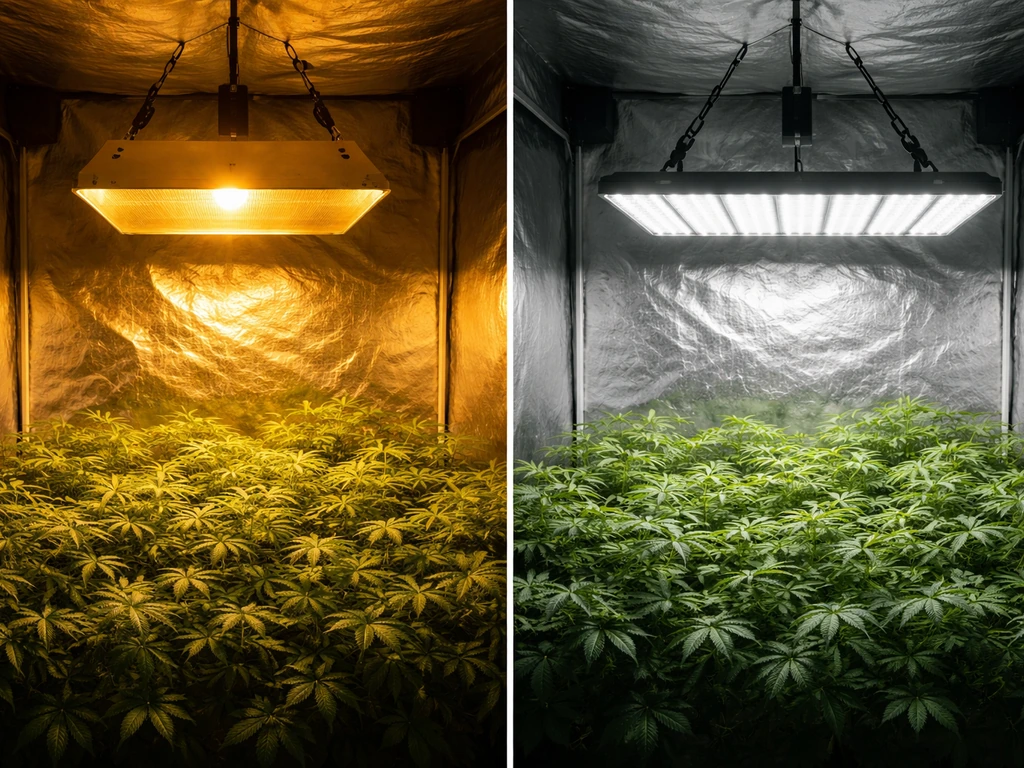
Best LED Grow Light to Replace 1000W HPS: Sizing Guide
Sizing and buying guide to replace a 1000W HPS with the right LED using PPFD, layout, mounting, and spectrum for yields.