
The best 5x5 LED grow light is the one that actually delivers enough PPFD across the full 5x5 canopy for your specific crop, not just the fixture a manufacturer calls '5x5 compatible.' That distinction matters more than almost anything else you'll read in a spec sheet. A true 5x5 flowering light needs to hit 600–900+ µmol/m²/s across most of that footprint consistently, and that takes a fixture drawing somewhere in the 600–700W range from the wall, running at high efficiency. Anything significantly below that, and you're either compromising yield or squeezing the corners of your canopy.
Best 5x5 LED Grow Light: Buying Guide and Top Picks
Marcus Rutherford
4 Apr 2026
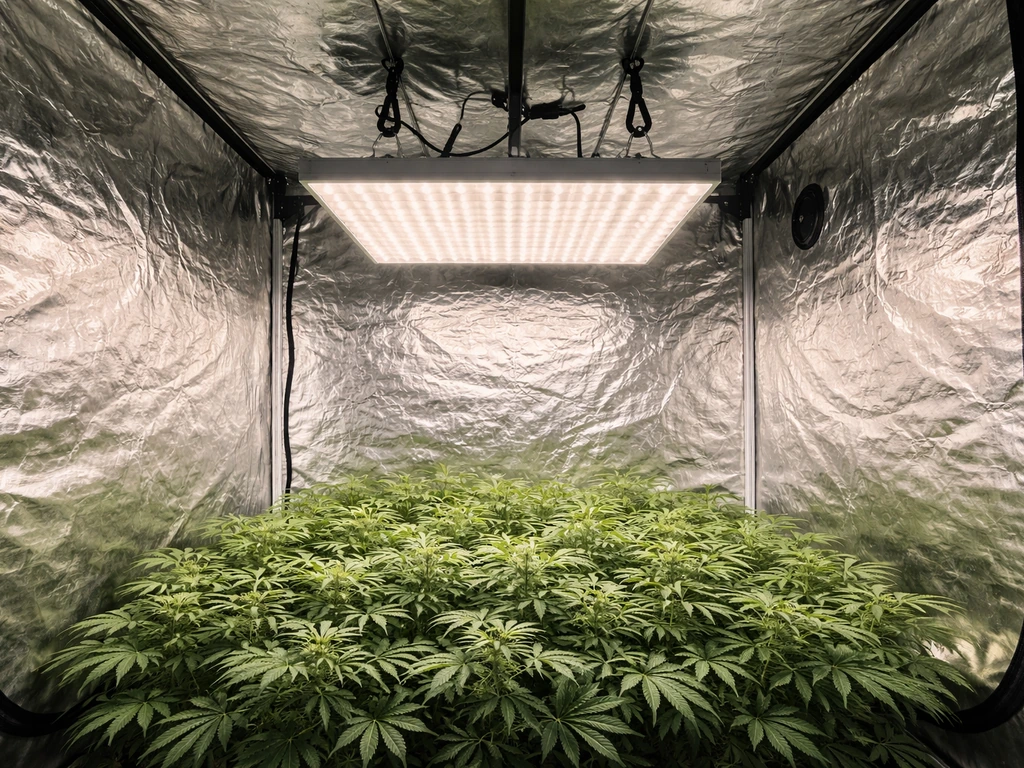
What 'best 5x5' actually means for your grow
Before you spend money, you need to be clear about what your 5x5 will be used for, because the 'best' fixture changes depending on that answer. A 5x5 running leafy greens in vegetative state needs a daily light integral (DLI) of roughly 12–17 mol/m²/day. Herbs want 15–22. Fruiting crops like cannabis, tomatoes, or peppers need 20–30 mol/m²/day. Those numbers come from converting your PPFD and photoperiod using the formula DLI = PPFD × hours/day × 0.0036. If you're growing basil, a 400W-range light might genuinely be your best option. If you're running a flowering cannabis tent, you need the heavy hitter.
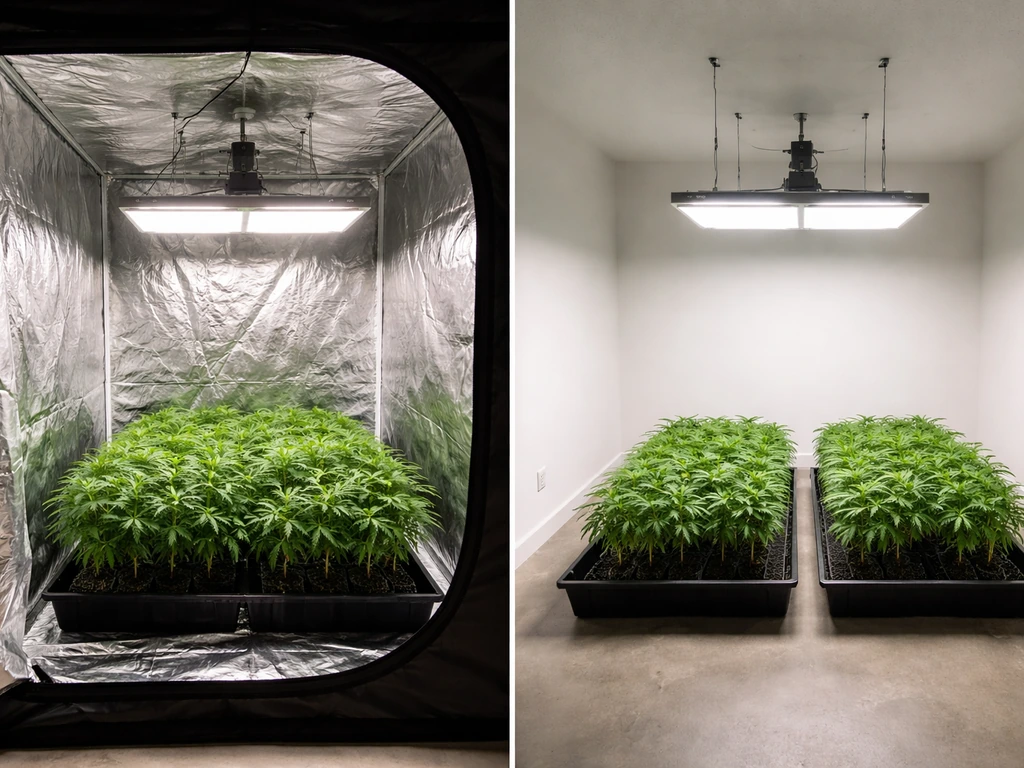
There's also the tent vs. open room distinction. A 5x5 tent with reflective mylar walls bounces a surprising amount of light back into the canopy, which means usable PPFD at the edges is higher than what bare lab measurements suggest. An open room or commercial setup doesn't get that benefit, so you need a fixture with stronger raw output or supplemental lighting to compensate. Keep that in mind when reading manufacturer footprint claims, which are almost always measured in ideal reflective conditions.
Finally, think about whether this is your only light. Running a single fixture versus running two in a larger space changes how you think about coverage overlap. If you're scaling past a single tent, it's worth looking at how fixtures perform in larger arrays, the same logic that applies when you start thinking about LED grow lights for a 10x10 tent.
The specs that actually matter when comparing fixtures
Wattage and real power draw
For flowering a full 5x5, plan on 600–700W of actual wall draw. The HLG Tomahawk 650, for example, lists its power at 0–650W (it's dimmable) and rates its flowering footprint as 5x5. The HLG Scorpion Diablo operates similarly in that wattage class. Budget fixtures that claim 5x5 coverage at 300–400W are usually referencing veg coverage at lower PPFD targets, not flowering intensity. Don't let 'equivalent wattage' or 'replaces 1000W HPS' language distract you from the actual wall draw number.
PPFD, coverage maps, and what to trust
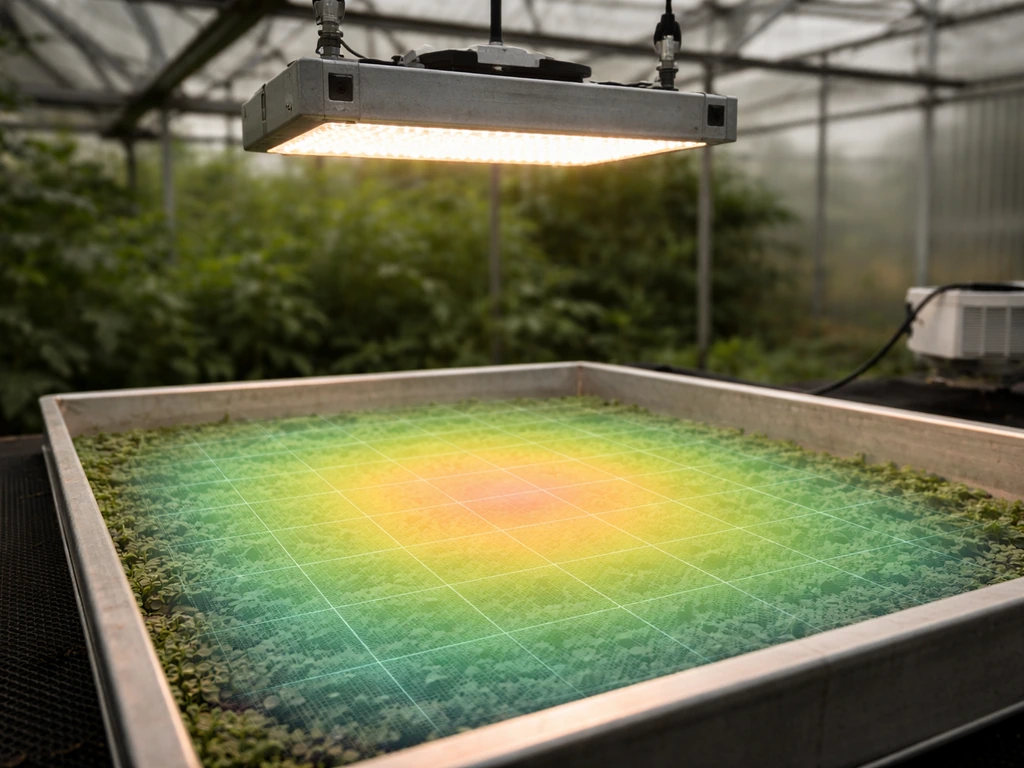
PPFD (photosynthetic photon flux density, measured in µmol/m²/s) tells you how much usable light is hitting a specific point. The problem is that a single peak PPFD number tells you almost nothing about uniformity. What you want is a full grid map showing PPFD at multiple points across a 5x5 area. HLG publishes an independent lab PPFD chart for the Scorpion Diablo (report ID L092012601G) showing grid-point values at 12, 18, and 24 inch mounting heights across a 5x5 grid.
That's the kind of documentation to look for. Spider Farmer's G8600, tested by Coco For Cannabis using a standardized protocol that measures 'Optimal Usable PPF' (defined as PAR at canopy when maximum PPFD is around 950–1000 µmol), showed real-world performance in that same tier.
Efficiency (µmol/J)
Photon efficacy tells you how efficiently your fixture converts electricity into usable plant light. The University of Missouri Extension notes that blank" rel="noopener noreferrer">anything over 2.5 µmol/J is considered efficient by industry standards. The University of Missouri Extension notes that LED photon efficacy above about 2.5 µmol/J is considered efficient by industry standards. The HLG Scorpion Diablo hits 3.2 µmol/J with a total PPF output of 2130 µmol/s. The Spider Farmer G8600 comes in at around 2.9 µmol/J with 2146 µmol/s PPF. Both are strong performers. Fixtures below 2.5 µmol/J aren't necessarily bad, but they'll cost you more in electricity over a grow cycle, and that adds up fast.
Spectrum
Most quality 5x5 fixtures in 2026 use full-spectrum white LEDs, often combined with targeted deep red diodes. The Scorpion Diablo is spec'd as 'Full Spectrum White & Deep Red,' which is now a common and effective approach. When evaluating spectrum, look for meaningful energy in the blue range (440–470 nm), the main red range (640–680 nm), and ideally some far-red output around 720–740 nm, which accelerates flowering responses via the Emerson effect. A manufacturer that provides a published spectral graph is being transparent. One that only says 'full spectrum' without a graph is asking you to take their word for it.
Dimming
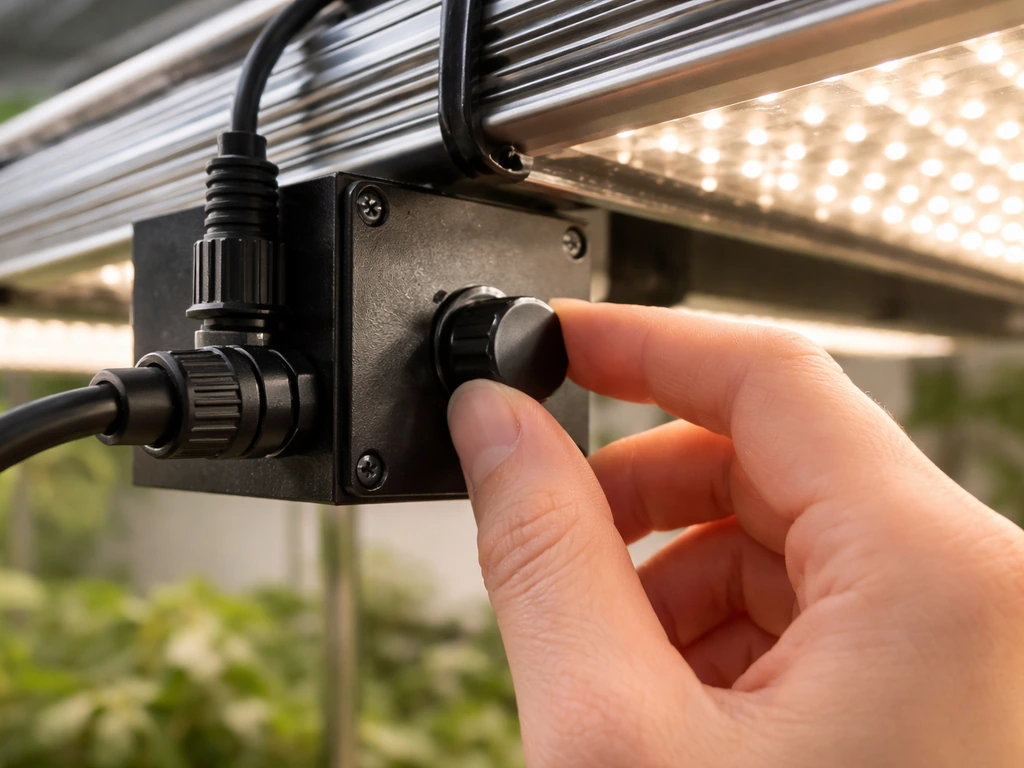
A 0–10V dimming interface is the professional standard and worth looking for. The HLG Tomahawk 650 uses this interface, which lets you dial intensity through a controller rather than manually at the driver. This matters practically: seedlings and early veg don't need 650W of light, and running full intensity from day one wastes energy and can stress young plants. The ability to ramp up through the grow cycle is a real operational advantage.
Top picks by scenario
Rather than giving you a single winner, here's how I'd match fixtures to the most common 5x5 scenarios. These aren't the only options on the market, but they represent distinct tiers and approaches.
| Scenario | Fixture Example | Wall Draw | PPF (µmol/s) | Efficacy (µmol/J) | Notes |
|---|---|---|---|---|---|
| High-intensity flowering (tent or room) | HLG Scorpion Diablo | ~630W | 2130 | 3.2 | Independent PPFD map available; 5x5 flowering footprint at 18" |
| High-intensity flowering (budget-conscious) | Spider Farmer G8600 | ~700W | 2146 | 2.9 | Strong PPF, slightly lower efficacy, competitive price |
| High-intensity with controller dimming | HLG Tomahawk 650 | 0–650W | ~2000+ | ~3.0+ | 0–10V dimmable; 8"–24" mount range; 5x5 flowering footprint |
| Veg or mixed light crop (5x5) | Mid-range 500W full-spectrum LED | ~500W | ~1400–1600 | ~2.6–2.8 | Sufficient for herbs/greens; underpowered for dense flowering |
If your priority is raw verified performance with published photometric data, the HLG Scorpion Diablo is the reference fixture in this class. If you want comparable output at a lower entry price and are comfortable with slightly lower efficiency, the Spider Farmer G8600 is a legitimate alternative. The Tomahawk 650 earns its place specifically if you want granular dimming control and a wider mounting height range (the spec sheet lists 8–24 inches above canopy, giving you flexibility from early veg through late flower without moving the fixture).
Full-spectrum vs. specialized spectrum: which do you need
For most 5x5 growers, a quality full-spectrum white-plus-deep-red fixture is the right call. It covers the entire photosynthetically active range, works across the whole life cycle, and doesn't require you to swap lights between veg and flower. That's the approach HLG and Spider Farmer are both using in their top-tier 5x5 fixtures, and the real-world results back it up.
Specialized or targeted-spectrum fixtures, like pure red/blue 'blurple' panels or narrow-band supplemental bars, make more sense as additions to a primary white-spectrum fixture than as standalone lights for a 5x5. Far-red supplemental bars (720–740 nm) can be worth adding to a flowering tent to trigger faster transitions and potentially tighter internodal spacing, but they're a refinement, not a foundation.
One practical note: if you're currently running something small and considering a 5x5 as an upgrade, the logic about spectrum choice applies at every size. The same principles that make full-spectrum the right call for a 5x5 are why it's the dominant recommendation when looking at LEDs for a small grow tent as well.
Installation, mounting height, and dialing in your setup
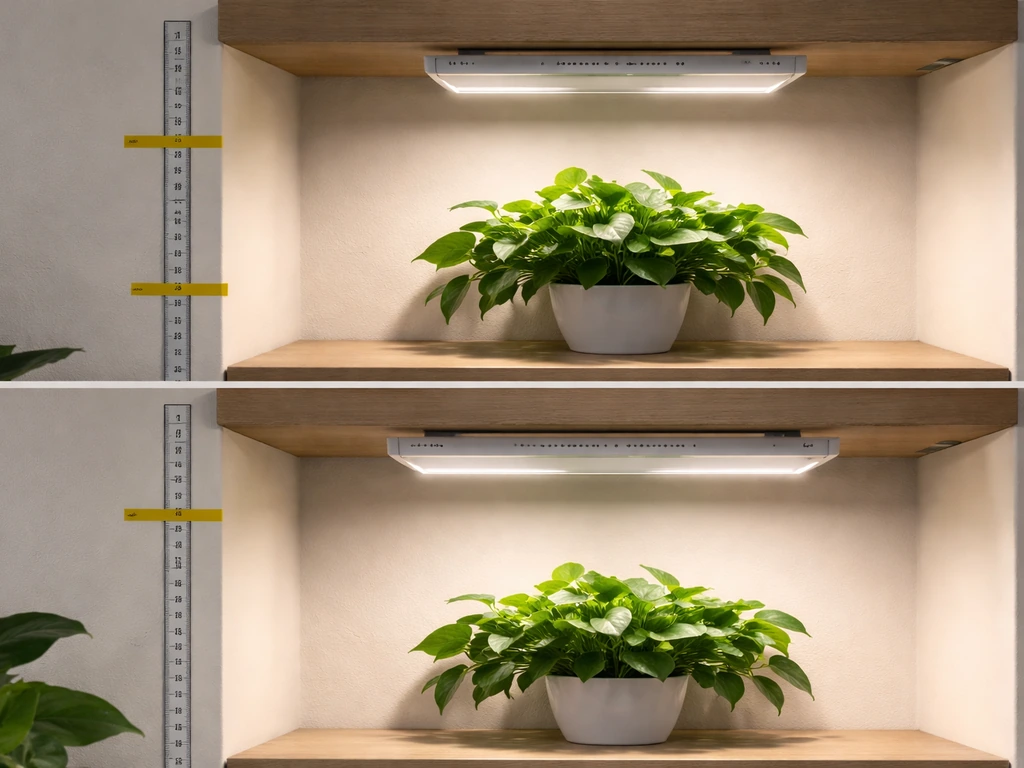
Mounting height is where a lot of growers leave performance on the table. Too high and your PPFD drops off at the canopy edges. Too low and you create hot spots in the center while potentially burning plants directly beneath the fixture. For a 600–650W class light on a 5x5, the sweet spot is typically 18–24 inches above canopy for flowering. HLG explicitly specs the Scorpion Diablo at 15–24 inches, with the 5x5 flowering footprint measured at 18 inches. That's a useful anchor point.
During veg, raise the fixture to 24 inches or more and dim to 50–60% intensity. During early flower, lower to around 20–22 inches and bring intensity up to 75–80%. Peak flower is when you run at 18 inches and full or near-full intensity. This progression mirrors the plant's increasing light demand through the grow cycle and avoids stressing young plants.
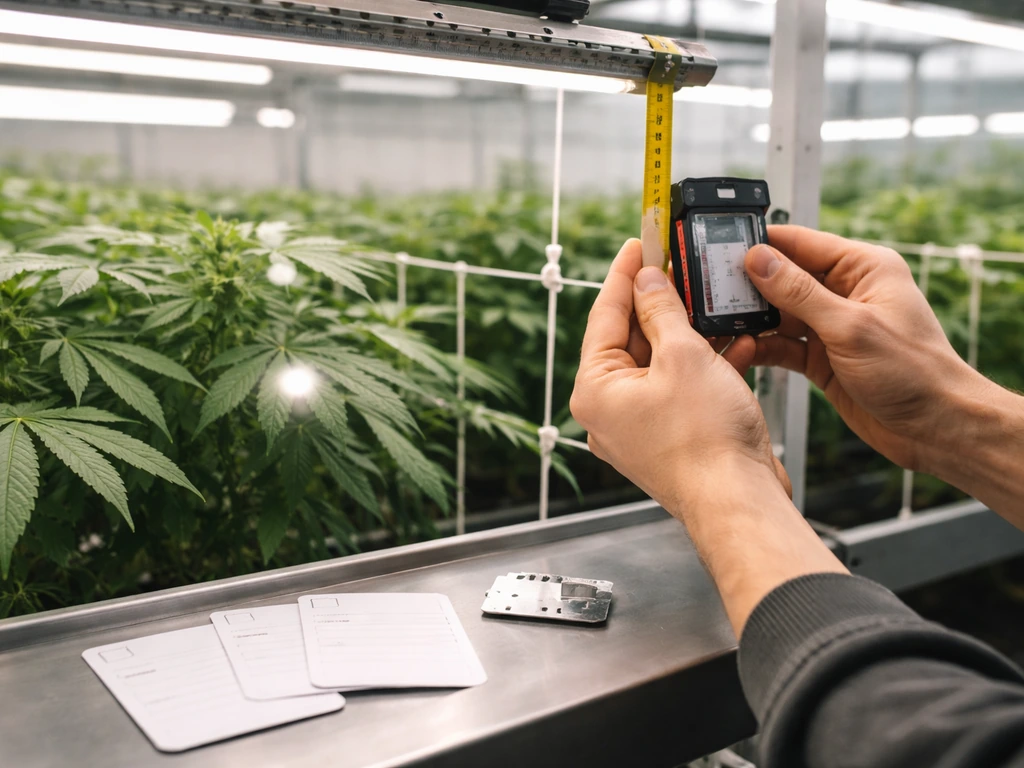
To verify your actual PPFD at canopy level, use a PAR meter or a calibrated smartphone app. The Photone app measures PAR/PPFD in µmol/m²/s and DLI in mol/m²/day, and it supports custom calibration against a reference meter if you want to tighten up accuracy. Take readings at nine or more points across the 5x5 grid (corners, edges, and center) to get a real sense of uniformity, not just the peak number under the fixture.
For tents specifically, use reflective Mylar-lined walls to recover light at the canopy edges. This isn't optional for a 5x5 where uniformity is already harder to achieve than in a 4x4. Also make sure your exhaust and circulation fans are sized appropriately. LEDs run cooler than HPS, but a 650W fixture in a sealed tent still generates meaningful heat, and canopy temperatures above 82°F will hurt you more than any spec improvement can help.
Budget vs. performance: how to score the tradeoffs honestly
The premium fixtures (HLG Scorpion Diablo, Tomahawk 650) carry higher upfront costs but deliver verified output, better efficiency, and typically better build quality with longer warranties. Over a 3–5 year use horizon, the efficiency gap between a 3.2 µmol/J fixture and a 2.5 µmol/J fixture at 600W of draw is real money in electricity. If you're running multiple cycles a year, that payback math favors the premium option.
Budget 5x5 LEDs in the $200–$350 range exist, and some are genuinely decent for vegetative crops or lower-demand grows. But for a high-intensity flowering 5x5, the $200 fixture that claims 1000W equivalent almost certainly can't sustain 600–800 µmol/m²/s across the full canopy. It might hit that at the center. The edges will be weak, and the canopy will show it. If budget is a real constraint, consider stepping down to a smaller footprint and running it well, rather than over-claiming coverage in a 5x5. There are some compelling options covered in the guide to LED grow tent kits that bundle a properly matched light with a tent at better value than buying separately.
A useful scoring framework when comparing fixtures: check efficacy (target 2.7+ µmol/J for any serious grow), ask for a PPFD grid map (not just peak PPFD), confirm actual wall draw (not marketing wattage), and verify the footprint claim includes a defined mounting height. Any fixture that can't satisfy all four of those checks deserves skepticism.
Mistakes that cost growers real yield (and money)
- Trusting footprint claims without a mounting height reference: a 5x5 footprint at 30 inches is not the same as at 18 inches. Always check both numbers together.
- Running full intensity from week one: seedlings and early veg plants don't need 650W. Start at 40–50% and ramp up. A 0–10V dimmer interface makes this easy to control.
- Skipping a PPFD verification: don't assume your light is performing as advertised. Use the Photone app or a PAR meter to take a grid of readings on day one and adjust height before plants are in the tent.
- Ignoring DLI targets: knowing your PPFD is not the same as knowing your DLI. Use the formula (PPFD × hours × 0.0036) to confirm your photoperiod and intensity combination is actually hitting the DLI your crop needs. Fruiting crops need 20–30 mol/m²/day; leafy greens can work with 12–17.
- Buying a fixture with no published spectral graph: 'full spectrum' is a marketing term. If the manufacturer doesn't publish a spectral power distribution graph, you don't actually know what you're getting.
- Overlooking thermal management: LEDs still generate heat. In a 5x5 tent, a 600W+ fixture needs adequate ventilation or it will raise canopy temperature enough to reduce photosynthesis and stress plants.
- Confusing 'coverage area' for veg vs. flower: manufacturers often list a larger veg footprint and smaller flowering footprint. Always base your purchasing decision on the flowering footprint if you're running a flowering crop.
FAQ
If a 5x5 LED shows a high peak PPFD, how do I know it will be strong across the whole canopy?
Look for a PPFD grid map at the height you will actually mount the fixture, and verify the edges and corners hit close to your target range, not just the center peak. For a flowering 5x5, center peak can be high while perimeter values are too low, creating patchy buds and slower ripening.
Can I use two smaller LEDs to cover a 5x5 instead of buying a true 5x5 fixture?
Yes, but do it carefully. If you share the same 5x5 footprint with two fixtures, measure and compare PPFD at multiple points after overlap. The goal is to avoid both underloved corners and excessive center intensity that can cause bleaching or clawing, especially when running full power early in veg.
Does dimming a 5x5 LED reduce PPFD predictably, or can it change plant response?
It can, depending on the controller and driver. Dimming reduces wall draw and typically lowers PPFD, but it may also change spectrum balance slightly. Before trusting dimming for seedlings, confirm the manufacturer provides performance or at least safe operating guidance at reduced levels, then verify with a PAR meter at canopy.
What matters more for results, PPFD target or DLI target, and how do I choose the right one?
For flowering in a 5x5, the fastest path to “best” is ensuring you can sustain the DLI range for your crop and schedule, not chasing wattage alone. If your photoperiod is fixed (for example 12 hours), calculate DLI from PPFD and adjust mounting height or dimming so the whole canopy stays inside target.
What if I need to mount the light higher than the manufacturer’s recommended height?
A “5x5 flowering” claim at a low mounting height can fail if you mount higher for plant height clearance. Use the published height in the footprint test, then compare it to your real plan. If you must mount higher than the verified height, expect reduced edge PPFD and consider supplemental lighting or a stronger fixture.
Why do some lights claim they “replace 1000W HPS” but still seem weak in a 5x5 tent?
Don’t rely on “equivalent wattage” or “replaces HPS.” Use actual wall draw and efficacy (µmol/J), then confirm the footprint was tested at flowering intensity. As a rule, budget fixtures that advertise 5x5 flowering at 300–400W of wall power often only match center intensity.
Does reflective mylar really make a big difference for edge coverage in a 5x5?
If you’re in a reflective tent, mylar can meaningfully improve effective PPFD at the edges, but it cannot fix a fixture that is underpowered at the perimeter. Treat reflectivity as a boost, not a substitute for a verified PPFD grid. Also keep walls taut and clean, since dust and wrinkles reduce bounce.
What’s the biggest mistake people make when they test PPFD with a PAR meter or app?
Run a PAR meter at the canopy and measure at multiple points after you dial in dimming and height. Reading only the center often leads to buying decisions that look good on paper but produce weak corners. A practical approach is to take nine or more points across the grid and compute the spread between lowest and highest PPFD.
How can I tell whether my controller will work properly with a 0–10V dimming 5x5 light?
Built-in dimmers and external controllers are not always interchangeable. If the fixture supports 0–10V, confirm the controller outputs a true 0–10V signal and is compatible with the driver’s dimming range. When setup is wrong, plants can get unstable intensity or the driver may not dim to the levels you expect.
If LEDs run cooler than HPS, do I still need to worry about tent temperature with a 600–700W 5x5 light?
Heat management still matters because canopy temperature affects transpiration, nutrient uptake, and growth rate. For LED tents, focus on airflow around the canopy and ensure exhaust can remove heat load from the tent. If canopy temps are staying above about 82°F, upgrading the fixture usually won’t solve the issue.
Is far-red supplementation worth it if my main 5x5 already includes deep red and full spectrum?
Yes, but start with verification. Far-red bars can support flowering transitions, but their impact depends on whether your base light already includes enough long-wavelength output. If your primary fixture already has meaningful far-red, you may get smaller gains, and the main benefit is faster response rather than major yield jumps.
How do I estimate whether a higher-efficacy premium 5x5 will pay back versus a cheaper one?
Yes, but they may increase electrical cost if they have lower efficacy and you cannot run as efficiently due to intensity nonuniformity. The more uniform the fixture, the less you need to overdrive the center to compensate for weak edges, which can reduce total power demand for the same canopy target.
What warranty details should I check before paying extra for a premium 5x5 LED grow light?
Warranties and build quality matter more for high-draw fixtures because drivers and thermal performance are common long-term failure points. Before buying, confirm the warranty term for the LED array and driver separately if stated, and note whether the manufacturer includes support for replacement parts beyond the full unit.
Next Articles
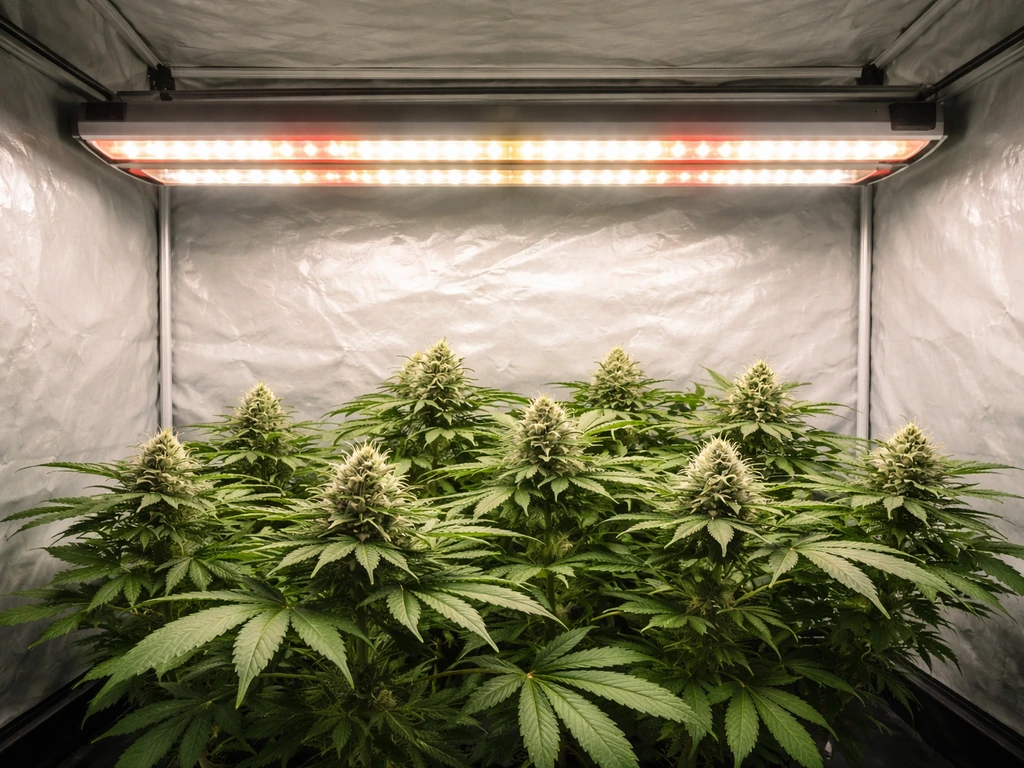
Best Full Spectrum 1000W LED Grow Lights: Buyer Guide
Buy the best full spectrum 1000W LED grow light with spec-to-decision tips on PPFD, coverage, wattage, and tent fit.
Best 100W LED Grow Light: How to Choose the Right One
Choose the best 100W LED grow light with PPFD coverage, spectrum, efficiency, dimming, heat, and setup tips.
Best LED Grow Light to Replace 1000W HPS: Sizing Guide
Sizing and buying guide to replace a 1000W HPS with the right LED using PPFD, layout, mounting, and spectrum for yields.