
The best 20 LED grow lights right now span a wide range of wattages, form factors, and price points, but they all share a few things: verified efficacy above 2.0 µmol/J, honest PPFD maps at canopy height, real dimming controls, and drivers that don't die in six months. If you're comparing lights and feeling overwhelmed, this guide cuts through the noise. It tells you exactly what specs to check, which lights win for specific grow setups, and how to avoid the most common and expensive mistakes buyers make in 2026.
Top 20 LED Grow Lights: Buyer Guide for Full-Cycle Indoor Growing
Marcus Rutherford
20 Apr 2026
What 'top 20' actually means here
A light earns a spot on this list by meeting real performance criteria, not by having a big marketing budget. Here's the selection logic used throughout this guide:
- Efficacy at or above 2.0 µmol/J, with 2.5+ µmol/J for premium picks (the Fluence SPYDR 3, for example, is rated at 2.6 µmol/J at 800 W)
- Verified PPFD maps showing realistic canopy performance, not ceiling-level peak readings
- Honest wattage draw matching advertised output, measured at the wall
- Reliable drivers (Meanwell, Inventronics, or equivalent) with thermal management that keeps junction temps safe over multi-year cycles
- Dimming support, either 0-10V, PWM, or a manual knob at minimum
- Safety certification from UL, ETL, CSA, or equivalent body
- Warranty of at least three years with accessible parts or support
- Real-world fit for a defined grow scenario: tent, indoor room, greenhouse, or specialty use
Lights that rely on inflated watt claims, cherry-picked single-point PPFD numbers, or mystery drivers don't make the cut, regardless of price. Budget lights can absolutely compete here, but only when they actually deliver at the canopy. For a tighter shortlist, the top 5 and top 10 versions of this guide focus on fewer picks with higher confidence scores, so if you want fewer options with less reading, those are worth checking out.
Best lights by grow type
Not every light is right for every setup. A bar light that crushes a 5x5 tent is overkill and poorly matched for a 2x4 seedling tray. Here's how the top performers break down by grow scenario.
Grow tents (2x2 to 5x5)

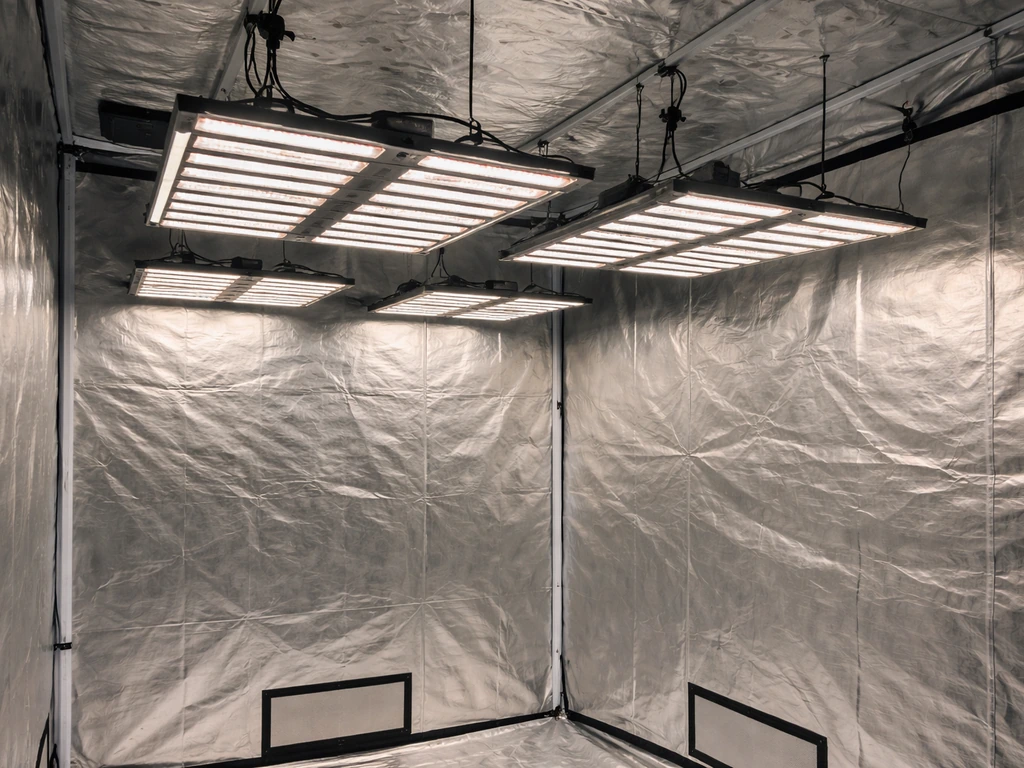
Tent growing rewards compact, high-efficacy panels and bar lights that distribute light evenly across a relatively small footprint. The reflective mylar walls in a tent do real work: Coco for Cannabis' testing protocol specifically positions lights so peak PPFD lands around 950-1000 µmol/m²/s at canopy with mylar walls in place, and that reflected light noticeably fills edge coverage gaps. For 4x4 tents, you want 400-700 W of actual draw from a quality fixture. For 5x5, push toward 600-800 W. For 2x4 and 3x3 setups, 200-400 W is the right range.
Open indoor rooms
Without reflective walls, you lose a meaningful percentage of edge light. Open rooms need more attention to uniformity, which is where bar arrays and multi-bar fixtures shine. You're spacing fixtures to achieve even PPFD across the canopy plane, and that requires actual PAR maps, not guesses. Lights with wide beam angles or linear bar configurations tend to perform better in open room arrays.
Greenhouse supplemental lighting
Greenhouse applications need IP-rated fixtures (IP65 or better for humidity and condensation resistance, IP66 for wet environments), wide coverage angles to supplement natural light uniformly, and dimming capability so you can dial back intensity on bright days without wasting energy. Far-red LEDs (700-850 nm range) get particular attention here because they interact with natural light and can trigger flowering responses or extend day length effectively.
Seedlings and clones
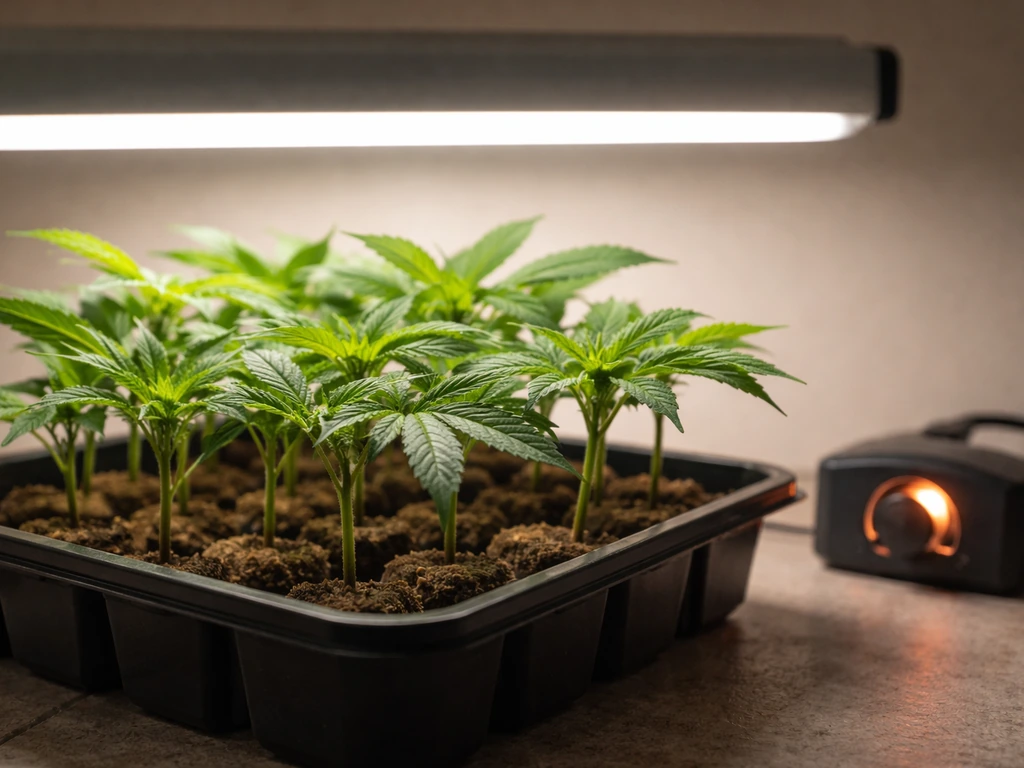
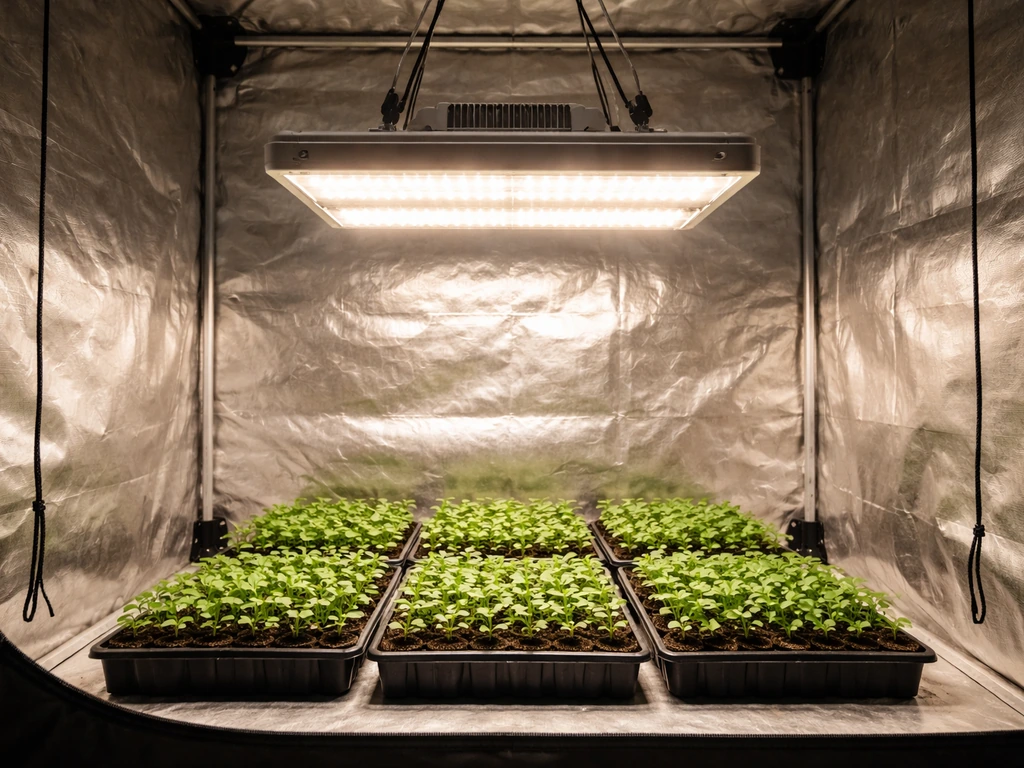
Seedlings and clones need gentle, even light, not intensity. Target PPFD of 80-250 µmol/m²/s for clones and early seedlings, running an 18-hour photoperiod. A dimmable 100-200 W fixture running at 30-50% output is often better than a dedicated low-power light, because you can scale up the same fixture as plants move into veg. Lights without dimming force you to raise the fixture to reduce intensity, which can create uneven coverage.
Vegetative growth
Veg targeting sits in the 250-650 µmol/m²/s range depending on the week and crop. Early veg weeks want the lower end; later bulk veg weeks push toward 625 µmol/m²/s with an 18-hour photoperiod. Most full-cycle fixtures do veg well, but check that the dimming range goes low enough for early stages without flickering.
Flowering and bloom
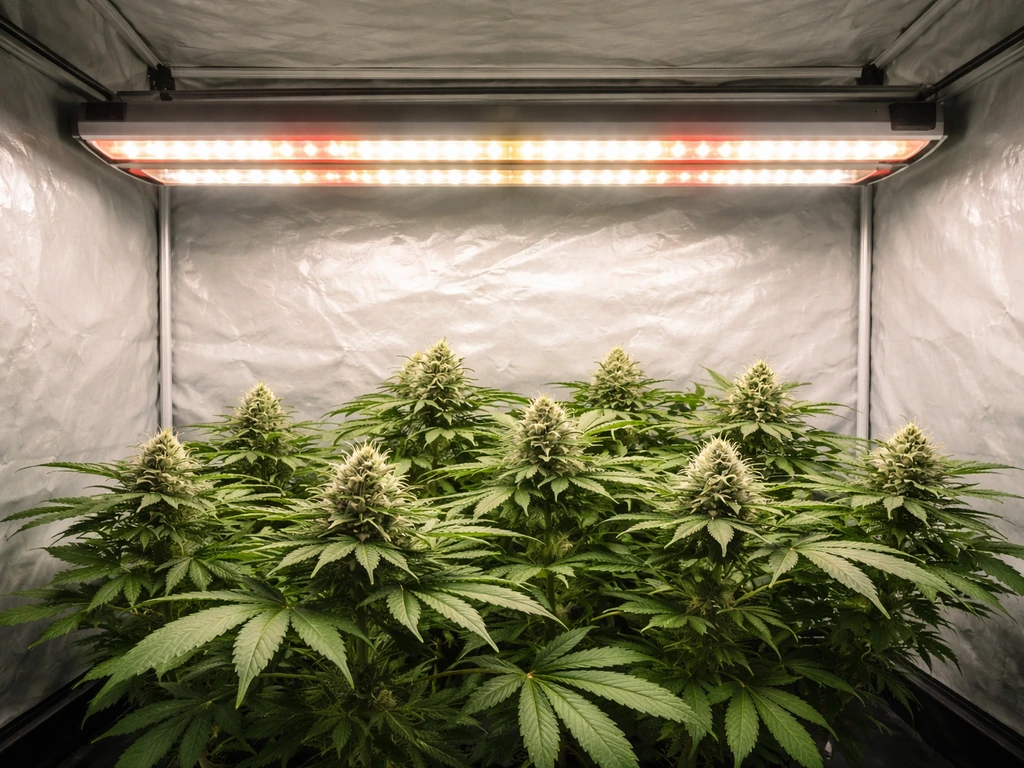
Flowering is where intensity matters most. Target PPFD of 650-1000 µmol/m²/s for most flowering crops under a 12-hour photoperiod, with some light-hungry plants tolerating up to 1175 µmol/m²/s at peak. This is where cheap lights often fail: their rated PPFD looks fine at 18 inches, but at real canopy distance with real uniformity, they fall short. Always ask for a full PAR map, not just the center point.
Matching wattage and coverage to your space
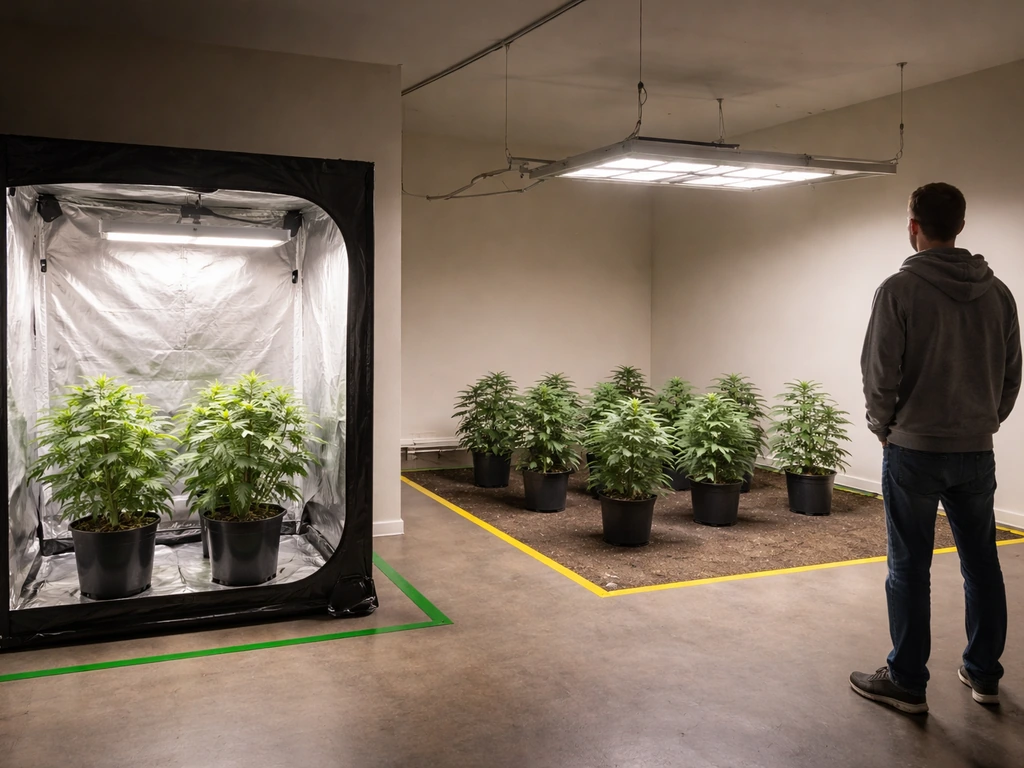
The single most common mistake growers make is buying the wrong size light for their space, usually overshooting for small tents or undershooting for large rooms. Here's a practical wattage-to-coverage guide based on real PPFD targets.
| Space Size | Actual Wattage Needed | Target PPFD (Flower) | Best Form Factor |
|---|---|---|---|
| 2x2 (4 sq ft) | 100-150 W | 650-900 µmol/m²/s | Compact panel or single bar |
| 2x4 (8 sq ft) | 200-300 W | 650-900 µmol/m²/s | Multi-bar or mid-size panel |
| 3x3 (9 sq ft) | 250-350 W | 700-950 µmol/m²/s | Multi-bar or compact bar array |
| 4x4 (16 sq ft) | 400-600 W | 750-1000 µmol/m²/s | Bar array or high-efficacy panel |
| 5x5 (25 sq ft) | 600-800 W | 750-1000 µmol/m²/s | Bar array, preferred |
| 4x8 (32 sq ft) | 800-1200 W | 750-1000 µmol/m²/s | Dual bar arrays or commercial fixture |
| 10x10+ (100 sq ft) | 2000+ W (multiple fixtures) | 800-1100 µmol/m²/s | Commercial multi-bar or linear array |
Bar lights vs panels vs strips
Bar lights (multi-bar LED arrays) have largely become the default choice for serious tent and indoor growers in 2026. They distribute light across a wider area with better uniformity than traditional quantum board panels, and they typically run cooler because heat is spread across a larger surface. Panels remain competitive in smaller spaces (2x2 to 3x3) where a single point source covers the canopy adequately. Strip or linear arrays are best for large open rooms, greenhouse racks, or vertical growing setups where you need to tune spacing precisely. The geometry matters: a wider beam angle or multiple bars mean fewer hotspots and more usable light at the canopy edges, which is where single-point panels consistently underperform in larger tents.
Spectrum basics you actually need to know
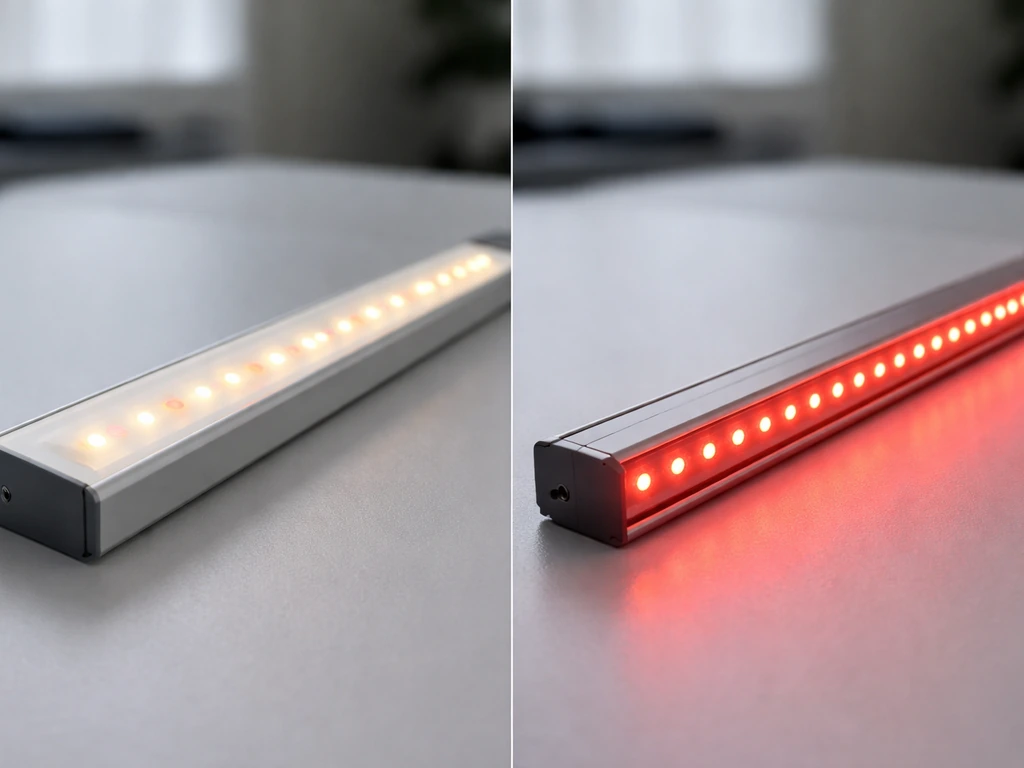
The term 'full-spectrum' gets thrown around constantly, and it doesn't always mean the same thing. A proper full-spectrum LED combines multiple wavelength bands: blue around 430-460 nm, green/yellow in the 580-610 nm range, red at 630-660 nm, and far-red at 700-850 nm, sometimes with UV near 410 nm. The key is that white LED phosphor chips emit a broad spectrum that fills the gaps between targeted wavelength peaks, which is why modern white-diode fixtures (often using Samsung or similar mid-power LEDs as a base) outperform old red/blue 'blurple' designs for most crops.
For most growers, a quality broad-spectrum white LED with red supplementation handles every growth stage competently. The real differentiation comes at the edges: far-red supplementation (700-850 nm) can accelerate flowering initiation and improve canopy penetration, and some premium fixtures let you tune red-to-far-red ratios independently. Unless you're dialing in a research protocol or a very specific commercial crop, a well-designed full-spectrum fixture at appropriate PPFD will outperform a poorly designed spectrum-tuned fixture at any stage.
Spectrum by stage: what's actually useful
- Clones and seedlings: Broad white spectrum at low intensity. No need for red-heavy output at this stage.
- Vegetative growth: Full spectrum with blue emphasis supports compact, dense foliage. Blue-heavy spectrums (400-500 nm) promote shorter internodes in most crops.
- Flowering and bloom: Shift toward red (630-660 nm) and far-red (700-730 nm) to promote flowering. Many growers increase far-red intensity in the final weeks.
- Full-cycle lights: A well-calibrated broad-spectrum white LED with supplemental red and far-red handles all stages without switching fixtures.
The spec checklist: what to compare before buying
Here are the specs that actually predict whether a light will perform and last. If a manufacturer won't publish these, treat that as a red flag.
Efficacy (µmol/J)
Efficacy tells you how much photosynthetically active light you get per watt consumed. Budget-tier lights typically land around 1.8-2.0 µmol/J. Mid-range fixtures hit 2.2-2.4 µmol/J. Premium commercial fixtures like the Fluence SPYDR 3 reach 2.6 µmol/J. Higher efficacy means lower electricity costs over time, which matters a lot across a full grow season. Don't accept advertised efficacy without a verified spec sheet, and be skeptical of any light claiming above 3.0 µmol/J without third-party testing data.
Driver quality
The driver is the most failure-prone component in any LED fixture. Meanwell drivers are the industry benchmark for reliability. Inventronics is a credible alternative. Generic no-name drivers are where budget lights cut corners and where you'll see failures at 12-18 months. Check whether the driver is external or integrated: external drivers run cooler and are easier to replace. Some high-end bar fixtures position the driver outside the grow space entirely, which extends diode life meaningfully.
Dimming controls
Dimming is non-negotiable for any serious grower. You need it for seedling stages, for dialing in PPFD when you change canopy height, and for CO2-augmented grows where you push intensity above baseline targets. The main standards are 0-10V analog dimming (the most common in commercial and semi-commercial fixtures), PWM dimming (common in consumer-grade lights), and RJ12 or proprietary network dimming for daisy-chaining multiple fixtures. Some premium fixtures like HLG's 750 Diablo offer RJ 0-10V control alongside a manual knob. Fluence's Wireless Flex system adds wireless control over a 0-10V port. For most tent growers, a manual dimmer knob or basic 0-10V controller is perfectly adequate.
Thermal management
LEDs degrade faster at higher junction temperatures. Fixtures with passive aluminum heatsinks and wide surface area run cooler and last longer than compact designs that concentrate heat. Check whether the fixture has a stated operating temperature range and whether the driver has thermal protection. In a sealed tent without adequate ventilation, even a well-designed fixture can overheat, so factor grow room ambient temperature into your setup planning.
Daisy-chaining
If you're running multiple lights, daisy-chain support lets you control several fixtures from a single dimmer or controller. This is critical for larger rooms and commercial setups. Check the maximum number of fixtures per chain (often 6-30 depending on the system) and whether the controller is included or sold separately.
Safety certifications and IP rating
Look for UL, ETL, or CSA certification for US markets. Intertek describes UL 8750 as the recognized safety standard for LED equipment, focusing on components like drivers used in lighting products blank" rel="noopener noreferrer">safety certifications and IP rating. European and Australian growers should verify CE or SAA marks. IP ratings matter in humid grow environments: blank" rel="noopener noreferrer">IP65 handles dust and water jets, IP66 handles heavy water jets and is suitable for wet locations. Fluence certifies some fixtures to IP66 for greenhouse use. Don't skip this, especially in high-humidity grow rooms.
Warranty and parts support
A five-year warranty from a company that will still exist in five years is worth more than a lifetime warranty from an unknown brand. HLG, Fluence, Gavita, Spider Farmer, Mars Hydro, and a few others have demonstrated staying power. Three years is the minimum I'd accept; five years is the standard for premium commercial fixtures. Check whether warranty covers drivers separately, since that's usually the first thing to fail.
The top 20 LED grow lights for 2026
These 20 lights represent the best available choices across wattages, form factors, price points, and grow scenarios as of April 2026. They're ordered roughly from premium commercial down to accessible budget picks, but the 'best' one for you depends entirely on your specific setup.
1. Fluence SPYDR 3
Best for: Commercial indoor rooms and serious large-scale tent growers. The SPYDR 3 runs at 800 W (at 277 V), outputs 2090 µmol/s PPF, and hits 2.6 µmol/J efficacy, which is among the highest verified figures available in 2026. It supports 0-10V dimming, carries IP-rated construction for humid environments, and comes with a five-year warranty. The tradeoff is cost: this is a commercial fixture with a commercial price tag. It's designed for 4x4 to 5x5 footprints in open room arrays. If you're running a tent, there are better-value options.
2. Gavita Pro 1700e LED
Best for: Commercial growers transitioning from HPS and large indoor rooms. The 1700e draws around 645 W, covers a 4x4 to 5x5 footprint at flowering intensity, and integrates cleanly into Gavita Master Controller systems for multi-fixture dimming. Efficacy sits around 2.6 µmol/J. The fixture has a strong track record in commercial cannabis production. Its wide coverage and uniform light distribution reduce hotspots. The downside is price, and the Gavita ecosystem is proprietary, so daisy-chaining requires their controller.
3. HLG 750 Diablo
Best for: Serious tent growers running 5x5 or large 4x4 spaces who want premium performance without going full commercial. The 750 Diablo is a bar-style fixture drawing approximately 730 W, with RJ 0-10V control and a manual dimmer option. Efficacy is competitive at the 2.4-2.6 µmol/J range. HLG's five-year warranty and US-based support give it strong long-term value. It runs warm, so tent ventilation needs to be adequate. Not cheap, but one of the best per-dollar options at this wattage level.
4. HLG 650R
Best for: 4x4 to 5x5 tent growers who want high efficacy at slightly lower wattage. The 650R is a proven HLG bar fixture that performs consistently across a 4x5 footprint at flower PPFD targets. It has a Meanwell driver, 0-10V dimming, and HLG's standard warranty. Slightly more accessible in price than the 750 Diablo while offering similar efficacy. A strong choice for the grower who wants HLG performance without maximum wattage.
5. Spider Farmer SE7000
Best for: 4x6 to 5x5 rooms where budget-conscious growers want bar-style performance. The SE7000 draws around 730 W with Samsung LM301H EVO diodes and a Meanwell driver, landing around 2.5-2.6 µmol/J efficacy. Spider Farmer's bar-style fixtures have earned credibility through consistent PPFD map performance and accessible pricing compared to HLG and Fluence. The three-year warranty is adequate, though not exceptional. A strong pick for growers who've outgrown entry-level lights but aren't ready for commercial pricing.
6. Mars Hydro FC-E8000
Best for: Large 5x5 to 4x8 spaces where value per watt matters. The FC-E8000 draws approximately 800 W, uses Samsung LM301H diodes, and achieves competitive efficacy around 2.4-2.5 µmol/J. Mars Hydro has improved quality control significantly in recent years, and their bar-format fixtures distribute light well. Dimming is available via a manual knob with optional controller. Warranty is three years. Best for growers who need coverage area and respectable efficacy without a premium price.
7. Spider Farmer SF-4000
Best for: 4x4 tent flowering. One of the most consistently reviewed mid-range quantum board fixtures available. Draws around 450 W, uses Samsung LM301B or LM301H diodes (depending on batch), and delivers solid PPFD at canopy in a 4x4 with mylar walls. Meanwell driver, manual dimmer, three-year warranty. A reliable workhorse at a mid-range price. Not the highest efficacy in the class but proven over multiple grow cycles.
8. Mars Hydro TSW 2000
Best for: 3x3 to 4x4 tents, especially for growers just moving past entry-level lights. The TSW 2000 draws around 300 W, covers a 3x3 footprint at flower PPFD targets comfortably, and runs relatively cool for a panel-style fixture. Samsung diodes, Meanwell driver, dimmable, three-year warranty. Strong value-per-dollar for the wattage. The panel format means slightly less edge uniformity in a 4x4 versus a bar fixture, but for 3x3 it's an excellent fit.
9. Growers Choice ROI-E720
Best for: Commercial or semi-commercial growers who want daisy-chaining and high efficacy in a bar format. The ROI-E720 draws around 720 W and is designed to link multiple units via a controller, making it practical for room-scale builds. Efficacy is strong at around 2.6 µmol/J. The five-year warranty and US-based support are standout features. It's pricier than Spider Farmer or Mars Hydro but earns that premium with build quality and support.
10. Photontek X 600W Pro
Best for: 4x4 to 5x5 growers who want controllability and connectivity. The X 600W Pro supports RJ12 daisy-chaining, 0-10V dimming, and has been tested at strong efficacy figures. Photontek has built credibility in the UK and European markets and is expanding in North America. The fixture runs cool for its wattage and the bar-style distribution is effective. A strong premium choice for growers who want to grow their control system over time.
11. Valoya AP67
Best for: Greenhouse supplemental lighting and specialty crops requiring precise spectrum control. Valoya fixtures are certified to UL and CSA standards, support 0-10V and PWM dimming with Dim-to-Off capability, and are engineered around research-validated spectrums for specific crops. They're not the right tool for a hobby tent, but for propagation or greenhouse applications where spectrum accuracy matters, they're a serious option.
12. HLG 300L Rspec
Best for: 3x3 tents for full-cycle growing. The 300L Rspec draws around 300 W with an enhanced red spectrum that suits flowering particularly well. It's a quantum board panel format, uses a Meanwell driver, and has HLG's five-year warranty. The Rspec designation means a higher ratio of 660 nm red diodes, which can improve flower density versus a pure white-spectrum light. Good value for a 3x3 space from a trusted manufacturer.
13. California Lightworks SolarSystem 1100
Best for: Growers who want programmable spectrum control across growth stages. The SolarSystem 1100 uses a controller to program spectrum ratios and intensity at each growth stage. It draws around 480 W and covers a 4x4 to 5x5 space. The programmable approach is genuinely useful if you're dialing in specific crops or running research protocols. The tradeoff is complexity and price: simpler lights at this wattage deliver comparable raw performance at lower cost.
14. Spider Farmer G8600
Best for: Large 4x8 spaces and dual-light 5x5 setups. The G8600 is Spider Farmer's high-output commercial bar fixture, drawing approximately 860 W with strong uniformity across a large footprint. Samsung LM301H EVO diodes, Meanwell driver, 0-10V dimming, and a three-year warranty. Comparable to the SE7000 but with more output and slightly wider coverage. Best suited for growers operating at the edge of hobby and commercial scale.
15. Mars Hydro FC 6500
Best for: 4x4 to 5x5 tents where the FC-E8000 is too much wattage. The FC 6500 draws around 730 W in its rated configuration and is one of Mars Hydro's best-performing fixtures in real PPFD testing. Bar format, Samsung diodes, manual dimmer, three-year warranty. A solid mid-to-upper-range option that consistently delivers at the canopy in tent grows.
16. AC Infinity IONFRAME EVO9
Best for: Growers already in the AC Infinity ecosystem who want integrated controls. The EVO9 is a bar-style fixture drawing around 800 W that integrates with AC Infinity's UIS controller system, allowing scheduling, dimming, and environment-linked automation from a single app. Samsung LM301H diodes, competitive efficacy, and the cross-device control ecosystem are the main draws. Warranty and parts support have improved. If you already run AC Infinity fans and controllers, this fixture simplifies your whole room significantly.
17. Medic Grow Fold-8
Best for: Growers who want portability and adjustable bar spacing. The Fold-8 is a foldable 8-bar fixture that packs flat for transport and allows bar spacing to be adjusted for coverage shape. It draws around 800 W with competitive efficacy. The folding design is genuinely useful for growers who move between tents or need to optimize coverage shape. Not as widely reviewed as HLG or Spider Farmer, but tested performance has held up.
18. Photobio TX 680W
Best for: Commercial supplemental lighting and large indoor rooms. The TX 680W is a high-output fixture targeting professional cannabis and horticulture production, with strong PPFD performance and IP-rated construction for humid environments. It supports 0-10V dimming and daisy-chaining. Premium pricing, but the build quality and commercial warranty justify it for operators running consistent production cycles.
19. Mars Hydro TS 1000
Best for: 2x2 to 3x3 tent growers on a budget, and seedling/veg stages in larger tents. The TS 1000 draws around 150 W, covers a 2x2 footprint at decent flower PPFD or a 3x3 at veg intensity. It's one of the most affordable lights on this list that still uses name-brand diodes and a decent driver. Not a powerhouse, but for the price and use case, it consistently delivers. Three-year warranty.
20. Spider Farmer SF-1000
Best for: Small 2x2 tents, seedling trays, and clone propagation. The SF-1000 draws around 100 W, uses Samsung LM301B diodes, and delivers consistent PPFD for small-footprint growing. It's dimmable, comes with a Meanwell driver, and has a three-year warranty. For a small tent or a propagation setup, this is the go-to entry-level recommendation from a reliable manufacturer. Don't expect it to flower a 3x3 at full intensity, but for its designed use it's hard to beat at this price.
Installation and setup checklist
Getting the light in the right position is as important as choosing the right light. Here's the practical setup checklist every grower should run through after unpacking a new fixture.
- Set initial hanging height based on manufacturer's recommended height for 100% intensity. Most flowering fixtures should start at 18-24 inches above the canopy and be adjusted based on measured PPFD, not guessing.
- Use a calibrated quantum sensor (like the Apogee MQ-200X) to measure actual PPFD at canopy level at multiple points across the grow area. Check center and all four corners. This is the only way to know if you're hitting your PPFD target.
- Map your coverage area before plants are in place. If corner readings are below 70% of center readings, raise the fixture or add reflective material to walls.
- Confirm reflective wall coverage in tents. Mylar or white poly on all four walls and the floor (around pots) adds meaningful reflected light to the canopy edges, reducing the center-to-edge PPFD gap by a measurable amount.
- Run ventilation before the first grow cycle to baseline ambient temperature. LED fixtures add heat to the grow space; measure ambient temperature at canopy level after the fixture has been running for 30 minutes at full power. Target 70-82°F (21-28°C) at the canopy.
- Check for hotspots by measuring PPFD across a grid pattern: 9+ measurement points in a 4x4, 16+ in a 5x5. Hotspots above 1200 µmol/m²/s in a non-CO2-enriched environment can stress plants.
- Confirm dimming functionality before the grow starts. Run the fixture at 30%, 60%, and 100% and verify output scales as expected. Some fixtures flicker at very low dim settings, which is not acceptable for long-duration photoperiods.
- Plan your daisy-chain layout before running cables. Ensure controller compatibility and maximum load per chain is not exceeded.
- Document your baseline: note hanging height, dimmer setting, and PPFD readings at the start of each growth stage. This lets you replicate results and diagnose problems quickly.
Costs, energy, and avoiding expensive mistakes
The sticker price of an LED fixture is almost never the real cost. A 400 W fixture running 18 hours a day for 60 days of veg uses approximately 432 kWh. At $0.15/kWh (a reasonable US average), that's about $65 in electricity for the veg cycle alone. Scale that up to a 1000 W fixture across a full year of 12/18-hour cycles and you're looking at $600-900 annually in electricity, before any other costs. A fixture that's 0.3 µmol/J more efficient than its competitor might cost $150 more upfront but save you $80-100 per year in power, breaking even in less than two years.
Here are the most expensive and most common mistakes to avoid:
- Overbuying wattage for a small tent: A 1000 W fixture in a 3x3 doesn't just waste electricity, it creates heat and intensity problems. Match wattage to footprint using the table earlier in this guide.
- Trusting advertised wattage without verifying actual draw: Some fixtures are marketed at their theoretical maximum but draw significantly less at the wall. Always check the spec sheet's 'input power' figure, not the LED chip rating.
- Ignoring PPFD uniformity in favor of peak numbers: A light that hits 1200 µmol/m²/s in the center and 300 at the corners is useless for even canopy development. Demand full PAR maps.
- Skipping dimming and then wondering why seedlings stretch: Without dimming, you're either burning seedlings at full power or raising the fixture so high that coverage suffers. Get a fixture with proper dimming.
- Buying based on Amazon star ratings rather than verified specs: Consumer review aggregates rarely reflect actual PPFD performance. Look for third-party test data.
- Underestimating heat load: LEDs are efficient, but a 600 W fixture still dumps 600 W of energy into your grow space. Plan ventilation to remove that heat, not just to circulate air.
- Ignoring warranty origin: A three-year warranty from a brand with a local support office is meaningfully different from a three-year warranty from a dropshipping reseller. Know who you're actually buying from.
- Confusing lumens with PPFD: Lumens measure light as humans perceive it. PPFD measures photons plants use. A high-lumen reading means nothing for plant growth if it's not verified in µmol/m²/s across PAR wavelengths.
For most hobbyist growers running a 4x4 tent, the sweet spot is a 400-600 W bar-style fixture from HLG, Spider Farmer, or Mars Hydro in the $300-600 range, with a Meanwell driver, 0-10V or knob dimming, and a minimum three-year warranty. If you want a fast, curated shortlist, see our top 10 led grow lights picks for the latest verified options by room size and budget. That combination will deliver flowering PPFD targets reliably, run efficiently enough to keep electricity costs manageable, and survive multiple grow cycles without driver failure. Moving up to fixtures like the HLG 750 Diablo, Fluence SPYDR 3, or Gavita Pro 1700e makes sense when you're running multiple rooms, need commercial-grade uniformity, or want the longest possible fixture life with maximum efficacy. The extra cost buys real performance at scale, but it's not necessary for a well-run single tent.
FAQ
How do I know if a top 20 LED grow light’s dimming will actually work for seedlings and clones?
Look for a dimming range that can reach your seedling and clone PPFD needs without flicker (often the manufacturer will specify min power or min output). If the lowest setting still drives high PPFD, you can end up raising the fixture or accepting uneven coverage, which defeats the purpose of dimming. For multi-fixture rooms, confirm the dimming standard matches your controller (0-10V, PWM, RJ12) so all lights track the same intensity.
What should I check to avoid buying a light that looks strong on paper but underperforms across the canopy?
Ask for the full PAR map at canopy height, ideally at multiple heights and the dimming output you plan to use. Center-point PPFD can look great while edges and corners lag, especially in larger tents. If you cannot get maps, use strict rules of thumb for spacing and consider a bar or multi-bar geometry instead of a single-panel point source.
Can I buy one light for the entire full cycle (clones to flower), or do I need different intensities?
Yes, but only if the fixture has true dimming control that you can scale consistently, and the photoperiod is matched for the crop stage. A good approach is to choose one fixture for the whole cycle, then plan your canopy height changes plus dimming steps. If the fixture is not reliably stable at low output, it can be better to use a separate low-intensity light for propagation.
Will a premium high-efficacy grow light last longer in a hot grow tent, or is it mostly about brand?
Yes, but you need to confirm the driver reliability and the fixture’s operating temperature range for your environment. Even high-efficacy lights lose performance and lifespan when ambient temperatures are high or ventilation is inadequate. If you are running multiple fixtures in a sealed tent, prioritize larger heatsinks, external drivers, and tested thermal protection details.
Are the “best LED grow lights” for tents automatically the right choice for greenhouse supplemental lighting?
Greenhouse supplemental lighting is not the same as tent growing. The FAQ-safe rule is to check IP rating, certification, and spectrum controls (including dim-to-off where relevant), then verify that the dimming type integrates with your existing automation. If you need consistent spectrum accuracy for specific crops, prioritize research-oriented fixtures instead of general full-spectrum tent lights.
Is it worth paying more for higher µmol/J if I plan to dim most of the time?
It matters. High efficacy can reduce electricity cost, but only if the real-world output at canopy matches the claimed efficacy. Do the simple cost check using your planned daily run hours, then compare expected electricity savings against the price difference. Also factor that a fixture that runs inefficiently at your chosen dimming level can erase the savings.
Can I daisy-chain multiple lights, and what are the common control mistakes people make?
For daisy-chaining, confirm the maximum number of fixtures per chain for your specific controller model, not the fixture’s general dimming support. Also verify whether you need the controller included or compatible separately, and whether RJ12 or proprietary networking is required. If you exceed supported chain limits, you can get uneven dimming or unstable control.
What’s the safest way to integrate multiple lights with my existing dimming or automation setup?
Generally, avoid using a “cheap” dimming solution that is not rated for the light’s control interface, and avoid DIY wiring that bypasses driver protections. In mixed rooms, ensure all fixtures share the same dimming protocol so they respond together. If your light uses 0-10V, confirm the controller’s voltage range and whether it supports multiple channels or a single global signal.
0-10V or PWM dimming, which is better for low-intensity stages?
If the fixture uses PWM dimming, some growers prefer 0-10V for smoother low-intensity control, especially for seedlings under long photoperiods. For your decision, prioritize stable output at the lowest setting you will use, and watch for flicker or intensity jumps during warm-up. If stability at low output is critical, choose a fixture with published low-output behavior.
When “full-spectrum” is marketing-heavy, what specific spectrum details should I look for?
Don’t treat “full-spectrum” as a guarantee of spectrum quality. The practical decision aid is to look for how far-red is implemented (range around 700 to 850 nm), whether the fixture uses white diode phosphor with proper band coverage, and whether any spectrum tuning is independently controllable. If you are not doing research-grade tuning, a well-designed broad-spectrum white plus sensible far-red support is usually the simplest win.
How do I choose coverage if my tent isn’t a perfect rectangular setup or my canopy height will vary?
Even when using the top 20 list, you should start by matching footprint and coverage geometry to your tent or room plan. A useful edge case is mixed layouts, like a 5x5 with a central walkway or a 4x4 with a trellis that creates irregular canopy height. In those cases, bar fixtures and verified PAR maps become more important than raw wattage.
Next Articles
What Are the Top 5 LED Grow Lights? Picks by Space
Top 5 LED grow lights by space, with selection criteria, best use cases, PPFD tips, and buying checklist.
Top 10 LED Grow Lights: Best Picks by Tent Size
Ranked top 10 LED grow lights by tent size with coverage, PPFD, efficiency, and setup tips for 2x2 to 5x5
Best Full Spectrum 1000W LED Grow Lights: Buyer Guide
Buy the best full spectrum 1000W LED grow light with spec-to-decision tips on PPFD, coverage, wattage, and tent fit.