
The best full spectrum 1000W LED grow light for most home growers in a 4x4 tent right now is a bar-style or quantum board unit pulling 900–1000 actual watts from the wall, with a verified average PPFD of at least 800–1000 µmol/m²/s across the canopy at flowering height, a PPE (photon efficacy) rating above 2.5 µmol/J, and a real full-spectrum output that goes beyond just red and blue. That narrows the field considerably once you know how to read the specs, and the rest of this guide walks you through exactly that. If you're specifically shopping for the best 100W LED grow light, use the same PPFD map and wattage-at-the-wall checks to avoid overhyped “equivalent” claims.
Best Full Spectrum 1000W LED Grow Lights: Buyer Guide
Marcus Rutherford
22 Apr 2026
What 'Full Spectrum 1000W' actually means
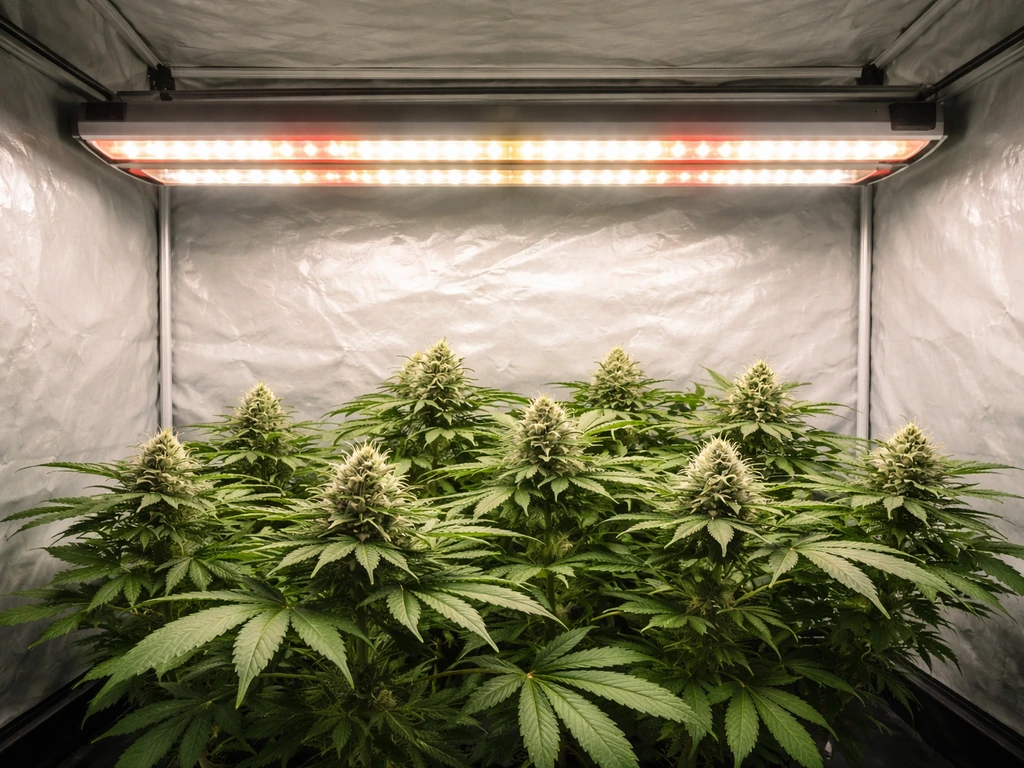
Let's deal with the marketing language first because it causes a lot of confusion. 'Full spectrum' gets slapped onto almost every grow light sold today, but the term means very different things depending on who's using it. Heliospectra's DYNA technical specifications list its wavelength channels, including UV-A 380 nm, blue 400/420/450 nm, green 520 nm, red 630/660 nm, far-red 735 nm, and white 5700K ['full spectrum' gets slapped onto almost every grow light sold today](https://led. heliospectra.
com/hubfs/Support%20Portal/Product%20Manuals/Heliospectra%20DYNA%20Technical%20Specifications%20V. 1. 1. pdf).
At a minimum, a true full-spectrum LED should cover the full PAR window of 400–700 nm, including both blue (400–500 nm), green (500–600 nm), and red (600–700 nm) wavelengths. Better units extend beyond that into far-red (700–750 nm) and sometimes UV (380–400 nm). Heliospectra's DYNA fixture, for example, uses nine individually controlled wavelength channels spanning from 380 nm UVA all the way to 735 nm far-red.
That's the gold standard of what 'full spectrum' should look like in practice, though you won't find that level of control in typical 1000W consumer grow lights.
The '1000W' part is where growers get burned most often. Almost no LED fixture labeled '1000W' actually draws 1000 watts from your wall at standard US household voltage (120V). Mars Hydro's FC1000W, for instance, draws 870–890W at 100–120V and only hits 970–1010W at 180–277V. Their FC1000W EVO targets 1000W ±5% but only at AC 220–277V.
That's not a flaw, it's just how LED drivers work, but it matters for your electricity bill and for how you interpret PPFD claims. When a manufacturer says their light hits 2900 µmol/m²/s peak PPFD (as Mars Hydro claims for the FC1000W EVO), that's the maximum at the center point, not an average across your canopy. The number you actually care about is the average PPFD across your full grow footprint at your actual mounting height.
PPFD stands for Photosynthetic Photon Flux Density and is measured in micromoles of photons per square meter per second (µmol/m²/s). Think of it as the intensity of light hitting your plants at a specific spot. A good manufacturer will provide a PPFD map, a grid of measurements taken at multiple points across the coverage area at a defined height. That grid tells you how uniform the light is and what the average canopy intensity actually is. If you only see a single peak number, that's a red flag. For flowering cannabis or heavy-producing vegetables, you want an average PPFD of 800–1200 µmol/m²/s. For veg, 400–700 µmol/m²/s is usually plenty.
True 1000W vs 1000W-equivalent: which type do you actually need
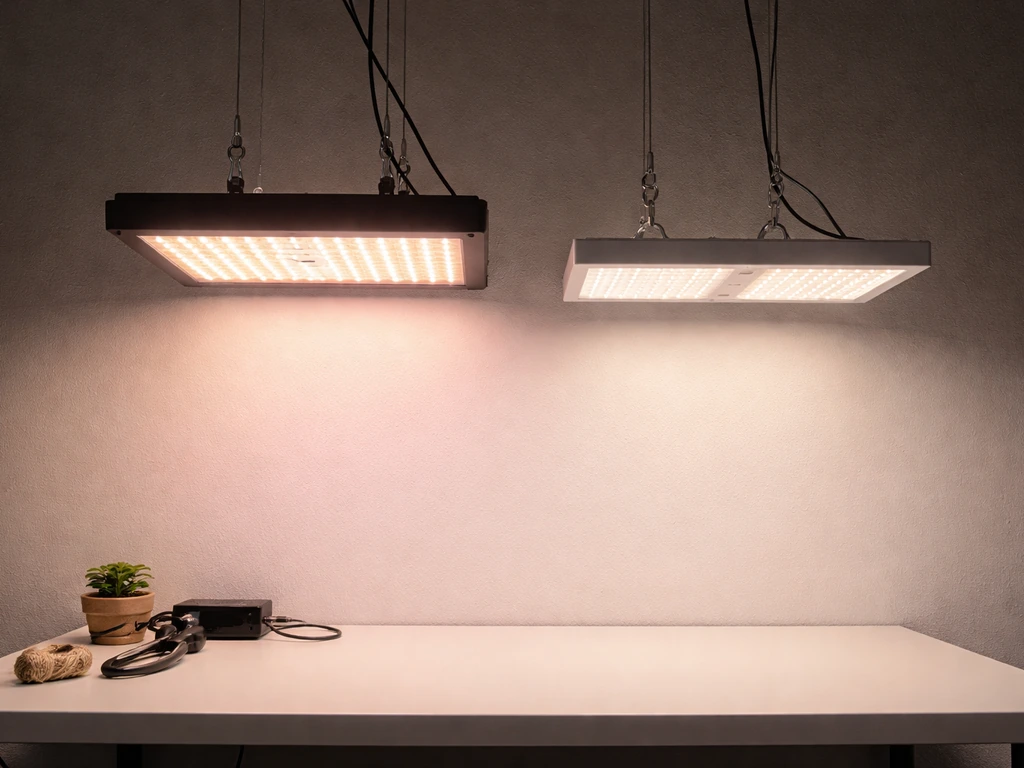
This is the most important decision you'll make before buying. The '1000W LED' market splits into roughly four categories, and they're not interchangeable even if the label says the same thing.
| Type | Actual Draw | Best For | Typical Form Factor | Efficiency |
|---|---|---|---|---|
| True 1000W draw LED | 950–1050W | 5x5 ft flowering, commercial rows | Large bar array or multi-chip panel | 2.5–2.8 µmol/J |
| 1000W-equivalent (HID replacement) | 400–600W | 4x4 ft all-stage, veg-heavy grows | Quantum board or compact panel | 2.2–2.6 µmol/J |
| Bar-style foldable array | 800–1000W | 4x4 to 4x6 ft, uniform canopy | Multiple articulating bars | 2.4–2.7 µmol/J |
| Research/commercial tunable | 500–1200W | Controlled research, specialty crops | Modular rack or ceiling mount | Varies by spectrum setting |
A '1000W HID replacement' LED typically draws 400–600W actual watts. It's designed to produce comparable yield results to a 1000W HPS because LEDs convert power to photons more efficiently than HID. These lights work well in a 4x4 tent if the PPFD map checks out, but they won't fill a 5x5 at flowering intensity. If you're replacing an actual 1000W HPS in a larger space, you need a true high-draw LED, something pulling 900W or more from the wall.
Searching for the best LED grow light to replace a 1000W HPS specifically requires a different calculation than picking a light for a new tent build. To find the best led grow light to replace 1000w hps, focus on actual wall draw and a canopy-average PPFD map for your exact tent size.
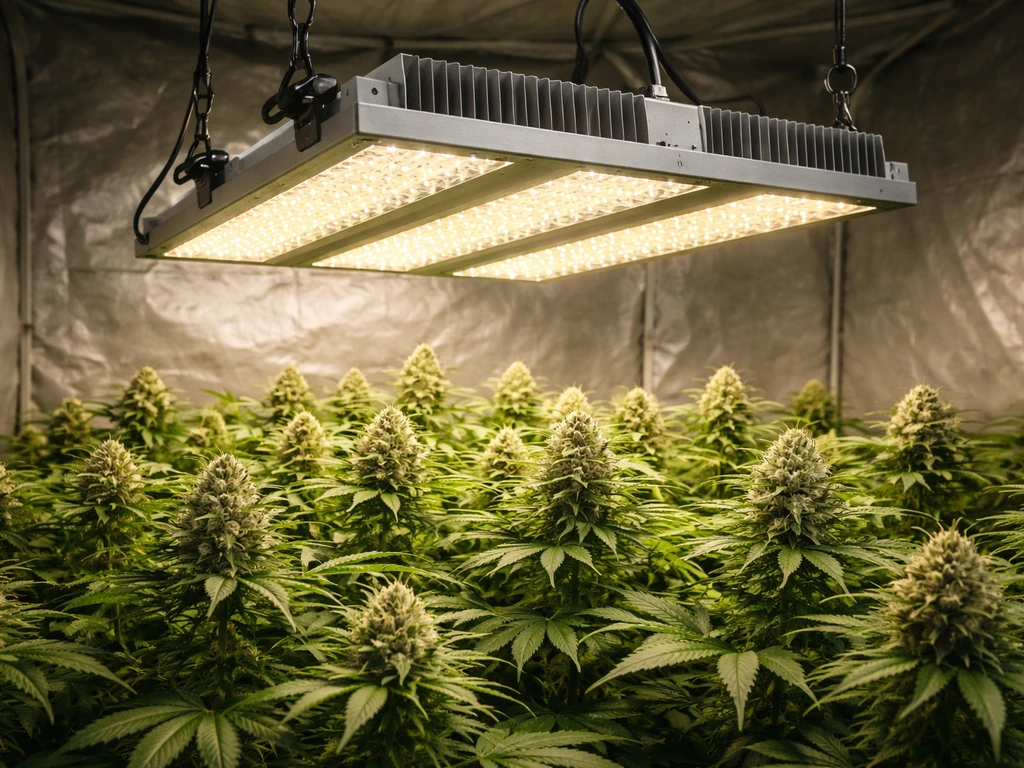
Bar-style lights like the Spider Farmer SE series and foldable multi-bar designs (like the Kingrowlight foldable that uses 10 x 100W bars for a true 1000W total) sit in the middle. The bar form factor distributes light more evenly across the canopy than a central puck or panel, reduces hot spots, and handles 4x4 to 4x6 coverage reasonably well depending on configuration. For most tent growers, a bar-style or quantum board drawing 800–1000W actual is the sweet spot.
Top picks by grow space and footprint
4x4 tent (16 sq ft)
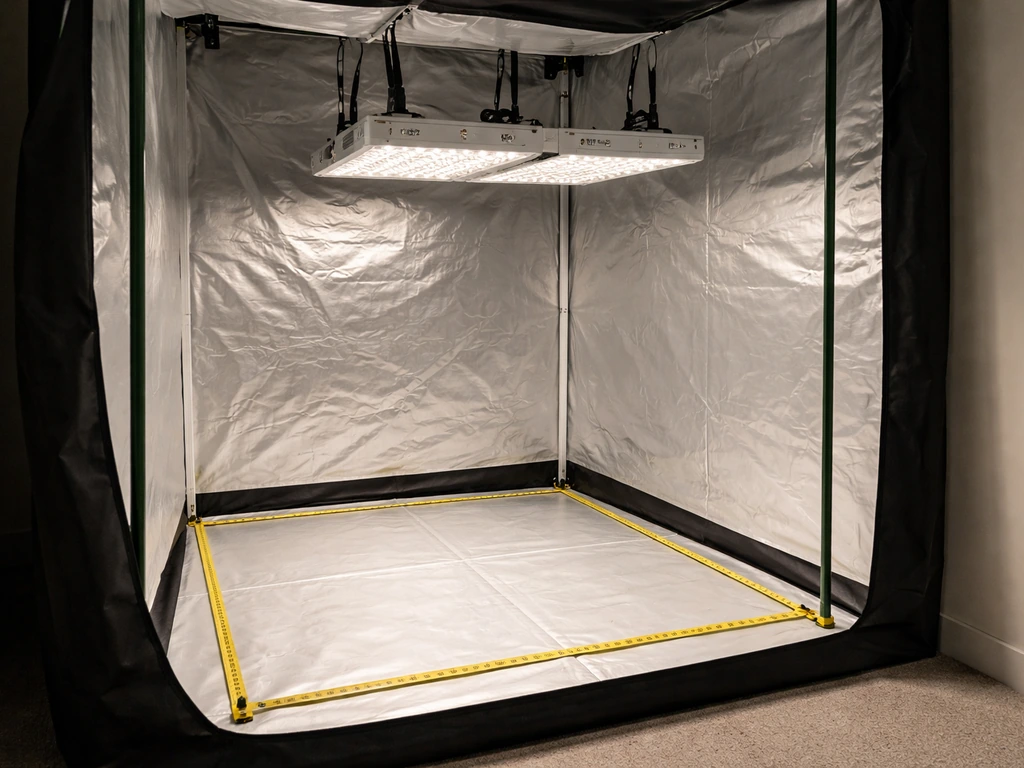
A 4x4 is the most common home grow tent size and the one most 1000W-class LEDs are designed around. For flowering in a 4x4, you want an average canopy PPFD of at least 800 µmol/m²/s, ideally 900–1000 µmol/m²/s. The California LightWorks SpectraMax Vertical 1000 delivers over 1700 µmol/m²/s across a 4x4 tray, which is actually overkill for a full-canopy average but leaves room for dimming headroom and multi-stage use.
For a more balanced choice, bar-style lights in the 800–1000W range from Spider Farmer's SE series are well-documented with real PPFD maps at multiple heights. The SE5000 targets 4x4 coverage explicitly and the SE-series manuals include grid PPFD charts at defined heights, which is exactly the kind of transparency you want.
The Spider Farmer SE-Series user manual includes PPFD grid maps at different mounting heights, showing numeric values across a 0, 4 FT by 0, 4 FT grid (for example, at heights labeled 8 and 10) grid PPFD charts at defined heights.
Use the same approach to identify which of the best led grow lights 1000w actually delivers your target average PPFD across the whole footprint bar-style lights in the 800–1000W range.
5x5 tent (25 sq ft)
A 5x5 is where a single true 1000W draw LED earns its place. You need to push 900–1000 actual watts to maintain flowering-level PPFD across 25 square feet. One well-specced bar array drawing 1000W can work here, but uniform coverage is harder to achieve with a single fixture. Many growers running 5x5 tents get better results from two lights running at 50–75% power than one light at full blast, because it improves edge-to-center uniformity. If you want a single-light 5x5 solution, verify the manufacturer's PPFD map is measured at 5x5 specifically, not a smaller footprint with falloff that leaves corners under-lit.
Veg-focused vs flower-focused setups
Vegetative growth doesn't need as much PPFD intensity as flowering. For a dedicated veg space, a 600W-class light running at 70–80% power gives you more dimming headroom, cooler temps, and lower electricity costs. Full-spectrum is still valuable in veg because blue (400–500 nm) drives compact, healthy growth and far-red accelerates the transition to flowering when you're ready. For all-stage use in one tent, pick a dimmable 1000W-class unit with at least a 50–100% dimming range so you can back it off during seedling and veg stages without sacrificing ceiling for flower.
The performance specs that actually matter
PPFD maps over single-point claims
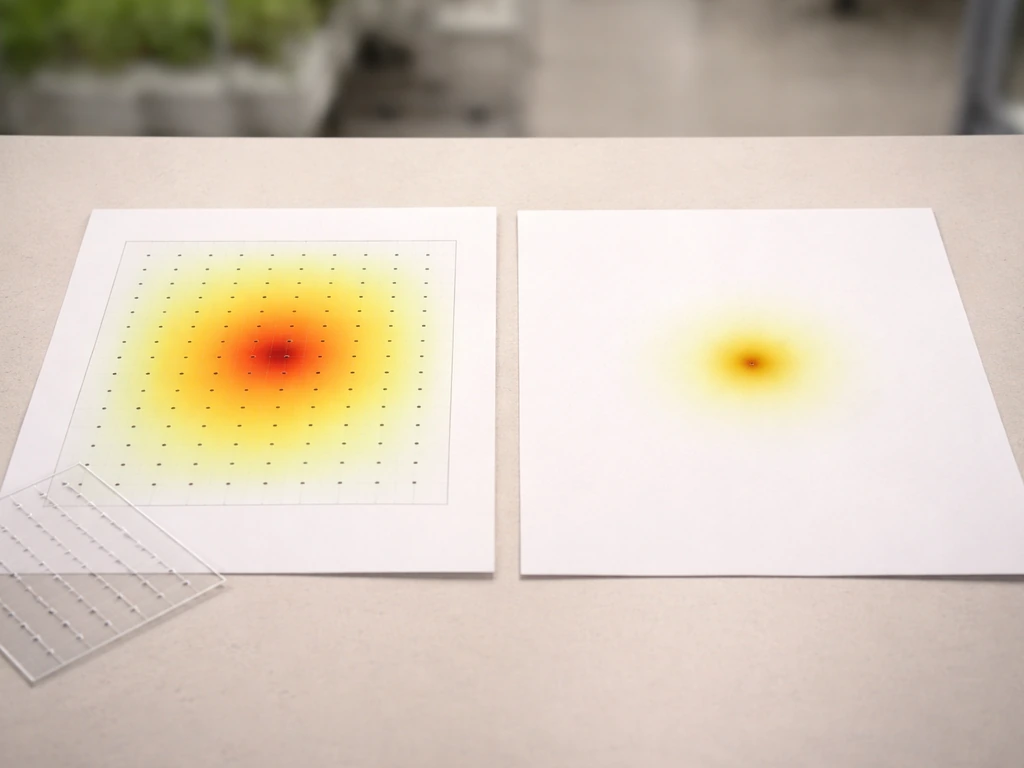
Always ask for (or find) a full PPFD grid map, not just a peak center reading. A credible map shows measurements at 9 or more points across the footprint at a stated height. Look at the corners and edges. If the corner readings are less than 60–70% of the center reading, you'll have significant dark zones. Third-party PAR testing is even better. Independent tests of the Mars Hydro FC-1000W, for example, have measured the corner-to-center PPFD ratio at a 41 cm height, and those numbers tell you far more than the marketing peak of 2900 µmol/m²/s.
Efficacy (PPE): the efficiency number that matters
Photon efficacy (PPE) is measured in µmol/J and tells you how many photons you get per watt of electricity. In 2026, a competitive 1000W-class LED should hit at least 2.5 µmol/J. Budget options often fall in the 2.0–2.3 range. Premium units push 2.7–2.8 µmol/J. Over a full grow cycle, a 0.3 µmol/J difference at 1000W means a meaningfully lower electricity bill, especially if you're running 12–18 hour photoperiods.
Driver quality
The driver is what converts AC power to the DC voltage your LEDs need, and it's one of the main failure points in any grow light. Meanwell (especially the HLG and ELG series) and Inventronics drivers are the industry benchmarks. If a light's product page doesn't name the driver brand, that's worth asking about. A quality driver runs cooler, dims more smoothly, and lasts longer than a no-name alternative. Dimming range matters too: 0–100% analog dimming is more useful than a fixed 50/75/100% step switch, especially for dialing in DLI targets.
Daisy-chaining for scaling
If you're running multiple lights or planning to expand, daisy-chain capability is a practical feature that saves you from cluttering your grow room with power strips and individual controllers. Most quality bar-style and commercial-grade units support daisy-chaining between 4 and 30 fixtures from a single controller. Confirm the maximum number of lights per chain before you buy, and check whether the daisy-chain also passes dimming control or just power.
Budget and grower type: who should spend what
| Grower Profile | Recommended Spend | What to Prioritize | What to Skip |
|---|---|---|---|
| First-time home grower (4x4 tent) | $300–$500 | Verified PPFD map, dimmability, warranty | Research-grade tunable spectrum |
| Experienced hobbyist (4x4–5x5) | $500–$900 | High PPE, bar-style uniformity, daisy-chain | Centralized commercial power systems |
| Small commercial (multiple tents) | $900–$1,800 per light | PPE above 2.6, daisy-chain, IP rating, warranty | Single-point PPFD marketing claims |
| Research/specialty crop | $2,000+ | Per-wavelength spectrum control, data logging | Consumer grow light brands |
For a first-time grower setting up a 4x4 tent, a bar-style LED in the $350–$500 range from a brand that publishes real PPFD maps and uses a named driver will outperform a cheaper option with vague specs every time. The mid-range $500–$900 tier is where the best value lives for experienced hobbyists: you get genuine 2.5+ µmol/J efficiency, better uniformity, and real daisy-chain support without paying for commercial-grade features you won't use.
Commercial scaling is a different equation. If you're running 10 or more lights, the per-unit cost matters less than total system efficiency, reliability, and how easy it is to replace a failed unit. California LightWorks' centralized MegaDrive system, for example, separates the driver from the fixture head, which simplifies maintenance in a multi-light rack setup. That architecture makes sense at scale but adds unnecessary complexity for someone running two tents at home. Keep this in mind if you're comparing 1000W options across multiple wattage classes, since the same logic applies whether you're looking at 100W fixtures or full 1000W commercial arrays.
Mounting height, coverage planning, and dimming
Hang height directly changes your PPFD readings and your coverage area. Raise the light and you get more uniform coverage but lower intensity. Lower it and intensity increases but hot spots appear and edges lose light. Spider Farmer's SE-series manual explicitly tells you to select hang height based on your target PPFD using the provided grid charts, which is the right approach. Here's a practical starting framework for a bar-style or quantum board 1000W LED in a 4x4 tent:
- Seedling/clone stage: 24–30 inches above canopy, light dimmed to 30–50%
- Vegetative stage: 18–24 inches above canopy, light at 50–75%
- Early flower: 16–20 inches, light at 75–100%
- Peak flower: 12–18 inches, light at 100% (monitor leaf temps, keep below 82°F surface)
These are starting points, not absolutes. Always verify with a PAR meter (an Apogee SQ-520 or similar quantum sensor) rather than relying on manufacturer tables alone. Manufacturer charts are measured in ideal lab conditions, and your reflective walls, plant canopy density, and room temperature all affect real-world PPFD. A $300 PAR meter will pay for itself in avoided burned crops and optimized yields within a single season.
For coverage planning, use the manufacturer's PPFD map to find the mounting height where your target average PPFD is met across your specific footprint. Don't assume a '4x4 coverage' claim means uniform 900 µmol/m²/s across all 16 square feet. Check the edge and corner numbers in the grid. A light that claims 4x4 coverage but shows 400 µmol/m²/s in the corners at flowering height isn't going to fill your tent evenly.
Heat, power draw, and long-term reliability
Cooling: passive vs active
Most quality 1000W-class LEDs in 2026 use passive cooling (heat sinks with no fans) on the fixture itself, relying on your grow tent's exhaust fan to move air across the heat sink. This is fine in a properly ventilated tent. Active cooling with built-in fans is more common in sealed panel designs and budget fixtures where the heat sink isn't large enough to passively handle the load. Fans add noise, create another mechanical failure point, and require periodic cleaning in a grow environment. All else equal, passive cooling with a properly sized heat sink is preferable.
IP rating and grow environment protection
Grow tents are humid, and humidity plus electronics is a real risk. Look for an IP rating of at least IP54 (splash-resistant) on any light you plan to run in a tent with overhead watering or high RH. Some commercial-grade fixtures carry IP65 or higher, which matters more in a greenhouse or open grow room where the light might get wet directly. Consumer tent lights often don't list an IP rating, which usually means no formal rating at all. It doesn't necessarily mean they'll fail immediately, but it's worth noting as a risk.
Rated lifespan and warranty
LED chips themselves are rated for 50,000–100,000 hours at full power. The driver and thermal management system usually determine the actual useful lifespan. Industrial LED products from companies like TSRgrow specify operating temperature ranges of -20°C to 45°C and state multi-year warranties alongside their lifetime claims. For consumer grow lights, a 3-year warranty is the minimum you should accept for a $500+ purchase. Some brands offer 5-year coverage. Read the warranty terms: many only cover defects, not performance degradation, and require proof of purchase and sometimes return authorization.
Safety certifications
For anything going in a home, look for UL listing, ETL certification (Intertek), or CE marking. Spider Farmer's SE-series documentation, for example, includes Intertek compliance language. These certifications mean the fixture has been tested to basic electrical safety standards. It won't guarantee the PPFD claims are accurate, but it reduces the risk of a fire or electrical fault in your grow space.
Buying checklist: how to verify claims before you commit
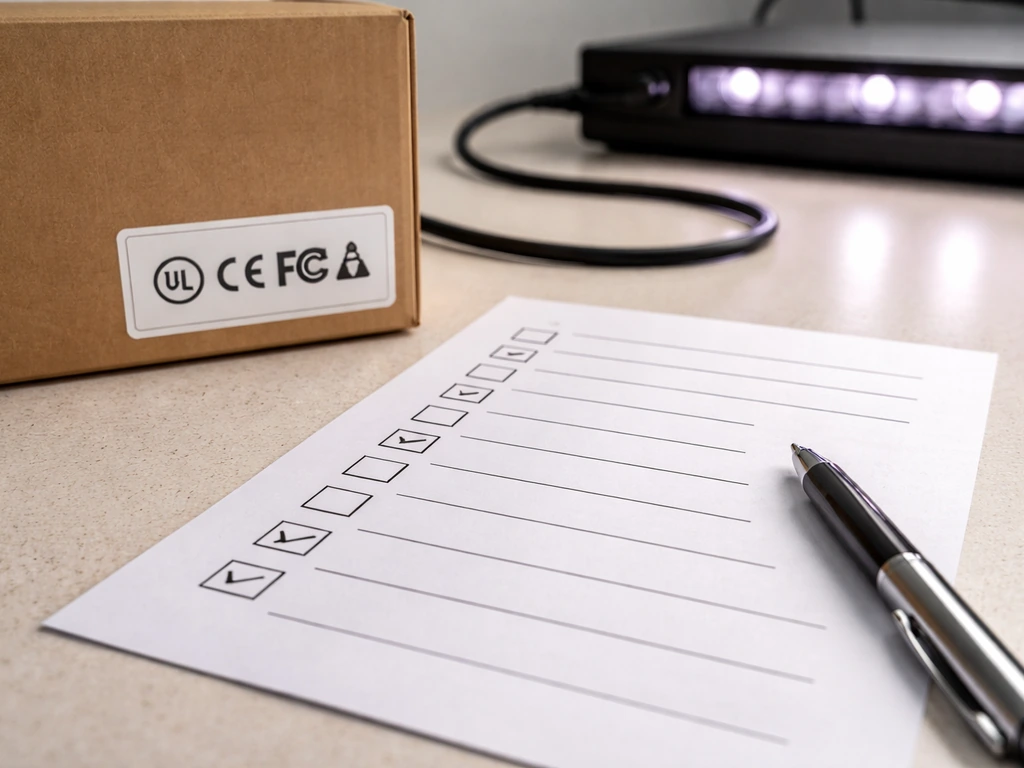
Before you click buy, run every candidate light through this checklist. Anything that fails more than two of these checks is a pass.
- Actual wall draw is stated clearly (not just 'equivalent wattage') and matches your voltage (120V or 240V)
- A full PPFD map (grid, not single-point) is published for your target footprint at a stated height
- PPE (photon efficacy) is listed and is at or above 2.5 µmol/J
- The driver brand is named (Meanwell, Inventronics, or equivalent)
- Full-spectrum claim includes at minimum 400–700 nm coverage plus far-red (700–735 nm)
- Dimming range is continuous (not just step switches) and covers at least 10–100%
- Daisy-chain support is confirmed if you plan to run multiple lights
- Safety certification (ETL, UL, or CE) is listed and verifiable
- Warranty is at least 3 years with clear replacement/repair terms
- Independent third-party PPFD test or grow review exists for the specific model
On the last point: manufacturer PPFD tables are a starting point, not gospel. Search for independent PAR testing of the exact model you're considering. Third-party reviews that include measured corner and center PPFD at multiple heights are far more useful than anything printed in the box. For 1000W-class LEDs especially, real-world measurements often differ from marketing claims by 10–25%, and that gap matters when you're trying to hit a specific DLI target.
Common mistakes to avoid
- Buying based on peak PPFD alone: a 2900 µmol/m²/s center reading means nothing if your corners are sitting at 400
- Assuming 'full spectrum' means UV and far-red are included: check the actual nm range in the spec sheet
- Underbuying for flower: a 600W-equivalent light will not sustain 900+ µmol/m²/s across a 4x4 at flowering height
- Ignoring voltage: a light rated 1000W at 240V may only draw 870W at 120V, affecting both PPFD and your electricity math
- Skipping the PAR meter: mounting height recommendations are useless without verifying actual intensity at your canopy
- Conflating different 1000W categories: a true 1000W draw bar light and a '1000W equivalent' HID replacement are very different products serving different spaces
The 1000W LED grow light category has genuinely excellent options at every price tier in 2026, but the marketing noise is loud. If you want the short list, compare the best 1000W LED grow lights by draw watts, canopy-average PPFD, and how their PPFD maps hold up at your mounting height.
If you are still narrowing your shortlist, also cross-check the best 1000 watt led grow light options on draw watts and canopy-average PPFD so you do not get misled by peak-only numbers. Stick to verified specs, real PPFD maps, and named components, and you'll find a light that matches your tent size and grow goals without overpaying or undershooting.
If you're also evaluating lights outside this specific wattage class, the same spec-checking framework applies whether you're looking at the best 100W LED grow lights for a small personal setup or comparing multiple 1000W units for a multi-tent build.
FAQ
If I buy a dimmable best full spectrum 1000W LED grow light, will dimming truly reduce PPFD evenly across the canopy?
Only trust dimming if it is specified as a real controllable range (for example, 10–100%) and not a marketing “dimmable” label tied to a fixed output step. If the manual gives a dimming curve or multiple PPFD maps at different power levels, verify at least one map includes your target mounting height. Without that, you may think you are reducing DLI, but actual PPFD can drop unpredictably.
Do full spectrum channels like far-red and UV automatically mean better results for veg and seedlings?
Yes, but the key is where the far-red and UV channels are used. If your light includes far-red, you still need an actual PPFD grid, because far-red can add plant responses without meaning the main PAR intensity is sufficient. Also, if you plan to run seeds or sensitive seedlings, confirm the manufacturer states controlled far-red intensity or provides separate channel settings, so you can avoid overdriving the spectrum too early.
What happens if I mount the light higher or lower than the height used for the PPFD map?
Generally no. Look for “average” or “canopy average” PPFD on the manufacturer’s map, and confirm the measurement height matches your planned hang height. A common mistake is buying based on a center peak at one height, then mounting higher for heat reasons. Higher hang height usually reduces average PPFD more than it improves uniformity, so edge and corner readings can fall below your target.
Can I buy a 4x4-rated best full spectrum 1000W LED and expect it to work evenly in a 5x5 tent?
If the PPFD map is measured on a specific footprint size, you cannot assume the same average for a different tent size. For example, a fixture tested for a 4x4 canopy-average may show corner falloff in a 5x5 even if the peak looks high. If you want a 5x5, require a map that explicitly matches 25 square feet, or plan to use two lights and test with a PAR meter.
How do I confirm whether a labeled 1000W LED will actually draw enough power on my outlet voltage?
Watch the “actual watts” claim and confirm it matches your input voltage range. Many 1000W-labeled fixtures hit the highest draw only at certain voltages, and some require 220–240V to reach the top end. If you are on 120V, verify the product page lists wattage at your voltage, then compare that figure to the PPFD map assumptions.
Should I calculate DLI from top-of-canopy PPFD or from the leaf-level PPFD?
Yes, and it is one of the most overlooked factors. If you run the same light over a fuller or denser canopy, the measured PPFD at the leaf level changes due to self-shadowing, so the DLI you calculated from top-of-canopy PPFD may overshoot. A practical approach is to use a PAR meter at the actual leaf plane for your plant stage, then adjust dimming using the measured DLI rather than the printed ceiling-level map.
Are bar-style full spectrum 1000W LEDs automatically more uniform than panel lights?
Not always, especially with bar arrays. Some bar setups are excellent at center intensity but still have corner or edge dips depending on reflector geometry and lens angle. If the map shows corners below 70% of center (at flowering height), expect uneven density, especially near the perimeter plants. Uniformity often improves more by adjusting hang height and plant spacing than by small changes in power.
Is passive cooling really better than built-in fans on a 1000W LED grow light used in a humid tent?
For most home setups, yes, passive cooling is preferable if the tent ventilation is adequate and the fixture has a heat sink sized for the full load. If you see a fixture with very aggressive power ratings but no mention of heat management or driver cooling, treat it as a risk. Also ensure your exhaust fan and intake airflow keep the tent from spiking during dark cycle, since driver temperature impacts lifespan.
When brands advertise long LED life or a short warranty, what warranty details should I look for on a 1000W-class fixture?
Check that the warranty covers driver and performance issues, not just “defects.” Many warranties exclude reduced output or require that damage is not caused by improper voltage, water ingress, or environmental conditions. Before buying, confirm the warranty length, shipping responsibilities for returns, and whether proof of purchase is required for claims.
How should I use PPE in practice, given that PPFD maps matter more?
A claimed PPE number is useful only if it is tied to the fixture’s real operating conditions, and it must not be the same as a marketing “equivalent watt” story. Use PPE as a tie-breaker, but make your final decision using measured PPFD maps and verified draw watts. If two lights have similar PPFD averages, the higher PPE usually means lower electricity cost over a season.
If I plan to run multiple lights, does daisy-chaining also control dimming channels, or is it power-only?
Yes, but confirm the chain behavior. Some fixtures daisy-chain for power only, meaning dimming or channel control still requires a separate controller. Others support true control over the same chain. Also check the maximum number of fixtures per chain, because exceeding it can lead to uneven power delivery or controller overload.
What practical steps should I take if my grow light does not list an IP rating for humidity and splashes?
If your light lacks an IP rating, you should assume the fixture is not designed for direct splashes or persistent high humidity. Instead of relying on “it works for others,” mitigate risk by positioning away from runoff paths and improving tent airflow. If there is an IP54 or higher rating, still avoid direct spray, but the risk profile improves for overhead watering and condensation.
Should I prioritize replaceable drivers or commercial-style maintenance features when buying for a home tent now, and possibly expanding later?
Yes, and it can save money. If you are starting a single tent and plan to expand, verify whether the driver is field-replaceable or if the manufacturer uses an architecture that makes repairs easier. A replaceable driver approach can reduce downtime when running many fixtures, and it also simplifies maintenance if a controller failure happens.
Next Articles
Best 100W LED Grow Light: How to Choose the Right One
Choose the best 100W LED grow light with PPFD coverage, spectrum, efficiency, dimming, heat, and setup tips.
Best LED Grow Light to Replace 1000W HPS: Sizing Guide
Sizing and buying guide to replace a 1000W HPS with the right LED using PPFD, layout, mounting, and spectrum for yields.
Best LED Grow Lights 1000W: Buying Guide, Coverage, Costs
Buying guide to choose the best 1000W LED grow lights: real watt draw, coverage, spectrum, mounting, and running costs.