The best LED grow light in Canada depends almost entirely on what you're growing, how big your space is, and how seriously you're taking this. There's no single "best" that works for a seedling tray, a 4x4 tent full of flowering plants, and a basement herb garden at the same time. But there are clear winners for each scenario, and once you know what to look for in the specs, the decision gets a lot easier. This guide walks you through exactly that, with Canada-specific buying advice included.
Best LED Grow Light Canada Guide for Indoor Plants
Marcus Rutherford
15 Apr 2026
Start here: match the light to your goals and space
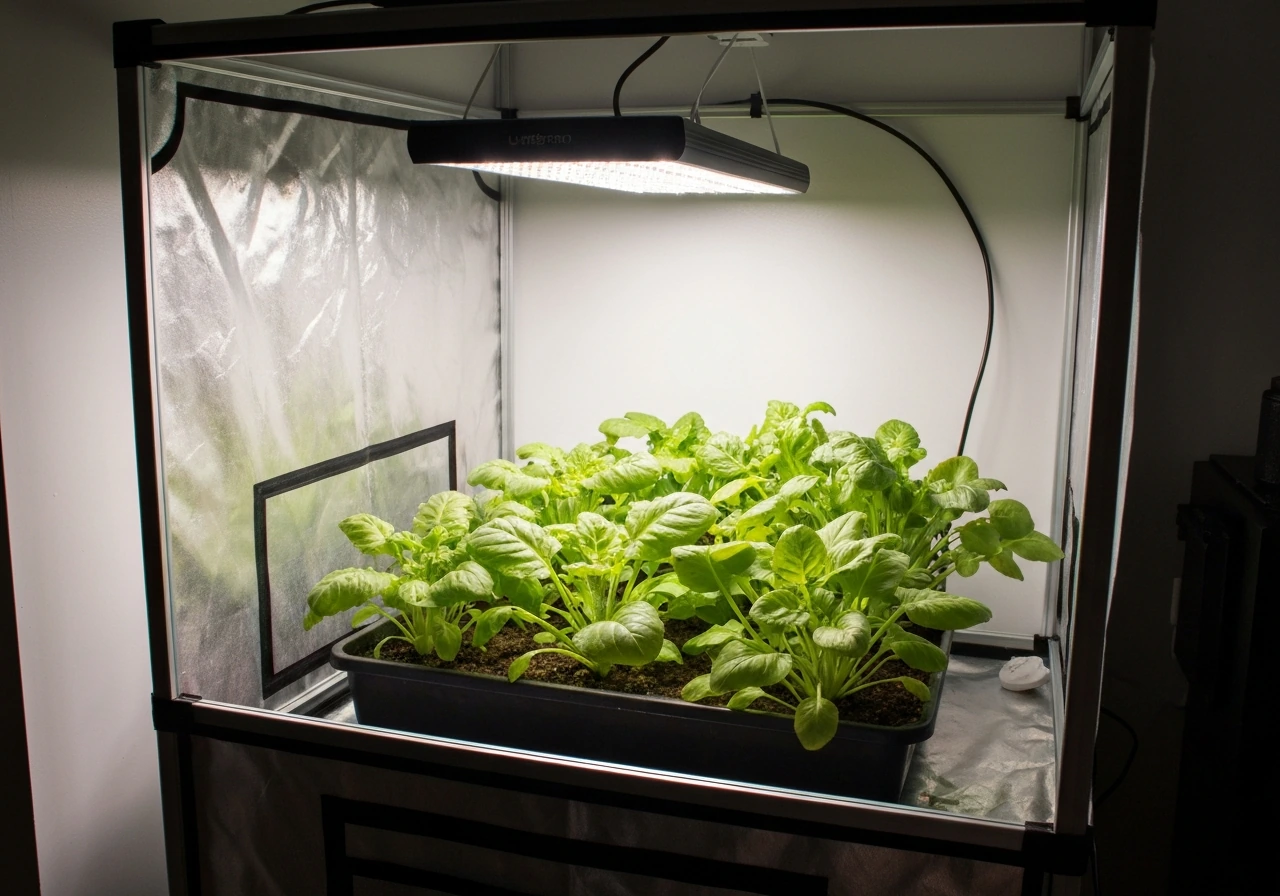
Before you look at a single product, answer two questions: what are you growing, and how much space do you have? These two factors dictate everything else, including wattage, form factor, and how much you should spend. A 200W bar-style light that's perfect for a 4x4 tent is overkill for a seedling rack and underpowered for a 5x5 canopy. Getting this backwards is the most common mistake beginners make, and it costs money in both directions, either burning plants or leaving them light-starved.
If you're just starting out and don't know exactly which led grow light to buy for your setup, the simplest starting framework is this: define your grow stage first (seedlings, vegetative, or full cycle including flower), then match a light to that stage's PPFD requirements, then confirm the light covers your actual footprint at the right intensity. Everything else, brand, price, diode type, is secondary to getting those three things right.
Indoor plants vs seedlings: the light requirements are not the same
This trips people up constantly. Seedlings and clones need far less light than established plants, and blasting them with high-intensity output actually causes stress, stretching, and bleaching. According to University of Maine Extension research, seedlings and clones need less than 100 PPFD (micromoles per square meter per second). Flowering and fruiting plants, on the other hand, need 400 to 1,200 PPFD depending on species and CO2 levels. That's a 10x difference. Running your seedling tray under the same settings as a flowering canopy is a real problem.
For general indoor plants, which includes things like houseplants, leafy herbs, and foliage-heavy tropicals, you're typically aiming for somewhere in the 200 to 400 PPFD range. These plants aren't trying to push buds or fruit, so they don't need to be pushed hard. A lower-wattage light hung higher, or a dimmable fixture turned down to 40 to 60 percent, does the job without stressing the plant or running up your electricity bill. If you're growing something like growing bonsai under LED lighting, you're in this lower-intensity range as well, prioritizing spectrum quality and even coverage over raw output.
For seedlings specifically, what matters most isn't intensity, it's consistency and spectrum. You want gentle blue-rich light that promotes compact, stocky growth without burning tender new tissue. A dimmable full-spectrum fixture at 20 to 30 percent power, or a purpose-built seedling panel, is all you need. Don't waste money on a 400W bar light for this stage.
Coverage and sizing: match the light to your actual grow area
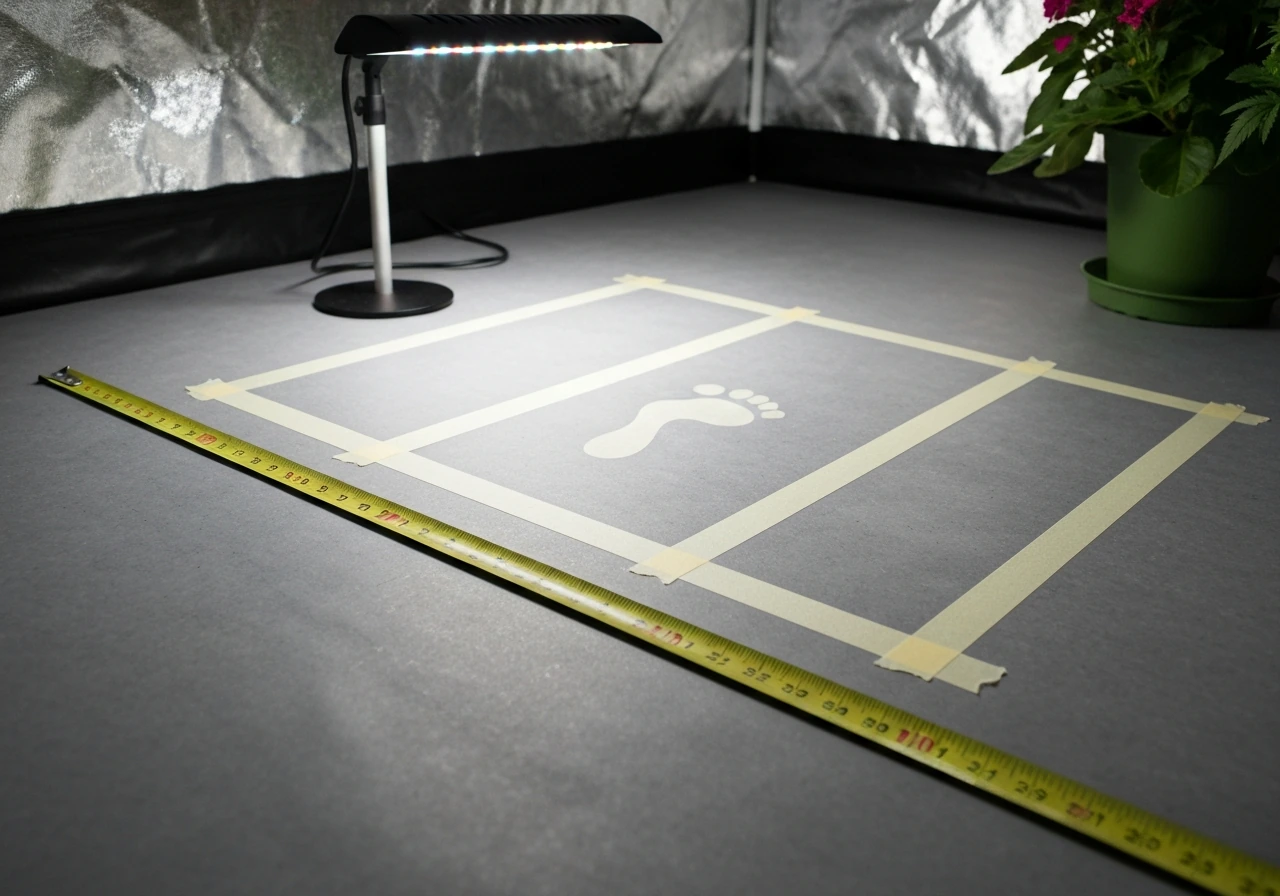
Every LED grow light listing will advertise a coverage area, and most of those numbers are optimistic. Manufacturers often list the maximum possible footprint, which is usually the area where the light delivers around 200 PPFD, barely enough for leafy greens and nowhere near enough for flower. When you see "covers 4x4 ft" on a 150W panel, treat that with skepticism.
Here's a more reliable rule of thumb for flowering plants: you need roughly 30 to 50 true watts of LED draw (not "equivalent" watts) per square foot of canopy. For vegetative growth, 20 to 30W per square foot is usually sufficient. Use these numbers to sanity-check any light you're considering.
| Grow Space | Sq Footage | Veg (W draw) | Flower (W draw) | Example Light Class |
|---|---|---|---|---|
| 2x2 tent | 4 sq ft | 80–120W | 120–200W | 100–200W compact panel |
| 3x3 tent | 9 sq ft | 180–270W | 270–450W | 240–300W bar or quantum board |
| 4x4 tent | 16 sq ft | 320–480W | 480–800W | 400–600W bar-style or multi-bar |
| 5x5 tent | 25 sq ft | 500–750W | 750W–1,000W+ | 600W–1,000W high-output bar |
| Seedling tray (2x4) | 8 sq ft | 40–80W | N/A | T5-style or 65–100W panel |
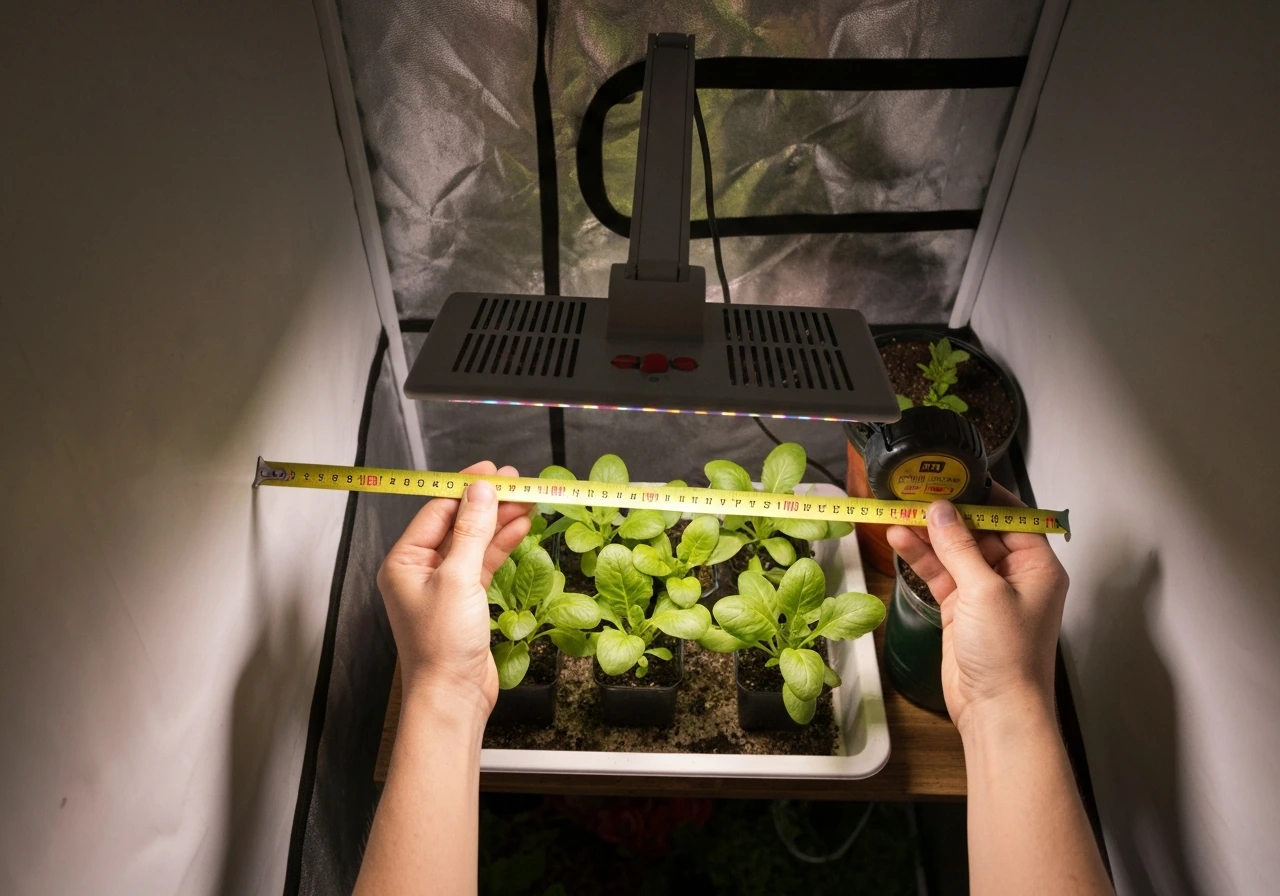
Mounting height matters too, and it's directly tied to PPFD at canopy level. UNH Extension notes that plant-usable intensity is PAR/PPFD and that factors like lamp distance and photoperiod affect seedling outcomes PPFD at canopy level.
Most quantum board and bar-style lights are designed to run at 18 to 24 inches above the canopy during veg, and 12 to 18 inches during flower. Going too high reduces intensity; going too low causes hotspots and light burn. Always check the manufacturer's PPFD map, not just the headline number, to understand how intensity drops off toward the edges of the coverage area.
A well-designed light should show relatively even distribution across the footprint, not a bright center that fades dramatically at the edges.
Specs that actually matter (and the ones you can mostly ignore)
LED grow light marketing is full of inflated numbers and misleading specs. Here's what to pay attention to and what to wave off.
The specs worth your time
- True wall draw (watts): This is the actual electricity the light pulls from the wall, measured in watts. It's the only wattage number that matters. Ignore "equivalent HPS watts" entirely.
- Efficacy (μmol/J): This measures how efficiently the light converts electricity into usable photons. Anything above 2.5 μmol/J is solid for 2026; top-tier fixtures hit 2.8 to 3.2 μmol/J. Below 2.0 μmol/J and you're burning money on heat.
- PPFD at canopy (μmol/m²/s): The actual photon intensity delivered to your plants at a stated height. Look for third-party PPFD maps, not just a single peak number.
- PPF (μmol/s): Total photon output of the fixture. Useful for comparing lights of similar size before knowing your hanging height.
- Spectrum (nm range): Whether the light covers the full photosynthetically active range, 400 to 700nm, plus any far-red (700 to 780nm) supplementation.
- Thermal management: Driver type (external vs built-in), passive vs active cooling, and operating temperature all affect long-term reliability.
- Warranty length: Reputable brands offer 3 to 5 year warranties. Anything shorter on a premium-priced light is a red flag.
The specs you can mostly ignore
- "Equivalent HPS watts": Meaningless marketing language. A 300W LED is not equivalent to a 1000W HPS in any useful way.
- LED chip count: 3000 diodes on a cheap fixture doesn't mean better output than 800 high-quality diodes. Diode quality matters far more than quantity.
- Lux readings: Lux measures light as the human eye perceives it, not as plants use it. PAR/PPFD is what you want.
- Color temperature (Kelvin) as a standalone spec: 3000K vs 6500K tells you something about spectrum, but it doesn't tell you about intensity, efficiency, or actual plant performance.
One more thing worth mentioning: don't confuse a light being popular with it being good. Some of the worst led grow lights on the market have thousands of positive reviews on Amazon, mostly because buyers don't have a reference point for what the light should actually be delivering.
Spectrum and full-spectrum: what it means at each growth stage
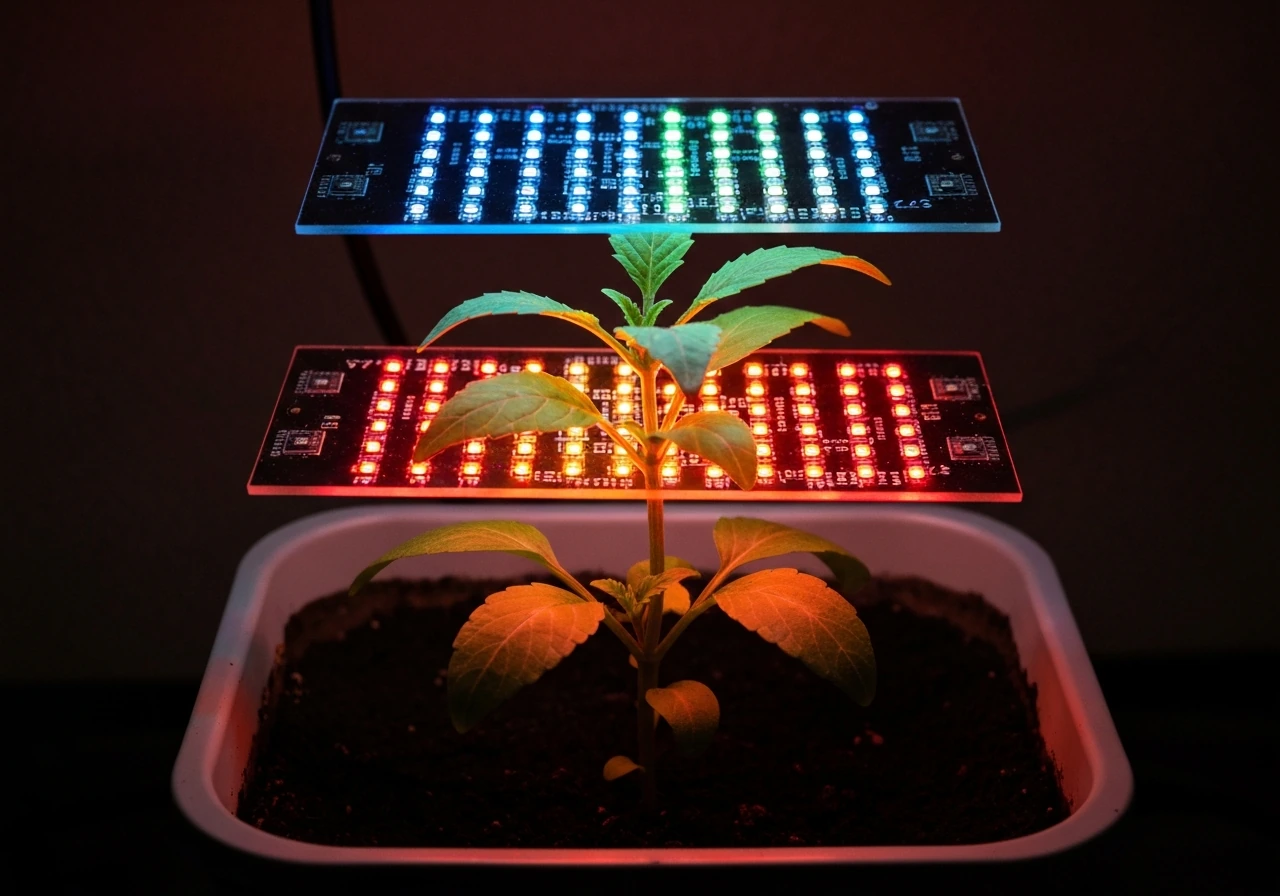
"Full spectrum" is one of the most overused terms in the grow light industry. Almost every light on Amazon Canada claims it, but there's a real difference between a light that technically covers 400 to 700nm and one that's actually optimized for plant growth across that range.
For seedlings, blue-heavy spectrum (5000 to 6500K range, or lights biased toward 400 to 500nm) promotes compact internodal spacing and healthy root development. You don't need far-red at this stage; in fact, too much red can cause stretching in young plants.
During vegetative growth, a balanced full-spectrum approach works best. Lights built on Samsung LM301H or LM301B diodes (or comparable Osram equivalents) running a 3000K to 4000K phosphor-converted white spectrum with some blue supplementation are a strong choice here. The white-spectrum approach, driven heavily by Samsung diode-based designs, delivers a broad, plant-usable spectrum with excellent efficiency. If you want to dig into which specific fixtures use these diodes, our best samsung led grow lights breakdown covers the top options in detail.
For flowering and fruiting, you want that 400 to 1,200 PPFD range hitting your canopy, with more red (620 to 680nm) and ideally some far-red (720 to 740nm) to trigger flowering responses and improve light penetration into the lower canopy. Many modern full-cycle fixtures include a far-red channel or supplement with deep red diodes for exactly this reason. If your light is dimmable and has a "bloom boost" mode, that typically means it's pushing more red and far-red output for the flowering stage.
Buying in Canada: Amazon vs other retailers, and how to verify what you're getting
Shopping for LED grow lights in Canada has gotten easier over the last few years, but the Amazon Canada marketplace still has significant noise. Here's how to navigate it without getting burned.
Amazon Canada: what to trust and what to question
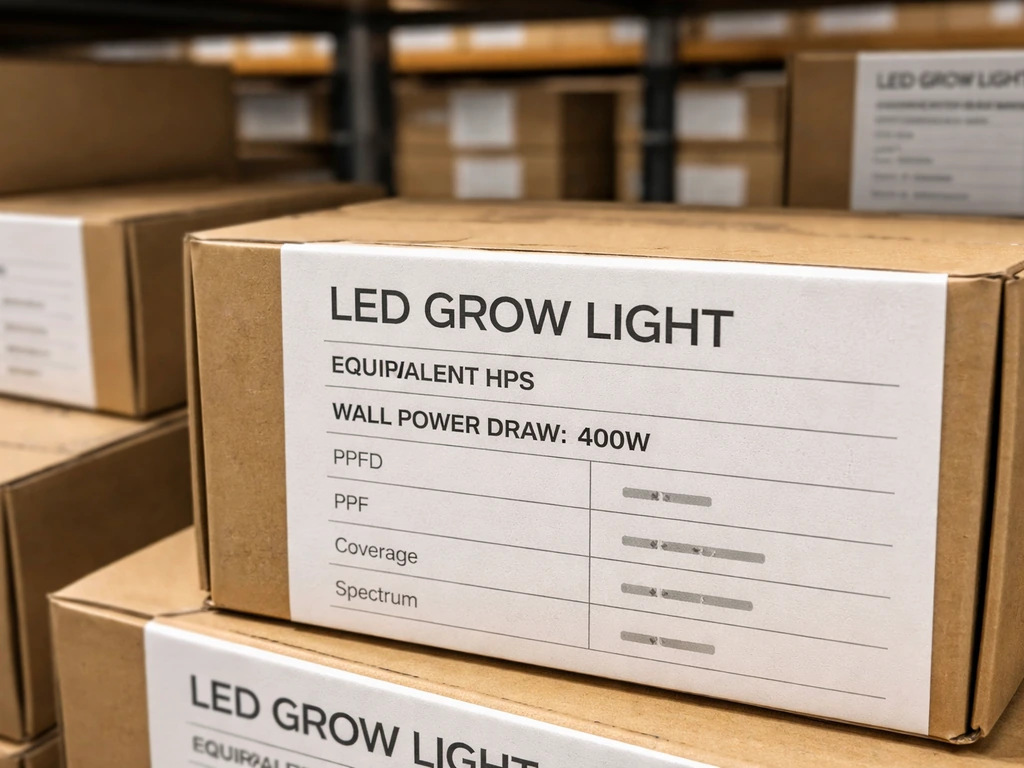
Amazon Canada carries most of the major brands (Mars Hydro, Spider Farmer, AC Infinity, HLG, Gavita) alongside a flood of no-name imports with inflated specs. The review system is unreliable for technical products because most buyers can't measure PPFD or efficacy. Instead, focus on these trust signals: Does the product listing include a PPFD map from a specific hanging height? Does the brand have a Canadian presence or at least a real warranty process? Is the listed wattage a true wall draw number or a vague "equivalent" figure? Brands that provide third-party tested PAR data (often linked from their website even if not on the Amazon listing itself) are generally more trustworthy.
Watch for shipping and import costs when ordering through Amazon Canada. Some lights ship from US warehouses and may trigger additional duties or longer lead times. Filters for "ships from Canada" or "sold by" a verified Canadian retailer can save headaches. Also check whether HST/GST is included in the listed price before comparing costs across platforms.
Other Canadian retailers and direct purchase
Several Canadian grow equipment retailers (both online and brick-and-mortar, particularly in BC, Ontario, and Quebec) carry quality brands and often provide better pre-sale support than Amazon. Buying directly from a Canadian distributor of brands like HLG, Spider Farmer, or AC Infinity means faster warranty resolution and no surprise customs charges. Manufacturer websites for major brands also often ship to Canada directly, and their product pages typically have more accurate and complete spec sheets than their Amazon listings.
One practical step: look up the fixture you're considering on the manufacturer's website and compare the PPFD map and efficacy rating to what's listed on Amazon. If the Amazon listing has inflated numbers compared to the manufacturer's own published data, walk away. If they match, that's a good sign the seller is being honest.
Best LED grow light picks by scenario
These aren't affiliate-driven picks. They're based on what consistently performs well in the specs that matter, efficacy, PPFD distribution, thermal management, and build quality. Canada availability is confirmed for all categories as of April 2026.
Budget picks (under $150 CAD): seedlings, small tents, and houseplants
Spider Farmer SF-1000 (around $130 to $150 CAD): A 100W quantum board using Samsung LM301B diodes with a meanwell driver. Efficacy sits around 2.7 μmol/J, which is genuinely competitive for the price. It covers a 2x2 canopy for veg and a tight 2x2 for flower. It's a legitimate light for the price, not a compromise pick. Good for: small 2x2 tents, supplemental houseplant lighting, vegetative growth on a budget.
Mars Hydro TS-1000 (similar price range): Another 150W-draw quantum board with solid Samsung diodes and decent PPFD distribution. Slightly better footprint than the SF-1000 for veg, roughly 3x3 at lower intensity. Good for: seedlings through veg in a 2x2 to 3x3 space. Not ideal for pushing heavy flower without supplemental lighting.
Mid-range picks ($150 to $450 CAD): 3x3 to 4x4 tents, full cycle
Spider Farmer SE3000 or SE5000 (bar-style): These bar lights have become a go-to recommendation for 3x3 to 5x5 coverage. The SE5000 pulls around 480W at the wall with efficacy above 2.8 μmol/J and includes dimming capability. The multi-bar design improves canopy penetration versus a single quantum board. Good for: intermediate growers running a 4x4 tent through full veg and flower cycles.
AC Infinity IONBOARD S33 or S44: AC Infinity has made a strong push into grow lights alongside their ventilation equipment, and the IONBOARD series is genuinely good. Samsung LM301H diodes, meanwell drivers, and app-controlled dimming via the UIS ecosystem. The S44 (for a 4x4) pulls around 200W with solid efficiency. Good for: growers already using AC Infinity equipment who want integrated control, or anyone who values app-based scheduling.
High-output picks ($450+ CAD): 4x4 to 5x5+ tents, serious flower production
HLG 650R or Diablo: HLG (Horticulture Lighting Group) remains one of the most respected names in the space for a reason. The 650R pulls around 630W at the wall with efficacy above 3.0 μmol/J and produces serious PPFD numbers across a 4x4 to 5x5 footprint. The Diablo series pushes even higher, targeting commercial-level output in a hobbyist-accessible package. These lights are expensive, but the performance data is real and backed by actual third-party testing. Good for: experienced growers maximizing yield in a 4x4 or 5x5 tent who want the best photon-per-dollar efficiency over the light's lifespan.
Gavita Pro 1700e LED: If you're scaling toward commercial production or running a large space (6x6 or multi-light setups), Gavita's bar-style fixtures are the commercial standard for a reason. The 1700e pulls around 645W with over 1700 μmol/s total PPF and an efficacy above 2.6 μmol/J. It's not the most efficient option on a per-watt basis, but the spread, penetration, and build quality for multi-light commercial arrays are excellent. Good for: serious commercial-scale setups or large hobby grows where reliability and uniformity outweigh upfront cost savings.
Quick comparison by scenario
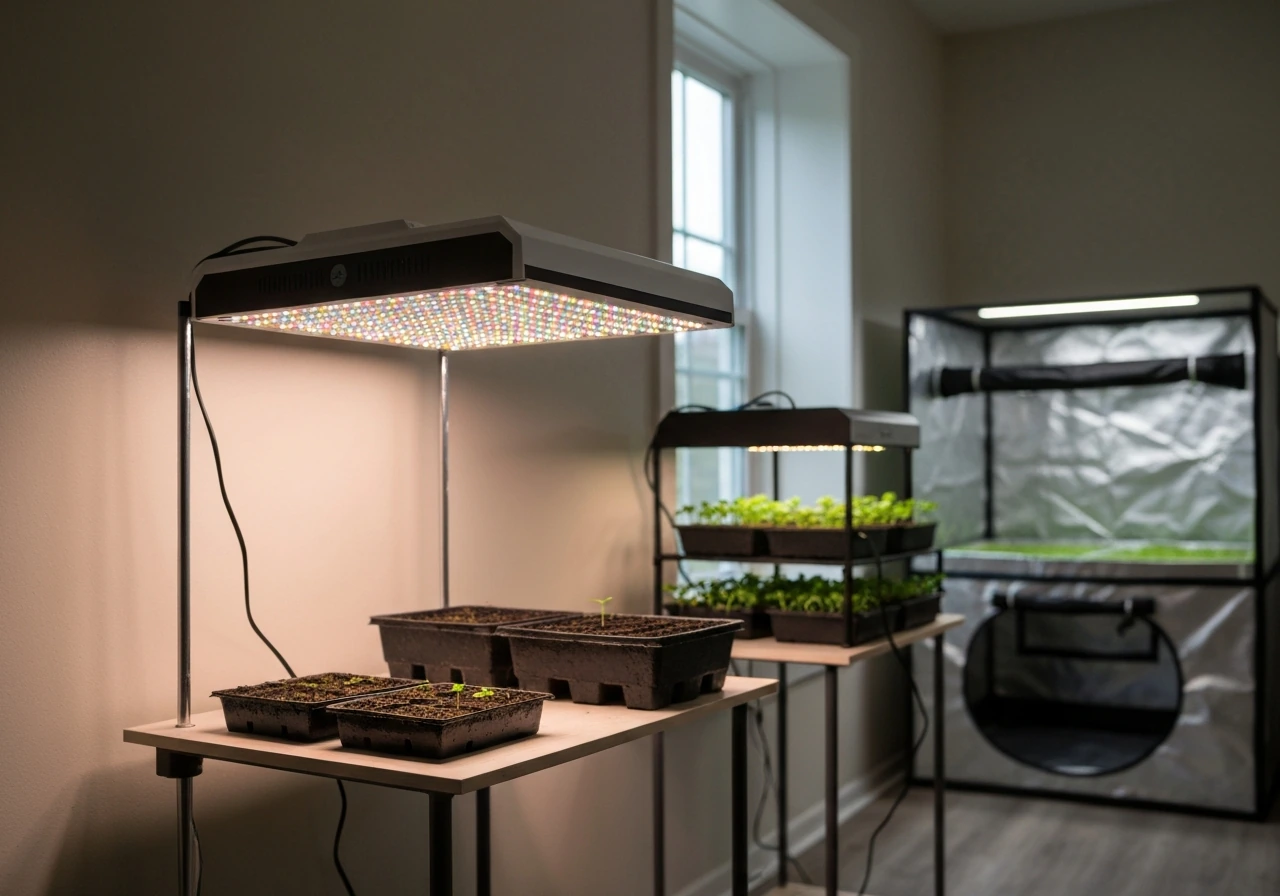
| Scenario | Recommended Light | Approx. Price (CAD) | Best For |
|---|---|---|---|
| Seedlings / clones | Spider Farmer SF-1000 at 20–30% dim | $130–150 | Beginners, propagation trays, small starts |
| Indoor houseplants / herbs | Mars Hydro TS-1000 or AC Infinity S22 | $120–200 | Low-to-mid PPFD, wide coverage, plug-and-play |
| 3x3 tent, full cycle | Spider Farmer SE3000 or AC Infinity S33 | $200–300 | Hobbyists running veg through flower |
| 4x4 tent, full cycle | Spider Farmer SE5000 or HLG 350R | $300–500 | Intermediate growers maximizing a 4x4 canopy |
| 5x5+ tent or heavy flower | HLG 650R or Gavita Pro 1700e | $550–900+ | Experienced growers pushing yield |
Where to go from here
If you've identified your grow stage, space, and budget from this guide, you're already ahead of most buyers. The next step is verifying the specific fixture you're considering against the specs framework above: true wall draw, efficacy in μmol/J, a real PPFD map, and a credible warranty. Don't buy on a headline claim. If the product listing doesn't include a PPFD map or the brand's website doesn't publish performance data, that tells you something important.
For growers still narrowing down between multiple solid options, the right call often comes down to your specific tent size and growth stage priority. A light that's excellent for veg may not be optimal for pushing flower, and vice versa. Take the wattage-per-square-foot rule seriously, check that the light's PPFD at your hanging height matches your stage's target range, and don't pay a premium for features you won't use. Get those fundamentals right and you'll get good results regardless of which solid brand you go with.
FAQ
How do I estimate electricity cost for the best led grow light canada pick, and what number should I actually trust?
For Canada, the easiest way to keep the calculation honest is to use your light’s stated true wall draw (watts) from the manufacturer, not an “equivalent” rating. Then estimate daily energy as watts x hours x your local electricity rate, and compare that to how much PPFD you actually get at canopy height using the PPFD map (not the coverage label). If the PPFD map assumes a hanging height you cannot match in your tent, your effective operating cost will be higher because you will need to raise output (or you will get lower yields).
Can I use the same LED grow light for seedlings and flowering, or do I need a separate fixture?
Start by ensuring you can dim the fixture, because seedlings benefit from intensity control and consistency. If your light is dimmable, begin at 20 to 30 percent power and run at the recommended hanging height, then watch for leaf posture and internode stretch over 3 to 5 days. If your light is not dimmable, you will need a physical distance adjustment, but that can create edge hotspots on some bars and boards, so prioritize models that provide a real dimming range or a seedling panel option.
If I buy one full-cycle light, how can I make sure it will not bleach or stress seedlings?
You can, but only if the fixture can deliver the target PPFD without pushing seedlings too hard. Many full-cycle lights are “strong,” and even if you dim them, the spectrum balance might not be ideal at low power. The safest approach is to use dimming for intensity and confirm on the manufacturer’s data that the spectrum at low power still looks reasonable for early growth (less emphasis on deep red than bloom mode). If the listing does not provide a PPFD map for your hanging height, assume you cannot guarantee safe seedling intensity.
When a grow light listing says it “covers 4x4,” how do I know it will actually cover my tent at the intensity I need?
Look for a PPFD map that specifies hanging height and measurement grid, and then check that your tent size lands inside the usable area where PPFD is close to your target. Coverage claims are often based on a lower reference PPFD, which means your outer corners might be far below what you need for flowering. Also verify whether the map is for the exact dimming level you plan to run, since some lights change distribution at different power levels.
Do PPFD targets change in Canada if I run CO2, or should I still follow the same numbers?
Yes, but it depends on your environment. If you run CO2, you can sometimes target the lower end of the flowering PPFD range because plants can use more carbon, but you still must maintain uniform coverage and avoid light stress. If you are not adding CO2, stay closer to the higher end of the 400 to 1,200 PPFD band for fruiting crops, then dial back based on plant response and leaf temperature. The practical rule is to avoid increasing PPFD to “make up for” poor canopy climate, airflow, or nutrition.
How do I pick the right hanging height for my LED grow light if I do not have a PPFD meter?
Mounting too high is the most common way people end up under-lighting, especially in larger tents where the fixture sits higher for clearance. Mounting too low can create hotspots that burn the top growth and leave edges dim. The decision aid is to match your hanging height to the PPFD map, then verify distribution visually with a test plant or a PPFD meter, focusing on whether the center and corners differ dramatically. If you do not own a meter, choose lights whose PPFD maps show relatively even falloff across the footprint.
What should I look for to avoid misleading “full spectrum” claims when shopping for best led grow light canada options?
Not always. “Full spectrum” can be a marketing label, and what matters is whether the diode mix and channel options support your stage. For seedlings, you generally want blue emphasis and a spectrum that avoids excessive far red. For flowering, you want enough red energy and ideally a far-red component to support flowering responses. If the product does not disclose channel wavelengths (or does not show a spectrum chart) and does not provide stage-relevant data, treat it as a gamble.
How can I tell whether a high-review Amazon Canada grow light is actually performing as advertised?
Third-party testing matters, but you should check what was tested. Prefer data that includes efficacy (μmol/J) and a PPFD map at a specified hanging height and power level. Also check thermal design, because a light that throttles when hot can show great early performance but weaker sustained PPFD. If the listing only has star ratings and no technical performance data, your risk is higher that the light is not delivering what you need.
What Canada-specific warranty and returns details should I confirm before buying?
Warranty terms and logistics can make the “best” light different in Canada. Before purchasing, confirm the warranty length, who handles shipping for defects, and whether a Canadian distributor exists for that brand. If you order through a marketplace seller, ask whether you will have to deal with import issues for warranty returns. A locally handled warranty often reduces downtime, which matters more than saving a small amount on the initial price.
If I plan to run multiple LED lights, how do I avoid uneven coverage across the canopy?
Yes, especially if you have multiple lights. For multi-light setups, uniformity across the whole canopy becomes harder, so you should plan spacing based on overlapping PPFD zones shown in the PPFD data (not just “each light covers X”). If you combine lights from different models with different intensity and distribution, you can create uneven fruiting or stretch. A simple decision aid is to pick identical fixtures when possible, then validate canopy uniformity using a measurement plan or a PPFD meter.
Next Articles
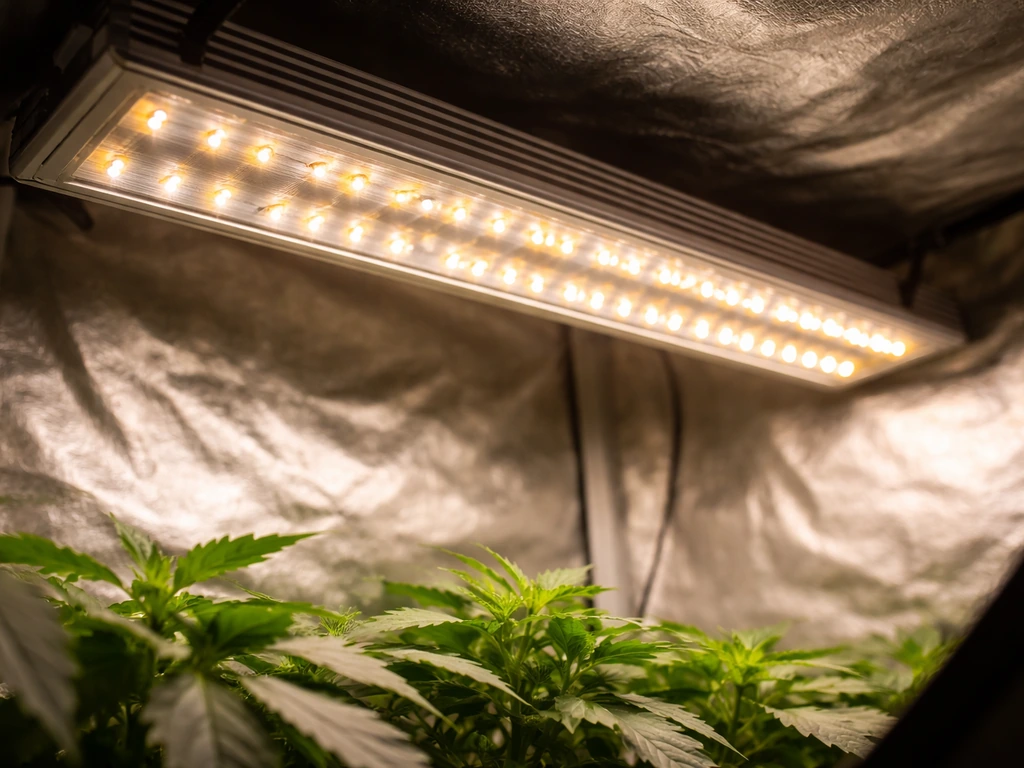
Best Samsung LED Grow Lights Review and Buying Guide
Hands-on review and guide to the best Samsung LED grow lights, with PPFD coverage, mounting tips, and top picks for tent
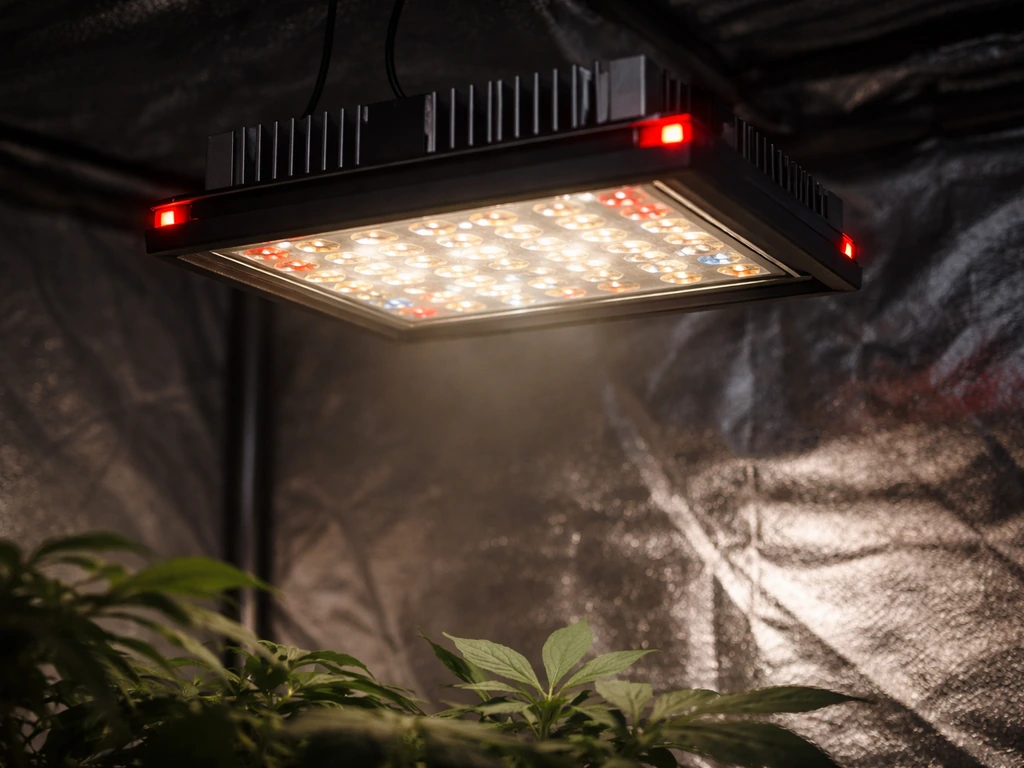
Worst LED Grow Lights: How to Spot Bad Lights Fast
Spot bad LED grow lights fast: red flags, placement checks, specs to verify, and fixes for tents and flowering.
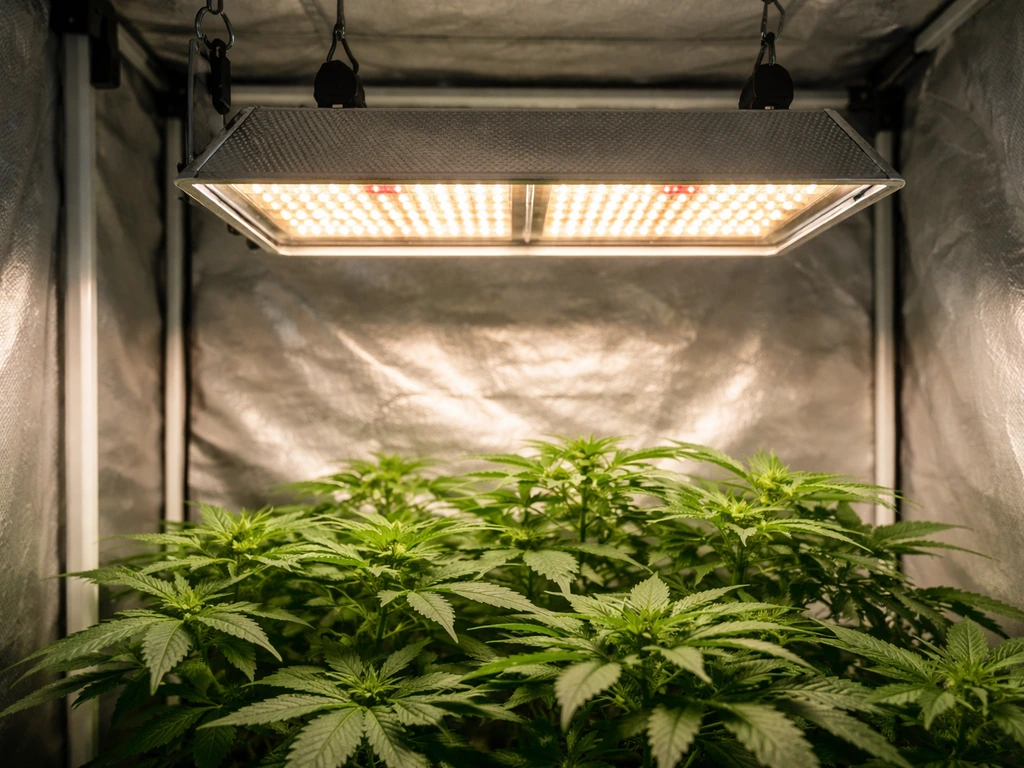
Which LED Grow Light to Buy: Coverage, Spectrum, Wattage Guide
Guide to choose the right LED grow light by tent size, spectrum, wattage, PPFD coverage, and budget to buy today