
The best Samsung LED grow lights right now are the fixtures built around Samsung LM301B or LM301H diodes, typically found in bar-style and quantum board designs from brands like Spider Farmer, Mars Hydro, and HLG. Samsung itself doesn't sell grow lights directly to consumers, so when growers say 'Samsung LED grow light,' they mean any fixture that uses Samsung's diode technology as its core component. That distinction matters a lot when you're shopping, because the diode is only one part of the equation. Driver quality, thermal design, spectrum tuning, and actual PPFD output separate a genuinely great light from a mediocre one that just happens to use a Samsung chip.
Best Samsung LED Grow Lights Review and Buying Guide
Marcus Rutherford
14 Apr 2026
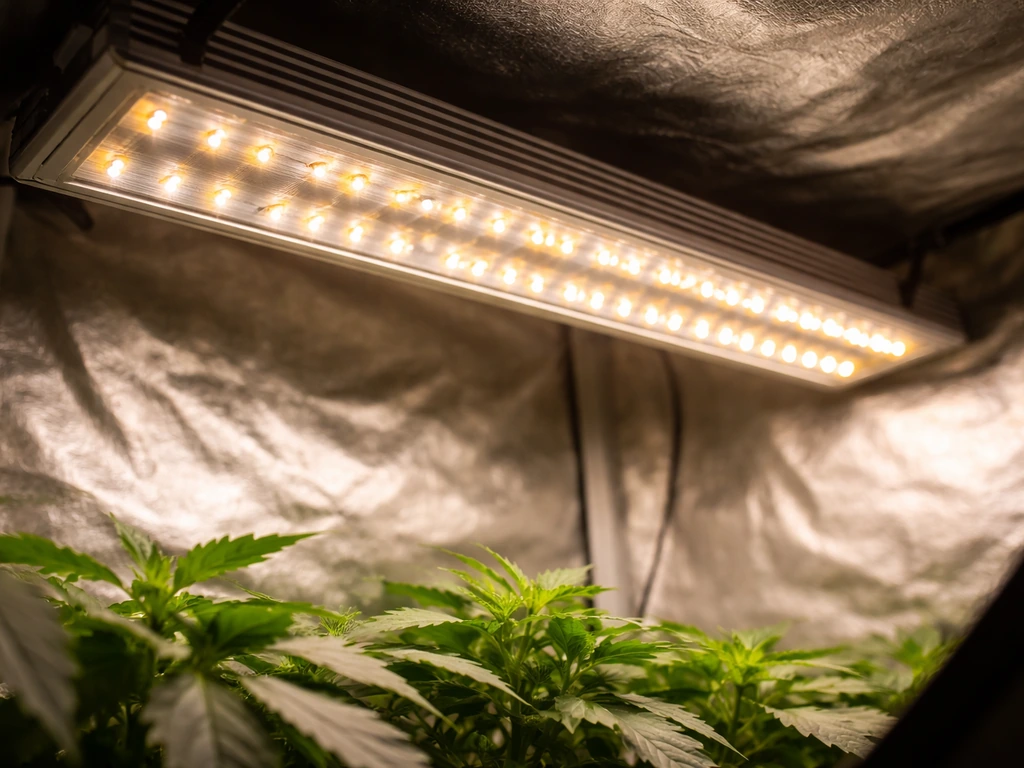
What 'best Samsung LED grow light' actually means for your setup
The word 'best' only makes sense when it's tied to a specific use case. A 200W Samsung-diode board that's perfect for a 2x4 vegetative tent is a terrible choice for a 5x5 flowering space. So before looking at any specific model, you need to nail down three things: your canopy footprint, your target crop, and your PPFD goals. Most flowering crops (cannabis, tomatoes, peppers) want 600–1000 µmol/m²/s during peak production. Seedlings and leafy greens do fine at 200–400 µmol/m²/s. Herb gardens and microgreens sit somewhere in between. Your space size dictates wattage range, roughly 30–50 true watts per square foot is a solid rule of thumb for flowering, and 15–25W/sq ft works for veg and propagation.
Crop type also steers you toward specific spectrum choices. Deep red-heavy (3000K or 3500K) boards push flowering hard. Higher blue ratios (5000K or mixed) support compact, vegetative growth. Full-spectrum white light with added red and far-red is the most versatile approach for multi-stage growing. If you're running a single tent through a full cycle, a broad-spectrum Samsung-diode fixture with a roughly 3000–3500K CCT and red supplementation is your best all-around bet.
Beyond crop and space, think honestly about your skill level and commitment to dialing in light. A hobbyist running one 4x4 tent doesn't need a complex multi-bar array with external controllers. Someone scaling to 10x10 rooms does. Getting that match right from the start saves money and frustration, and if you're still early in the decision process, it's worth reading through guidance on which LED grow light to buy before committing to any specific Samsung-diode model.
Samsung LED grow light form factors and wattage ranges
Samsung LM301-series diodes show up in a few distinct fixture formats, and the format affects how the light performs in your space just as much as the diode spec does.
Quantum boards
Quantum boards are single large panels densely packed with Samsung diodes, typically paired with a Meanwell or similar quality driver. They run cool relative to older HID setups, spread light reasonably well across a defined footprint, and are straightforward to hang and adjust. Common wattages run from 100W (for 2x2 spaces) up to around 600W (covering a 4x4 to 5x5 footprint at flowering intensity). The HLG 350R and 600R are the reference-grade examples in this category. They're expensive, but the build quality and diode binning are verified.
Bar-style fixtures
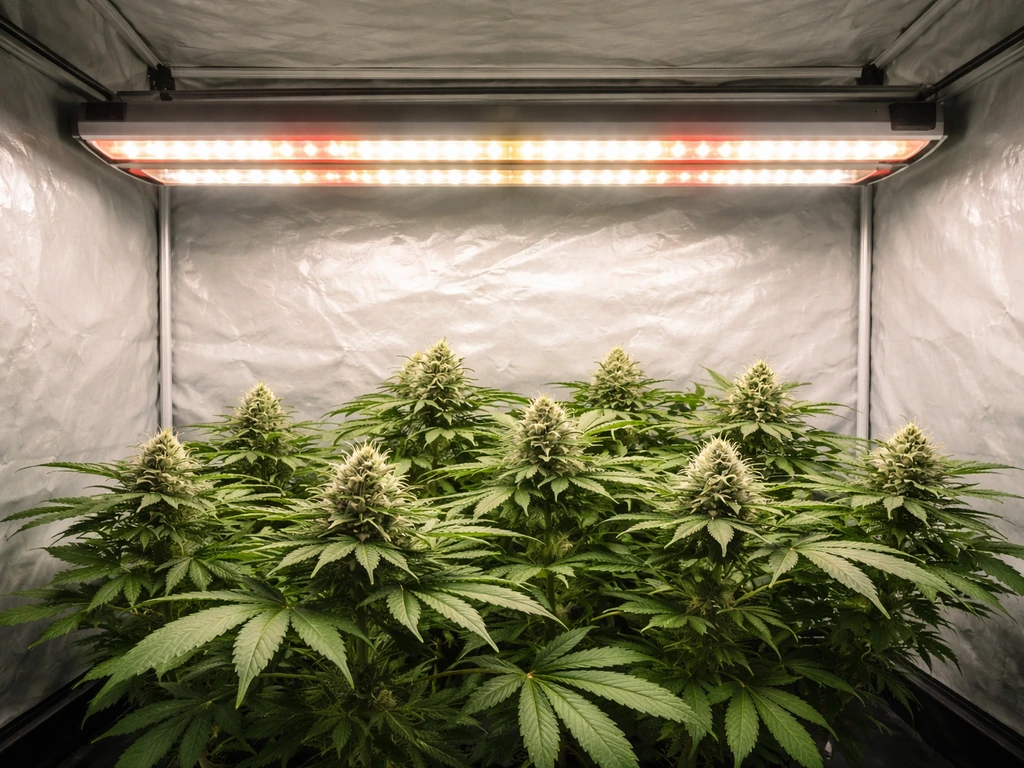
Bar lights distribute Samsung diodes across multiple narrow bars suspended from a frame. The multi-point light source dramatically improves canopy uniformity compared to a single panel, shadows between plants are reduced, and you get more even PPFD across the whole footprint. The Spider Farmer SE5000 is a strong example: a 480W bar-style fixture rated for a 4x4 grow area (120x120 cm), running a 0–10V dimming protocol so it integrates cleanly with environmental controllers. Bar lights are heavier and bulkier than boards, but the uniformity advantage is real and measurable in canopy penetration.
Compact and strip formats
Strip-style fixtures use Samsung diodes on narrow PCB strips, often arranged in a grid or row pattern. They're common in commercial vertical farms and propagation trays. For hobby tents, they're less common but worth considering if you're growing in a long, narrow space (like a 2x4 or 2x8) where a wide board wastes light by spilling outside the canopy. Efficiency on quality strip builds can match quantum boards, but the DIY or semi-commercial setups require more assembly and planning.
How to actually evaluate these lights (the metrics that matter)
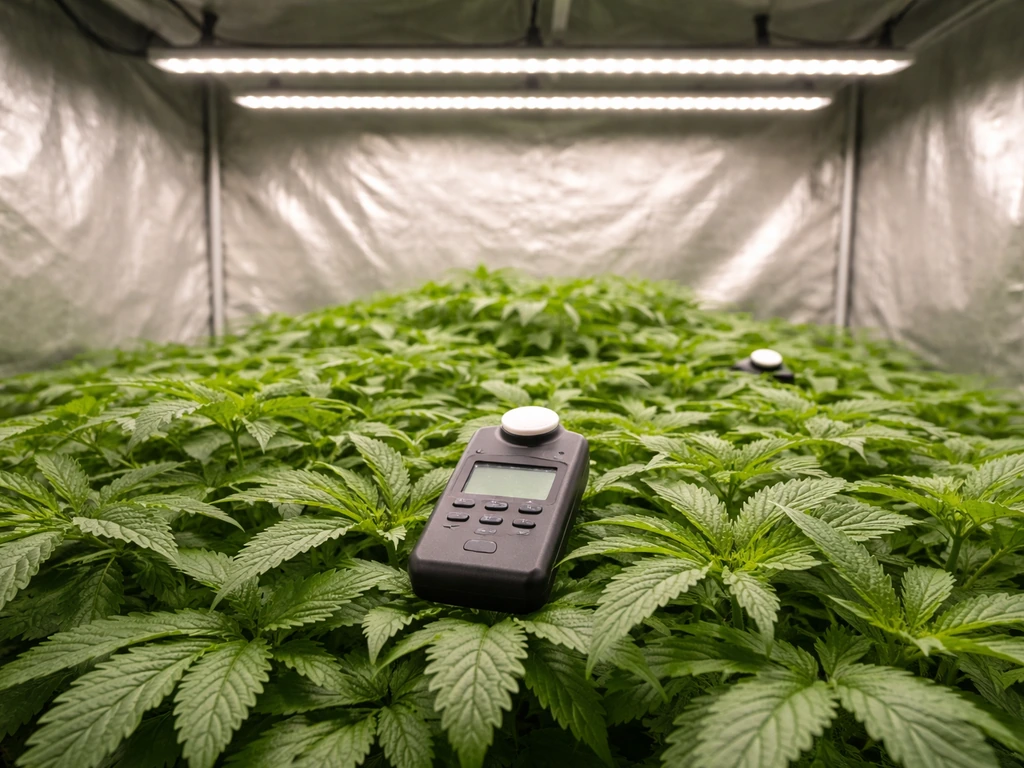
Marketing copy for Samsung-diode lights is everywhere, and a lot of it is noise. Here's what to actually look for when reading specs or a Samsung LED grow lights review. Samsung publishes downloadable LM301B EVO family datasheets as PDFs, such as the LM301B EVO Rev.1.0 data sheet for Glo, which can be used to support diode-level binning and performance claims blank" rel="noopener noreferrer">Samsung LED grow lights review. For LM301H EVO specifically, Samsung’s product family datasheet includes PPF ranges in μmol/s and optical and electro-optical characteristics across CCTs under the stated test conditions (such as IF = 65 mA and Ts = 25°C) Product Family Data Sheet LM301H EVO Rev.2.1.
- PPFD and PAR: PPFD (µmol/m²/s) is the amount of photosynthetically active light hitting your canopy per second. You want third-party or brand-published PPFD maps, not just peak center readings. A light that hits 1200 µmol/m²/s dead center but drops to 400 at the edges isn't covering a 4x4 — it's covering maybe a 2x2.
- Efficiency (µmol/J): This is the real performance number. Top-tier Samsung LM301H fixtures hit 2.7–2.9 µmol/J. LM301B builds typically land between 2.2–2.6 µmol/J. Anything claiming above 3.0 µmol/J from a budget brand without third-party data deserves skepticism.
- Coverage uniformity: Look for fixtures that publish a full PPFD map across the rated footprint, not just center and corner readings. Bar-style lights almost always outperform single boards here.
- Thermal management: Passive heatsink designs work fine for quantum boards under 400W. Above that, inadequate thermal design shortens diode lifespan. Check heatsink size relative to wattage, and whether the fixture runs noticeably hot at full power.
- Driver quality: Meanwell drivers (HLG and ELG series) are the industry benchmark. They're efficient, reliable, and have long warranties. Generic Chinese drivers in budget fixtures are the most common failure point after 12–18 months.
Top picks by grow scenario
These recommendations are based on actual fixture specs, published PPFD data, and real-world performance patterns across common grow setups. Prices shift, but the relative value positioning of these fixtures has been consistent.
| Scenario | Recommended Fixture | True Wattage | Coverage | Efficiency (µmol/J) | Best For |
|---|---|---|---|---|---|
| Small hobby tent (2x2 to 2x4) | HLG 200 Rspec or Spider Farmer SF2000 | 200W | 2x4 ft | ~2.7 | Veg/flower, single plant or small canopy |
| Standard hobby tent (4x4) | Spider Farmer SE5000 or HLG 600R | 480–600W | 4x4 ft | 2.7–2.9 | Full-cycle flowering, high PPFD target |
| Mid-size tent (5x5) | HLG 650R or Mars Hydro FC-E6500 | 650W | 5x5 ft | ~2.8 | Dense canopy, commercial-style output |
| Propagation and seedlings | Spider Farmer SF600 (bar style) | 50–100W | 2x4 ft | ~2.5 | Low-intensity, uniform spread for trays |
| Scaling / commercial row | Multi-unit bar array (SE5000 x2+) | 960W+ | 4x8 ft+ | 2.7–2.9 | Production environments, controller integration |
For a standard 4x4 tent targeting serious flowering output, the Spider Farmer SE5000 at 480W is a strong practical choice right now. Its bar-style design delivers noticeably better uniformity than a single board, the 0–10V dimming means you can tie it into an Inkbird or similar controller for automated intensity scheduling, and the 4x4 (120x120 cm) rated coverage is realistic rather than inflated. HLG's 600R is the premium alternative if you want North American support and verified diode binning, but you'll pay a 30–40% premium over the SE5000 for similar real-world output.
If you're outside the US and factoring in import costs and warranty logistics, availability matters as much as specs. It's worth checking what the best LED grow light options look like in Canada, where shipping costs and duty can flip the value equation between brands.
On the other end of the spectrum: some budget fixtures marketed with Samsung branding use lower-bin diodes or pair LM301B chips with generic drivers that underperform within a year. If you've seen suspiciously cheap 'Samsung LED' lights and want to know what to avoid, understanding which grow lights consistently underperform will save you from a frustrating purchase.
How to choose the right model and dial it in
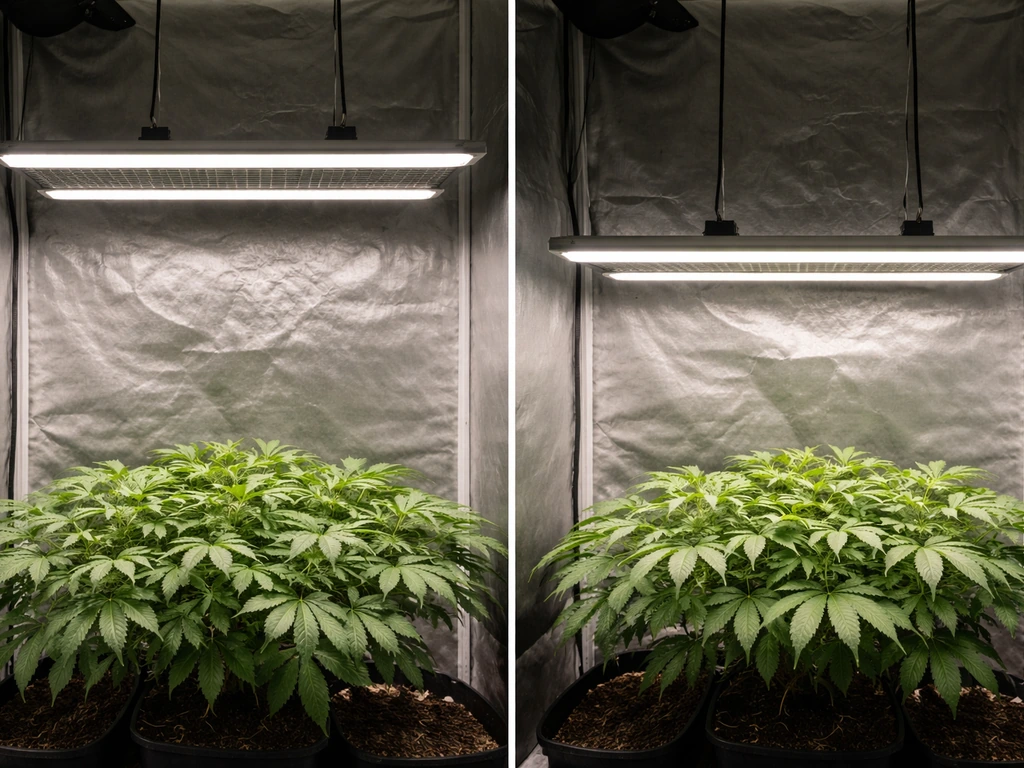
Once you've narrowed down your shortlist, here's how to make the final call and configure it correctly from day one.
Mounting height and PPFD targeting
Mounting height is the most underestimated variable in grow light performance. Hanging a 480W bar light at 18 inches in a 4x4 will cook canopy tops while the edges starve. Most Samsung-diode bar fixtures at 400–500W perform best hung 20–24 inches above canopy during flowering, with intensity at 80–100%. Drop to 24–30 inches for seedlings and early veg, or just dim the fixture down to 40–60%. If the manufacturer publishes a PPFD map at multiple heights, use it. If not, a PAR meter is a worthwhile one-time investment, you'll use it across every light you ever run.
Dimming, controllers, and scheduling
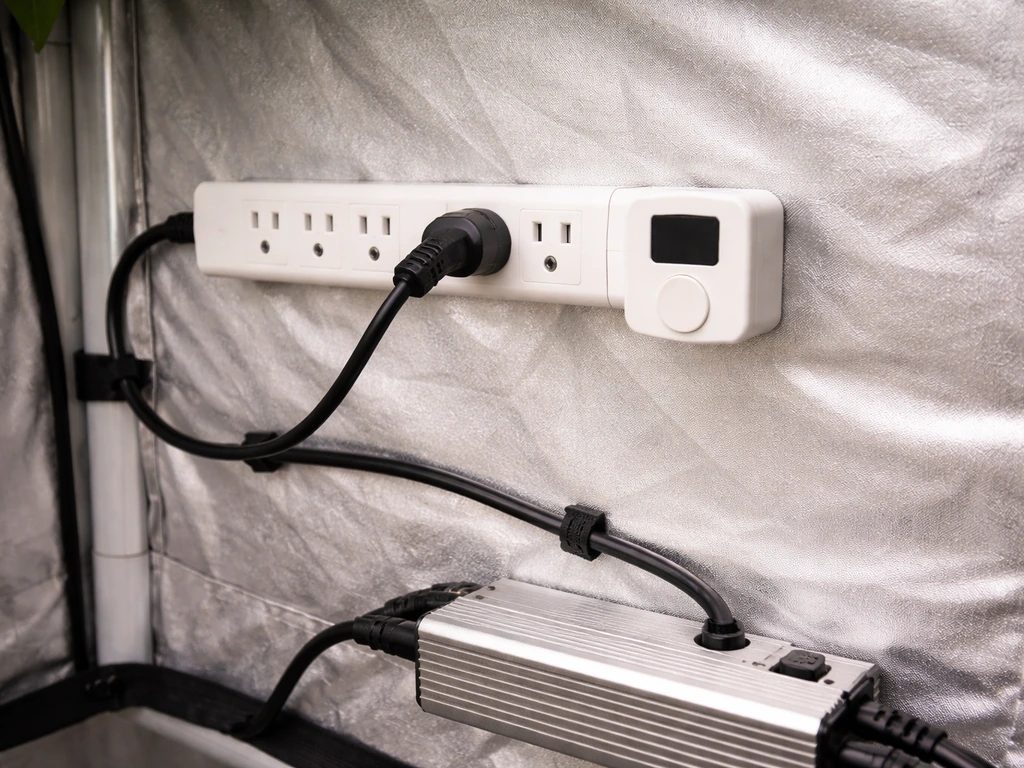
Dimming support varies more than it should across Samsung-diode fixtures. Basic potentiometer dimming (a knob on the driver) is functional but manual. The better option, especially if you're running multiple lights or want to automate intensity ramps through veg and flower stages, is 0–10V protocol support. The SE5000's 0–10V control input, for example, lets you plug directly into a compatible environmental controller and set intensity schedules the same way you schedule irrigation or CO2. If you're running a serious tent or scaling up, prioritize fixtures with 0–10V or RJ11 control inputs over knob-only dimmers.
Power draw and electrical planning
A 480W fixture at full draw pulls just over 4 amps on a 120V circuit, or about 2 amps on 240V. That sounds manageable until you add fans, pumps, and a dehumidifier to the same circuit. Plan your electrical load before you buy, not after. Run dedicated 20A circuits for lighting wherever possible, and never daisy-chain multiple high-wattage fixtures on a single outlet without checking total amperage. Commercial operations scaling to multiple 480–600W bars need 240V infrastructure to stay safe and efficient.
Installation and setup that actually affects your yield
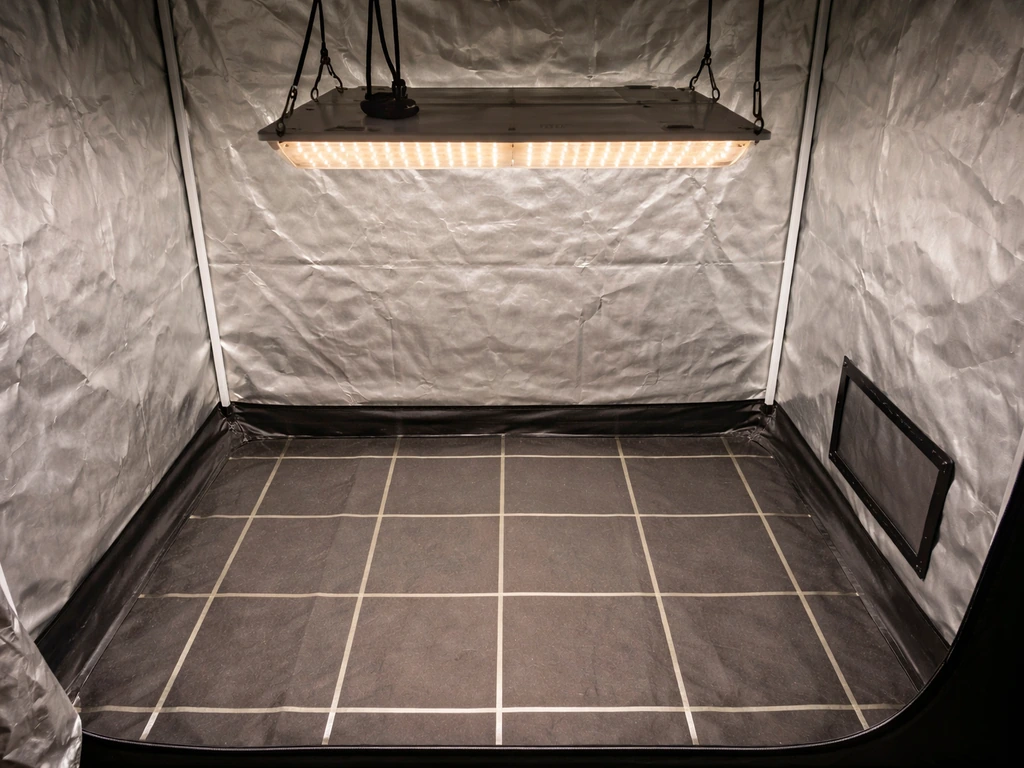
Even a great Samsung-diode light performs poorly if the physical setup is wrong. Here are the setup decisions that have the biggest real-world impact.
- Map your coverage before your first grow: Hang the light at your planned height, set it to target intensity, and take PAR readings at 9+ points across the canopy footprint using a PAR meter or a PAR app (less accurate but usable for a rough check). You're looking for less than 20–25% variation between center and corners for a well-designed fixture.
- Ventilation comes before thermal issues: Samsung LM301 diodes are efficient and run cooler than HID, but they still produce heat — especially at 400–600W. In a 4x4 tent, a 6-inch inline fan rated at 400+ CFM keeps temps and humidity in range. Make sure air movement reaches the fixture itself, not just the plant canopy.
- Hang with proper hardware: Ratchet hangers are fine for quantum boards under 10 lbs. Bar-style fixtures at 480W+ often weigh 15–25 lbs and need secure attachment points. Verify your tent's frame supports the weight, and use the manufacturer's included hanging hardware or equivalent rated gear.
- Seal light leaks in your grow space: Stray light during dark periods disrupts photoperiod crops. Check your tent seams and zipper paths when the light is on — any visible light from outside means light is also getting in during the off cycle.
- Safety first on electrical connections: Use grounded outlets, never run lights on extension cords for extended periods, and keep driver units out of direct contact with water or humidity. Most quality fixtures have IP ratings for splash resistance on the fixture itself, but drivers are rarely sealed.
Long-term value: efficiency, lifespan, and what warranties actually cover
Samsung LM301H and LM301B diodes are rated for 54,000+ hours at L90 (meaning they retain 90% of original output after that runtime). At 18 hours per day for veg or 12 hours for flower, that's 8–12 years of diode life under normal conditions. The diodes almost never fail first. What fails is the driver, the solder joints on budget PCBs, or the connector hardware. This is why driver brand matters so much: Meanwell HLG-series drivers carry a 5-year warranty and have a strong track record past that. Generic drivers often start degrading output or failing entirely inside 18–24 months.
Cost per watt of actual output (not input wattage) is the most honest way to compare Samsung-diode fixtures at different price points. A fixture at $400 that delivers 2.8 µmol/J costs you less per photon over its lifespan than a $250 fixture at 2.2 µmol/J, especially when you factor in electricity costs over 5+ years. At $0.12/kWh, a 480W fixture run 12 hours daily costs roughly $25/month. The efficiency gap between a 2.2 and 2.8 µmol/J fixture means the cheaper light needs about 27% more wattage to deliver the same PPFD, so you're paying more in electricity every single month.
Warranty terms differ significantly between brands. HLG offers a 3-year warranty with US-based support. Spider Farmer offers a 3-year warranty with responsive online support. Mars Hydro is similar. Where things get murky is with generic brands selling Samsung-labeled products on marketplaces, warranty claims often require international shipping at your cost, and customer support response can be weeks-long. If long-term support matters to you, buy from a brand with an actual support infrastructure, not just a storefront.
One niche worth mentioning: if you're running Samsung-diode lights for specialty low-light crops or precision applications like bonsai cultivation, the intensity requirements and coverage priorities shift considerably. Picking the best LED grow light for bonsai involves different PPFD targets and spectrum considerations than a high-intensity flowering tent, so it's worth reading into that separately if it applies to your setup.
Bottom line: for most growers running a 4x4 tent and wanting a Samsung-diode light that's reliable, efficient, and properly controllable, the Spider Farmer SE5000 at 480W or the HLG 600R are the practical targets right now. Buy based on your budget and support preference, hang it at 22–24 inches for flowering, run it through a 0–10V controller if you have one, and plan your electrical load before installation. That's the actual answer, not a vague 'it depends,' but a real starting point you can act on today.
FAQ
Do I need an LM301B or LM301H specifically, or will any Samsung-branded LED work?
You usually want the LM301B or LM301H series, because those diodes are a known performance baseline. If a light only says “Samsung” without the LM301 letter/series, treat it as a risk, then verify driver brand, dimming method, and whether the seller publishes real PPFD results at your target height.
How can I tell if a “Samsung LED grow light” listing is legit or just marketing?
Look for concrete specs that go beyond branding: diode model (LM301B/H), driver manufacturer, control input type (0–10V, RJ11, or none), and a PPFD map or tested PPFD numbers. If the listing has no measurable output and heavily emphasizes price, assume the driver or binning is not competitive.
What PPFD target should I use if I’m unsure about my crop’s peak needs?
If you are planning a single full-cycle tent and want to avoid constant re-setup, a practical starting point is aiming for roughly 600–800 µmol/m²/s at canopy during peak flowering, then dim as needed for earlier stages. Use your PAR meter to confirm at the actual hanging height, because advertised coverage often assumes a specific height.
Should I buy based on wattage rating or on µmol/J efficiency?
For Samsung-diode lights, µmol/J (photon efficiency) is the more honest comparison. Wattage matters, but efficiency determines how much PPFD you get for the electricity you pay, and it also affects heat. If two lights have similar coverage but one is notably higher µmol/J, it will typically cost less to run over years.
Is the manufacturer’s “cover area” claim realistic for my tent size?
Often it is only realistic if you match the same hanging height and dimming level used in their testing assumptions. For bar lights especially, coverage can be accurate at the rated footprint but still uneven if you hang too high or run at a low intensity. Treat “rated area” as a starting point, then verify with PPFD if possible.
What hanging height should I use if I’m switching between veg and flowering?
Use either a height change or dimming strategy, not a one-size setting. A common approach is flowering at a tighter range (around 20–24 inches for many 400–500W bars) and seedlings/early veg higher or dimmed (around 24–30 inches or reduce intensity). The key is to re-check PPFD or adjust based on plant response once you change stages.
Do I really need a PAR meter, or can I skip it?
You can skip it if you are staying within manufacturer guidance and using conservative settings, but it reduces trial-and-error. A PAR meter is especially useful with Samsung-diode bar setups because uniformity can look different across the tent depending on height and dimming. If you buy one, prioritize measuring at canopy and comparing center to edges.
If my light has a knob dimmer, is it safe to run it at lower settings?
Yes, lowering intensity is typically fine, but knob dimming is manual and limits automation. Also confirm that dimming is true driver control (not just a limited output mode) and that the light still meets its claimed efficiency within your dim range. For multi-stage automation, 0–10V or similar control inputs are usually less frustrating.
Can I connect multiple Samsung-diode fixtures to one controller?
Often yes, if the fixtures support the same control standard (for example, 0–10V inputs). What varies is the controller’s output capacity and how each driver interprets the signal. Before wiring multiple lights, confirm compatibility and test ramp behavior at a low setting to avoid uneven stage changes.
What electrical planning mistakes cause the most problems with 400–600W bars?
The big ones are using an already-loaded circuit (lights plus dehumidifier, heater, or high-CFM fans), and daisy-chaining fixtures into a single outlet without checking total amperage. Plan on dedicated circuits where possible, consider 120V draw versus 240V draw, and remember that breakers can nuisance-trip during startup loads.
How do I extend lifespan if my driver is the likely failure point?
Improve operating conditions: keep the light within its recommended ambient temperature range, ensure airflow across the driver and heatsink, and avoid covering vents. Even with long diode rated life, connectors and driver components can degrade faster under heat and dust. Regularly check for loose wiring where the driver meets the housing.
Is 18 hours per day vs 12 hours per day important for real diode life?
Yes, runtime affects wear, but diode aging is not the only issue. The diodes may last many years under proper conditions, while drivers and joints are more likely to limit lifespan. If you run long daily schedules, focus on thermal management and consider warranties, because driver replacement is the more realistic long-term cost.
What’s the safest way to mount a bar light to avoid uneven canopy?
Use a rigid hang method (ratchet hangers or properly rated cables) and measure height from canopy, not from the tent floor. Re-check height after weeks of plant growth, because canopies rise unevenly. For uniformity, avoid skewed mounts (one side higher), and confirm edge plants receive similar PPFD to the center.
Do Samsung-diode lights work differently for low-light crops like herbs or bonsai?
Yes. Low-light or precision crops often need lower PPFD targets and more controlled intensity across smaller areas, where “strong flowering settings” can cause stress. If your application is specialty, you will typically prioritize uniformity and adjustable intensity over maximizing peak flowering output.
Are there brands to prefer if I’m worried about warranty and long-term support?
Prefer brands with clear warranty terms, local or established support processes, and a driver ecosystem that is easy to troubleshoot. If a product is sold through a marketplace listing with Samsung labeling but unclear driver identity and difficult claim logistics, plan for higher risk. For many growers, reliable support is as important as peak performance.
Next Articles
Worst LED Grow Lights: How to Spot Bad Lights Fast
Spot bad LED grow lights fast: red flags, placement checks, specs to verify, and fixes for tents and flowering.
Which LED Grow Light to Buy: Coverage, Spectrum, Wattage Guide
Guide to choose the right LED grow light by tent size, spectrum, wattage, PPFD coverage, and budget to buy today
Best Full Spectrum 1000W LED Grow Lights: Buyer Guide
Buy the best full spectrum 1000W LED grow light with spec-to-decision tips on PPFD, coverage, wattage, and tent fit.