
The best full spectrum LED grow lights available in the UK right now are fixtures that combine Samsung or similar high-bin white LEDs with targeted red wavelengths (typically 660–665 nm) and, at the premium end, far-red at 730 nm. The top performers in practical terms are Spider Farmer SE and G-series lights, HLG Rspec boards, AC Infinity Ionframe EVO panels, and SANlight EVO units. Which one you actually need depends on your tent size, plant stage, and how much you want to spend. This guide cuts through the marketing, explains what 'full spectrum' actually means, and gives you clear recommendations at each price tier.
Best Full Spectrum LED Grow Lights UK: Buyer’s Guide
Marcus Rutherford
8 Apr 2026
What 'full spectrum' actually means for LED grow lights
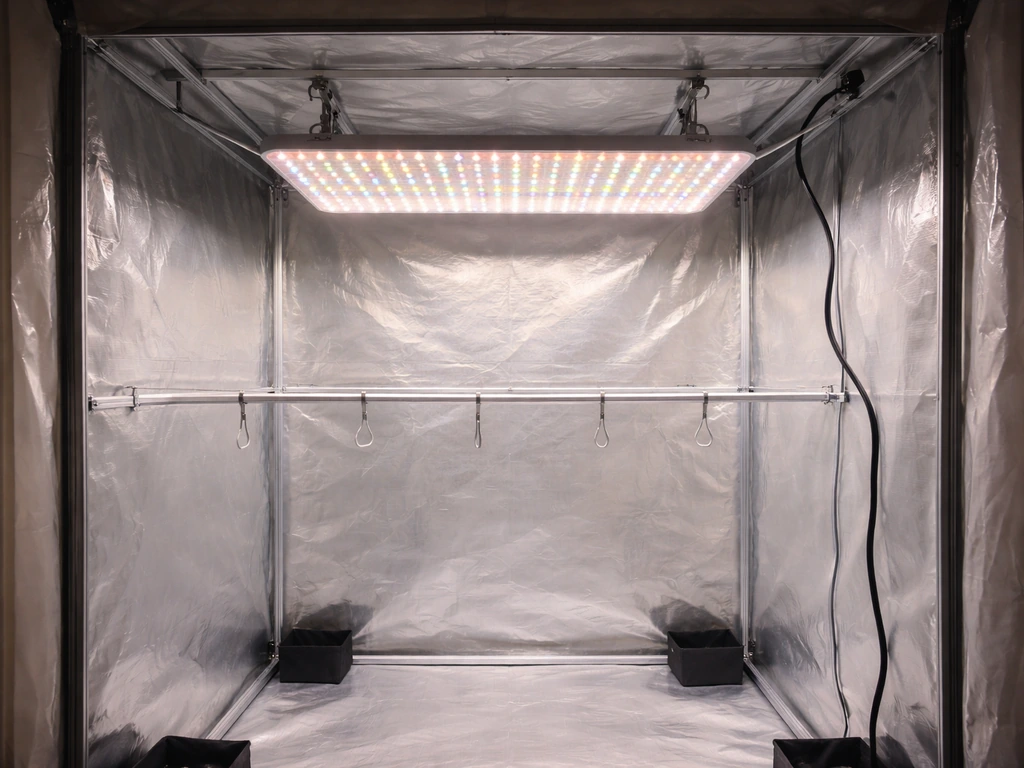
The term 'full spectrum' is one of the most abused phrases in the grow light industry. On a cheap panel, it can mean almost nothing. On a well-engineered fixture, it refers to a carefully defined combination of LED channels that together cover the wavelength bands plants actually use. The meaningful version works like this: a warm white LED cluster (typically 2800–3200 K) delivers red-heavy output to support flowering, while a cool white cluster (4800–5000 K) covers blue-dominant wavelengths for vegetative growth and photosynthesis. These are layered with dedicated deep red diodes at 660–665 nm, which hit the peak of chlorophyll-a absorption. Some fixtures add 730 nm far-red to trigger the Emerson enhancement effect, which measurably increases photosynthetic efficiency when combined with red light.
Spider Farmer's SE series, for example, explicitly specifies its spectrum as 660–665 nm deep red plus 2800–3200 K warm white and 4800–5000 K cool white. That's a real, verifiable definition. HLG follows the same philosophy on their Rspec range, positioning it as 'white light full spectrum for veg and flowering' built around defined white channels and specific horticultural wavelengths. SANlight goes further still, publishing actual PPFD plots and PAR distribution data so you can verify canopy intensity rather than just trusting a label. If a fixture's product page doesn't list actual wavelength bands, CCT values, or PPFD maps, treat the 'full spectrum' claim as marketing until proven otherwise.
One thing worth knowing: the PAR window (photosynthetically active radiation) runs from 400–700 nm, but components outside that range, particularly far-red at 700–750 nm, still influence plant physiology. Blue light in the 400–500 nm range drives compact vegetative growth and stomatal regulation. A fixture that skips meaningful blue output or has virtually no red channel isn't truly full spectrum regardless of what the box says.
Matching your light to your space: tent size, room size, and mounting height
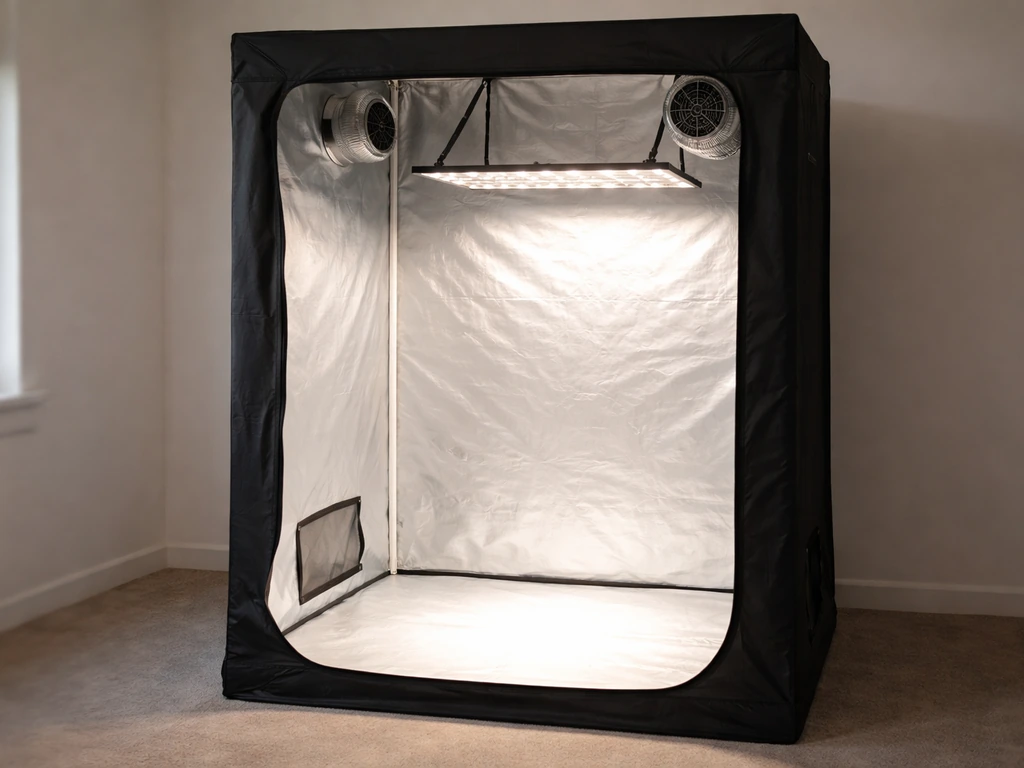
Getting the right wattage and coverage area for your space is more important than any other buying decision. Overpowered lights waste electricity and create heat problems. Underpowered lights give you stretched, unproductive plants. The general rule for flowering is to target 600–1,000 µmol/m²/s PPFD at canopy level, which for most full spectrum LED fixtures translates to roughly 30–50 true watts per square foot of flowering canopy.
Coverage footprints on product pages are a starting point, not gospel. Spider Farmer labels SE3000 coverage as a 2×2 ft commercial core area up to 3×3 ft for personal growing. Those numbers are meaningful but context-dependent: 2×2 ft commercial means the light can sustain high-PPFD flowering intensity over that smaller area, while 3×3 ft works for personal grows where slightly lower intensity is acceptable. A physical fixture like the SE3000 measures roughly 60×58 cm, so spacing and tent size planning needs to account for both coverage and the bar/board footprint itself. Always cross-reference coverage claims against PPFD maps at your actual intended mounting height.
For mounting height, manufacturers like Treegers publish PPFD maps at multiple canopy-to-light distances, which is the correct way to plan. A light that delivers 900 µmol/m²/s at 18 inches might only deliver 400 µmol/m²/s at 30 inches. If you're running seedlings under the same fixture as your mature canopy, you'll need to adjust height (or dim the light) to hit stage-appropriate PPFD rather than burning young plants.
| Tent/Space Size | Recommended True Wattage | Target Stage | Notes |
|---|---|---|---|
| 2×2 ft (60×60 cm) | 100–150 W | Veg or single plant flower | Bar-style or compact quantum board; SE2000 or HLG 200 range |
| 3×3 ft (90×90 cm) | 250–300 W | Veg or flower | SE3000 or equivalent 300 W bar; good personal grow sweet spot |
| 4×4 ft (120×120 cm) | 400–500 W | Full flowering cycle | SE5000, HLG 600, or two 250 W bars; most common home setup |
| 5×5 ft (150×150 cm) | 600–750 W | Full flowering cycle | SE7000 or equivalent; dimming headroom essential |
| 4×8 ft or larger | 1,000 W+ | Commercial/semi-commercial | Multiple bars or SE1000W class; 0–10V daisy chain control recommended |
Best full spectrum LED grow lights in the UK: picks by budget tier
These recommendations are based on verified specs, UK availability, and real-world performance data rather than manufacturer marketing. There are genuinely good lights at every price point, and the gap between budget and premium has narrowed significantly in the last two years, but the differences still matter when you're trying to maximise yield or run lights for 18 hours a day over multiple cycles. For a broader international comparison including options not always stocked in the UK, the best full spectrum LED grow lights roundup covers additional fixtures worth knowing about.
Budget tier: under £150
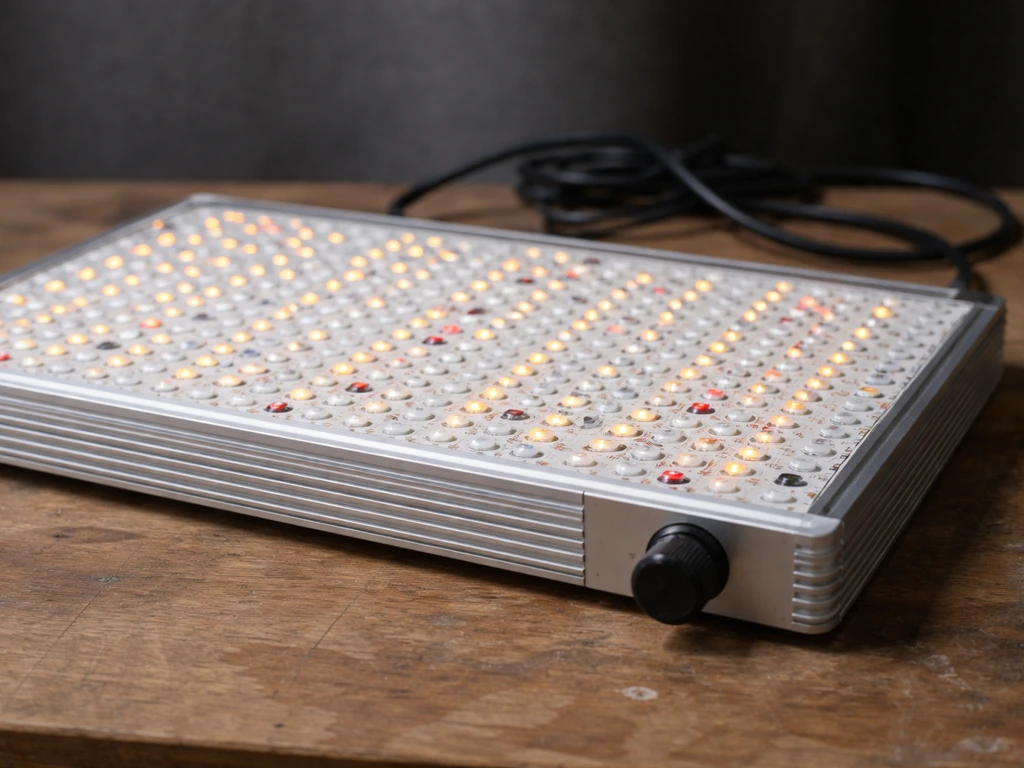
At this price point the Spider Farmer SF series and comparable Samsung LM301B-based quantum boards consistently outperform the competition. You're looking at genuine PPE (photon efficacy) figures above 2.5 µmol/J, real coverage for 2×2 to 3×3 ft spaces, and passive cooling designs that don't add fan noise or failure points. Avoid lights in this tier that don't publish PPFD maps or list their diode bins, there are plenty of boards flooding UK marketplaces with unverifiable 'full spectrum' claims and wildly inflated watt figures. If a 1000W light is listed for under £80, the true draw is almost certainly under 100 W and the PPFD will be disappointing.
Mid-range tier: £150–£350
This is where the Spider Farmer SE3000 sits, and it's genuinely one of the strongest all-round options in the UK market right now. The 300 W draw, 660–665 nm deep red plus warm/cool white spectrum, and 5-year warranty with 30-day free returns from the UK store make it a solid choice for a 3×3 tent. The G-series from the same brand covers similar ground with a slightly different bar layout. If you want something with IP65 water resistance for humid environments, AC Infinity Ionframe EVO models (around £340 for the relevant size) add that protection alongside dimmability and app control, which is genuinely useful when dialling in intensity across a grow cycle.
Premium tier: £350 and above
HLG and SANlight are the fixtures to look at when you want published photometric data and long-term reliability backing up the price. HLG's Rspec range uses 660 nm and 730 nm far-red in combination with high-efficacy white diodes, and their fixtures have a track record across commercial and serious hobbyist grows. SANlight EVO units are less commonly stocked across UK retailers but are engineered to an extremely high standard: the EVO 3-60 1.5, for example, delivers a measured 545 µmol/s onto a 60×60 cm area at 200 W, which is a quantifiable claim you can verify rather than just a marketing number. I-HLED's Verona 400W is another premium UK option worth considering, specifying 0–10V dimming and a 5-year warranty on both the product listing and datasheet, which means you can actually confirm the driver protocol rather than relying on vague 'dimmable' wording.
Seedlings vs mature plants: spectrum, intensity, and distance
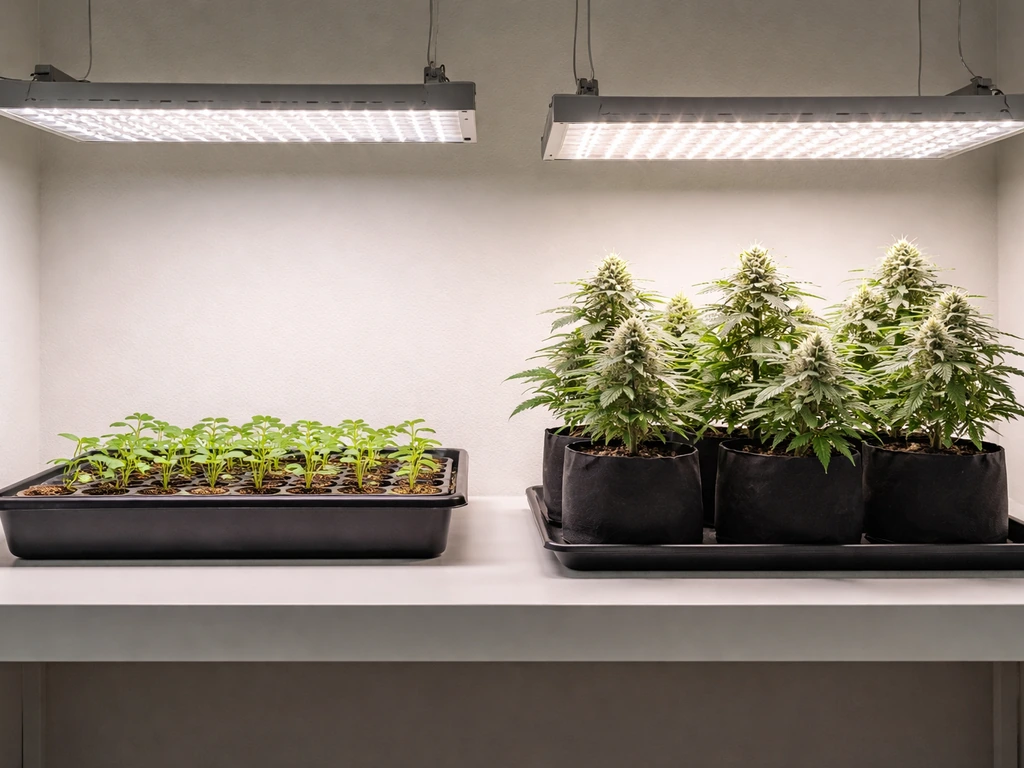
Plant stage matters more than most beginners realise when it comes to how you run your light. Seedlings need much lower PPFD than flowering plants. Running a 400 W board at full power over a seedling tray will bleach and stress the plants before they've had a chance to establish. The target PPFD ranges by stage are roughly as follows: seedlings do well at 100–300 µmol/m²/s, vegetative plants at 400–600 µmol/m²/s, and flowering plants at 600–1,000 µmol/m²/s. Some high-intensity cultivars can push past 1,000 µmol/m²/s in flower, but that's advanced territory.
For seedlings, the practical approach is either to raise the fixture significantly above the canopy or use the dimming function. A light with 0–10V dimming control lets you run at 20–30% power during propagation and ramp up as the plant enters veg. This is far more controllable than adjusting height constantly. The blue-heavy output of a 4800–5000 K cool white component in a full spectrum light is actually beneficial for seedlings and early veg, encouraging compact, sturdy growth. You don't need a separate 'blue' or 'veg mode' light if your full spectrum fixture has meaningful cool white coverage.
For mature flowering plants, that 660–665 nm deep red channel becomes the priority. Far-red at 730 nm (present in HLG Rspec and some premium bars) can push the Emerson enhancement effect and support end-of-cycle light-off triggers. If your budget doesn't stretch to a far-red fixture, a standard full spectrum white-plus-660 nm setup will still deliver strong flowering results, far-red is a meaningful upgrade but not a requirement.
How to actually judge specs: PPFD, coverage, efficiency, and dimming
PPFD (photosynthetic photon flux density, measured in µmol/m²/s) is the single most useful number on a spec sheet. It tells you how much usable light is landing on a given area at a specific mounting height. The critical thing is that PPFD drops sharply as you raise the fixture: it roughly follows the inverse square law, so doubling the mounting height quarters the intensity. This is why fixtures should publish PPFD maps at multiple heights, 12 inches, 18 inches, and 24 inches at minimum, rather than a single headline number. A PPFD map shows you how intensity varies across the coverage area, not just at the centre point. Centre-weighted maps with a bright spot and dim edges indicate poor uniformity and wasted canopy area.
PPE (photon efficacy) measures how efficiently the fixture converts watts of electricity into photons of usable light. It's expressed in µmol/J. Anything above 2.5 µmol/J is solid for a commercial-grade fixture; budget boards with Samsung LM301B diodes typically reach 2.3–2.7 µmol/J in practice. Premium fixtures from HLG and SANlight can push past 3.0 µmol/J. Higher PPE means lower electricity bills and less waste heat for the same amount of plant-usable light.
Dimming control matters because grow conditions aren't static. Seedlings need low intensity, you may want to ramp up gradually, and heat management sometimes requires backing off power. The standard for quality fixtures is 0–10V dimming via a dedicated driver input. Spider Farmer's SE1000W lists explicit 0–10V control on its UK product page, and you can daisy-chain multiple units for centralised control. The Verona 400W specifies 1–10V on both its listing and datasheet, which is functionally the same. Avoid fixtures that describe dimming only as 'adjustable knob on the driver' if you're running multiple lights in a larger space, analogue per-unit adjustment gets cumbersome fast.
Coverage area claims are worth approaching sceptically. Some manufacturers define coverage as the area that receives any measurable light; others define it as the area that hits a commercially useful PPFD threshold for flowering. SANlight's approach of reporting what percentage of the illuminated area reaches a minimum PPFD value is the most rigorous method and the one buyers should look for. A simple 'covers 4×4 ft' claim without supporting PPFD data is essentially unverifiable.
UK buying considerations: power draw, heat, drivers, warranties, and what to avoid
UK mains voltage runs at 230 V / 50 Hz, which most quality LED grow light drivers handle natively with no adaptor needed. Always confirm the input voltage range on the spec sheet before buying: a driver rated 100–277 V AC will work fine; one rated only for 110 V (common on US-spec grey imports) will not. Most reputable brands sold through UK retailers like Hytec or Greens Horticulture stock UK-compatible units with UK plugs, but if you're ordering direct from a brand's international store, double-check the driver spec.
Heat management is directly tied to PPE. A less efficient fixture running at 400 W actual draw dumps more of that as waste heat than a high-PPE light at the same wattage. In a sealed or poorly ventilated tent this becomes a real problem, raising ambient temperature above 28–30°C and stressing plants. Quality full spectrum LED bars run significantly cooler than older blurple or HID setups, but they still generate heat. Make sure your tent's extraction capacity (in m³/hr) can handle the fixture's thermal output before buying.
Driver quality and lifespan claims deserve scrutiny. LED chip lifespan is typically quoted using lumen maintenance metrics like L70, L80, or L90, meaning the point at which luminous output drops to 70%, 80%, or 90% of original. These figures are extrapolated from LM-80 test data using IES TM-21 methodology, and a credible manufacturer will reference these standards rather than just saying 'lasts 50,000 hours.' That 50,000-hour figure is widely cited but often refers to an L70 endpoint (30% output loss) not L90, and the driver often fails before the diodes do. MEAN WELL drivers, used in HLG, Spider Farmer SE series, and SANlight units, have a strong track record for longevity and are worth looking for by name.
IP ratings matter if your environment is humid. IP65 (as featured on AC Infinity Ionframe EVO models) means the fixture is dust-tight and protected against water jets per IEC 60529, making it appropriate for high-humidity propagation or wet rooms. Most quantum boards are not IP-rated at all, which is fine for standard tent use but worth knowing. Don't confuse an IP rating with general durability: an IP65 rating is specifically about ingress protection, not build quality overall.
Warranty length is a meaningful differentiator in this category. Spider Farmer SE series lights carry a 5-year warranty with 30-day free returns from their UK store, and the Verona 400W and SANlight EVO units match that 5-year standard. Budget boards from lesser-known brands often offer 1–2 years at best. Given that you're running these lights 12–18 hours per day, a 5-year warranty represents meaningful coverage for multiple grow cycles.
Things to actively avoid: inflated watt figures (a '2000W' light drawing 200 W actual), 'full spectrum' claims with no wavelength or CCT data, PPFD figures listed without specifying mounting height, and lights sold without UK-compatible drivers. Also be wary of fixtures with no published PPFD maps at all. UK marketplace listings sometimes include fixtures that look impressive on paper but have no verifiable photometric data. If the seller can't point you to a PPFD map or the manufacturer doesn't publish one, that's a red flag.
Quick setup and buying checklist
Use this checklist before you buy and when you're setting up. It covers the practical steps that make the difference between a light that performs and one that underdelivers.
- Measure your tent or grow space and calculate the coverage area in square feet. Confirm the fixture's PPFD map covers that area at a usable intensity (600+ µmol/m²/s for flowering, 400+ for veg) at your planned mounting height.
- Check the fixture's true power draw (watts at the wall), not the LED chip rated wattage. Confirm your circuit can handle it: a 400 W light on a shared ring main with other equipment can trip a breaker.
- Verify the input voltage accepts 230 V / 50 Hz and that the fixture comes with a UK plug or a compatible IEC cable for UK use.
- Confirm the dimming method: 0–10V or 1–10V control is the standard for serious fixtures. If you're running multiple lights, check whether the driver supports daisy-chaining.
- Look up the PPFD map at the mounting height you're planning. Note the centre and edge values. A well-designed fixture should deliver no less than 70–75% of centre PPFD at the canopy edges.
- For seedlings, plan to either dim to 20–30% power or raise the fixture to achieve 100–300 µmol/m²/s at canopy level. Do not run a 400 W light at full power 12 inches above a seedling tray.
- Check the warranty (target 3 years minimum, 5 years ideal) and confirm the returns policy before purchasing from a UK retailer.
- If buying a premium fixture, verify whether the spectrum includes 730 nm far-red (useful for flowering end-stage) and whether the manufacturer publishes LM-80 or TM-21 data for lifespan claims.
- Once installed, adjust mounting height by plant response as well as PPFD targets: stretching stems mean more light, bleaching or curling leaves mean back off intensity or raise the fixture.
FAQ
When a listing says “full spectrum”, what exact details should I look for on the product page to know it is real?
Look for a defined wavelength breakdown (for example, 660 to 665 nm deep red plus specified warm and cool white CCT values), any mention of far-red at 730 nm (if claimed), and ideally a PPFD map or PAR distribution. If the page only has a broad marketing line like “full spectrum” with no wavelength bands, CCT values, or mounting-height details, treat it as unverified.
Do I need both blue light and a red channel, or can I choose a simpler red-focused bar for flowering?
For a true full-spectrum result, you want meaningful cool-white output to cover blue-dominant wavelengths (roughly 400 to 500 nm). If you go too red-only, vegetative growth can become stretched or weak and plants may be harder to transition through stages. A red-heavy setup can still flower, but it is usually less predictable across the full grow cycle.
How can I tell if the PPFD number is trustworthy if they only show one figure?
Trust is higher when the PPFD is presented with a mounting height and ideally a map across the footprint. A single centre PPFD value with no height or no uniformity information is often incomplete, because intensity drops sharply with distance and edges can be much lower than the centre.
What should I do if my seedlings look stressed under my full spectrum light, even though I’m using the dimmer?
First, confirm the dimmer control range is actually being used (not just “brightness perception”). Then lower intensity and/or increase mounting height temporarily, because seedlings can get bleached from even moderate overshoot. Use a gradual ramp over several days, and avoid sudden changes when you switch from veg to earlier growth.
Can I use the same light height for seedlings, veg, and flowering to simplify setup?
You can, but you will likely need to change intensity. The plants need different target PPFD levels by stage (seedlings are typically far lower than flowering), so either adjust the mounting height between stages or use dimming to hit stage-appropriate PPFD without overheating the tent.
What mounting height should I start with for a UK tent if the manufacturer doesn’t publish PPFD maps for my exact distance?
Start from the nearest published height (for example, 18 inches if they only show 12 and 24) and then plan to verify with your own measurements if possible. As a rule of thumb, moving the light significantly higher can cut usable intensity dramatically, so you may need to dim less or improve coverage before committing to a whole cycle.
Is far-red at 730 nm required for good yields, or is it mostly optional?
It is optional. Far-red can measurably improve photosynthetic efficiency when paired correctly with red, but a well-designed 660 to 665 nm plus warm/cool white spectrum will still produce strong flowering. If your priority is value, far-red is often a “nice upgrade” rather than a must-have.
How do I avoid buying a light with inflated “watt” claims?
Compare the labeled draw (actual watts) to the “equivalent” marketing number. If a product promotes “2000W” performance but the spec sheet lists a much lower electrical input, the true draw is what matters for heat, power cost, and real PPFD.
What extraction and ventilation capacity do I need in practice for a high-power LED in a tent?
You need enough air exchange to keep temperatures in a safe band (commonly staying below about 28 to 30°C). Check the fixture’s efficiency (PPE) and actual draw first, because lower PPE means more waste heat. Then ensure your extractor is sized for the tent volume, not just for odour control.
Should I prioritise PPE or PPFD, and how do they relate when comparing models?
PPFD tells you how much light reaches your canopy at your height, PPE tells you the efficiency cost (µmol per joule). In a like-for-like comparison, pick the fixture that can deliver your target PPFD across the useful footprint at a power draw you can handle with your ventilation budget.
Do IP ratings matter for normal tent growing, or only for humid setups?
IP ratings matter mainly when you have persistent humidity, condensation, or water exposure. For typical dry tent setups, many quantum boards are fine even without an IP rating. If you expect wet propagation areas or frequent splashing, an IP65-style enclosure approach can reduce risk.
What warranty length should I treat as a minimum for UK use, given LEDs run 12 to 18 hours a day?
A 5-year warranty is a strong baseline because it aligns with the reality of long daily runtimes across multiple grow cycles. Short warranties (1 to 2 years) are a red flag unless the price difference is large, because you may still be paying replacement costs while your light is already near typical wear points.
If I buy from abroad, will a UK-compatible driver always be included?
Not necessarily. Always check the driver input voltage range on the specification sheet, look for compatibility with 230 V, and confirm the plug type if buying from a storefront. A driver rated only for a US-specific input can fail to run on UK mains even if the diode board itself is fine.
How many lights do I need for my space, or should I buy one bigger fixture?
It depends on your tent dimensions and the uniformity you can get. More smaller lights can improve even coverage if each has published PPFD maps showing adequate edges, but one larger panel can work if its footprint and spacing match your canopy size. Coverage claims without PPFD maps make it hard to compare, so prefer fixtures with verified distribution data.
Next Articles
Best Full Spectrum LED Grow Lights 2026 Guide by Setup
2026 guide to best full spectrum LED grow lights: specs, PPFD, coverage, wattage, seedlings, and budget picks.
Best Full Spectrum 1000W LED Grow Lights: Buyer Guide
Buy the best full spectrum 1000W LED grow light with spec-to-decision tips on PPFD, coverage, wattage, and tent fit.
Best 100W LED Grow Light: How to Choose the Right One
Choose the best 100W LED grow light with PPFD coverage, spectrum, efficiency, dimming, heat, and setup tips.