The best LED for a small grow tent right now is a dimmable, full-spectrum quantum board or bar-style fixture sized to deliver 200–400 true watts for footprints up to 3x3 feet, or 400–600 true watts for a 4x4. Those numbers are not marketing watts, they are the actual power draw at the wall. If you nail that spec, you have already eliminated 80% of the bad choices on the market.
Best LED for Small Grow Tent: How to Choose Right Light
Marcus Rutherford
8 Apr 2026
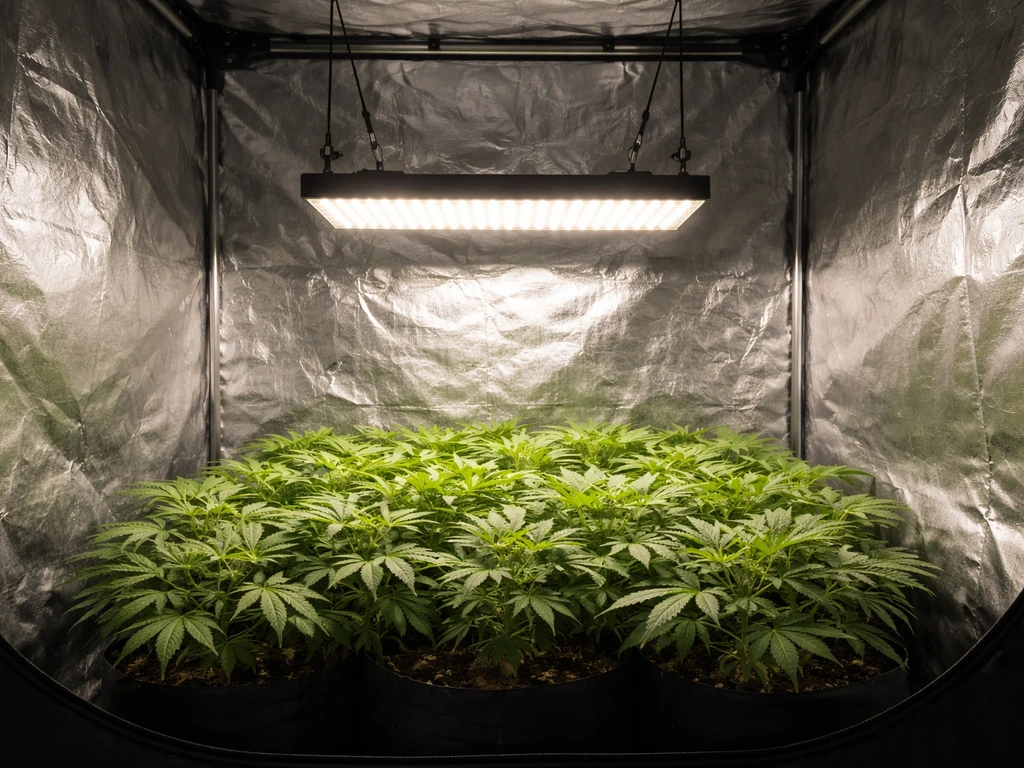
How to choose the right LED for your small grow tent
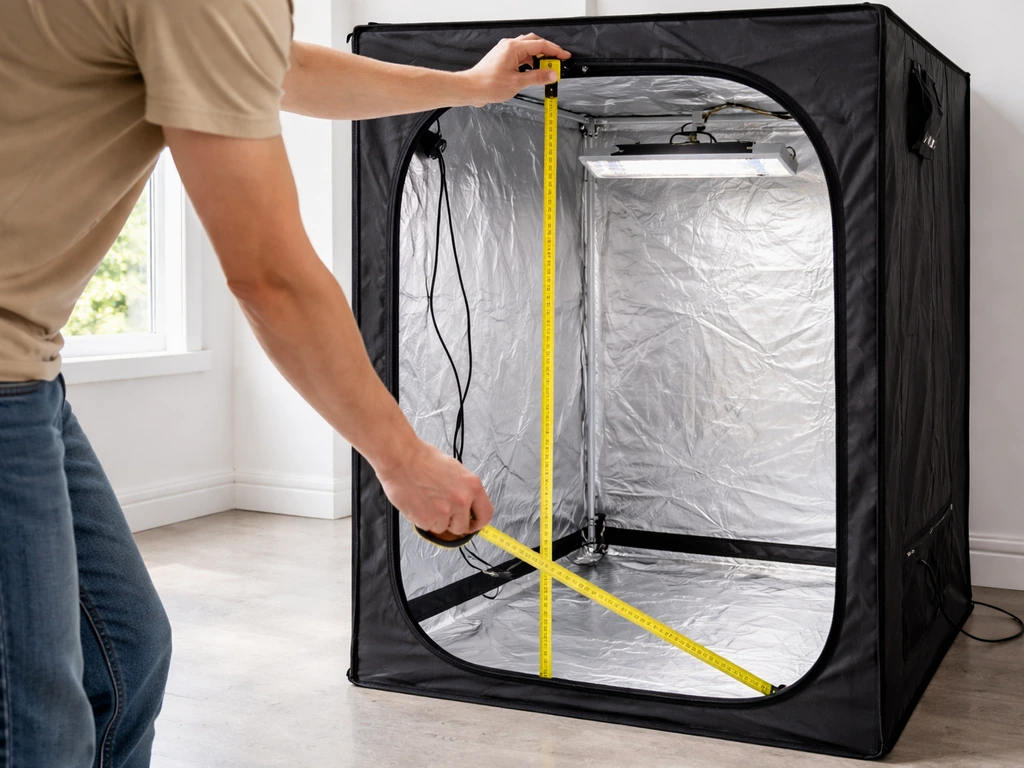
Three things actually determine which light belongs in your tent: the tent's footprint, what you plan to grow through its full cycle, and your budget. Everything else is secondary. Start with footprint because it sets a hard ceiling on how much canopy you can light adequately. A 2x4 tent needs a different light than a 4x4, full stop. If you try to stretch a 2x2 panel across a 3x3 tent to save money, you will get dim corners and underwhelming yields, and no amount of reflective lining will fully compensate.
For the plants: leafy greens, herbs, and seedlings are forgiving at lower intensities. Cannabis, tomatoes, and fruiting crops during flower need significantly more light, which pushes you toward higher-wattage fixtures with real dimming capability. A light you can run at 50% during veg and crank to 100% during flower gives you one fixture that covers the whole cycle. That flexibility is worth paying for. Budget-wise, expect to spend $150–$250 for a quality 200W-range light covering a 2x4 or 3x3, and $300–$500 for a solid 400–600W fixture for a 4x4. Anything significantly cheaper usually cuts corners on the driver, diodes, or thermal management.
If you are just getting started and want a complete setup rather than piecing it together, looking into a best led grow tent kit is a smart shortcut, those bundles are often priced competitively and pre-matched for compatibility.
Best LED models by tent size and wattage class
Rather than ranking every fixture on the market, here is how to think about it by common small-tent scenarios. The brackets below represent the realistic wattage classes and form factors that consistently perform well in each footprint. Specific model names change faster than the underlying specs, so matching specs to tent size will outlast any particular recommendation.
| Tent Size | True Wattage Target | Best Form Factor | Typical PPFD at Canopy (Flower) | Budget Range |
|---|---|---|---|---|
| 2x2 (4 sq ft) | 100–150W | Single quantum board or compact bar | 600–900 µmol/m²/s | $80–$150 |
| 2x4 (8 sq ft) | 200–250W | Dual-bar or mid-size quantum board | 600–900 µmol/m²/s | $150–$250 |
| 3x3 (9 sq ft) | 250–350W | Quantum board or 3-bar strip | 600–900 µmol/m²/s | $200–$350 |
| 4x4 (16 sq ft) | 400–600W | Multi-bar or large quantum board | 700–1,000 µmol/m²/s | $300–$500 |
For a 2x2 tent, look at fixtures from brands like Spider Farmer, Mars Hydro, or ViparSpectra in the SF-1000 or equivalent class. These pull 90–100W at the wall and hit adequate PPFD for vegetative growth easily. For flowering in that tight space, bump to a 150W-class fixture. In a 3x3, the Spider Farmer SF-2000, Mars Hydro TSW-2000, and similar 200–240W boards are proven performers with Samsung LM301B or LM301H diodes and Meanwell drivers, a combination worth specifically looking for.
For a 4x4, the 480W quantum board class (Spider Farmer SF-4000, HLG 480 Rspec, or equivalent) is where most growers land. If you eventually scale up beyond a 4x4, the specs and selection criteria covered here still apply, you just need more fixtures or a bigger panel, and the guidance in our best 5x5 led grow light article picks up right where this one leaves off.
Full-spectrum vs cheaper spectrum options: what actually matters
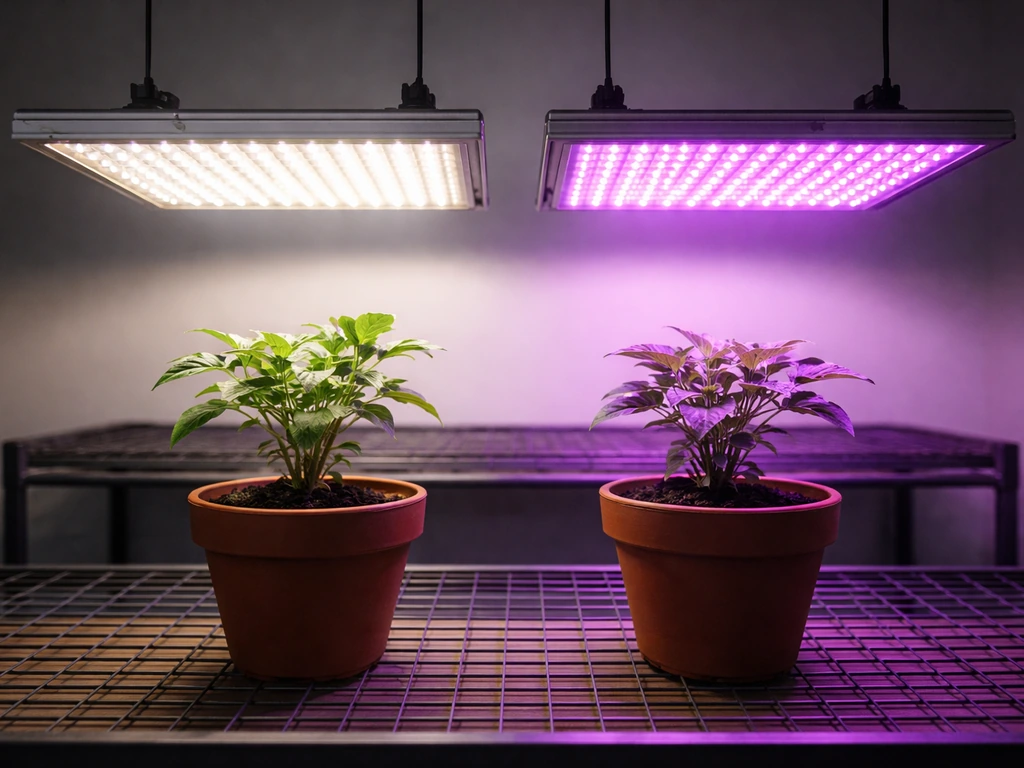
Full-spectrum in the LED grow light world usually means white-dominant light produced by phosphor-coated diodes (like Samsung LM301 series), sometimes combined with targeted red or far-red LEDs. It covers the full PAR range (roughly 400–700nm) in a distribution that loosely resembles sunlight. This matters because plants use light across that entire band for different photochemical processes, not just the red and blue peaks that older blurple lights provided.
Cheaper blurple lights, the purple-hued panels that flooded the market in the 2010s, typically run two wavelengths: a narrow blue peak around 450nm and a red peak around 660nm. These are not useless, but they are genuinely less efficient at growing most crops compared to a modern full-spectrum quantum board at the same true wattage. The plants look terrible under blurple light (making it hard to spot deficiencies), and the photon distribution misses wavelengths that support stem strength and secondary metabolite development.
That said, not every "full-spectrum" claim is equal. Some budget boards use lower-binned white diodes that technically emit across the PAR range but at significantly lower efficiency. When evaluating any fixture, look for the diode model listed in the specs. Samsung LM301B hits around 2.
7–2. 8 µmol/J efficiency. LM301H pushes slightly higher. Epistar or unnamed Chinese diodes are a wildcard, sometimes fine, sometimes not.
The spectrum itself is less of a gotcha than the efficiency and binning of the underlying diodes. One practical note: measuring PPFD accurately depends on the sensor you use. [Apogee and similar quantum sensors vary in their spectral response](https://www. apogeeinstruments.
com/quantum/), and a PAR sensor calibrated only for sunlight will read differently from a full-spectrum quantum sensor when measuring LED output, so take manufacturer PPFD claims with a grain of salt unless they specify the measurement instrument.
Coverage, hanging height, and heat: getting the light distribution right
Coverage claims on light packaging are almost always optimistic. A fixture marketed as covering a 4x4 "flowering footprint" might deliver decent PPFD at the center of that space but drop off sharply at the corners. Real coverage for high-intensity flowering is usually one size down from whatever the box says. Use the manufacturer's PPFD map if they publish one, it shows actual measured values at a specific hanging height across the entire footprint. If they do not publish a PPFD map, that is itself a red flag.
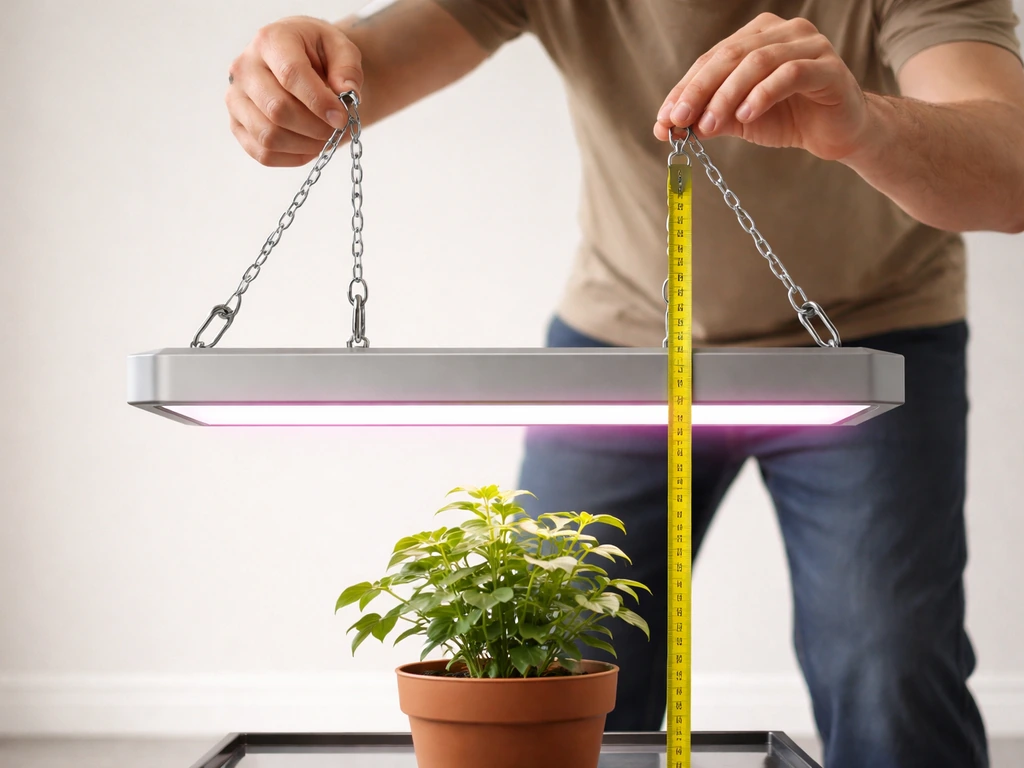
Hanging height has a dramatic effect on intensity and uniformity. Most quantum boards and bar lights work best at 18–24 inches above the canopy during flower and 24–36 inches during veg or seedling stages. Hanging too close concentrates light in a hot spot and leaves the edges dim; hanging too high spreads light more evenly but reduces overall intensity at the canopy. The sweet spot for most 4x4-targeted fixtures is around 18–20 inches during peak flower. AC Infinity's own guidance, for example, recommends running lights at only about 25% intensity during the seedling stage, not just hanging them higher, because even a dimmed full-power LED at close range can stress young plants.
Heat is often underestimated in small tents. A 400W LED in a 4x4 tent with poor ventilation will drive temperatures above 85°F at the canopy even though LEDs run cooler than HPS. Rule of thumb: plan for at least one inline fan capable of exchanging the tent's air volume every 1–3 minutes. For a 4x4x7 tent (roughly 112 cubic feet), that means a minimum 4-inch fan rated at 190+ CFM, ideally with a speed controller tied to a thermometer. Bar-style fixtures tend to run slightly cooler and distribute heat more evenly than single-board designs, which is a real (if unsexy) advantage in tight spaces.
Performance metrics that decide "best"
Wattage alone tells you nothing useful about how well a light will grow plants. The metrics that actually matter are PPFD, efficacy (µmol/J), and uniformity. Here is what each one means and what numbers to look for.
PPFD (Photosynthetic Photon Flux Density) measures how many photons in the PAR range land on a square meter of canopy per second, expressed as µmol/m²/s. This is the number your plants are actually responding to. Target ranges by growth stage: seedlings need 100–300 µmol/m²/s; vegetative growth runs well at 400–600 µmol/m²/s; flowering crops benefit from 600–1,000 µmol/m²/s. Cannabis and heavy-feeding crops near the top of that range, leafy greens and herbs toward the bottom.
If you are adding CO2, push toward the upper limits. Importantly, PPFD is not the only piece, the daily total matters too. DLI (Daily Light Integral) combines PPFD with photoperiod to give you the total light dose per day: DLI = PPFD × hours × 3600 / 1,000,000, expressed in mol/m²/day. Most flowering crops want 30–50 mol/m²/day; leafy greens thrive at 12–20 mol/m²/day.
Checking DLI tells you whether you are hitting adequate light totals across your photoperiod, not just whether the instantaneous intensity sounds right.
Efficacy is the efficiency rating: how many photons you get per watt of electricity consumed. Modern quantum boards with Samsung LM301 diodes hit 2.5–2.9 µmol/J. Premium fixtures from HLG or similar brands occasionally exceed 3.0 µmol/J. Budget fixtures using lower-quality diodes often land at 1.8–2.2 µmol/J. Higher efficacy means more light per dollar of electricity over time and less heat generated per photon delivered. At scale, this matters enormously, and even in a small tent it affects your ambient temperature and electricity bill meaningfully over a full grow cycle.
Uniformity refers to how evenly the PPFD is distributed across the canopy. A light that delivers 900 µmol/m²/s at center and 400 at the edges produces uneven growth, plants near the edges stay behind, which wastes tent space. Bar-style fixtures tend to deliver better uniformity than single large boards because the light sources are spread across more of the tent footprint. When reviewing a PPFD map, look for corner values that are at least 60–70% of the center reading for a respectable uniformity rating.
Dimming is non-negotiable for serious growers. A 0–100% dimmable driver (Meanwell HLG series is the gold standard) lets you match output to growth stage, protect seedlings from intensity stress, and run the light cooler during warm months. Lights without dimming force you to manage intensity only through hanging height, which is a crude and limited tool.
Setup tips and troubleshooting for first-time tent grows
Before you hang anything, measure your tent's actual interior height from floor to ceiling. Subtract the height of your largest pot (often 12–18 inches) and the length of the fixture plus hanging hardware (another 4–8 inches). What is left is your maximum canopy-to-fixture distance. If that number is under 12 inches, you have a problem with oversized pots or a light that does not dim low enough. Address this before your first seed goes in.
Common first-timer mistakes and how to fix them:
- Running the light at full power over seedlings: dial back to 25–30% intensity and hang at 24–30 inches. Seedlings only need 100–200 µmol/m²/s — blasting them causes bleaching and stunted growth.
- Ignoring the PPFD map and guessing at height: download or request the manufacturer's PPFD map, find the hanging height that delivers your target intensity across the canopy, and hang the light there. Don't guess.
- Underestimating heat in summer: ambient room temperature plus heat from the fixture can push tent temps above 85°F, which slows growth and stresses plants. Add an inkbird or similar temperature controller to your fan so it ramps up automatically.
- Buying a light sized for veg coverage, not flower coverage: if the box says '4x4 coverage,' check whether that's for veg or flower. Many manufacturers list veg coverage on the front and bury the smaller flower footprint in fine print.
- No timer: plants need consistent photoperiods. A simple digital timer costs $10 and prevents the kind of irregular light schedules that trigger hermaphroditism in cannabis or bolting in leafy greens.
- Ignoring the driver warranty: Meanwell drivers carry 5-year warranties. No-name drivers rarely do. If the brand won't tell you who made the driver, assume the worst.
Once you are up and running, check your canopy PPFD with a PAR meter at least once per grow cycle. Diode output degrades over time, typically 3–5% per year with quality components, so a light that hit 900 µmol/m²/s at 18 inches in year one may be delivering noticeably less by year three. Adjusting hanging height or increasing intensity on the dimmer compensates for this as the fixture ages.
For growers who eventually want to scale beyond one small tent, the decision-making framework here applies directly to larger setups. If a second tent is on the horizon, the coverage and efficiency principles that make a light great for a 4x4 are the same ones that matter when you are evaluating fixtures for a best led lights for 10x10 grow tent scenario, you are just multiplying the fixture count and managing the added heat load.
Bottom line: buy a dimmable full-spectrum quantum board or bar light sized to your true tent footprint, confirm the PPFD map shows adequate coverage for your crop's flowering stage, and verify the driver and diode brand before committing. Do those three things and you will be ahead of the majority of buyers who just filter by price and wattage. That is the practical shortcut to getting it right the first time.
FAQ
What should I do if the manufacturer does not provide a PPFD map for the light?
If you cannot find a published PPFD map, use the fixture’s stated photon efficacy and your target DLI as a reality check, then plan to verify with a PAR meter after setup. A common workaround is starting at a conservative dim level, measuring center and corner PPFD at your final hanging height, then adjusting intensity to hit the stage range you want.
How can I tell if my LED is too uneven for a small grow tent?
Aim for uniformity before maxing intensity. If corner PPFD is below about 60 to 70% of the center reading, you will get edge lag even if the middle hits your target. For small tents, this often means choosing a larger light footprint class, or adding a second smaller fixture to improve coverage rather than pushing one fixture harder.
Can I rely on hanging height instead of dimming for seedlings?
Yes, you can, but only if the driver truly supports low-end dimming without flicker or instability. In practice, set the dimmer so seedlings run in the lower PPFD band rather than assuming “lower height” is a substitute. If your fixture can only dim to something like 40% to 60%, hanging lower can create heat stress and hotspots, so the better fix is picking a light with a wider dimming range.
If two LEDs draw the same watts, will they perform the same in my tent?
Don’t judge “wattage per square foot” alone. Two fixtures with the same true watt draw can produce very different PPFD because efficacy (µmol/J) varies widely by diode binning and driver quality. For decision-making, compare efficacy and any PPFD measurements at your intended hanging height, then choose the fixture that gets you into your target PPFD and DLI ranges.
What’s the fastest way to diagnose heat problems with a small tent LED?
For frequent warm-ups, consider the tent air exchange first. A good baseline is one inline exhaust rate that clears the tent volume every 1 to 3 minutes, then monitor canopy temperature with a thermometer at plant height. If canopy temps exceed your target range, improve airflow before raising dimmer output, because overheating can reduce growth and worsen nutrient uptake.
How do I know whether a “full-spectrum” LED is actually worth buying?
Full-spectrum is not one fixed formula. Some boards are white-phosphor dominated with supplemental red and far-red, others add only small amounts, and cheaper “full spectrum” marketing may use lower efficiency diodes. Your practical filter is the listed diode model and bin (for example, LM301B or LM301H) plus efficacy, not the marketing wording alone.
How often should I measure PPFD to account for LED aging?
More than one, because diodes age and drivers can drift. A sensible approach is to measure PPFD at the same hanging height during the first week of each new grow, especially if you use the same plants and photoperiod every time. If readings drop, adjust dimming upward or slightly reduce hanging height within safe limits for leaf temperature and uniformity.
When should I adjust photoperiod versus intensity to hit the right light dose?
DLI matters most when you keep the same photoperiod and want consistent flowering performance. If your PPFD is near the middle of the target band, changing DLI usually means adjusting hours, not just intensity. If you are at the edge of the PPFD range, raising intensity may be the cheaper and faster fix than adding extra hours, but only if your canopy stays uniform and heat is controlled.
What dimming pitfalls should I avoid when buying a budget LED for a small tent?
Watch for driver and dimmer limitations. Some budget fixtures claim “dimmable” but the driver may not behave well at very low settings, or the dimming controller may not be smooth. If you plan to run 0 to 10% for seedlings, choose a driver designed for true continuous dimming and verify whether the manufacturer specifies a dimming method (and minimum operating point) rather than relying on generic “dimmable” labels.
Can I still use DLI targets if my tent coverage is not perfectly uniform?
Yes, because DLI guidance assumes adequate light distribution across your canopy. If your corners are dim, your plants experience a lower effective DLI even when the center looks on target. That’s why uniformity checks with a meter at corners can prevent “I hit the numbers but yields are low” situations.
Next Articles
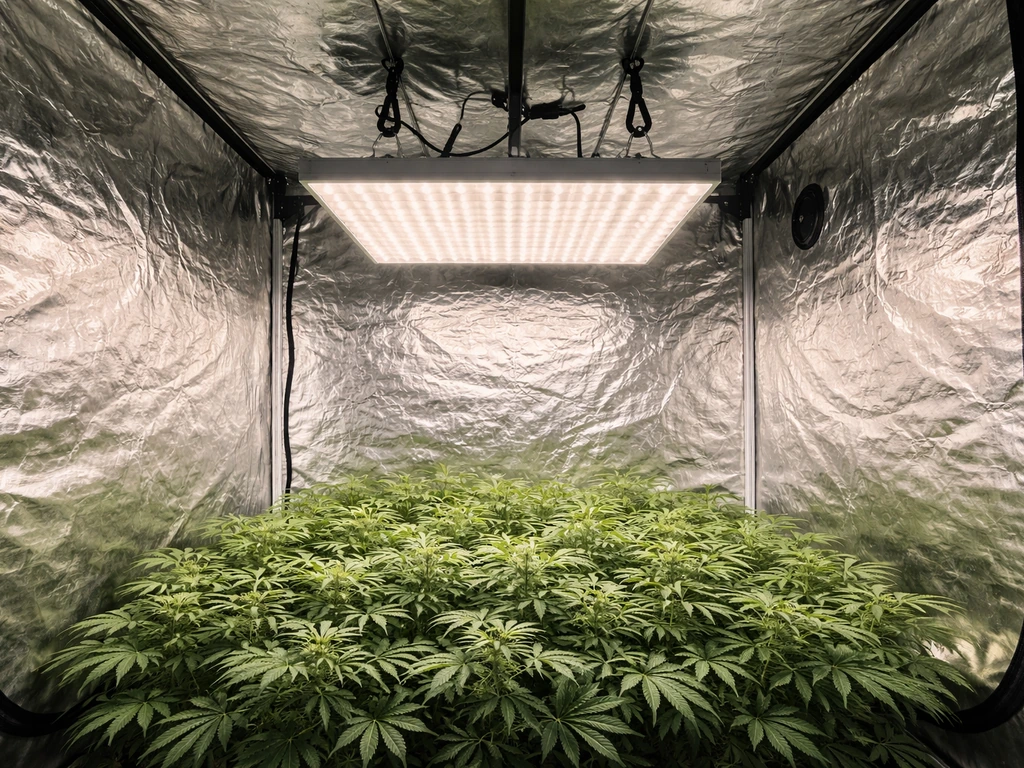
Best 5x5 LED Grow Light: Buying Guide and Top Picks
Find the best 5x5 LED grow light with specs on PPFD coverage, spectrum, wattage, dimming, efficiency, and setup tips.
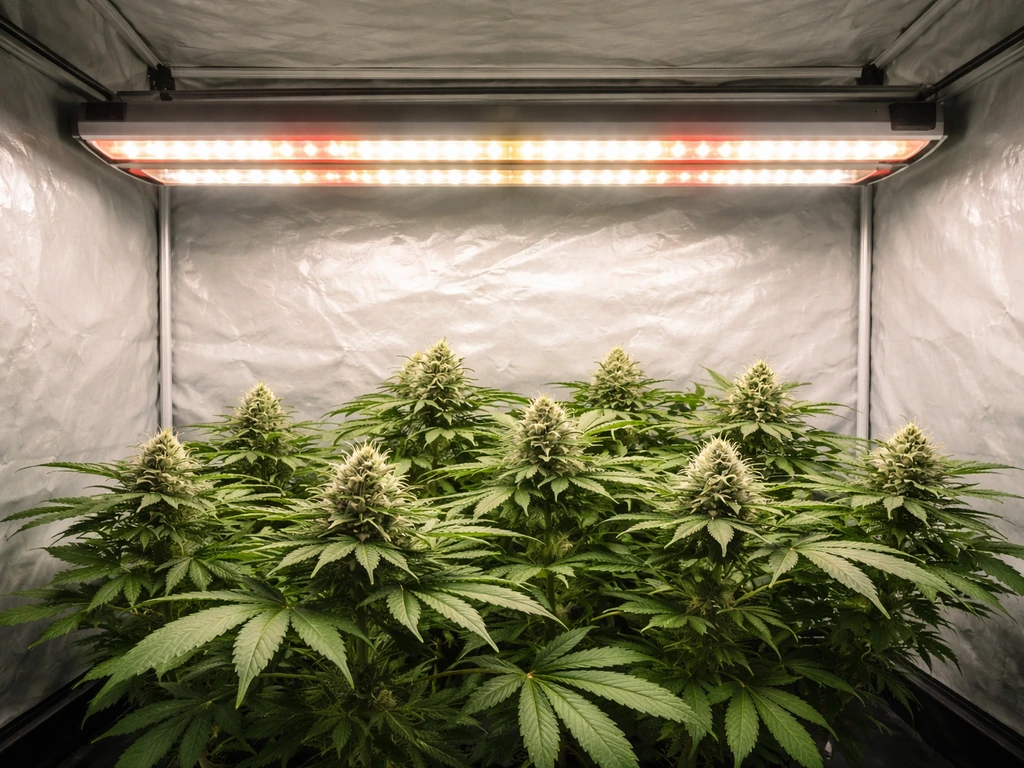
Best Full Spectrum 1000W LED Grow Lights: Buyer Guide
Buy the best full spectrum 1000W LED grow light with spec-to-decision tips on PPFD, coverage, wattage, and tent fit.
Best 100W LED Grow Light: How to Choose the Right One
Choose the best 100W LED grow light with PPFD coverage, spectrum, efficiency, dimming, heat, and setup tips.