A screw-in LED grow light is exactly what it sounds like: a grow-specific LED bulb with a standard Edison screw base (E26 or E27) that drops into any ordinary lamp socket. No drivers, no hanging hardware, no ballasts. For seedlings on a shelf, herbs on a countertop, or a small closet grow that needs a quick supplement light, a good screw-in bulb can absolutely do the job. The key word is 'good.' Most people searching for these are hoping one bulb will replace a proper grow fixture. Sometimes it can, within a small footprint. But the choice comes down to actual photon output, not wattage labels, and getting that wrong is the most common mistake buyers make. This guide walks through every factor you need to make a smart pick.
Best Screw-In LED Grow Light Bulbs: How to Choose and Compare
Marcus Rutherford
19 Apr 2026
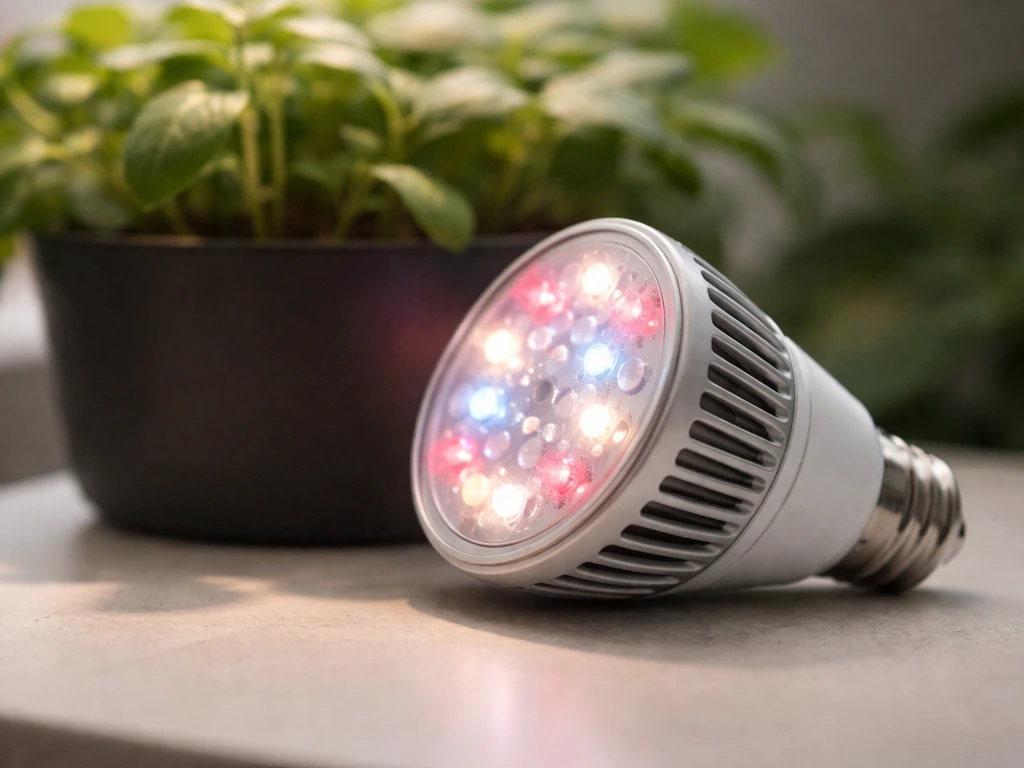
What a screw-in LED grow light actually is
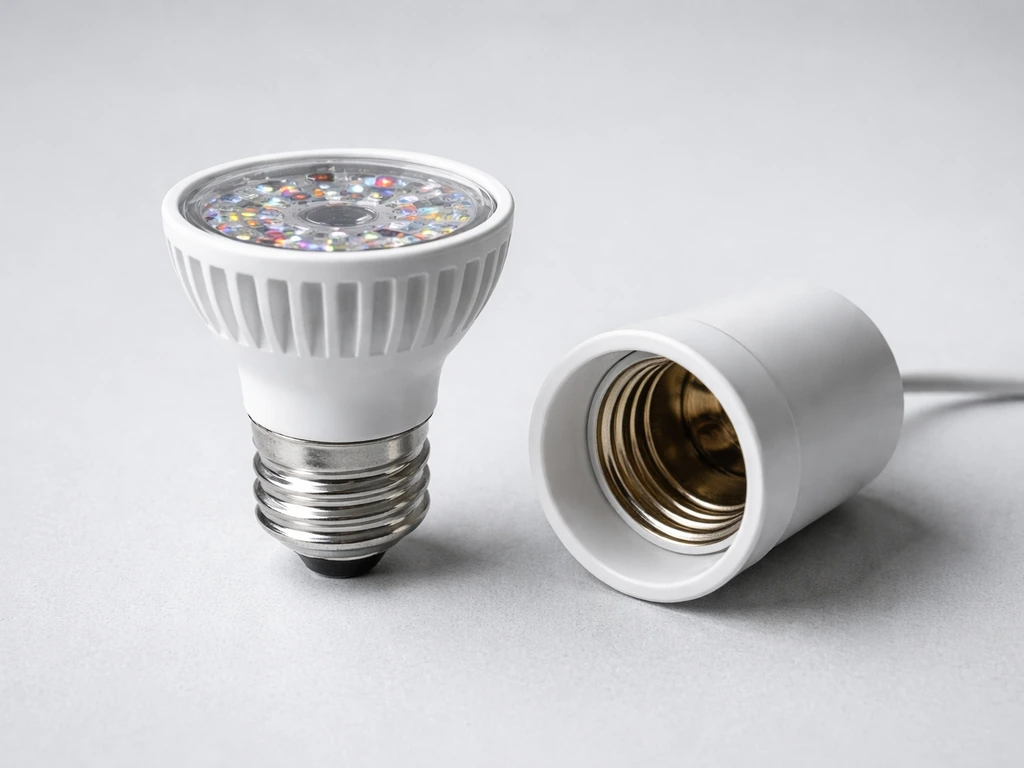
When people search for a screw-in grow light, they are looking for an E26 or E27 base LED bulb engineered for plant growth rather than room illumination. E26 is the North American standard (26 mm thread diameter, rated for 120V circuits), while E27 is the European and international equivalent (27 mm diameter, rated for 240V systems). The threads look nearly identical, which is why people assume they are interchangeable, but they are not the same electrically or in insulating length, and forcing one into the wrong socket can create a safety hazard. In the U.S., you want E26. In Europe and most international markets, E27 is correct.
Within the screw-in grow light category, the two dominant form factors are the BR30 reflector bulb and the PAR38 (or PAR25) reflector bulb. BR30s are the most common: wide flood angle, moderate output, and a size that fits most standard recessed or track fixtures. PAR38s are physically larger, often draw more wattage, and throw a tighter, more intense beam. Both have built-in reflector geometry that helps direct light downward rather than scattering it in all directions like a standard A19 bulb would. For plant growing, that directionality matters more than most people realize because you want photons hitting leaves, not bouncing off your walls.
These bulbs are distinct from dedicated grow light fixtures (quantum boards, COB arrays, bar lights) in one important way: they are constrained by the thermal and wattage limits of a standard lamp socket. That ceiling keeps output relatively modest, which defines both the appropriate use cases and the realistic expectations you should have going in.
Matching a bulb to your actual grow setup
The biggest factor in whether a screw-in bulb works for you is the size of the space you are trying to light. A single BR30 or PAR38 grow bulb covers roughly 1 to 2 square feet of canopy at the intensity plants need for active growth. That is not a lot. A single 2x2 shelf bay might accept two to three bulbs, and even then you are looking at light levels appropriate for seedlings, leafy greens, and herbs rather than heavy-feeding fruiting or flowering plants.
Plant type and growth stage change the calculus significantly. Seedlings, microgreens, and leafy herbs like basil, mint, or lettuce are genuinely well-served by screw-in LEDs when used correctly. These crops are either low-PPFD-tolerant or are grown at close range where intensity is adequate. Plants in active vegetative growth need more, and flowering plants need considerably more, which is where a single screw-in bulb will let you down unless you are clustering several of them or using them as supplement lighting alongside a primary fixture.
Mounting matters too. Most screw-in grow bulbs assume a downward-pointing socket. Recessed ceiling cans, track lights, clamp lights, and clip-on gooseneck fixtures all work well. Horizontal or upward-facing sockets waste a lot of light because the reflector geometry is designed for a vertical, downward-facing orientation. If you are setting up shelf growing, a clamp light with a metal reflector hood positioned 6 to 18 inches above the plant canopy is the most practical and affordable mounting solution.
Wattage vs. actual brightness: compare the right numbers
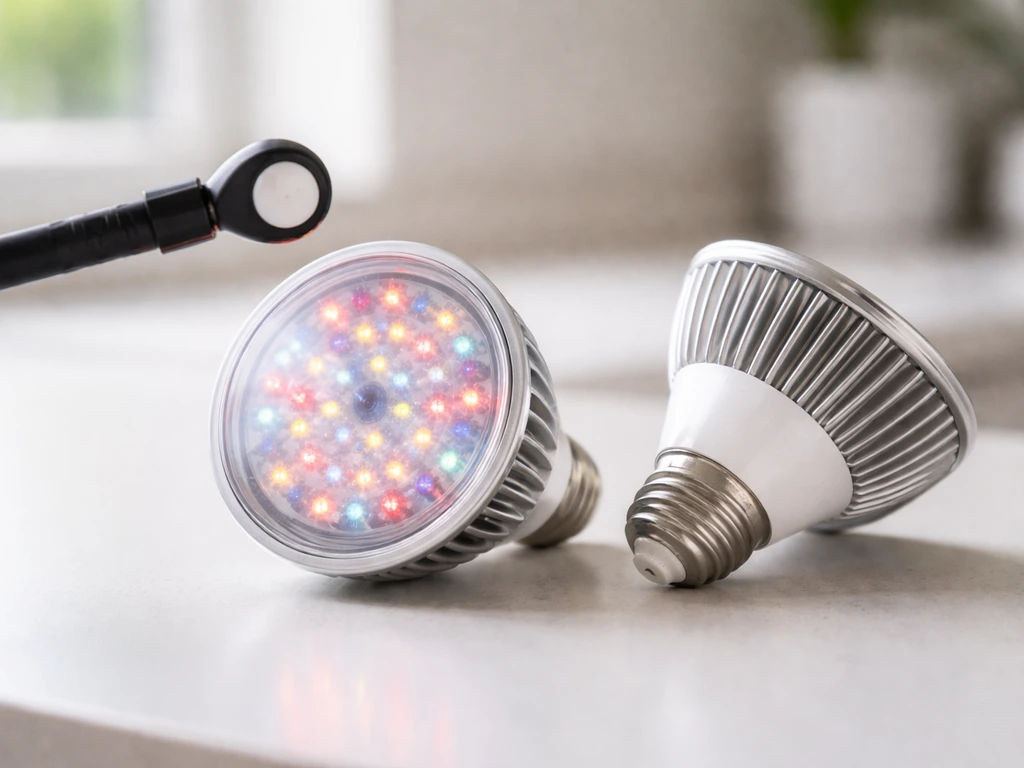
Wattage tells you how much power a bulb consumes. It tells you almost nothing about how useful that light is for plants. A standard 10W LED grow bulb and a 10W household LED pull the same electricity but deliver completely different outputs for plant growth because grow bulbs prioritize wavelengths in the photosynthetically active radiation (PAR) range (roughly 400 to 700 nanometers) while household bulbs are designed to maximize visual brightness in lumens. Lumens are a human-eye metric. Plants do not have eyes.
The metric you actually want is PPFD: photosynthetic photon flux density, measured in micromoles per square meter per second (µmol/m²/s). This tells you how many photons in the PAR range are hitting a square meter of canopy every second. Some manufacturers publish PPFD at a fixed distance, which is genuinely useful. SANSI, for example, lists PPFD values at 1 foot for their PAR25 bulb (around 220 µmol/m²/s at 1 ft for their 30W model), which lets you make a direct comparison. When PPFD maps are not provided, look for PPF: photosynthetic photon flux in µmol/s, which is the total PAR output of the bulb before distance dilution. The GE PAR38 grow bulb, for instance, draws around 32 actual watts and produces approximately 50 µmol/s PPF, which gives you a way to estimate coverage. GT-Lite's 9W BR30 publishes a PPF of 12.85 µmol/s, which is a transparent and useful spec even on a modest bulb.
If a manufacturer only gives you watts and lumens, you can still make educated comparisons. A grow-optimized bulb will typically have lower lumens than a comparably powered household bulb because it is sacrificing green/yellow output (which drives lumen measurements) in favor of red and blue photons that plants actually use. Higher lumens on a grow bulb are not necessarily a good sign. What you are looking for is PAR efficiency (PPF per watt) or, better yet, measured PPFD at a specific distance. When none of that is available, PPF is your next best proxy, and any brand that does not publish at least one of these metrics should give you pause.
For practical targets: seedlings and cotyledons do well in the 200 to 300 µmol/m²/s range. Leafy greens and herbs are satisfied with 200 to 300 µmol/m²/s as well and can often tolerate the lower end. Vegetative plants want 400 to 600 µmol/m²/s. Flowering and fruiting typically demand 600 to 900+ µmol/m²/s. Most screw-in bulbs can hit the seedling and greens target at 6 to 12 inches; few can hit flowering targets without clustering multiple bulbs.
| Growth Stage | Target PPFD (µmol/m²/s) | Realistic with Screw-in Bulbs? | Typical Mounting Height |
|---|---|---|---|
| Seedlings / cotyledons | 200–300 | Yes, single bulb | 12–18 inches |
| Leafy greens / herbs | 200–300 | Yes, single bulb | 10–16 inches |
| Vegetative growth | 400–600 | Possible with 2–4 bulbs clustered | 8–14 inches |
| Flowering / fruiting | 600–900+ | Unlikely without a primary fixture | Requires dedicated fixture |
Spectrum and grow modes: what actually matters
Full-spectrum grow bulbs try to cover the full PAR range with a white-phosphor LED base plus targeted red and blue peaks. In practice, this means they produce light that looks roughly white or pinkish-white and can support multiple growth stages reasonably well. This is the most flexible option for general growing, especially when you are running a single bulb over a mixed herb shelf or cycling through seedlings to veg.
Some screw-in grow bulbs, including Feit Electric's BR30 Multi-Spectrum line, offer switchable or adjustable modes that emphasize different spectrum combinations depending on growth stage. The idea is that you can shift toward a more blue-heavy output for seedlings and veg (encouraging compact, vegetative growth) and a more red-heavy output for flowering or fruiting. Whether this makes a meaningful practical difference at the low power levels of a screw-in bulb is debatable, but it does give you flexibility without buying separate bulbs. Feit's spec sheets are actually fairly transparent about what each mode delivers, which puts them ahead of brands that just print 'full spectrum' on the packaging without further detail.
Dimming is worth considering if you are growing seedlings. Young plants can bleach or stretch oddly if light is too intense at close range. A dimmable screw-in bulb (paired with a compatible dimmer switch) lets you start low and ramp up as plants develop without having to raise the fixture constantly. Check that the bulb and dimmer are compatible before buying since LED dimming compatibility is not universal.
One thing to be clear-eyed about: the marketing term 'full spectrum' is not regulated or standardized. Any bulb with both red and blue diodes technically qualifies in the eyes of most marketing departments. What distinguishes a genuinely useful full-spectrum grow bulb is one where the manufacturer actually shows you a spectral power distribution chart or at least breaks down the red-to-blue ratio and confirms coverage of the 660 nm red peak that drives chlorophyll A absorption most efficiently.
Installation, safety, and heat: the stuff most guides skip
Screw-in grow bulbs are not universally safe in every fixture. The first thing to check is the fixture's wattage rating, which is stamped inside the socket housing. Running a 32W PAR38 in a fixture rated for 25W maximum is a fire risk, full stop. LED bulbs run cooler than incandescent equivalents at the same wattage, but they still produce heat at the base and driver components, and exceeding a fixture's rating creates real thermal hazards, especially in enclosed setups.
Grow tents add another layer of thermal consideration. A sealed or semi-sealed tent with poor ventilation will cause bulb driver temperatures to rise, which shortens LED lifespan and degrades output over time. Feit's BR30 grow bulb is rated for damp locations, and Sunco's BR30 line carries UL listing with damp location ratings as well, which matters in a humid grow tent environment. If a bulb does not carry a damp location or wet location rating, avoid using it in a tent where humidity regularly exceeds 60 percent.
E26 versus E27 confusion is real and worth repeating. In North America, use E26 bulbs in E26 sockets. Do not force an E27 bulb into a North American socket even if the threads seem to engage. The voltage ratings differ, and the physical insulating geometry differences can result in an unsafe fit. If you are outside North America, reverse this guidance. The sibling topic covering E27 grow lights specifically goes deeper on international socket compatibility and the grow bulb options sold primarily in E27 markets.
Spacing between multiple bulbs also matters for coverage uniformity. The goal is overlapping coverage zones so there are no dark spots across the canopy. For BR30 bulbs with a 100-to-120-degree flood angle, spacing bulbs 10 to 14 inches apart center-to-center at a mounting height of 12 inches generally produces reasonable uniformity over a 2x2 to 2x3 area. At 18 inches mounting height, you get more even coverage but lower peak PPFD. Running the DLI math (DLI = 0.0036 x PPFD x light hours per day) helps confirm whether your photoperiod compensates for lower intensity.
Best screw-in LED grow light picks by use case
Rather than ranking specific SKUs that go in and out of stock, here is how I would approach the decision by use case, with reference to the types of bulbs that consistently deliver in each scenario.
Seedlings and propagation
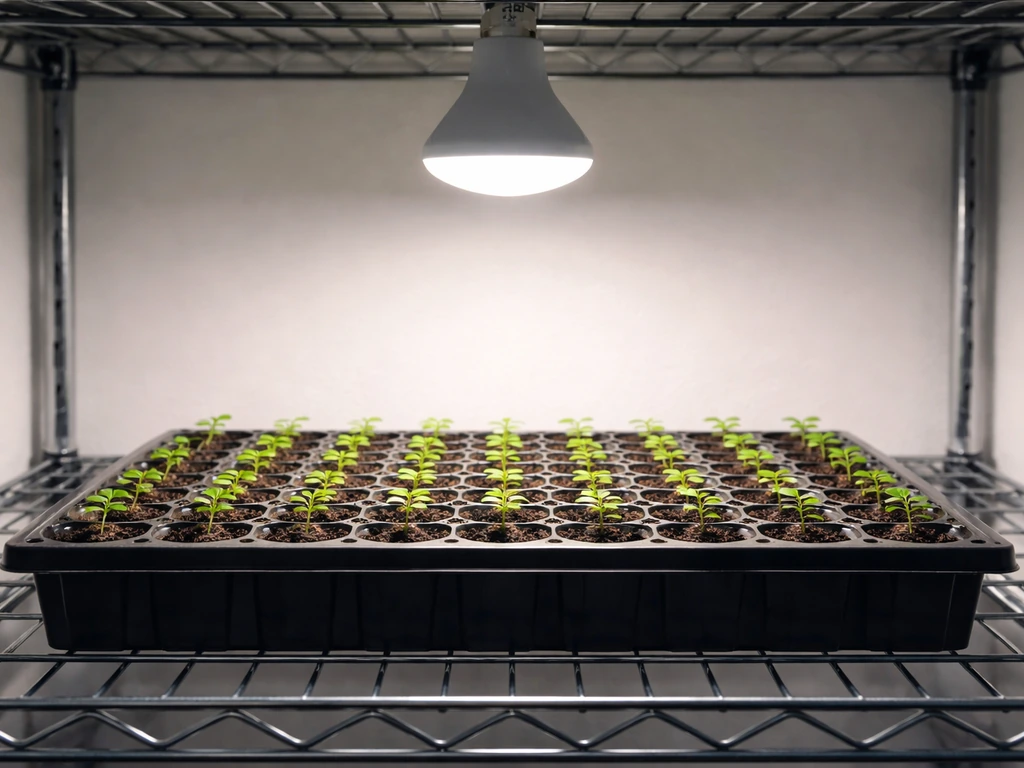
For seedling trays and propagation shelves, a BR30-format grow bulb in the 9 to 15W actual draw range is the sweet spot. You want a bulb that hits 200 to 300 µmol/m²/s at 12 to 14 inches without overpowering fragile seedlings. GT-Lite's 9W BR30 with a published PPF of 12.85 µmol/s is a realistic, transparent option. Feit's BR30 adjustable-spectrum bulb earns a mention here because the ability to dim it down for cotyledons, then shift spectrum as seedlings develop, is genuinely useful. Mount 12 to 16 inches above the tray, run 16 to 18 hours of light per day, and you have a solid seedling setup for under $20 per bulb.
Herbs and leafy greens on a shelf
This is arguably the best use case for screw-in grow bulbs. Basil, mint, cilantro, lettuce, and spinach all thrive in the 200 to 300 µmol/m²/s range that a quality BR30 or PAR38 bulb can reliably deliver at 10 to 14 inch mounting heights. If you want a compact solution for seedlings, herbs, or small shelf growing, the best E27 LED grow light options are the ones that publish PPFD or PPF at a stated distance BR30 or PAR38 bulb. For a single shelf bay (roughly 2 feet wide), two BR30 grow bulbs in adjacent clamp or track fixtures covering about 1 square foot each is an efficient and cost-effective setup. A full-spectrum white-dominant bulb works better here than a purely red-blue 'blurple' because it also provides enough green wavelengths for even, natural plant development.
Small tents (2x2 or smaller)
A 2x2 grow tent in vegetative mode can work with four to six quality screw-in bulbs if you have the fixture infrastructure to support them, but at this point you are spending enough money and adding enough complexity that a dedicated LED fixture starts making more sense. Where screw-in bulbs win in a small tent is during the seedling-to-early-veg transition when you do not need full intensity and want something simple to hang. A PAR38 format grow bulb drawing 25 to 32 actual watts (like the GE PAR38 at ~32W with ~50 µmol/s PPF) gives you the most output of any single screw-in option and is worth considering for 2x2 use when hung at 12 to 18 inches.
Supplement lighting alongside a primary fixture
This is an underrated use case. If you have a primary fixture covering your canopy but have side or corner spots that receive less light, a single screw-in grow bulb in a clip light pointed at a specific plant or canopy zone is an inexpensive and effective fix. Here, spectrum precision matters less than mounting flexibility and output. A BR30 or PAR38 bulb in a gooseneck clamp light gives you a lot of positioning freedom.
Emergency and backup lighting
If your primary fixture fails mid-cycle, a couple of screw-in grow bulbs keep plants alive while you sort out a replacement. They will not sustain full flowering intensity, but they prevent the photosynthetic shutdown and stress that comes from going dark for multiple days. Keep one or two on hand as insurance. They store easily and are inexpensive.
Common mistakes and how to fix them
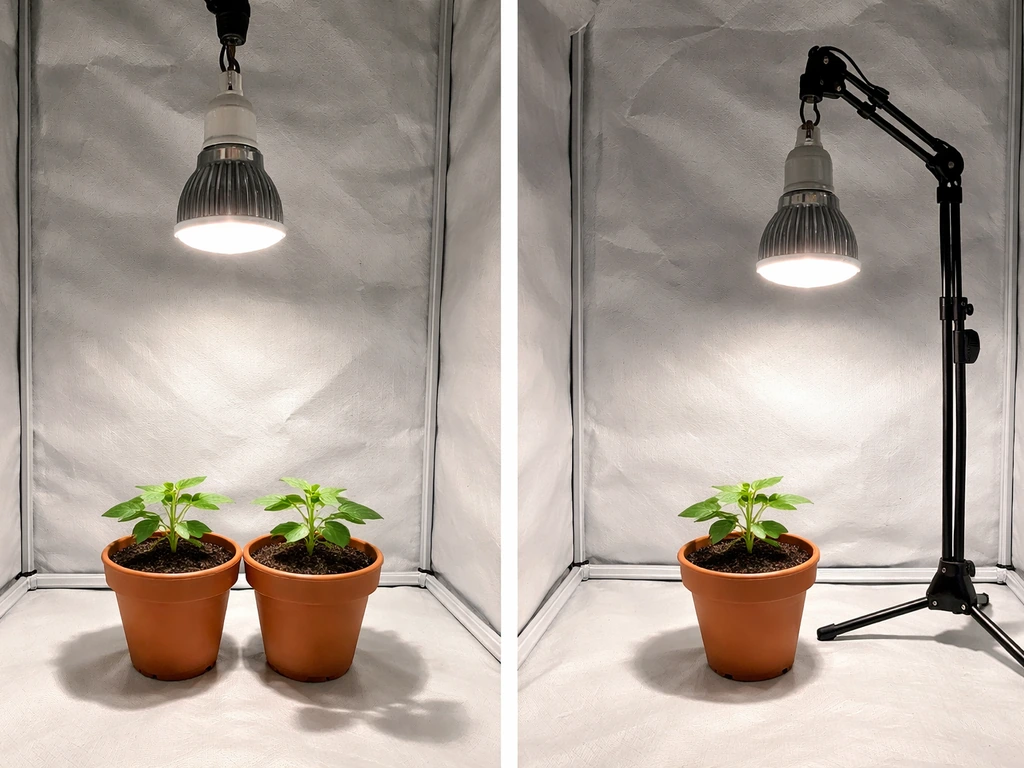
- Using wattage as the primary comparison metric: Two bulbs with the same wattage can have wildly different PAR outputs depending on LED quality and spectrum design. Always look for PPF or PPFD specs. If the brand does not publish them, treat the product with skepticism.
- Mounting too high: The most common reason a screw-in grow bulb 'doesn't work' is simply being too far from the canopy. PPFD drops with the square of distance. Moving a bulb from 24 inches to 12 inches quadruples the light hitting the plant. Start closer than you think and watch for bleaching or heat stress.
- Expecting one bulb to flower a 4x4 space: This is physically not possible. The output ceiling of a screw-in bulb tops out around 50 to 60 µmol/s PPF for the most powerful PAR38 options. A 4x4 tent in full flower needs closer to 600 to 900+ µmol/m²/s across 16 square feet, which requires a real fixture. If flowering is your goal in a medium or large space, look at dedicated LED grow lights, including COB or quantum board formats.
- Uneven canopy coverage with a single bulb: Screw-in bulbs have a narrow effective coverage footprint. A single BR30 at 12 inches covers roughly 1 to 1.5 square feet at target PPFD. If you are growing across a wider area, add more bulbs or use a wider-angle reflector fixture.
- Ignoring socket wattage ratings: A fixture rated for a 60W incandescent maximum does not automatically accept a 32W LED grow bulb safely. LED wattage is actual draw, not equivalent incandescent wattage. Check the physical fixture rating, not the 'equivalent' marketing number on the bulb box.
- Using non-damp-rated bulbs in a humid grow environment: Standard LED bulbs are not rated for the humidity levels inside an active grow tent. Use bulbs with UL damp or wet location ratings in any enclosed or humid growing space.
- Confusing E26 and E27 sockets: If you are in North America buying from international sellers, double-check the base type. An E27 bulb in a North American fixture can engage the threads but may not seat correctly and is not rated for 120V circuits in most cases.
Screw-in LED grow bulbs occupy a genuinely useful niche: they are low-cost, easy to deploy, and capable of supporting real plant growth within their output limits. The growers who get the most out of them are the ones who match the bulb to a realistic task, check the actual PAR specs rather than wattage claims, and do not ask a $15 bulb to do the work of a $200 fixture. If you want a quick starting point, the best cree cob led grow light options are usually the ones that publish real PPFD or PPF and match your canopy distance. Used correctly for seedlings, herbs, greens, supplement lighting, or emergency backup, a quality E26 grow bulb is a practical and honest tool.
FAQ
Can a single best screw in led grow light bulb replace a full grow fixture?
Usually yes for small projects, but only if you match the canopy size to the bulb output. A practical way to sanity-check is to pick your target PPFD (for example 200 to 300 µmol/m²/s for herbs and greens), then confirm the manufacturer’s PPFD test distance or estimate using PPF, and finally ensure you can maintain coverage with overlapping bulbs. If the bulb only meets targets at 4 to 6 inches above the canopy, it is probably not a good “single bulb replacement” for a whole room grow.
What should I look at besides wattage when buying the best screw in led grow light?
Do not rely on lumens or the advertised “watts” label. Lumens are optimized for human visibility, not for plant photon delivery. The decision aid is either published PPFD at a stated distance (best) or PPF in µmol/s (next best), and then comparing to your plant stage target.
How can I tell if my screw-in LED grow bulb is too strong for seedlings?
Yes, at least temporarily. If seedlings start bleaching, stretching, or turning pale at a close mounting height, switch on a dimmable bulb (if you have one) or lower the intensity by raising the light and shortening the photoperiod. As a rule of thumb from typical screw-in bulb setups, most people find seedlings stabilize when the bulb is kept around 6 to 18 inches above the canopy and they avoid long days at maximum power.
Is “full spectrum” always the best choice for the best screw in led grow light?
LED grow bulbs with “full spectrum” marketing vary widely. Look for a spectrum chart or a breakdown that shows both blue and red contributions, and confirm the presence of a meaningful red peak around 660 nm (and usually a complementary red/far-red spread if the brand claims flowering support). If none of that is provided and the only specs are lumens and vague color terms, the claim is likely not very actionable.
Can I install a screw-in grow bulb in any lamp orientation?
Not always. Many screw-in grow bulbs are designed for a downward-facing socket because the built-in reflector is engineered for that geometry. If you put the bulb in an upward or horizontal orientation, you can lose a large fraction of useful photons and create a lot of side spill, which makes it harder to hit the PPFD your plants need.
What happens if I accidentally use an E27 screw-in bulb in an E26 socket?
E26 and E27 are not interchangeable in a safe, plug-and-play way. Even though the thread looks similar, the voltage rating and insulating fit differ, and forcing the wrong one into a socket is a safety hazard. If you are in North America, target E26 bulbs for E26 sockets (and if you are outside North America, follow the local socket standard for your market).
Are screw-in LED grow bulbs safe inside a grow tent?
It depends on your tent’s humidity and ventilation. If the bulb does not have a damp location or wet location rating, avoid using it inside a humid grow tent where humidity often exceeds 60 percent. In enclosed tents, also account for driver heat, poor airflow, and the fact that output can drift down over time in overheating conditions.
If I want dimming for seedlings, what compatibility issues should I check?
Yes, but watch compatibility. Not every LED bulb supports every dimmer type, and incorrect dimmer pairing can cause flicker, reduced lifespan, or failure to dim properly. If you plan to dim for cotyledons, confirm that the bulb is explicitly dimmable and that the exact dimmer type is listed as compatible.
How do I space multiple screw-in grow bulbs for even coverage?
Use spacing to prevent canopy dark spots, not just to “cover the area.” For BR30-style reflector bulbs with a wide flood angle, people often start with about 10 to 14 inches center-to-center when mounted around 12 inches high, then adjust based on whether your plants show uneven growth. If your bulb’s beam angle is unknown, do not guess, measure at the shelf with a PPFD meter if possible, or be ready to tighten spacing.
Can the best screw in led grow light bulbs be used as side lighting with a main grow light?
In many cases, yes, you can use screw-in bulbs as supplement lighting, but only if you preserve your main fixture’s PPFD contribution. A common edge case is relying on supplements that are too far from the canopy, because screw-in bulbs have limited intensity. Place the supplemental bulb in the side or corner zone that the main light cannot reach, and aim for overlapping coverage rather than “one bulb per plant.”
Will screw-in grow bulbs keep plants alive if my main light fails?
Keep them as short-term insurance, not as a replacement for a flowering-grade fixture. Screw-in bulbs can prevent total photosynthetic shutdown during a brief outage, but they usually cannot sustain the high PPFD required for flowering and fruiting stages. If a failure might last more than a few days, plan on a real intensity jump, or prepare to temporarily reduce expectations.
Next Articles
Best E27 LED Grow Light: Buying Guide for Real Canopy Coverage
Choose the best E27 LED grow light by spectrum, coverage, wattage and PPFD, with a shortlist for your canopy size
Best CREE COB LED Grow Light: Reviews and Buying Guide
Best CREE COB LED grow light picks and buying guide: COB vs LED, wattage, coverage, spectrum, heat, drivers
Best Full Spectrum 1000W LED Grow Lights: Buyer Guide
Buy the best full spectrum 1000W LED grow light with spec-to-decision tips on PPFD, coverage, wattage, and tent fit.