
Cheap LED grow lights can absolutely work. Expensive ones are often worth the premium. But neither of those statements is useful until you know exactly what you're comparing and why. The honest answer is that the gap between a $60 panel and a $600 bar-style light is real, measurable, and matters differently depending on your tent size, plant type, and whether you're running a hobby setup or trying to pull consistent harvests. This guide breaks down what actually separates them so you can stop guessing and make a decision that makes sense for your grow today.
Cheap LED Grow Light vs Expensive: Value, Metrics, and TCO
Marcus Rutherford
13 Apr 2026
What 'cheap' and 'expensive' actually mean in LED grow lights
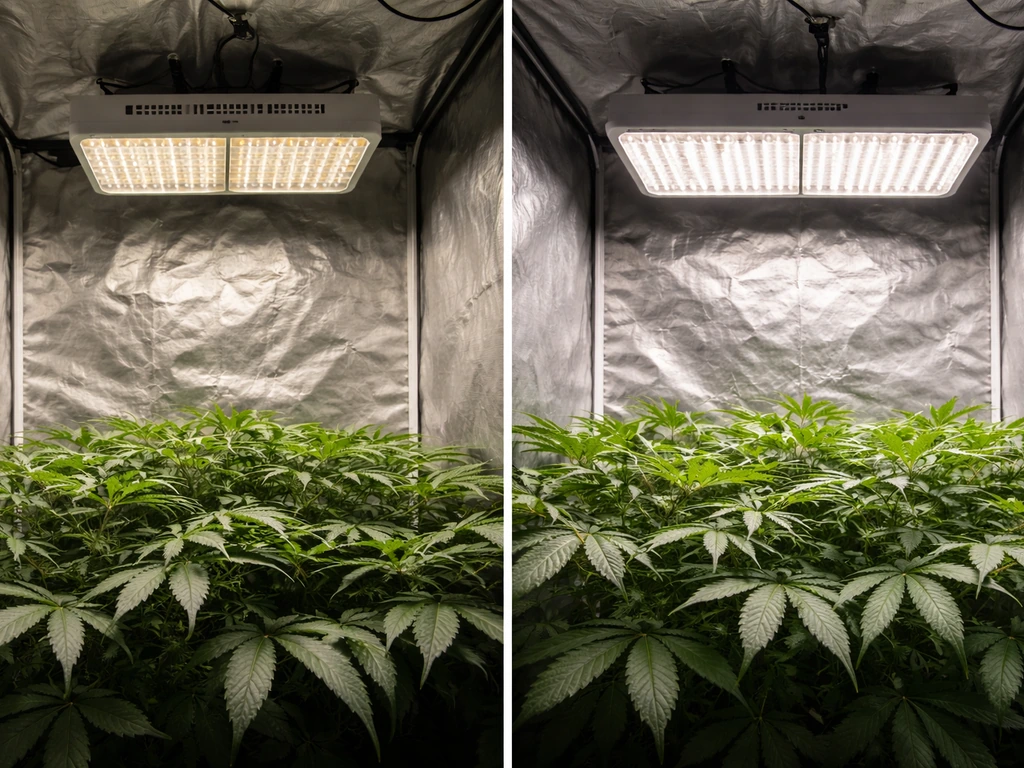
In LED grow lighting, "cheap" usually means sub-$150 for a light marketed for a 2x2 to 4x4 footprint. These are typically blurple panels or low-efficiency white-chip boards sold by generic brands with minimal documentation. "Expensive" in this context means $300 to $800+ for a fixture from a recognized brand, usually in a bar-style or quantum board form factor, with published photon efficiency numbers, real warranty support, and tested drivers.
The more precise way to think about it is cost per watt of actual draw versus cost per µmol/J of delivered light. A $80 light pulling 100W of actual power is $0.80/W. A $480 light pulling 480W is also $1.00/W, but if it delivers 2.7 µmol/J versus the cheap light's 1.4 µmol/J, you're getting nearly twice the usable light per watt of electricity. That efficiency gap is the real dividing line, not the sticker price.
Form factor matters here too. Budget lights are almost always panel-style, often with older diode technology. Mid-range and premium lights have largely moved to bar-style designs and Samsung LM301 or equivalent diodes, which run cooler, spread light more evenly, and maintain output longer. When someone asks "is the expensive one worth it," they're really asking whether that efficiency and build quality gap justifies the upfront cost difference, which depends heavily on total cost of ownership over time.
The performance numbers that actually matter
PPFD, DLI, and why lumens are useless for plants
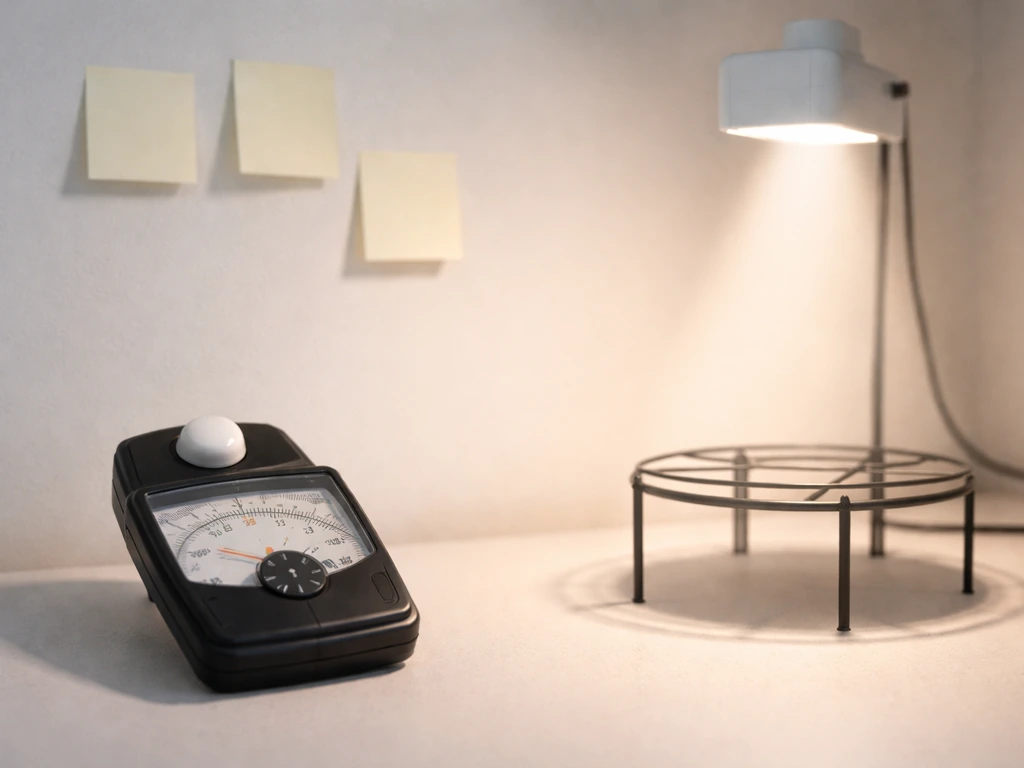
Lumens measure light as human eyes perceive it. Plants don't care about that. What matters is PPFD, which stands for Photosynthetic Photon Flux Density, measured in µmol/m²/s. It tells you how much photosynthetically active light is actually hitting a square meter of canopy per second. Many cheap lights are still marketed using lux or lumen numbers, which is a reliable red flag that the seller isn't targeting serious growers.
DLI (Daily Light Integral) takes PPFD one step further. It's the total amount of light your plants receive in a full day, calculated as: DLI (mol/m²/day) = PPFD × light hours × 3,600 ÷ 1,000,000. So a light delivering 600 µmol/m²/s for 18 hours gives you a DLI of about 38.9 mol/m²/day. Seedlings and young veg plants typically want a DLI in the 15–30 range. Flowering cannabis wants 40–65. Something like microgreens operates much lower, around a DLI of 6–10 mol/m²/day with PPFD targets between 125–175 µmol/m²/s. Knowing your target DLI tells you immediately whether a light's published PPFD map can actually support your plants at a given photoperiod.
Coverage, footprint, and uniformity
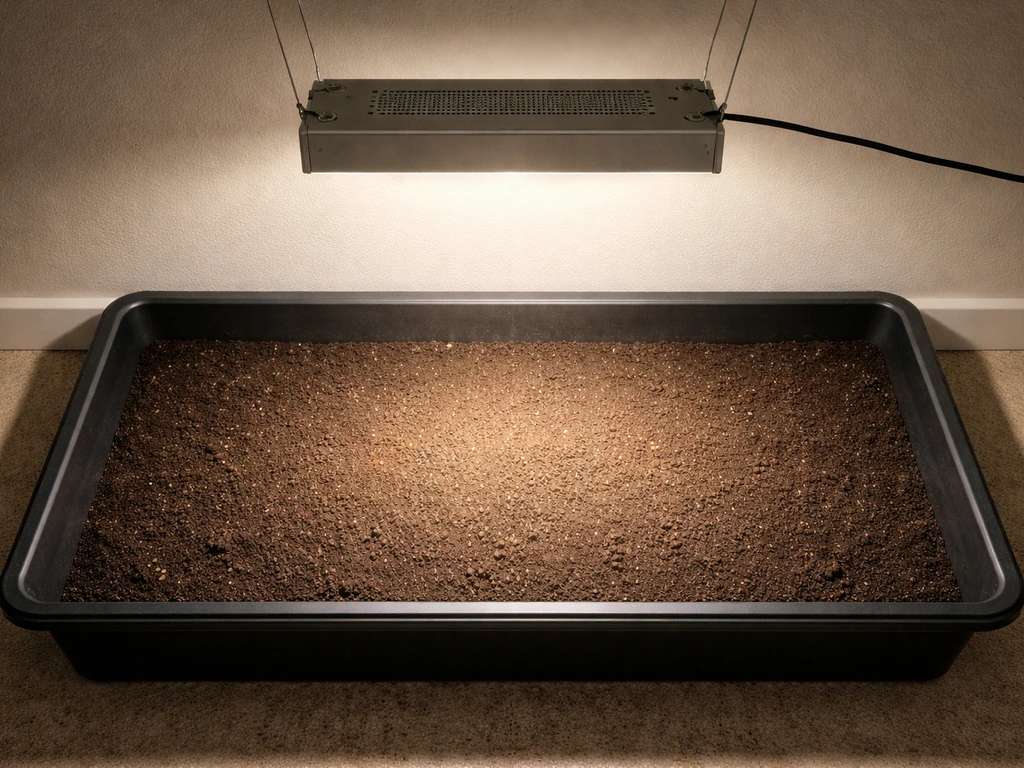
Coverage claims on budget lights are almost always overstated. A light marketed as "covering 4x4" may deliver adequate PPFD in the center 2x2 feet and drop off sharply at the edges. Real coverage means maintaining at least 80% of peak PPFD across the entire stated footprint. Reputable brands publish full PPFD maps showing measurements at multiple grid points, not just center-spot readings. If a brand only shows you a single center number, that's telling.
Spectrum quality: beyond 'full spectrum' marketing
"Full spectrum" has become essentially meaningless as a marketing term. Every LED panel made in the last five years claims it. What matters is whether the spectral output is actually tuned for photosynthesis across the full PAR range (400–700nm) with the right balance of blue (400–500nm) for veg and red (600–700nm) for flower, and whether the light includes meaningful far-red (700–750nm) and UV wavelengths that genuinely affect plant development. Some premium lights, like those offering adjustable spectrum control with real UV and far-red channels, let you dial in light recipes by growth stage. Cheap lights with white LEDs can still deliver a workable broad spectrum, but they usually lack spectral tunability and often underweight the wavelengths that drive flowering. The key question is whether the manufacturer shows an actual spectral power distribution graph, not just a "full spectrum" badge.
Photon efficiency: the number that ties it all together
Photon efficacy (µmol/J) tells you how efficiently a light converts electricity into usable plant light. Budget lights from 2022–2025 typically land between 1.4 and 2.0 µmol/J. Current mid-range and premium bar-style lights from established brands routinely hit 2.5–2.9 µmol/J, with some flagship models pushing past 3.0 µmol/J. At scale, that difference is massive: running a 1,000W light at 2.5 µmol/J versus 1.8 µmol/J means 39% more photons delivered for the same electricity bill. For a home grower running one tent, the monthly dollar savings are modest. For a commercial operation running 50+ fixtures 18 hours a day, it's a very different calculation.
What drives the price difference: drivers, heat, and build quality
Driver quality
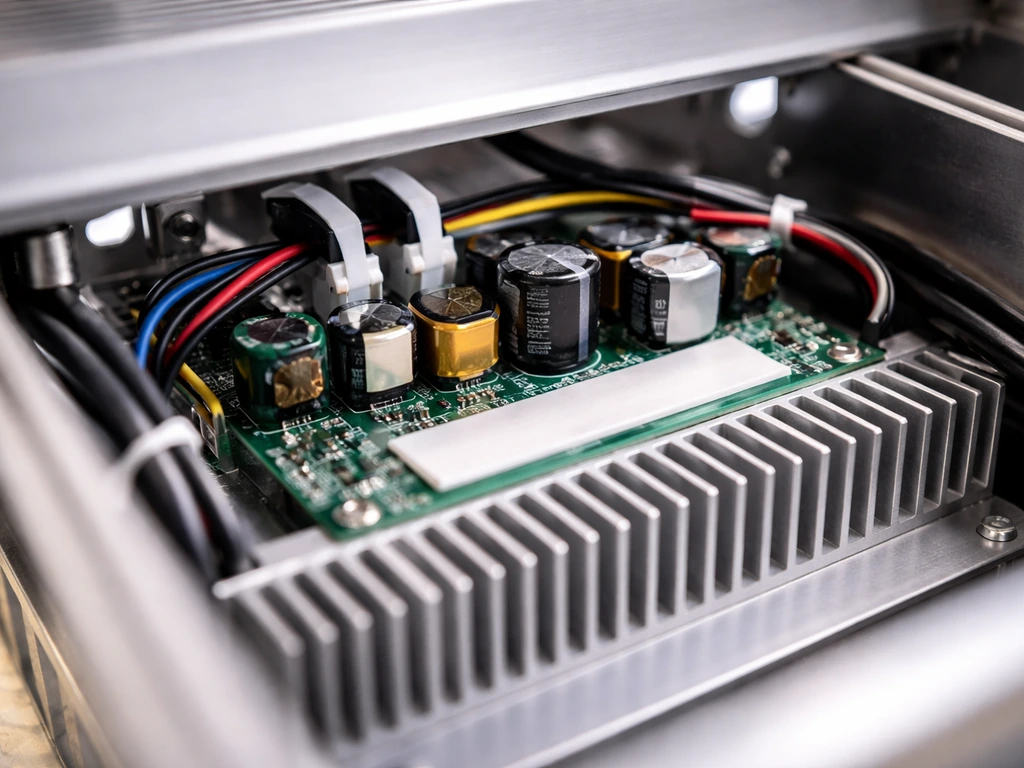
The driver is the power supply inside a grow light, and it's often where cheap lights cut the most corners. Premium lights use drivers from Meanwell (HLG series), Inventronics, or similarly rated manufacturers that are UL 8750 listed for LED equipment safety. These drivers run cooler, handle input voltage variation cleanly, include thermal protection, and often support 0–10V dimming for precise intensity control. Budget lights frequently use unnamed drivers that run hot, have no certification, and fail first, often within 6–18 months of continuous use. The driver is usually the thing that kills an otherwise functional cheap light.
Thermal design and heat management
Heat is the enemy of LED longevity. LED output degrades over time as junction temperatures accumulate, and the rate of that degradation is directly tied to how well the fixture manages heat. The industry standard metric for this is blank" rel="noopener noreferrer">L70: the point at which a fixture drops to 70% of its initial output, typically projected using LM-80 test data and IES TM-21 methodology. A well-designed premium light running quality diodes at conservative drive currents with adequate aluminum heatsinking might project L70 at 50,000–100,000 hours. LM-80-21 is the ANSI/IES approved method for measuring maintenance of light output characteristics of solid-state light sources, which serves as a basis for later lifetime projection methods blank" rel="noopener noreferrer">ANSI/IES LM. A budget light running diodes hard with minimal thermal mass may hit L70 at 15,000–25,000 hours, or fail outright before that. That's not a marketing number, it's a physics problem: higher operating temperature accelerates lumen depreciation measurably.
LED binning and consistency
LED diodes are manufactured in batches and sorted ("binned") by actual output, color consistency, and forward voltage. Premium fixtures use tight-bin diodes that match closely across the entire board, producing uniform output and consistent color temperatures. Budget lights often use wide-bin or mixed-bin diodes that vary in output and color, which creates hot spots, uneven canopy coverage, and unpredictable spectral distribution across the fixture. You can sometimes spot this visually: look at a lit cheap panel and you'll often see some diodes that look slightly different in color temperature than others.
Warranty depth and what it tells you
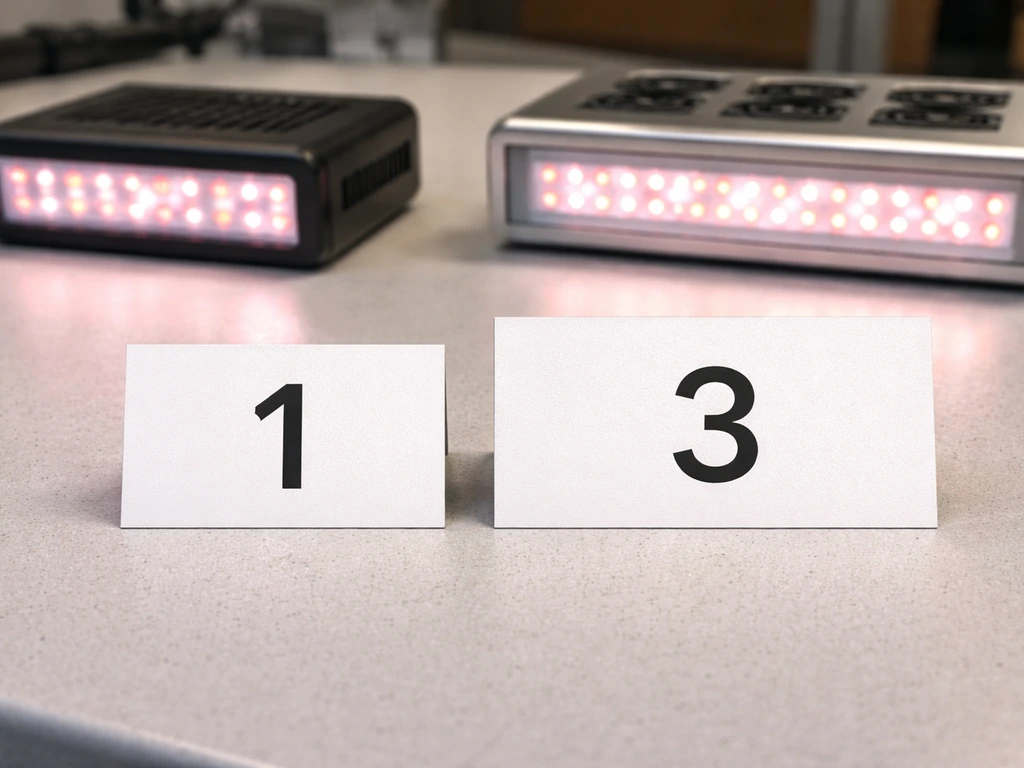
A warranty is a manufacturer's public bet on how long their product lasts. Budget grow lights commonly offer 1-year warranties with vague terms and overseas-only support. Premium brands typically offer 3–5 year warranties with real replacement or repair pipelines. When a company offers a 5-year warranty on a fixture that's meant to run 18 hours a day, that's 32,850 operating hours over 5 years. If they're willing to stand behind that, they've done the thermal and driver math. A 1-year warranty on a light that may run those same hours is a very different bet.
Total cost of ownership: when cheap gets expensive
Upfront price is only part of the story. To compare a cheap light and a premium light honestly, you need to factor in electricity cost over the fixture's useful life, replacement frequency, and yield impact from inferior spectrum or PPFD delivery. Here's a concrete example for a 4x4 tent over three years, using real-world assumptions:
| Factor | Budget LED (~$120, 200W draw) | Premium LED (~$500, 480W draw) |
|---|---|---|
| Upfront cost | $120 | $500 |
| Photon efficacy | ~1.6 µmol/J | ~2.7 µmol/J |
| Electricity (18hr/day, $0.13/kWh, 3 years) | ~$512 | ~$1,230 |
| Expected useful life (L70) | ~20,000 hrs (~3 years at 18hr/day) | ~60,000 hrs (~9 years at 18hr/day) |
| Replacements needed over 5 years | ~1.7x (replace partway through year 5) | 0x |
| Replacement cost over 5 years | ~$204 | $0 |
| Total 5-year cost (est.) | ~$1,688 | ~$2,082 |
| Usable photons per watt | Low (less efficient) | High (more efficient) |
The numbers above make clear that the gap narrows significantly over time, and the premium light's real advantage is compounded by better yields from superior PPFD delivery and spectrum quality. For a hobbyist running a single tent with herbs or easy-to-grow plants, a good mid-range light (not the cheapest, not the most expensive) often hits the best value point. For anyone running multiple tents or high-demand crops like cannabis, the efficiency math tips toward premium builds.
It's also worth noting that cheap panels aren't the only alternative to LED at all. If you're evaluating whether to transition from older technology or if you're specifically growing in configurations where linear light distribution matters, comparing fluorescent vs LED grow lights is a worthwhile exercise for context, especially in low-heat environments like propagation and seedling rooms where fluorescent fixtures have historically been a budget default.
Matching your light to your actual grow setup
Tent size and wattage guidelines
The rule of thumb most often cited is 30–50W of actual draw per square foot for flowering crops. A 4x4 tent (16 sq ft) therefore wants 480–800W of actual draw from an efficient fixture. A 2x2 tent wants 120–200W. A 5x5 tent wants 750–1,250W. "Actual draw" means what the fixture pulls from the wall at the breaker, not the LED chip wattage or the "equivalent" marketing number. Budget lights frequently inflate their equivalent wattage claims by 30–50%, so always verify actual wall draw.
| Tent Size | Recommended Actual Draw (flowering) | Budget Light Sweet Spot | Premium Light Sweet Spot |
|---|---|---|---|
| 2x2 (4 sq ft) | 120–200W | $80–$150 | $200–$320 |
| 3x3 (9 sq ft) | 270–450W | $140–$220 | $300–$450 |
| 4x4 (16 sq ft) | 480–800W | $200–$300 (often underpowered) | $450–$650 |
| 5x5 (25 sq ft) | 750–1,250W | Not recommended (coverage/efficiency gap too large) | $650–$1,100 |
Adjusting for growth stage
Seedlings and clones want low PPFD: 100–250 µmol/m²/s is plenty, and too much light at this stage causes stress. Veg plants generally want 400–600 µmol/m²/s. Flowering plants want 600–900+ µmol/m²/s depending on CO2 levels and strain. This is why dimmability matters: a quality light with 0–100% dimming lets you run the same fixture from seedling through flower without burning young plants or under-serving mature ones. Most cheap lights have no dimming or only fixed 50/100% switches, which forces you to manage intensity by raising or lowering the fixture instead.
If you're running specialized lighting setups that include linear tubes alongside your LED panels, understanding the performance differences in something like T8 vs LED grow lights can help you build a more cost-effective multi-zone setup, particularly for veg rooms or propagation racks where you want wide, even coverage without the heat footprint of a high-wattage panel.
Plant type considerations
Not every crop needs the same intensity. Light-hungry plants like tomatoes, peppers, and cannabis need 600–900+ µmol/m²/s at canopy during peak growth. Herbs, leafy greens, and most houseplants are satisfied with 200–400 µmol/m²/s. If you're growing low-demand plants, a well-chosen budget light can genuinely do the job without needing to spend $500+. The mistake is buying the cheapest light for a high-demand crop and wondering why yields underperform.
How to buy smart today: red flags, spec checklist, and best-value picks
Red flags to walk away from
- No actual wattage draw listed: if the spec sheet only lists "equivalent" or "chip wattage," assume the real draw is 40–60% of the claimed number.
- No PPFD map or only a single center-point PPFD reading: real products show full grid maps at multiple fixture heights.
- "Full spectrum" as the only spectral claim with no SPD graph: this tells you nothing about actual wavelength distribution.
- Driver brand not listed or listed as "high quality brand driver": if they're proud of the driver, they name it.
- Warranty under 2 years on a fixture meant for continuous use: this is a near-guarantee of cheap driver and thermal design.
- No UL, ETL, CE, or RoHS certification mentioned: safety certifications aren't optional for fixtures running in enclosed humid environments.
- Amazon-only availability with no brand website, no downloadable spec sheet, and no verifiable company contact: the support will not be there when you need it.
Spec checklist before you buy
- Actual wall draw in watts (not chip watts or equivalent watts)
- Photon efficacy in µmol/J (look for 2.0+ for mid-range, 2.5+ for premium)
- Full PPFD map at your intended hanging height across your tent footprint
- Spectrum graph (SPD) showing actual wavelength distribution, not just a color label
- Driver brand and model (Meanwell HLG-series or equivalent is a good baseline)
- Dimming capability (0–10V analog dimming preferred)
- Operating temperature range and IP rating if you run high humidity
- Warranty length and what it covers (driver failure, diode failure, full replacement policy)
- Certification marks: UL/ETL listed, CE, RoHS at minimum
- L70 lifespan projection if available (50,000 hours or better is a meaningful data point)
Best-value guidance by budget right now
Under $150: You're in genuine budget territory. Look for lights using Samsung LM301B or equivalent white diodes, Meanwell or comparable driver, and realistic 2x2 to 2.5x2.5 veg footprint claims. Don't try to flower a 4x4 with this budget. A single 100–150W actual-draw quantum board-style panel from a brand that publishes real specs is your best bet here.
$150–$350: The best value window for a home grower. This range now includes mid-range bar-style lights and quality quantum boards that hit 2.5–2.7 µmol/J with Meanwell drivers, adequate PPFD coverage for a 3x3 to small 4x4 flowering footprint, and 3-year warranties. This is where the "cheap vs expensive" debate largely resolves: you can get 90% of premium performance at 60% of premium price in this bracket.
$350–$700: Full coverage of a 4x4 to 5x5 with excellent efficiency, full dimming, solid warranty support, and often adjustable spectrum options. If you're running a serious hobby grow or small commercial, this is the range where premium brands earn their price. Look for efficacy above 2.7 µmol/J, published PPFD maps with edge uniformity data, and named components throughout.
$700+: Commercial territory. Lights in this range are typically purpose-built for large canopies, consistent multi-run harvests, and operations where energy cost is a real line item. Efficacy often exceeds 3.0 µmol/J, and fixture design prioritizes uniformity, serviceability, and thermal longevity over anything else. If you're a hobbyist and you're looking at this range, make sure the economics of your grow actually justify the spend rather than the appeal of flagship hardware.
The bottom line on cheap vs expensive
The honest answer is that "cheap" LED grow lights have gotten meaningfully better over the last three years, and many sub-$200 options now deliver real, usable light for low-to-medium demand crops in smaller tents. But they still fall short of premium lights on photon efficacy, thermal lifespan, spectral precision, and driver reliability in ways that matter for serious growing. For a hobbyist growing herbs or easy crops in a 2x2 or 3x3, a well-chosen mid-range light in the $150–$300 window beats both the cheap panel and the $600 flagship on pure value. For anyone running flowering crops in a 4x4 or larger with consistent grow cycles, the efficiency and longevity math starts favoring the premium side, and the total cost of ownership gap closes faster than the sticker price difference suggests.
FAQ
How can I confirm a “cheap” light’s real PPFD instead of trusting marketing claims?
Ask for a full PPFD map (multiple grid points) measured at a specified hanging height, and verify it includes the spectrum context (veg or bloom mode, or dimming level). If the seller only provides a center-spot PPFD number or uses lux/lumens, assume the real edge coverage is lower than the claimed footprint.
What hanging height should I use when comparing cheap vs expensive lights?
Use the manufacturer’s measurement height for PPFD and DLI targets, then model real-canopy distance where you will actually run. If one light’s PPFD is published at 12 inches and another at 24 inches, comparing the center number alone is misleading, because intensity and spread change quickly with height.
Is it better to buy a “cheap” higher-watt light or a “more expensive” more efficient one?
Do the comparison in terms of delivered photons, not LED chip watts. If both lights can meet your PPFD and edge-uniformity needs, the higher efficacy fixture typically wins on electricity and output stability. If the cheap light cannot reach your canopy DLI without over-driving or raising height, then the “cheaper watt” becomes the more expensive yield problem.
How do dimming and driver quality change the value of a premium light?
Premium fixtures often include true 0 to 10V dimming, which lets you reduce heat and extend useful life during seedling and veg. Cheap models that only offer fixed switches force you to adjust by moving the light, which can worsen uniformity and complicate reaching consistent DLI across cycles.
Do “full spectrum” cheap lights really work for flowering?
They can, especially if the fixture has meaningful output across the PAR band, but the weak point is spectral weighting and tunability. If there is no spectral power distribution chart, or if “UV” and “far-red” channels are absent or purely decorative, expect less predictable flowering performance compared with lights that publish actual spectra and allow staged recipes.
What should I check on the driver and power supply before buying?
Look for named driver brands, clear safety/certification language, and any mention of thermal protection or dimming compatibility. If you cannot find driver identification at all, treat driver reliability as the biggest risk area, because it is commonly the failure point on budget fixtures.
How can I estimate whether a light’s warranty is meaningful for my usage hours?
Match warranty length to your photoperiod. For example, a 3-year warranty on a light used 18 hours per day is about 19,710 operating hours, while a 1-year warranty is about 6,570 hours. If the warranty is short or vague about continuous-use terms, plan for earlier replacement even if the LED chips themselves would last longer.
Should I judge “coverage” by footprint size or by edge uniformity?
Edge uniformity is the better metric. A stated “4x4” claim is not enough unless the manufacturer shows measurements that maintain at least 80% of peak PPFD toward the edges. Otherwise, you may get a bright center and underlit corners, which affects canopy uniformity and final yield.
Why do some cheap lights create hot spots or uneven color temperature?
Mixed-bin diode boards and less controlled bin matching can produce variations in output and correlated color temperature. If you notice different-looking LED strips or uneven brightness across the panel, expect canopy PPFD non-uniformity that can be hard to correct without zone-by-zone adjustments.
If I’m using CO2, does the cheap vs expensive decision change?
Yes. When CO2 is added, plants can use higher PPFD efficiently, so poor photon efficacy and weak spectra show up as bigger performance gaps. If you plan to run higher-intensity flowering with CO2, prioritize meeting your DLI and edge uniformity targets with higher efficacy and better control.
How should I factor electricity cost if I buy one premium light instead of two cheap ones?
Compare based on actual wall draw at your dimming level, and include run hours across the same photoperiod schedule. If the premium light delivers required PPFD at lower wattage, it can offset higher upfront cost, especially for multiple tents or long daily run times.
What’s the biggest mistake when comparing cheap LED grow lights vs expensive ones?
Comparing only the advertised wattage, footprint, or a single center measurement. Instead, compare actual draw, efficacy (µmol/J), PPFD uniformity at your real hanging height, and the expected operating lifespan, since those variables determine whether the light actually performs across a full grow cycle.
Next Articles
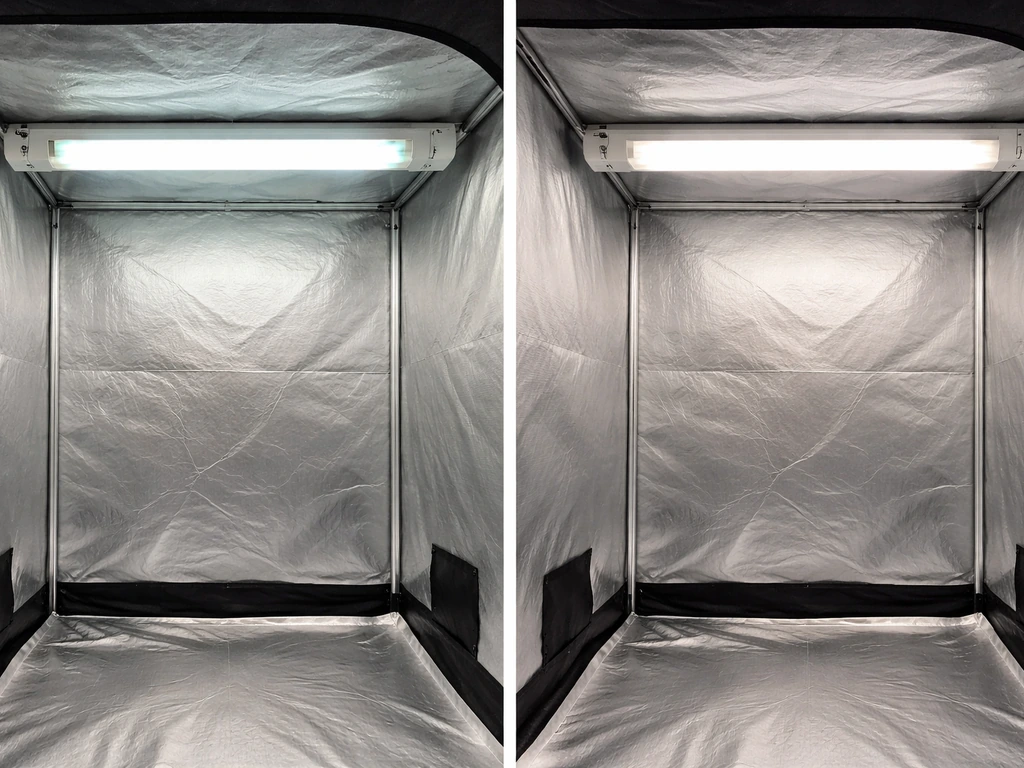
T8 vs LED Grow Lights: Best T8 and LED Options Today
Compare T8 fluorescent and LED grow lights: efficiency, brightness, heat, lifespan, specs, and best picks for your tent
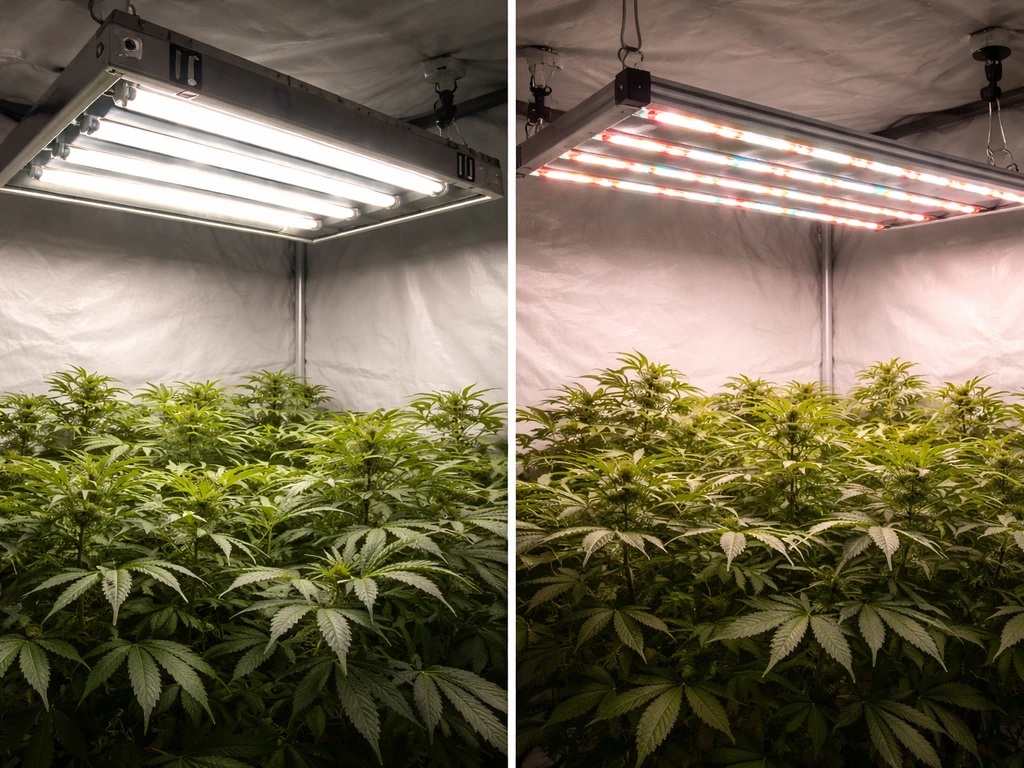
Fluorescent vs LED Grow Lights: Which to Choose Today
Compare fluorescent vs LED grow lights by PPFD, spectrum, heat, lifespan, cost, and choose the right option for your set
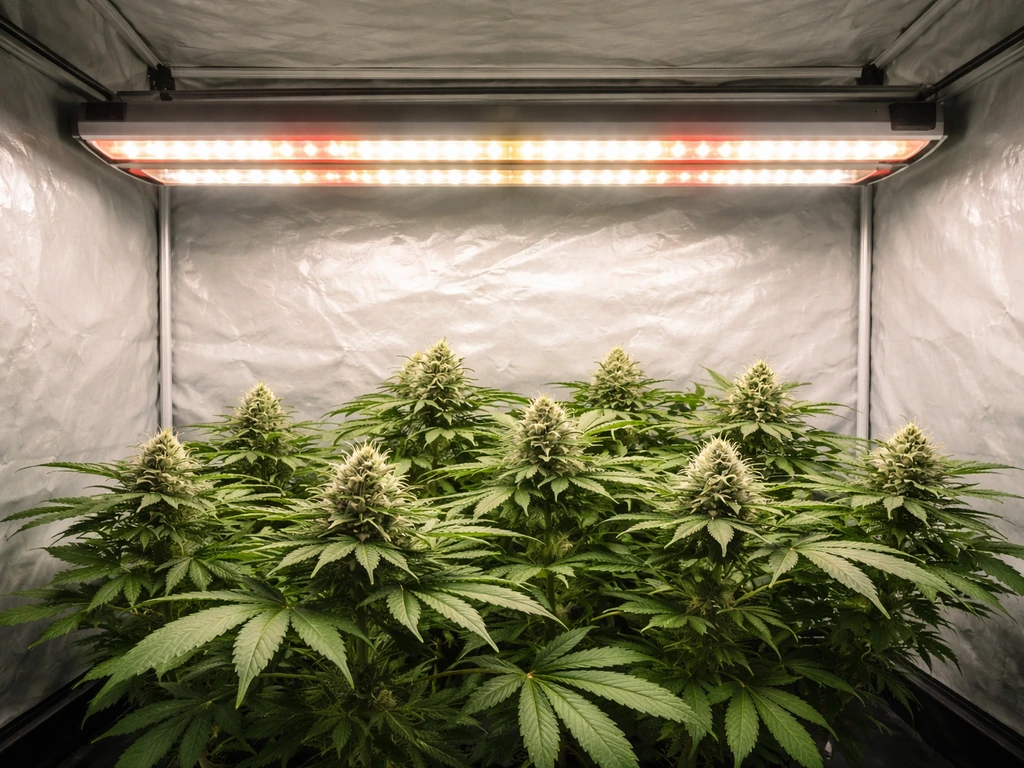
Best Full Spectrum 1000W LED Grow Lights: Buyer Guide
Buy the best full spectrum 1000W LED grow light with spec-to-decision tips on PPFD, coverage, wattage, and tent fit.