
The best 1200W LED grow light for your setup is whichever one delivers the right PPFD across your actual canopy footprint, at an efficacy above 2.5 µmol/J, with verified real wattage and a thermal design that keeps the driver cool enough to last. That one sentence cuts through 90% of the marketing noise in this category. The problem is that most shoppers never get that far because they get distracted by brand names, suspiciously inflated wattage claims, and coverage maps that show a single-point number rather than a spatial average. This guide is about avoiding all of that.
Best 1200 Watt LED Grow Light: Buyer Guide by Space
Marcus Rutherford
20 Apr 2026
What 'best 1200W LED' should actually mean for your grow
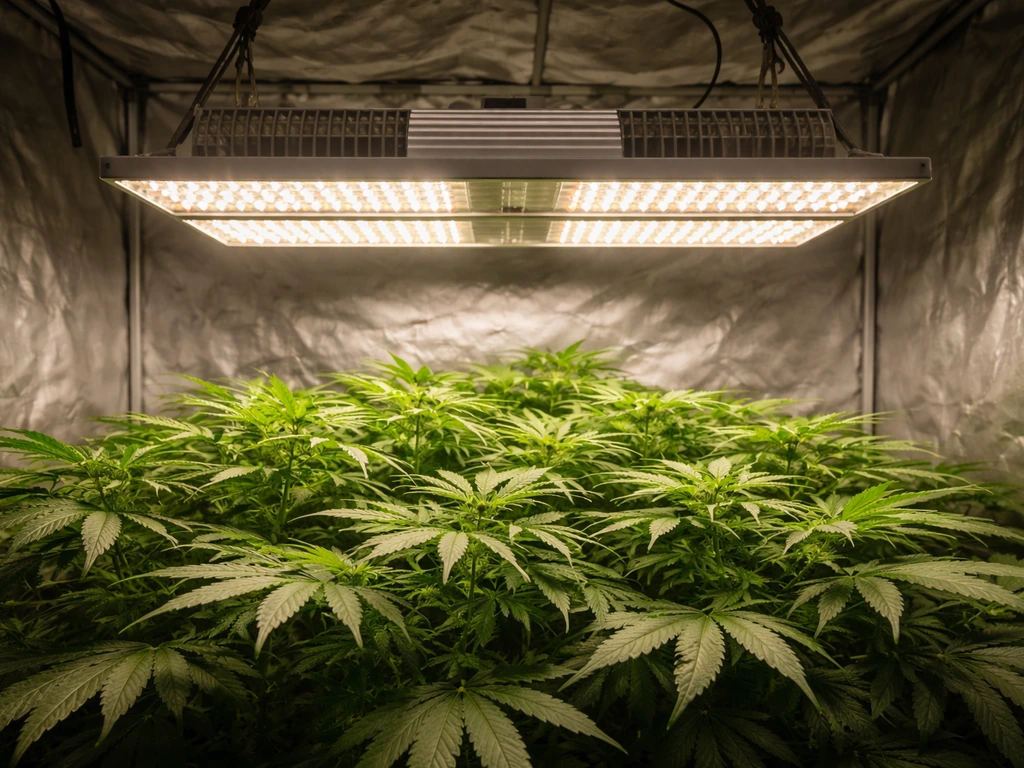
Start with your use case, not the product listing. A 1200W-class LED is a serious fixture. At genuine 1200W of wall draw, you are pulling enough photons to cover a 5x5 or even a 6x6 canopy at flowering PPFD levels, or to push a 4x4 into high-DLI, high-CO2 territory. That also means you are spending real money on electricity and putting real thermal load into your grow space. So before you even look at a product, you need to answer three questions: What footprint am I actually lighting? What crops and growth stage require what PPFD target? And do I have the ventilation to handle that heat load?
For context on scale: if you are growing leafy greens or herbs in a 3x3 tent, a 1200W fixture is almost certainly overkill and a smaller unit in the 400-600W range would serve you better. If you are flowering dense, light-hungry plants like cannabis or tomatoes in a 5x5 or running supplemental CO2 to push above 1000 µmol/m²/s PPFD, then a true 1200W fixture starts to make real sense. Understanding the match between fixture output and your space is what separates a smart buy from an expensive mistake.
Specs that actually matter when you're choosing
Actual watts versus advertised watts
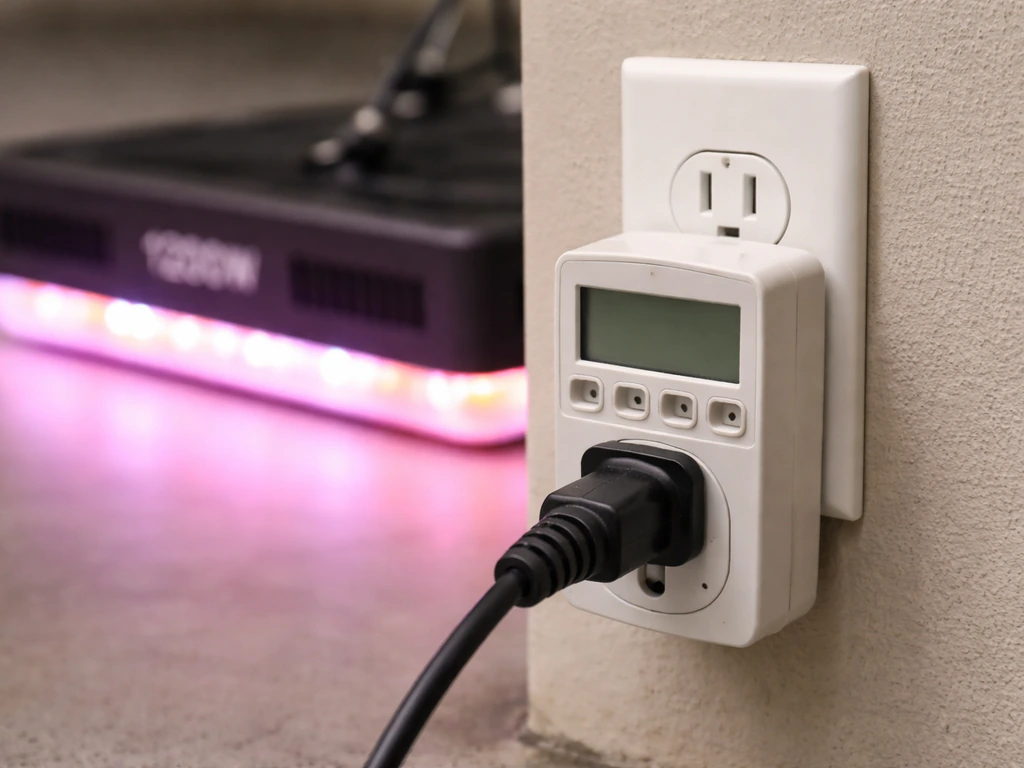
This is the single biggest source of confusion in this category. A fixture branded as '1200W' might draw anywhere from 200W to genuine 1200W from the wall. The label often refers to the theoretical maximum output of the LED chips installed, not the actual power the driver feeds them under normal operation. Always look for the 'true power draw' or 'wall draw' specification. Independent reviewers who plug fixtures into a watt meter (a basic Kill A Watt device is all it takes) have repeatedly caught fixtures drawing a fraction of their advertised wattage. If a manufacturer won't publish actual input wattage clearly, that alone is a red flag.
PPF and efficacy (µmol/J) are the numbers that matter
PPF (photosynthetic photon flux) is the total photon output of the fixture measured in µmol per second. PPFD is that same output measured at a specific point on your canopy (µmol/m²/s). Efficacy, reported in µmol/J, tells you how many photons you get per watt of electricity consumed. A fixture hitting 2.9 µmol/J or above is genuinely efficient by current standards. The Illuminating Engineering Society and the DesignLights Consortium both require that these numbers be reported in standardized formats (specifically ANSI/IES TM-33-18) for credible qualification. If a brand can only show you marketing copy but no PPF/PPE data in that format, you are flying blind. Fixtures from manufacturers like Photontek publish PPF of 2925 µmol/s and efficacy of 2.9 µmol/J on their 1000W CO2 Pro, and independent PAR tests have come close to verifying those numbers. That is the standard to hold others against.
PPFD maps and coverage uniformity
A single average PPFD number does not tell you whether your edges and corners are getting enough light. You want to see a full PAR map: a grid of PPFD measurements across the entire footprint at your planned mounting height. GrowersHouse and independent reviewers like Coco For Cannabis have both flagged that PAR maps can be generated in ways that make uniformity look better than it is. Look for maps with dense measurement grids (ideally 9 or more points across a 4x4 or 5x5 footprint) and check that the edge readings are not falling below 50% of the center value during flowering. If the manufacturer only shows one center-point PPFD, ask for the full map or look for third-party reviews that include one.
Spectrum: full spectrum versus targeted
Standard PAR is measured from 400 to 700 nm, but peer-reviewed research has made a strong case that far-red wavelengths (700-750 nm) contribute meaningfully to photosynthesis and should be factored into efficacy comparisons. This matters practically because some fixtures marketed as 'full spectrum' do include far-red, which can boost effective yield, while others use the term loosely to mean 'white light plus a few red diodes.' When a manufacturer publishes PPF and efficacy numbers, check whether those figures include far-red or are calculated only on the 400-700 nm range. The two numbers can differ meaningfully for the same fixture. Full-spectrum with far-red is generally the better choice for flowering, while targeted blue-heavy spectrum makes more sense for seedling and vegetative stages where compact internodal growth is the goal.
Dimming and controls
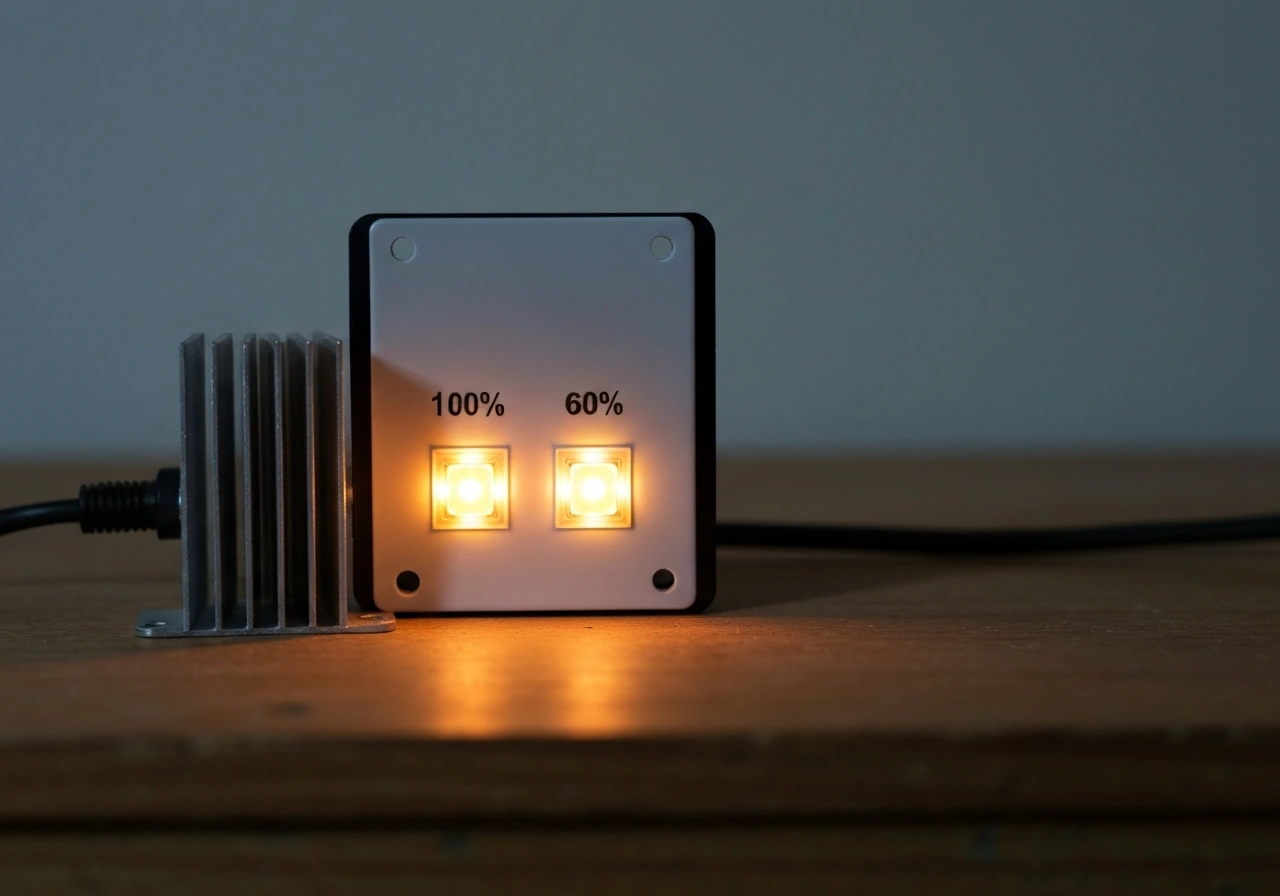
Dimming matters for two reasons: plant management across growth stages and heat control. A fixture you can dial back to 50-60% during seedling stage protects delicate plants and saves electricity. The standard for commercial-grade dimming is 0-10V analog control, where a controller sets a voltage and the driver adjusts output accordingly. The critical thing to verify is that dimming is smooth across the full range without visible flicker or audible noise from the driver. Flicker and noise are symptoms of poor driver-dimmer matching, which also shortens driver lifespan. Some budget fixtures claim 'dimmable' but only support a narrow range like 50-100%. Check that the full dimming range is usable and that the driver response is smooth.
Thermal management
The driver is the primary heat source in most LED fixtures, and it is also the component most likely to fail first. Fixtures that mount the driver externally or use passive heatsinks with good airflow tend to outlast compact designs where heat builds up around the electronics. At 1200W of actual draw, you are generating significant heat. Passive cooling (no fan, just heatsink and convection) works well if the design is generous, but passively cooled fixtures need more airspace around them. Fanless designs are quieter and have fewer moving parts to fail, but they also depend entirely on your grow room ventilation to keep ambient temperatures in check.
Top picks and what they're best for
Rather than ranking fixtures by brand prestige, here is how to think about the major categories competing in the 1200W space and what real-world scenarios each fits best.
| Fixture Type | True Wattage Range | Best Footprint | Efficacy Target | Best For |
|---|---|---|---|---|
| Top-tier commercial bar light (e.g., Photontek XT 1000W CO2 Pro class) | 900-1100W actual | 5x5 to 5x6 | 2.9+ µmol/J | High-intensity flowering, CO2 grows, commercial use |
| Mid-range quantum board (e.g., MIGRO ARAY 500 class) | 450-550W actual per unit | 4x4 to 4x5 | 3.0-3.1 µmol/J | Home growers, efficiency-focused, veg and flower |
| Budget 1200W branded panel | 200-600W actual (verify) | 3x3 to 4x4 (at best) | 1.5-2.2 µmol/J typical | Seedlings, low-demand crops, very tight budgets |
| Multi-bar 1200W system (stacked/modular) | 1000-1200W actual | 5x5 to 6x6 | 2.5-3.0 µmol/J | Uniform canopy coverage, commercial supplement lighting |
| Full-spectrum COB array (~1200W) | 800-1100W actual | 4x4 to 5x5 | 2.0-2.6 µmol/J | Penetration into thick canopies, mixed-stage grows |
The Photontek XT 1000W CO2 Pro is a useful benchmark because it has been independently tested: a published PAR test found 1850 µmol of usable PPF from it across a test footprint, close to the manufacturer's published 2925 µmol/s total PPF claim after accounting for test geometry. Independent tests of the MIGRO ARAY 500 measured 922 µmol/m²/s average PPFD and 3.1 µmol/J efficiency, which is among the best per-watt performance in its class. FloraFlex publishes PPF of 3480 µmol/s for its 1200W-class unit, but as with any manufacturer number, that figure should be validated against third-party testing or DLC listing before you weight it heavily.
For a 4x4 tent with a single flowering crop, a fixture in the 600-800W actual draw range hitting 2.7 µmol/J or better will often outperform a cheap 1200W-branded unit drawing 400W at 1.8 µmol/J. More labeled watts is not more light. The math always comes back to PPF output and efficacy.
PPFD targets by stage and crop: the real performance check
Once you know a fixture's PPFD at your mounting height, you can calculate whether it hits the daily light integral (DLI) your crops need. The formula is straightforward: DLI (mol/m²/day) = 0.0036 × PPFD (µmol/m²/s) × photoperiod (hours/day). This is the number that actually drives biomass and yield, not watts.
| Growth Stage | Target PPFD (µmol/m²/s) | Typical Photoperiod | Target DLI (mol/m²/day) |
|---|---|---|---|
| Seedling / Clone | 100-300 | 18 hours | 6-19 |
| Vegetative | 400-600 | 18 hours | 26-39 |
| Flowering (moderate) | 600-900 | 12 hours | 26-39 |
| Flowering (high-intensity / CO2) | 900-1500 | 12 hours | 39-65 |
A genuine 1200W fixture with good efficacy should be capable of delivering 800-1000+ µmol/m²/s across a 5x5 footprint at an appropriate mounting height, which puts it squarely in the high-intensity flowering range. If a fixture claiming 1200W cannot hit 600 µmol/m²/s average across a 4x4 at 18 inches, something is wrong with either the wattage claim or the optical design. Use the DLI formula to reality-check any fixture against your crop's actual needs before you buy.
One more thing worth flagging on spectrum: standard PPF measurements cover 400-700 nm. Research from Frontiers in Plant Science has made a credible argument that far-red photons (700-750 nm) contribute to photosynthesis and should be included in efficacy calculations. If a fixture includes meaningful far-red output, its effective photosynthetic contribution may be higher than a standard PPF number suggests. Ask whether the published PPF includes far-red or not, especially when comparing 'full spectrum' fixtures against each other.
Installation and setup: getting it right from day one
Mounting height and canopy distance
Mounting height dramatically affects both PPFD intensity and coverage footprint. The same fixture at 12 inches above the canopy will deliver a much higher center-point PPFD but a much smaller even coverage area than at 24 inches. Most bar-style and quantum board fixtures for 1200W-class grows are designed to operate at 18-30 inches above the canopy for flowering. Always refer to the manufacturer's PPFD-at-distance data for your specific fixture, and cross-check it against a multi-point PAR map at that height. If coverage falls off sharply at the edges even at the recommended height, you may need to raise the light and compensate with longer photoperiod, or add supplemental side lighting.
Ventilation and heat management
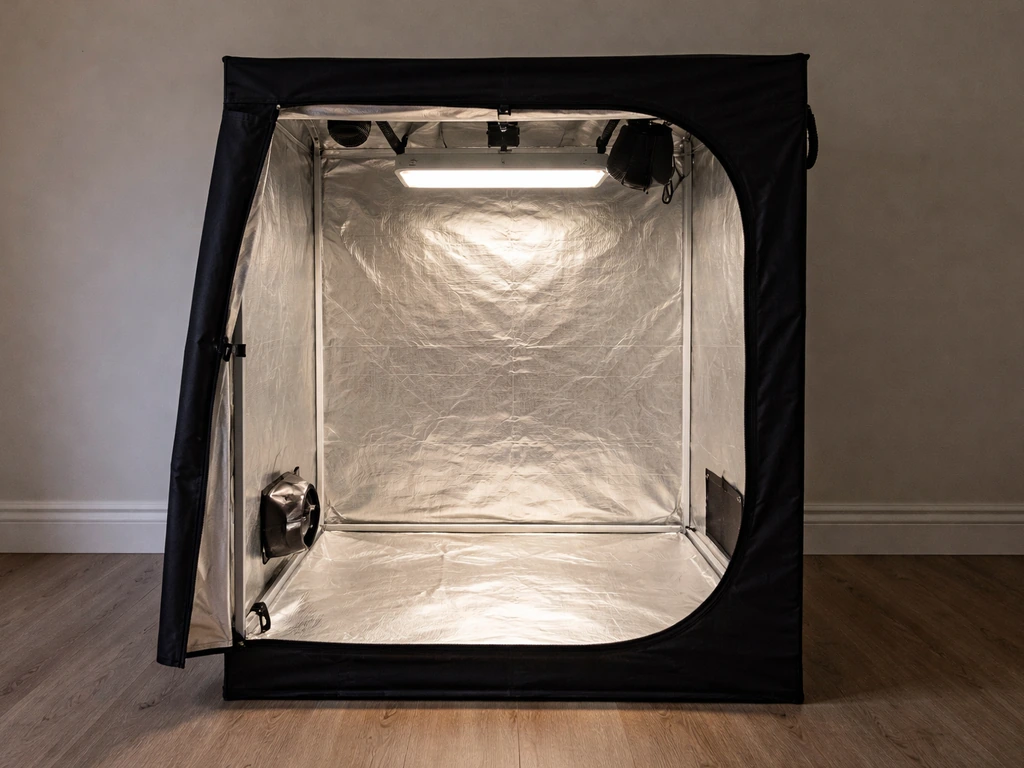
A true 1200W fixture puts out roughly 4,100 BTU/hour of heat. In a 4x4 or 5x5 tent, that is a significant thermal load that your inline fan and carbon filter setup needs to handle. As a practical rule, size your exhaust fan to turn the tent air volume over at least once per minute, and add a buffer for the heat generated by your lights. In a 5x5x8 tent (200 cubic feet), that means a minimum of a 4-inch fan rated at 200+ CFM, and realistically a 6-inch fan for any grow where you are running the fixture at full power through summer months or in a warm room. Keep the driver (external or built-in) out of direct airflow from the intake if possible, because drivers last longer at lower operating temperatures.
Power draw and electrical setup
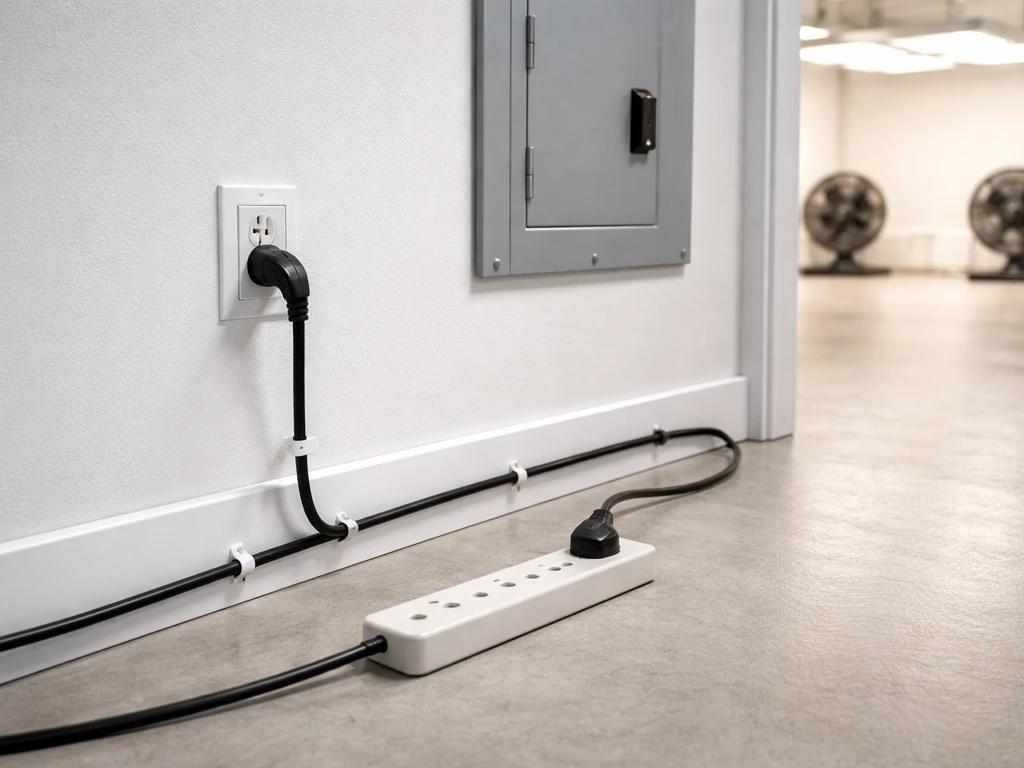
A genuine 1200W fixture requires a 15-amp circuit to itself, with no other significant loads on the same breaker. Many home growers run into problems when they add fans, pumps, and a 1200W light to the same 15-amp circuit and then wonder why breakers trip. A dedicated 20-amp circuit is a much safer and more professional setup for this wattage class. Also check the fixture's voltage range: most quality fixtures accept 100-277V input, which gives you flexibility to run 240V in a garage or basement setup, cutting amperage draw roughly in half and reducing heat in your wiring.
Cost, operating expenses, and what to expect over time
A true 1200W fixture running 12 hours per day draws 14.4 kWh daily. At a US average of around $0.16/kWh (rates vary significantly by state and have been trending upward through 2025-2026), that is roughly $2.30 per day, or about $69/month just for the light. This is why efficacy matters so much to your operating cost. A fixture hitting 3.0 µmol/J delivers 30% more photons per dollar of electricity than one hitting 2.3 µmol/J. Over a 12-month year, that difference compounds into hundreds of dollars. If you are comparing a $400 budget fixture at 1.8 µmol/J against an $800 fixture at 2.9 µmol/J, the premium fixture often pays for itself in electricity savings within 18-24 months, before you factor in replacement costs.
LED lifespan is typically published as 50,000+ hours to L90 (meaning the fixture maintains 90% of its original photon output to that point). At 12 hours per day, 50,000 hours represents over 11 years of continuous operation. In practice, the driver fails well before the diodes, which is why driver quality and thermal management are the real lifespan determinants. The DLC horticultural qualification program focuses on photon flux maintenance over time as a key credentialing factor. Look for fixtures with independently verified photon flux maintenance data, not just a marketing claim of '50,000 hours.' Warranty length is also a useful proxy: reputable manufacturers typically offer 3-5 years of coverage. A fixture with a 1-year warranty at this price point is a yellow flag.
Buyer checklist and how to avoid getting burned
Here is the practical checklist I would run through before buying any fixture in this category. If you are shopping specifically for the best led grow light under 200, use the same PPFD and true wall-draw checks so you get real output for the money. It addresses the most common mistakes growers make when shopping for 1200W LEDs.
- Verify actual wall draw: Look for a published input wattage spec in watts (not 'equivalent' watts), and check independent reviews that measured real draw with a watt meter. Budget fixtures often draw 30-50% less than labeled.
- Get the PPF and µmol/J number: If the manufacturer does not publish PPF in µmol/s and efficacy in µmol/J, do not buy. These are the core performance metrics. A credible fixture at this wattage should hit at least 2.5 µmol/J.
- Ask for or find a full PAR map: One PPFD number means nothing. You need a grid map showing PPFD at multiple points across the footprint at your planned mounting height. Edge readings should not be below 50% of center readings for flowering use.
- Check for DLC listing or third-party test data: DLC-listed fixtures must report to ANSI/IES TM-33-18 standards. This is the most reliable way to verify performance claims. If DLC listing is not available, look for independent PAR test reviews from sources that publish actual measurement grids.
- Confirm the spectrum includes what you need: For flowering, a full-spectrum fixture that includes some far-red (700-750 nm) is generally preferred. For veg-only or seedling use, blue-heavy spectrum is fine. Ask whether published PPF includes far-red or only covers 400-700 nm.
- Test dimming range before committing: If you can, confirm the fixture dims smoothly from at least 20% to 100% without flicker or driver noise. Dimming only in the 50-100% range is not truly dimmable for seedling and early veg use.
- Check cooling design and driver placement: External drivers or well-separated heatsinks run cooler and last longer. Understand your ventilation requirements before the fixture arrives.
- Verify electrical compatibility: Confirm the fixture runs on your available voltage (120V or 240V), check the amperage draw, and confirm you have a dedicated circuit of sufficient capacity.
- Look at the warranty and support reality: Minimum 3 years of coverage from the manufacturer, with a physical address and real customer support. A warranty that requires shipping to a mainland China address for every claim is effectively no warranty for a hobbyist.
- Calculate operating cost before you buy: Use the DLI formula (DLI = 0.0036 × PPFD × hours) to confirm the fixture actually delivers your target DLI at your crop stage, then multiply true wall watts by your electricity rate to get monthly cost.
Common mistakes to avoid
- Buying based on the wattage label rather than verified wall draw and PPF output.
- Trusting a single center-point PPFD number as a coverage claim.
- Assuming 'full spectrum' means the same thing across all brands (far-red inclusion varies significantly).
- Ignoring heat load and ventilation requirements until the grow room is already too hot.
- Overlooking dimming quality and assuming any 'dimmable' label means useful dimming across all stages.
- Putting a 1200W fixture in a 3x3 tent and wondering why plants are light-stressed (it's too much intensity for a small space at close range).
- Choosing a fixture with a 1-year warranty at premium pricing without checking for third-party test data to justify that price.
How this fits in the broader wattage picture
If your grow space is smaller than 4x4 or you are growing lower-intensity crops, look at smaller fixtures in the 150W to 600W range rather than trying to dial back a 1200W unit with heavy dimming the whole time. For many growers, the best 150 watt LED grow light is the one that hits the right PPFD across your canopy without wasting electricity 150W to 600W. If you are specifically shopping for the best 1500 watt led grow light, the same PPFD and efficacy checks apply, just for a larger canopy footprint 150W to 600W. Conversely, if you are scaling toward a 6x8 or larger canopy or targeting high-intensity CO2 supplementation, the 1500W and 3000W class options become worth evaluating. The 1200W class sits squarely in the middle: it is the right choice for serious home growers running a 5x5 flowering tent at high intensity, or for anyone bridging the gap between hobby and small-scale commercial production. Match the fixture to the space, verify the numbers, and the rest takes care of itself. If you are specifically looking at the best 3000w led grow light for a bigger canopy, keep the same PPFD, efficacy, and verified wall-draw checks at the forefront.
FAQ
If a 1200W LED shows great PPFD at the center, can I assume it will cover my whole canopy well?
Not reliably. For a 1200W-class fixture, “center PPFD” can look fine while the perimeter is underpowered. Use a manufacturer PPFD-at-distance table plus a multi-point PAR map at your planned mounting height, and confirm uniformity by checking edge values (ideally not dropping far below the center during flowering). If the seller only provides a single number, treat it as incomplete data.
When manufacturers say “full spectrum,” how do I know if the far-red is included in the PPF numbers, not just in marketing?
To compare two “full spectrum” LEDs fairly, verify whether their PPF or PPE numbers are based on 400-700 nm only or include far-red (700-750 nm). If the published PPF uses standard photosynthetically active radiation only, two fixtures can show similar PPF while behaving differently in real flowering because far-red contribution is not reflected. Ask the manufacturer to clarify what wavelength range their photometric data includes.
Can I run a 1200W LED grow light on the same 15-amp circuit as my exhaust fan and humidifier?
A 1200W fixture should typically be wired to a dedicated breaker, because dimming, fans, and pumps still create additional continuous loads. If you must share a circuit, keep the total other draw modest and avoid running the light at full output at the same time, but the safer approach is one circuit for the fixture. Also check if your fixture has a true input wattage that matches its nameplate, since undervalued wattage can still trip breakers when it’s actually closer to the advertised class.
Is it okay to run a 1200W LED at 50% power for most of the grow, and will it still perform consistently?
Yes, but the risk is that you compromise the driver and optics performance. First, confirm the manufacturer’s supported dimming method (0-10V, PWM, or proprietary). Then check for smooth dimming across the full range, and listen for driver noise or look for visible flicker if your crop is light-sensitive. Lastly, verify that PPFD scales predictably when dimmed, since some fixtures reduce output more than others at the same dimming percentage.
What should I check if I’m considering a fanless 1200W LED, since the driver is still a heat source?
If it is truly “fanless” or uses only passive cooling, you must treat ambient temperature like a spec. Provide extra clearance around heatsinks, and ensure your grow room can keep operating temperature in range under worst-case conditions (summer heat, sealed tents, high humidity). A fixture can survive mild days but fail early if the driver and heatsink regularly run hot.
How do I calculate DLI correctly if my fixture’s PPFD changes with mounting height and dimming?
Not directly. DLI uses PPFD, but your PPFD needs to be measured or trusted at your exact mounting height and in your exact environment. If you dim to a target PPFD, calculate DLI using that PPFD and the photoperiod you will actually run, and remember that DLI changes quickly with distance and reflector setup. Also confirm whether the fixture’s PPFD data assumes reflective walls, bare floor, or specific height.
What’s the simplest way to confirm whether a “1200W” LED is actually drawing true 1200W from the wall?
Measure it, don’t guess. Use a wall watt meter during a stable run period to confirm real input wattage, and compare that to the fixture’s “true power” claim. Two fixtures labeled 1200W can differ by several hundred watts of real draw, which also changes the heat load and circuit sizing. If the manufacturer refuses to provide clear wall-draw data, treat it as a procurement and safety risk.
If my corners are underlit, should I raise the light or add side lighting?
Often, but only if you keep it within the usable optical range and you can maintain uniformity. Raising the light increases spread but reduces center intensity and may make the corners worse unless you also adjust reflector setup and photoperiod. If edge PPFD falls below your crop needs, you may need supplemental side lighting rather than simply raising the main bar or panel.
Is the 50,000-hour L90 rating meaningful for a 1200W LED, or should I focus on the driver instead?
Many fixtures are rated for 50,000 hours to L90 under controlled conditions, but driver failure is the usual limiter. Check for independently verified photon maintenance data (not just a generic lifespan statement), and verify warranty length and what it covers (driver only versus full fixture). If the warranty is very short for the price, assume the driver is likely the weak point and plan for earlier replacement.
How do I mount and place the driver and heatsink to get better longevity?
It depends on your airflow design and space geometry. Start by ensuring the driver is not trapped near hot air and that intake air is relatively cool. If possible, keep the driver out of direct airflow from the intake and make sure the exhaust path removes heat from the tent. Poor placement can reduce cooling effectiveness even when the exhaust fan is correctly sized.
Next Articles
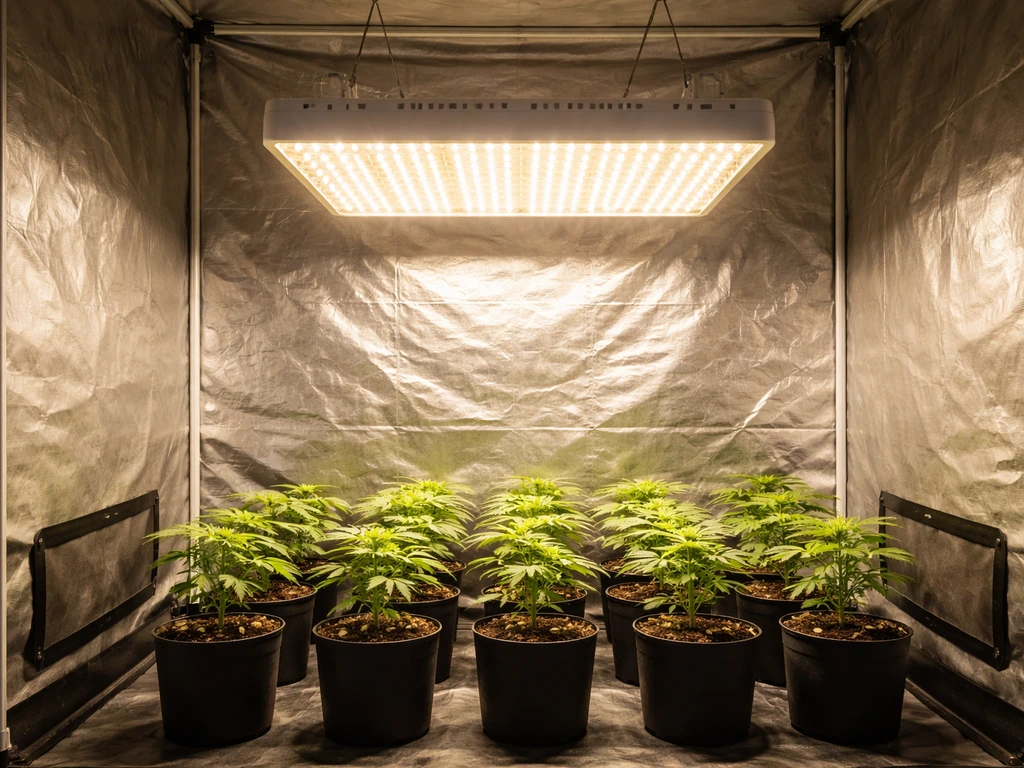
Best 3000W LED Grow Light: Buying Guide and Setup Tips
Buying guide to choose the best 3000W LED grow light, decode real watts, compare PPFD coverage, and set up safely.
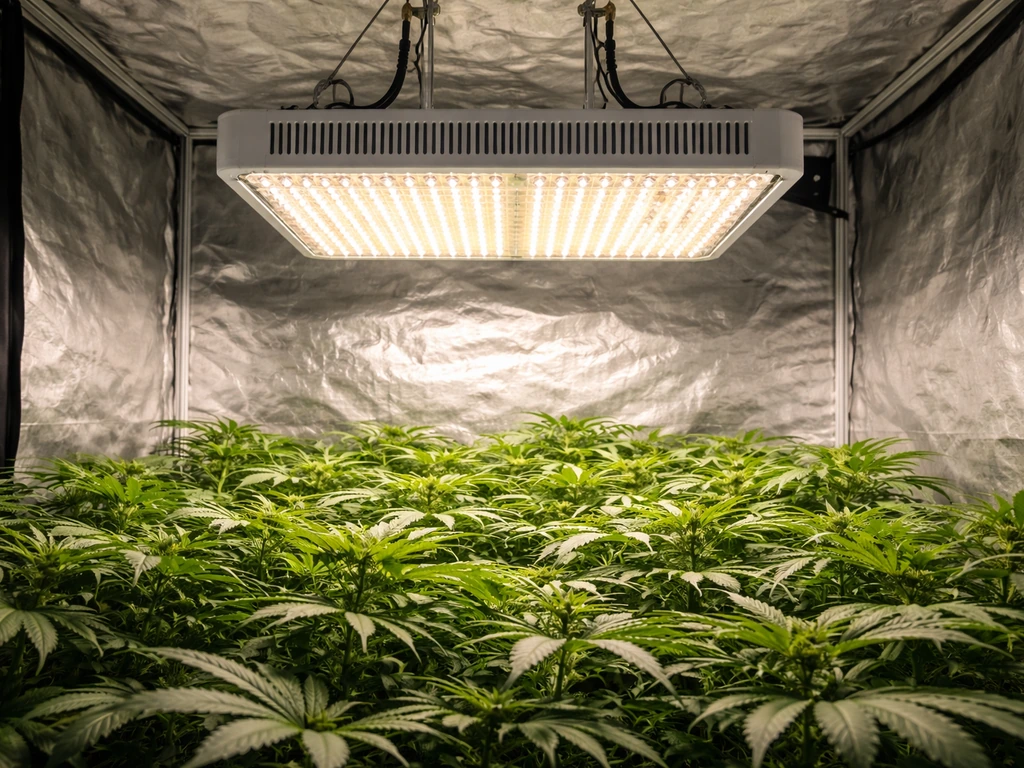
Best 1500 Watt LED Grow Light: Buyer Guide for True Performance
Choose the best 1500W LED grow light by real watt draw, PPFD and coverage, plus setup tips for 4x4 to bigger tents.
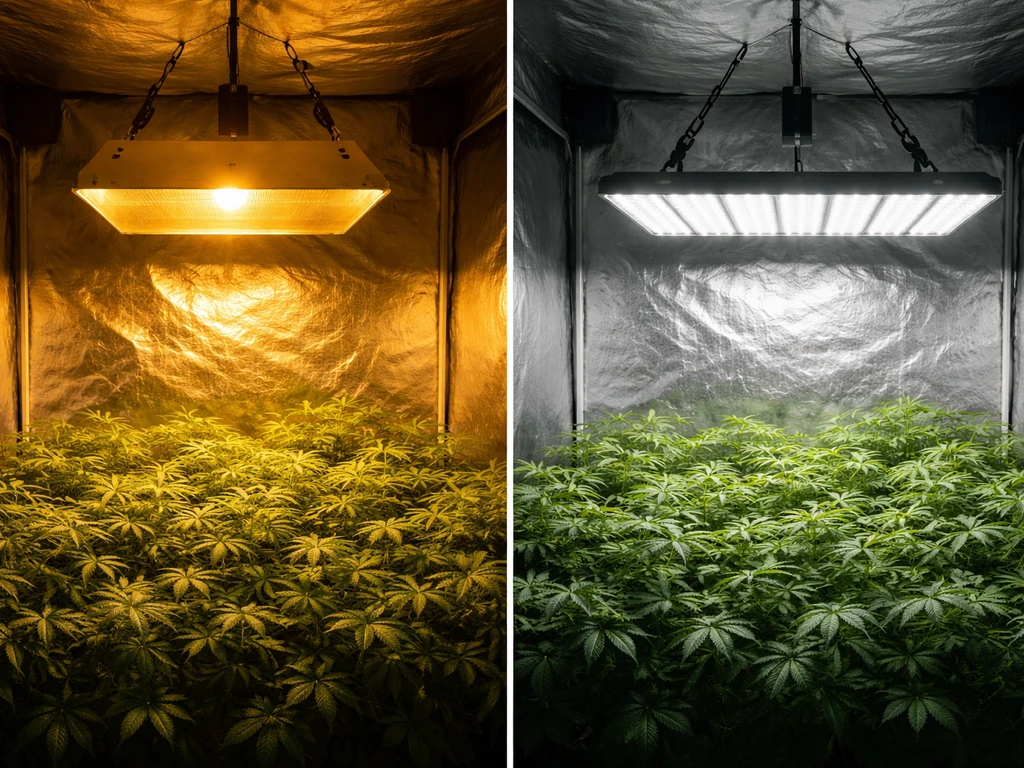
Best LED Grow Light to Replace 1000W HPS: Sizing Guide
Sizing and buying guide to replace a 1000W HPS with the right LED using PPFD, layout, mounting, and spectrum for yields.