
Here is the short answer: there is no single "best 3000W LED grow light" because the number itself is mostly a marketing label. What actually matters is how many micromoles of photons the fixture puts out per second (PPF), how efficiently it does that per watt of electricity drawn from your wall (µmol/J), and whether that PPFD is distributed evenly across your actual canopy footprint. Once you understand those three things, picking the right 3000W-class light becomes a straightforward process of matching real numbers to your tent size and crop goals.
Best 3000W LED Grow Light: Buying Guide and Setup Tips
Marcus Rutherford
19 Apr 2026
What "3000W" really means for LED grow lights
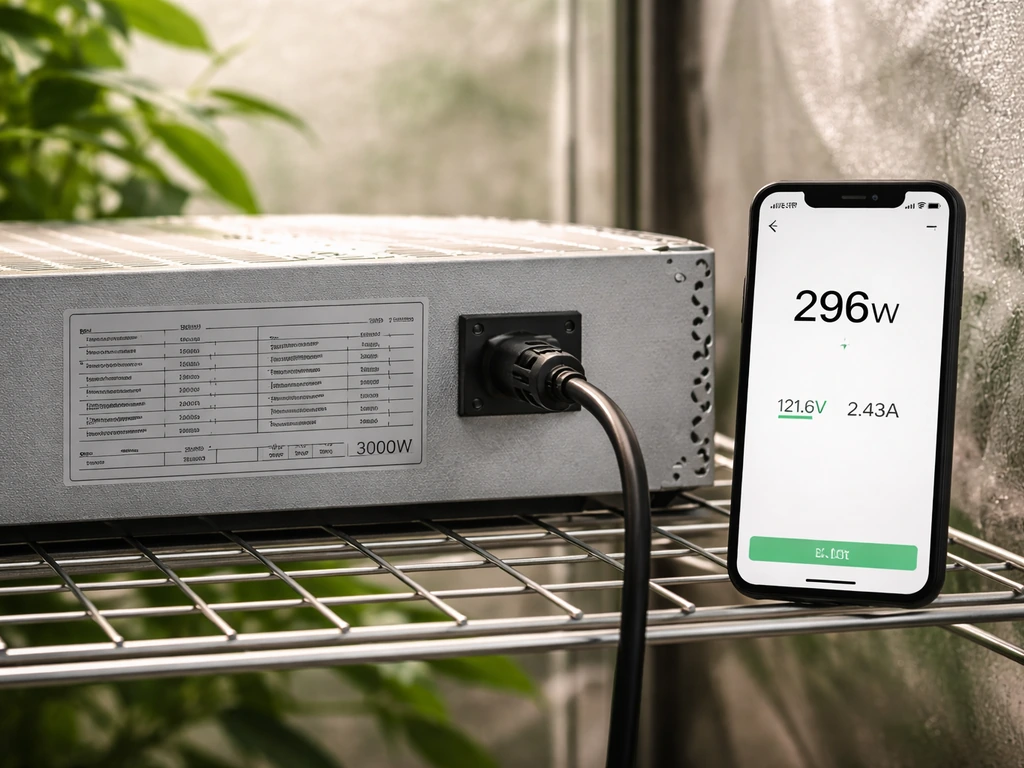
The "3000W" label almost never describes how much electricity the fixture actually draws from your wall. Manufacturers either add up the theoretical maximum wattage of every individual LED diode at its absolute peak rating, or they inflate the number to imply an "equivalent" to a 3000W HPS setup. A fixture marketed as "3000W" might actually draw anywhere from 400W to 700W at the wall under real operating conditions. A few larger bar-style or multi-board rigs do approach 1000W or more of actual draw, but those are genuinely large, expensive commercial-grade systems.
The number that matters is actual input wattage (sometimes called "wall draw" or "measured power"). Reputable manufacturers disclose this clearly on their spec sheets alongside PPF output and efficacy. If a product listing only shows you "3000W" with no separate "actual watts" figure, that is your first red flag. A legitimate spec block looks something like: input watts 660W, PPF 1700 µmol/s, efficacy 2.6 µmol/J. Those three numbers together tell you everything the "3000W" label never will.
The industry has clear standards for measuring this honestly. ANSI/IES LM-79-19 is the accepted methodology for measuring photon flux, electrical power, and efficacy for solid-state lighting. The DesignLights Consortium (DLC) horticultural Qualified Products List (QPL) requires testing to this standard (alongside UL 8800 for safety compliance) before a fixture can be listed. If a brand cites LM-79 test reports and appears on the DLC horticultural QPL, you can trust the numbers. If neither is mentioned, treat the specs as unverified marketing.
The specs that actually predict performance
PPFD: the number at your canopy
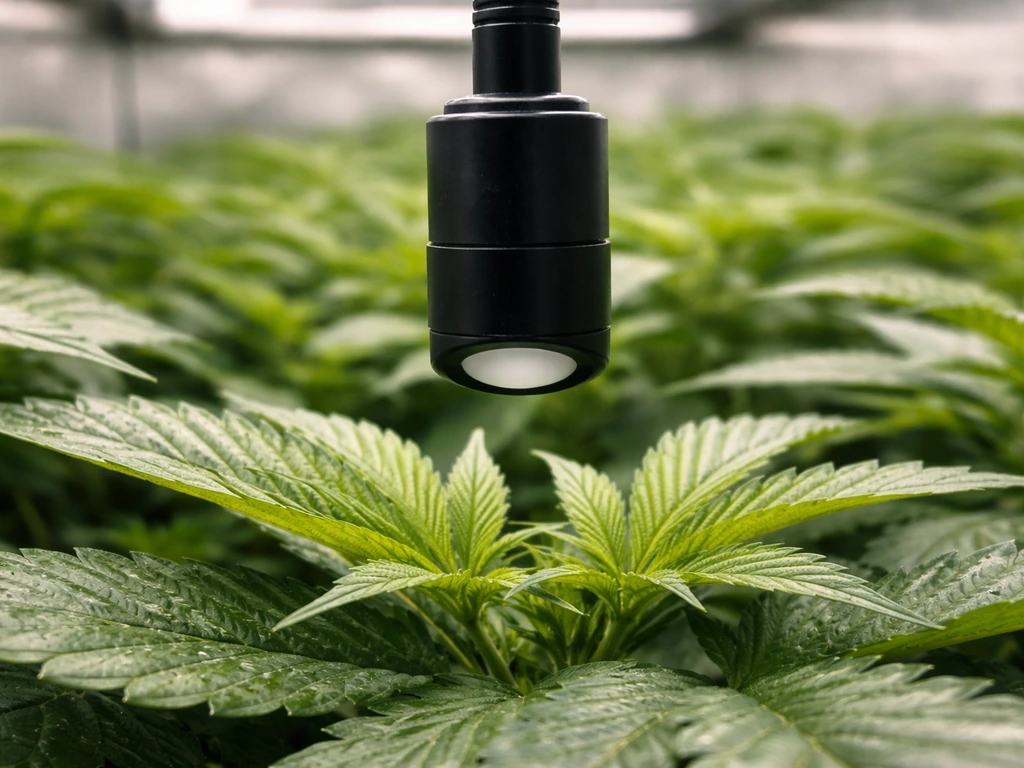
PPFD (photosynthetic photon flux density) measures how many micromoles of photons land on one square meter of canopy every second (µmol/m²/s). This is the single most useful number for a grower because it directly tells you what your plants are receiving, not what the fixture is putting out into open air. Most flowering crops want 600–900 µmol/m²/s at canopy level for solid yields, with light-hungry strains pushing toward 1000–1200 µmol/m²/s if CO2 is supplemented. Seedlings and clones typically want 100–300 µmol/m²/s.
Efficacy (µmol/J): the efficiency metric
Photosynthetic photon efficacy (PPE, measured in µmol/J) tells you how efficiently the fixture converts electrical energy into usable plant light. Budget lights from a few years ago hovered around 1.5–1.8 µmol/J. Decent mid-range fixtures today are at 2.3–2.6 µmol/J. Top-tier commercial boards using Samsung LM301H or similar high-bin diodes are reaching 2.7–3.0 µmol/J. Higher efficacy means you grow the same amount of light for less electricity, which directly reduces your operating cost every single month.
PPFD maps and uniformity
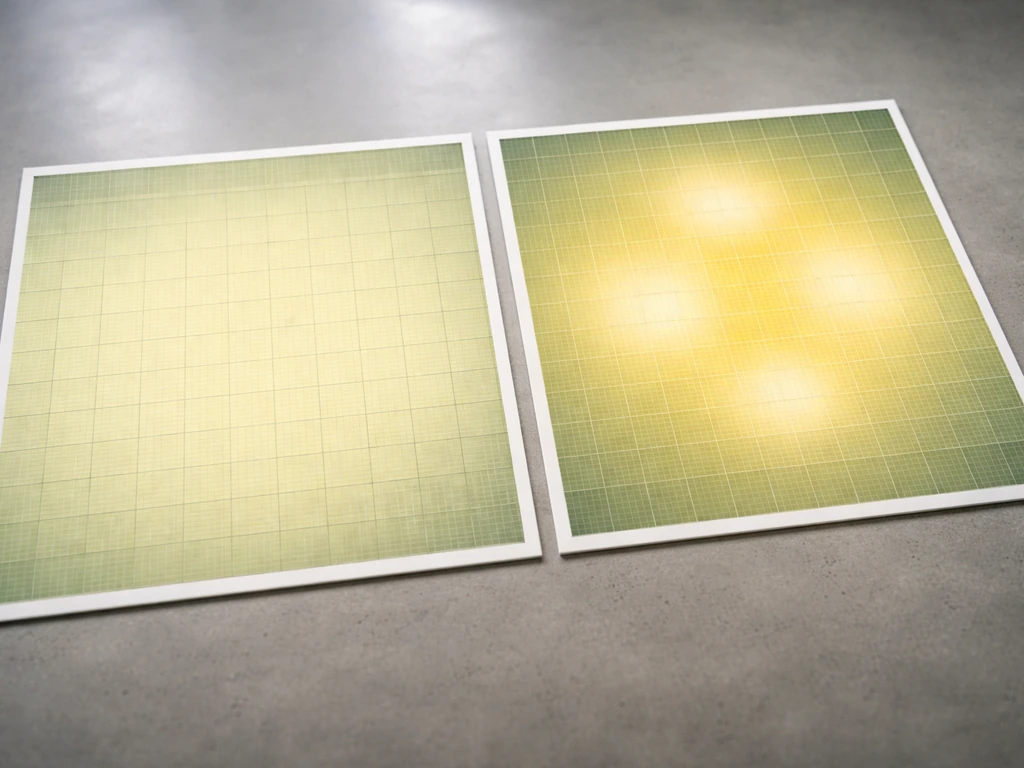
A PPFD map is a grid of measurements taken at canopy height across the full coverage area. It tells you not just the average PPFD but how evenly the light is distributed. The industry rule of thumb is a minimum-to-average PPFD ratio of at least 0.75 to 0.80, meaning the dimmest corner should be no worse than 75–80% of the average reading. Coefficient of variation (CV) should be 15–20% or less. If a PPFD map shows bright hot spots in the center and dramatic drop-off at the edges, plants in those corners will be noticeably underfed. Be skeptical of any PPFD map that was clearly measured inside a reflective white tent or room, since reflective surfaces can inflate readings by 10–30% compared to what you will actually see in a real grow.
| Metric | Budget Range | Mid-Range Target | Top-Tier Target |
|---|---|---|---|
| Actual wall draw (for "3000W" class) | 300–500W | 500–700W | 700–1000W+ |
| Efficacy (µmol/J) | 1.5–1.9 | 2.3–2.6 | 2.7–3.0 |
| PPFD uniformity (min/avg) | Below 0.70 | 0.75–0.80 | 0.80+ |
| Third-party test report | Rarely provided | Sometimes LM-79 | LM-79 + DLC QPL listed |
| Driver quality | Unknown brand | Named brand (Mean Well) | Mean Well HLG or equiv. |
Matching footprint and hanging height to your tent
Forget wattage for a moment and think in square feet and PPFD. A 3000W-class light (real draw around 500–700W, depending on the fixture) is typically marketed for 4x4 or 5x5 coverage in flowering. In reality, coverage depends on your target PPFD, your mounting height above the canopy, and the optics of the specific fixture.
PPFD drops fast with distance. Doubling your hanging height roughly quarters the intensity at canopy level for most fixtures without tight secondary optics. A fixture that delivers 900 µmol/m²/s at 18 inches might only deliver 450–500 µmol/m²/s at 30 inches across the same footprint. That is why the vendor's "coverage area" claim is meaningless without knowing the PPFD at that coverage area and the hanging height used to measure it.
A practical starting framework: look at the manufacturer's PPFD map for the exact footprint you have (4x4, 4x8, whatever), at a realistic mounting height (18–24 inches above canopy is common for most fixtures in a 4x4), and confirm the average PPFD lands in your target range. If the map shows 800 µmol/m²/s average at 18 inches over a 4x4, you have usable data. If the listing only shows a vague "coverage: 4x4" with no numbers, you have nothing.
- 2x2 tent (veg or small flower): A single 200–300W actual-draw fixture is more than enough. A 3000W-class light here is extreme overkill and will likely require significant dimming.
- 3x3 tent (flower): A well-built 500–600W actual-draw fixture covers this well at moderate intensity without pushing thermal limits.
- 4x4 tent (flower): The sweet spot for most 3000W-class single fixtures with 500–700W actual draw. Aim for 800–900 µmol/m²/s average PPFD at 18–24 inches.
- 4x8 tent (flower): One 3000W-class fixture alone will not cover this properly. You need two fixtures, or a single larger bar-style light with 800–1000W+ actual draw.
- 5x5 tent (flower): On the edge for a single 650–700W fixture. Expect lower average PPFD or reduced uniformity at the corners unless you find a fixture with a wide beam pattern.
For growers stepping up from smaller setups like a 150W or 1200W-class fixture, the jump to a true 3000W-class system represents a meaningful increase in both coverage and heat load. If you are moving up from a 150W LED grow light, you will usually need to reassess both your canopy coverage and the heat your ventilation system must handle. For growers stepping up from smaller setups like a 150W or 1200W-class fixture, the jump to a true 3000W-class system represents a meaningful increase in both coverage and heat load, and if you want to stay closer to that 1200W level you can compare options using the best 1200 watt led grow light guides. Plan your ventilation and canopy management accordingly before you buy.
Spectrum choices: what "full spectrum" actually means
"Full spectrum" is one of the most abused phrases in grow light marketing. Technically, any light with a continuous distribution across the photosynthetically active radiation (PAR) range of 400–700nm qualifies, which means a basic white LED with a CRI of 80 could claim "full spectrum." What you actually want to verify is the specific spectral distribution: are there strong blue peaks (around 440–460nm) for compact vegetative growth, strong red peaks (630–660nm) for photosynthesis and flowering, and is far-red (700–750nm) included for the Emerson effect? UV (below 400nm) is a bonus for some crops but not essential for most.
The right way to verify a spectrum claim is to ask for the spectral power distribution (SPD) graph, ideally from an LM-79 test report that includes TM-33 spectral data. The DLC horticultural technical requirements explicitly include TM-33 spectral reporting as part of the accepted documentation package. A brand that hands you a smooth-looking SPD chart with no measurement basis is showing you a simulation or a marketing graphic, not real data.
Veg vs. flower vs. full-cycle
Some fixtures offer switchable veg/bloom channels or variable spectrum control via separate drivers. This can be useful if you grow in a single tent through both stages, but in practice, a well-designed white-spectrum board with appropriate red supplementation performs consistently across the full cycle. Dedicated veg or bloom switches on budget fixtures often just turn on or off a cluster of diodes rather than doing anything sophisticated. Unless you have a specific reason for spectrum-switching (like growing very different crop types in the same space), a high-quality fixed full-spectrum board is the simpler and often better choice.
| Spectrum Type | Best Use Case | What to Verify |
|---|---|---|
| White + red (2700–3500K + 660nm) | Full-cycle flowering crops | SPD graph, red peak at 650–660nm |
| Blue-heavy (5000–6500K dominant) | Veg only, seedlings, clones | Blue peak at 440–460nm present |
| Full spectrum + far-red (730nm) | Flowering acceleration, Emerson effect | 730nm channel in SPD, intensity disclosed |
| Full spectrum + UV (385–400nm) | Specialty crops, resin enhancement | UV output quantified separately |
| Switchable veg/bloom | Single-tent full-cycle grow | Both channels independently tested, not just labeled |
Setup, wiring, cooling, and safety
Electrical requirements
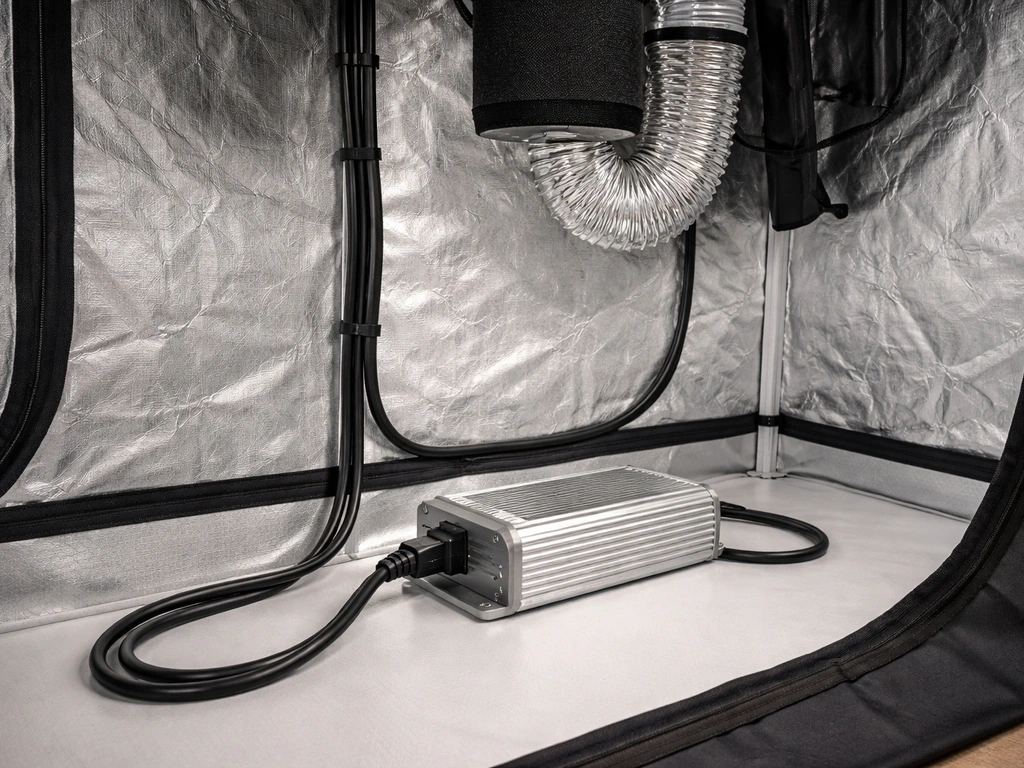
A fixture with 600W actual draw on a standard 120V circuit draws about 5 amps. Most household circuits are 15A (rated for about 12A continuous), so a single 600W fixture plus fans and other gear can stay within limits. Push toward 700–800W actual draw and you will want to consider a dedicated 20A circuit. Fixtures with 1000W+ actual draw often accept 240V input, which halves the current draw and is typically the safer path for high-wattage setups. Always confirm the fixture's input voltage range (most quality units accept 100–277VAC) and factor in your other gear on the same circuit.
Driver power factor (PF) is worth checking. A quality driver from Mean Well or MOSO will list PF ≥ 0.97 at 115VAC and ≥ 0.95 at 230VAC. High power factor means the driver is drawing clean power without wasting reactive current. Cheap drivers with low PF effectively draw more apparent power than their watt rating suggests, which can trip breakers unexpectedly. For dimming, look for 0–10V or PWM dimming interfaces, which let you dial in PPFD precisely rather than using crude physical switches.
Heat management and ventilation
Even a high-efficiency 2.7 µmol/J fixture converts about 63% of input watts to heat. A 600W fixture is putting roughly 380W of heat into your tent. That is not trivial. In a 4x4 tent, you need enough airflow to exhaust that heat continuously: a 4-inch inline fan typically moves 200–400 CFM, which is usually enough for a single 600W fixture in a moderate ambient temperature. Push toward 700–800W actual draw in summer, and you may need a 6-inch fan or active cooling to keep canopy temps in the 72–82°F sweet spot. Drivers mounted externally (outside the tent) help significantly by keeping the hottest component out of the growing environment.
Hanging, dimming, and dialing in
Start new seedlings and young veg plants with the light at 24–30 inches above canopy and dimmed to 50–60% power. This gives you a soft target PPFD of 300–500 µmol/m²/s for early stages while keeping heat manageable and giving plants time to adjust. As plants mature into pre-flower and flower, lower the fixture to 18–22 inches and bring dimming up to 75–100%. Always validate PPFD with a PAR meter if you can; vendor distance charts are useful starting points but they are rarely measured under your specific tent geometry and canopy reflection conditions. A basic apogee or other PAR meter runs $100–$250 and pays for itself quickly in better dialed-in results.
UL 8800 certification means the fixture has been tested for safety requirements specific to horticultural lighting environments, which are more demanding than standard indoor lighting because of water, high humidity, and plant matter. Always confirm the fixture carries UL 8800 or a comparable safety certification before putting it in a high-humidity grow tent.
How to compare products and spot bad specs
The most important skill when shopping for a 3000W-class LED is learning to distinguish real spec sheets from marketing PDFs. Here is a practical checklist for every fixture you evaluate.
- Find the actual input wattage (wall draw). If the listing only shows a "3000W" marketing number without a separate "actual watts" or "measured power" figure, do not trust any other spec on the page.
- Calculate internal consistency. Divide the claimed PPF (µmol/s) by the stated input watts to get efficacy (µmol/J). If the result seems too high (above 3.2 µmol/J for a 2025–2026 product), that is a discrepancy worth investigating before you buy.
- Ask for or find the LM-79 test report. Reputable brands either publish these on their website or provide them on request. The report should include input watts, PPF, and spectral data (TM-33 format ideally). If a brand refuses or cannot provide one, walk away.
- Examine the PPFD map carefully. Check what mounting height was used, whether the measurement environment is specified, and whether the grid is dense enough to show uniformity. A map showing only the center point or an average of five spots is not a real PPFD map.
- Confirm the min/avg uniformity ratio. For a 4x4 coverage claim, the corners should ideally be no dimmer than 75–80% of the center reading. If the map shows 1000 µmol/m²/s in the center and 400 µmol/m²/s at the corners, that "4x4 coverage" is not real usable coverage.
- Check driver specs. The driver brand, PF rating, input voltage range, and dimming interface should all be disclosed. A listing that says "quality driver" with no further detail is hiding something.
- Verify certifications. Look for UL 8800, ETL, CE, or DLC QPL horticultural listing. These are not guarantees of performance, but they confirm the fixture went through real testing processes.
- Use a watt meter post-purchase. Plug in the fixture and measure actual wall draw at 100% dimming. Compare it to the spec. A significant mismatch (more than 10–15%) means the product is not performing as advertised.
Red flags to watch for
- "3000W" in the product title but actual draw listed as 200W or less with no "equivalent" disclosure.
- PPFD maps with no stated measurement height, no grid methodology, and suspiciously high uniformity across a large area.
- No third-party test reports offered or available, even on request.
- Efficacy claims above 3.2 µmol/J for fixtures in the $150–$300 price range (possible at the very high end of the market, not for budget fixtures).
- Driver listed as "waterproof driver" or "high-efficiency driver" with no brand name or spec disclosure.
- Customer reviews that describe the fixture running extremely hot, flickering at low dim levels, or failing within the first few months of use.
Decide, size your purchase, and dial in results
Start by defining your grow scenario clearly before you open a single product listing. Write down your tent dimensions, your target crop and growth stage, and your target canopy PPFD. Those three inputs will filter out 90% of the products that are not right for your situation.
For a 4x4 tent running flowering crops, you want a fixture with 550–650W actual draw, efficacy of 2. For a 4x4 tent running flowering crops, you want a fixture with 550, 650W actual draw, efficacy of 2 best 1500 watt led grow light. 3 µmol/J or better, a PPFD map showing 800–900 µmol/m²/s average at 18–20 inches with a min/avg ratio of 0.75 or better, and a genuine LM-79 test report to back it up. Budget for that, and you will be in the $300–$600 range in 2026 for a quality mid-range unit. Going above that gets you into commercial-grade territory with higher efficacy and better build quality.
If your tent is a 4x8 or larger, plan for two fixtures from the start. A single 3000W-class unit will leave the outer half of a 4x8 underpowered regardless of what the marketing says. Two 500–600W actual-draw fixtures positioned symmetrically will give you far better uniformity than one 1000W unit centered in the space.
For beginners who want a simpler decision path: pick a fixture on the DLC horticultural QPL or one that provides a published LM-79 report, match it to the footprint sizes above, and use the vendor's suggested hanging height as your starting point. The same approach applies when comparing the best 150 watt led grow light options, focusing on measured watt draw, PPF, and canopy PPFD rather than marketing labels. Use the same measured-watt, PPF, and canopy PPFD approach to find the best led grow light under 200 that will actually perform for your space. Then invest $150–$250 in a PAR meter and validate your actual canopy PPFD in the first week. Adjust height and dimming until you hit your target range. That process is more reliable than any marketing chart and will teach you more about your specific setup than any amount of pre-purchase research.
For growers scaling up or running multiple tents, calculate your total coverage area, target PPFD, and the total PPF required (target PPFD multiplied by total canopy area in square meters). Divide by your chosen fixture's PPF rating to get the number of fixtures needed. Factor in efficacy to project monthly electricity costs at your local rate. That math makes it easy to compare the true cost of a cheaper but less efficient fixture against a premium unit over a one-to-two year grow cycle.
Finally, do not neglect the post-purchase verification step. Measure your wall draw with a plug-in watt meter on day one. Take PPFD readings at multiple grid points across your canopy at your chosen hanging height and dimming level. Calculate your min/avg ratio. If the numbers are off from what the spec sheet promised, you have documentation to request a return or replacement before you invest a full grow cycle into the wrong light. Getting this right at the start saves far more time and money than chasing yield problems mid-flower.
FAQ
Why does the “3000W” label not match what my power meter shows?
LED grow lights labeled “3000W” often have very different wall-draw at full output, so decide based on measured input watts and PPFD. As a quick sanity check, if the product listing does not clearly state a single “input watts” number for normal operation, treat it as unreliable and confirm with a watt meter once it arrives.
What’s the difference between average PPFD and uniform coverage, and why should I care?
A fixture can hit the right average PPFD but still leave corners underfed if distribution is uneven. Measure or request a PPFD map that includes minimum-to-average ratio (and ideally coefficient of variation), then compare your plant spacing to the dim zones so you do not end up with systemic low-yield sites.
How reliable are vendor coverage charts if I mount the light at a different height?
PPFD is highly sensitive to mounting height and optics. If you change height from the vendor’s measurement setup, expect a nonlinear shift in coverage and intensity, so plan to re-check with a PAR meter after installing and setting your dim level.
How much can tent reflectivity change the PPFD results I should expect?
If the PPFD map was measured in a reflective environment, real readings in your tent can be lower by roughly 10–30 percent. To reduce surprises, use a dimming margin (for example, start 10–15% lower than your target plan), then dial to the goal using actual PPFD readings.
What should I verify beyond the phrase “full spectrum”?
Don’t assume the “full spectrum” diodes are balanced for your crop. Ask for the spectral power distribution (SPD) or TM-33 data, and verify the mix includes meaningful red (photosynthesis), appropriate blue for vegetative growth, and whether far-red is actually present if you are relying on flowering stretch.
Which dimming method works best for dialing PPFD precisely?
Not all dimming methods behave the same. 0–10V dimming usually gives smoother control than simple channel switching, while PWM can vary how “stable” the output feels over time. If you intend to tune PPFD precisely, prioritize a dimming interface that the manufacturer documents clearly.
Should I trust efficacy (µmol/J) numbers even if the manufacturer lists multiple power modes?
Efficacy numbers only help if they correspond to the same operating point (normal drive current, not a theoretical mode). Compare fixture efficacy at the same dimming percentage and verify the input watts that go with that mode, otherwise you may underestimate real electricity and heat.
How do I estimate heat and airflow needs for a 3000W-class LED?
For heat, count driver heat and luminaire heat, not just “LEDs.” If the fixture uses an external driver, you often get a modest improvement in tent air temperature, but you still must exhaust total heat continually. Use a plug-in watt meter and estimate heat as roughly 65% of measured input watts to size airflow realistically.
Is it ever better to use one big 3000W-class light instead of two smaller ones in a 4x8?
A common mistake is buying one large fixture for a big tent. For a 4x8, two smaller fixtures positioned evenly usually produce better uniformity and easier dimming control than one centered unit, which often underfeeds the ends.
What’s the safest way to ramp a new fixture from seedlings into flower?
Light burn risk is less about total “watts” and more about actual PPFD at canopy. Start higher and dimmed, then adjust after 3–7 days using measured PPFD. If you cannot measure, use plant response cues and avoid jumping from seedling settings to full flower output in one step.
How can I tell if a light’s PPF and PPFD specs are questionable before I buy?
If you see odd output claims, verify whether the PPF and PPFD are measured at your stated mounting height and with real canopy distance assumptions. A red flag is a “PPF” number with no associated input watts and no documented LM-79 style test basis.
Should I prefer 240V for a 3000W-class LED, and how do I check if my circuit can handle it?
Confirm the fixture’s voltage range and driver design first. Many quality units accept 100–277VAC, but “3000W-class” systems can still draw high current depending on actual wattage and whether you are on 120V or 240V, so you should calculate breaker load with your measured wall draw plus other equipment.
What post-purchase measurements should I take to confirm the light matches the claimed uniformity?
Yes, especially if your plants sit in different zones. After week one, collect a small grid of PPFD readings (for example, 5 to 9 points) and compute min-to-average ratio. If it’s below the vendor-style target, adjust dimming, height, or consider splitting the grow into two fixtures.
Does UL 8800 tell me the light will perform well, or is it only about safety?
UL 8800 is about safety for horticultural environments, but it does not guarantee performance metrics like PPF or PPFD distribution. Treat safety certification as a baseline requirement, then separately evaluate LM-79/TM-33 style light output documentation.
Next Articles
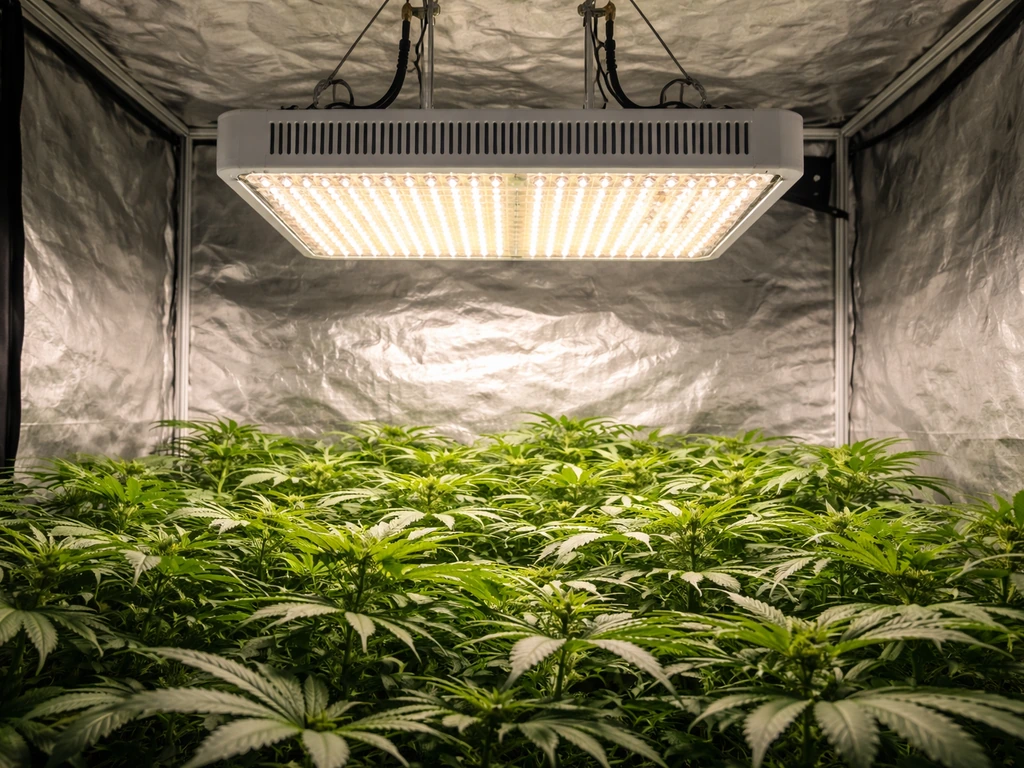
Best 1500 Watt LED Grow Light: Buyer Guide for True Performance
Choose the best 1500W LED grow light by real watt draw, PPFD and coverage, plus setup tips for 4x4 to bigger tents.
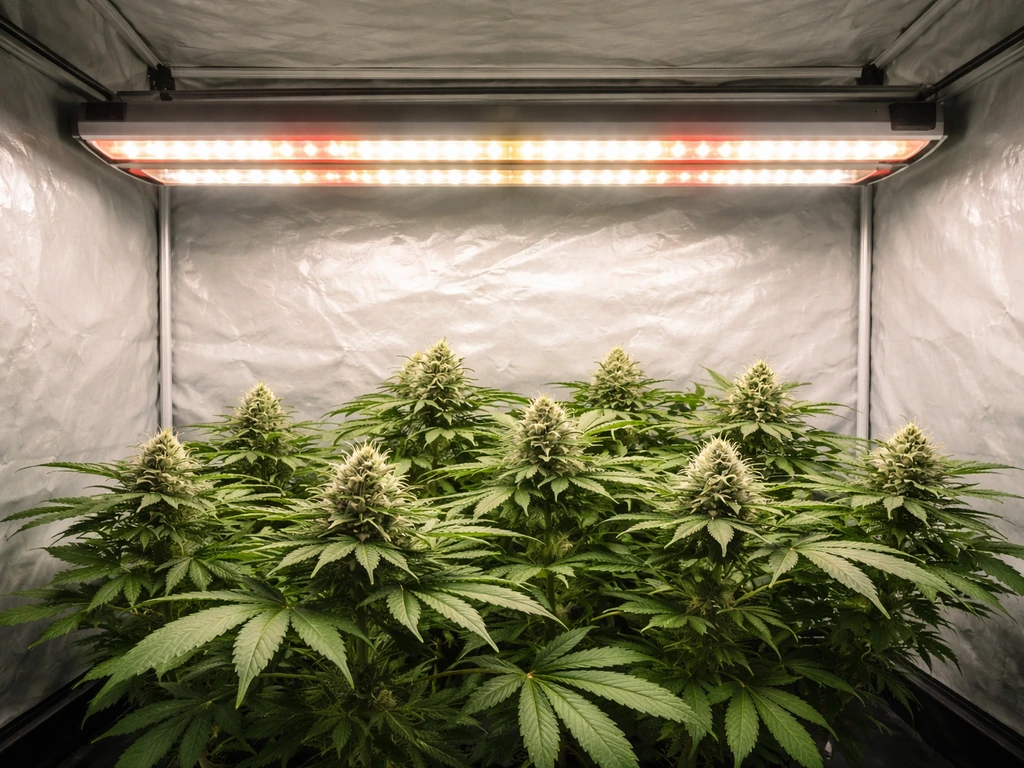
Best Full Spectrum 1000W LED Grow Lights: Buyer Guide
Buy the best full spectrum 1000W LED grow light with spec-to-decision tips on PPFD, coverage, wattage, and tent fit.
Best 100W LED Grow Light: How to Choose the Right One
Choose the best 100W LED grow light with PPFD coverage, spectrum, efficiency, dimming, heat, and setup tips.