
If you're searching for the best 6500K LED grow light, here's the direct answer: 6500K is a color temperature descriptor, not a grow performance spec. The lights that actually perform best for your canopy are the ones delivering the right PPFD (photosynthetic photon flux density) at the right efficacy, in the right footprint, with real test data to back it up. That said, 6500K-style daylight white LEDs are genuinely useful for vegetative growth, seedling stages, and certain crops like leafy greens, so choosing one smartly can pay off. This guide walks you through exactly how to do that.
Best 6500K LED Grow Light: How to Choose and Optimize
Marcus Rutherford
6 Apr 2026
What 6500K actually means for your plants
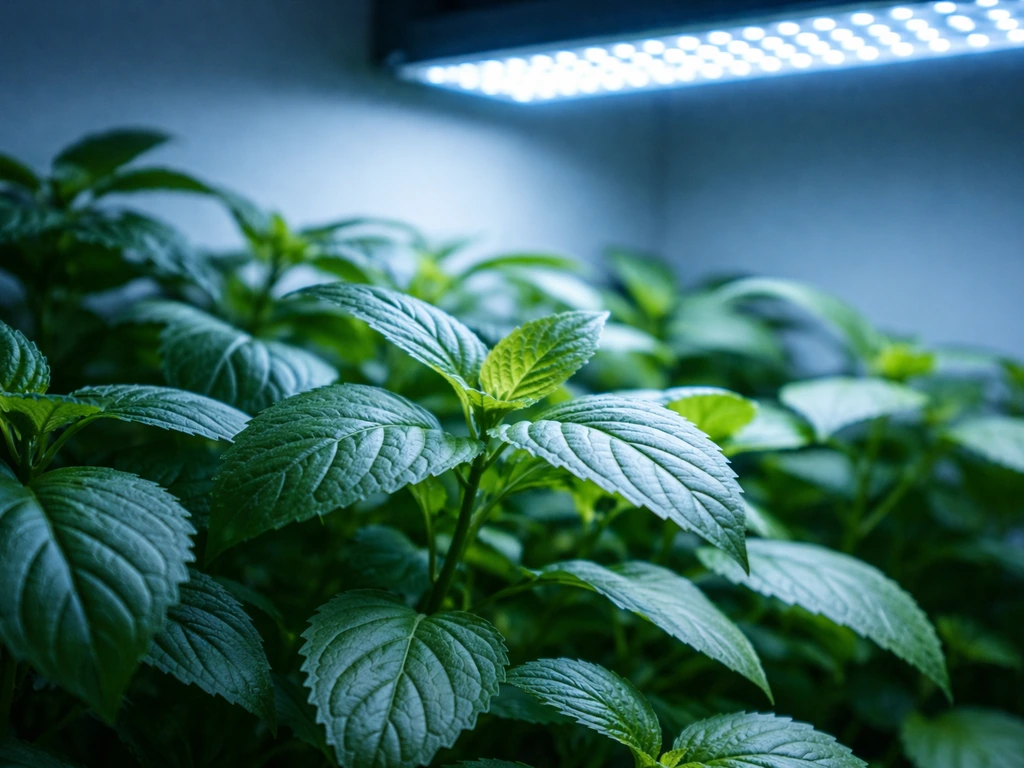
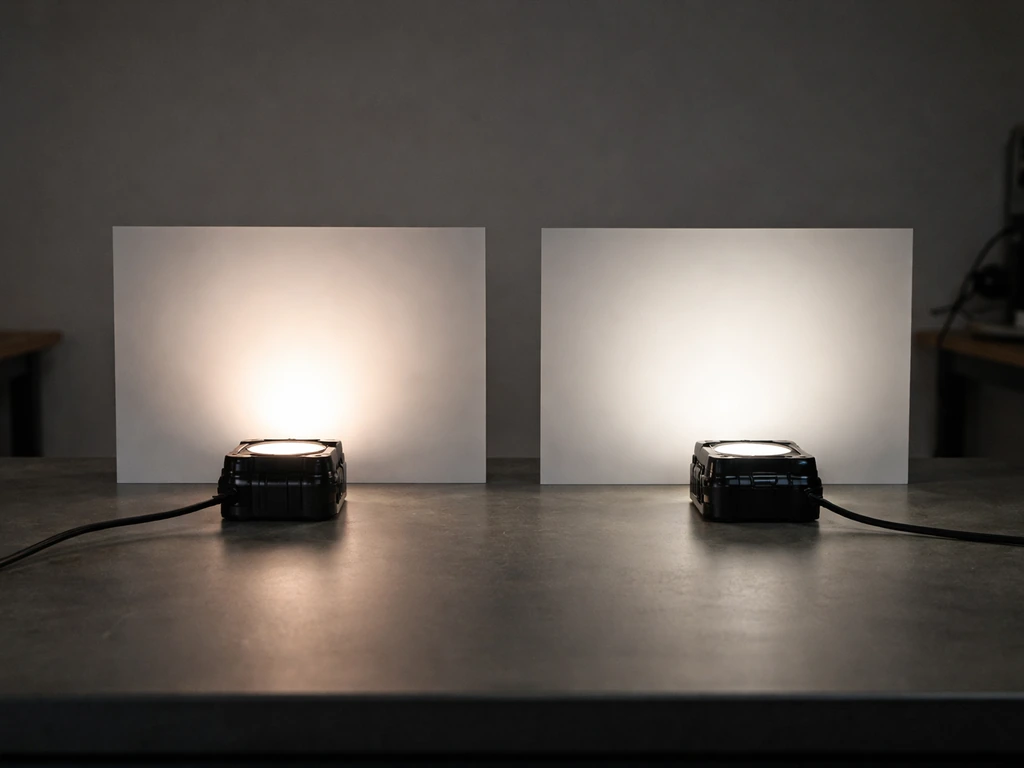
Color temperature is a way of describing the apparent "warmth" or "coolness" of white light. A 6500K LED sits at the cool, blue-white end of the scale, sometimes called "daylight" white. Under the hood, a 6500K phosphor-converted white LED is built on a blue pump LED with a YAG phosphor that converts some of that blue energy into a broader spread of green, yellow, and some red. The result is a blue-dominant spectrum that's been broadened across the visible range, loosely resembling the D65 daylight standard. It's not a pure blue laser; it's a broadened, blue-heavy white.
For plants, that blue-heavy character has real effects. Research consistently shows that higher blue light fractions (generally in the 20 to 30% range) promote more compact morphology, suppress excessive stem elongation, and encourage thicker, well-expanded leaves. This is why 6500K lights are popular for seedlings, clones, and vegetative growth, where you want stocky, compact plants rather than stretched stems reaching for light. The "sun-type" morphology associated with blue-enriched spectra also improves canopy light interception, which matters for yield.
The important caveat: 6500K white light alone won't maximize every crop's potential. A lettuce study comparing 6500K and 2700K white LED treatments found similar biomass between the two at roughly 53 grams per plant, and it was only when supplemental red and phyto spectrum was added that growth outcomes shifted meaningfully. If you're growing crops that need peak photosynthetic efficiency across the full PAR spectrum, a 6500K-only setup may leave performance on the table, especially during flowering and fruiting stages where far-red and deep-red wavelengths matter more.
What to look for when buying a 6500K grow light
PPFD and efficacy are the numbers that matter
Wattage is a starting point, not a performance metric. Two 300W lights can produce radically different results depending on the LED chips, driver efficiency, and thermal design. The specs you actually want to see are PPF (total photosynthetic photon flux, in µmol/s) and efficacy (in µmol/J). A fixture hitting 2.5 µmol/J or above is competitive in 2026. Anything below 1.8 µmol/J is using outdated technology. PPFD (the intensity at a specific point on your canopy, in µmol/m²/s) is what you use to match the light to your crop's needs at a given mounting height.
Published PPFD maps are the most useful thing a manufacturer can give you. A PPFD map shows measured light intensity across a grid of points at a set height, so you can see both peak intensity and uniformity across your footprint. Look for manufacturers who publish these at multiple heights and include coverage area specs tied to specific PPFD targets, not just maximum center values. Some brands publish "effective coverage" data that ties a PPFD threshold to the usable footprint at a given hanging distance, which is exactly the kind of honest spec sheet you want.
Uniformity is as important as peak PPFD
A light that hits 1,000 µmol/m²/s in the center but drops to 300 at the corners of your tent is going to produce uneven canopy development. The IES framework for horticultural lighting uses U90 and U80 uniformity metrics: U90 means the percentage of measured points exceeding 90% of the maximum PPFD value, and U80 is the same threshold at 80%. For practical growing, you want a high U80 score across your intended footprint, meaning most of your canopy is getting close to the target intensity, not just the center plant.
Wattage tiers and what they cover
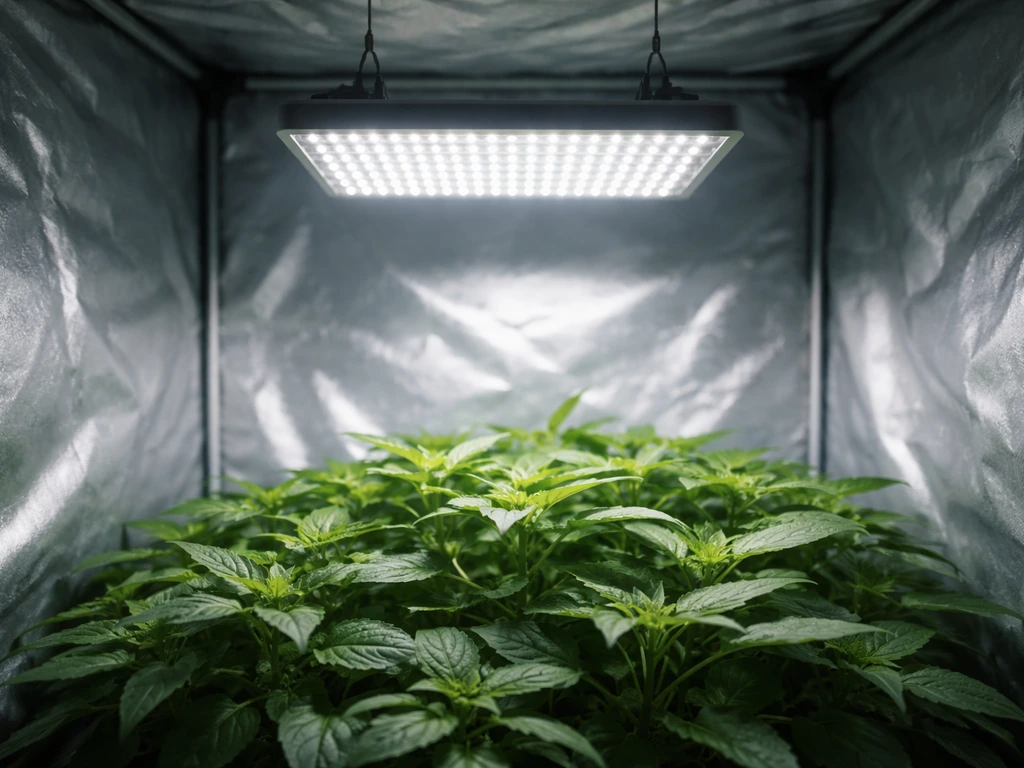
For a 2x2 to 2x4 foot space (seedlings, propagation, small veg tent), a well-built unit in the 100 to 200W range is typically sufficient, provided it's hitting 200 to 400 µmol/m²/s at canopy. For a standard 4x4 tent in veg, you're looking at 300 to 400W of quality LED to hit the 400 to 600 µmol/m²/s vegetative PPFD target consistently across the footprint. A 5x5 or larger space typically needs 500 to 600W or a multi-light configuration to cover it properly. If you're trying to push flowering crops or high-light leafy greens to 600 to 1,000 µmol/m²/s, the wattage requirements go up accordingly.
Matching the light to your specific grow setup
Small tents and seedling/propagation spaces
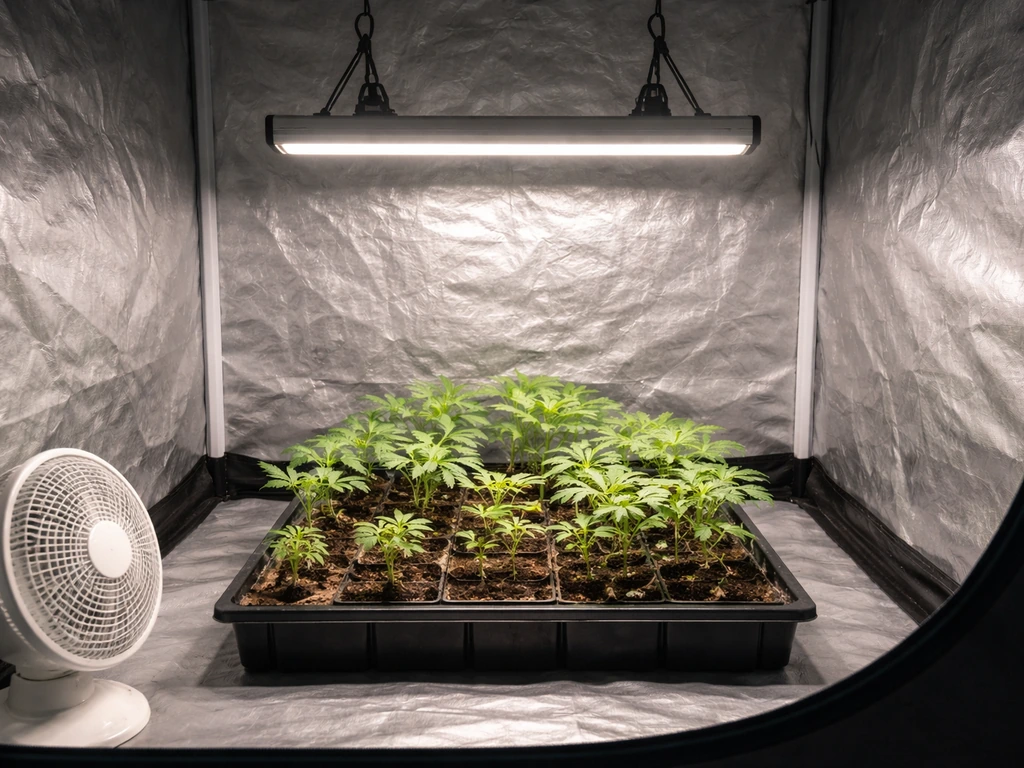
For seedlings and clones, target PPFD sits between 100 and 300 µmol/m²/s. A single compact panel or bar light in the 100 to 150W range with a 6500K or full-spectrum output is genuinely enough here. The blue-heavy 6500K character is actually ideal at this stage since compact, stocky seedlings are exactly what you want before transplanting. Keep the light dimmed or raised to stay in the lower end of the PPFD range until the plants are established.
4x4 tents in veg
A 4x4 is the most common hobby tent size, and it's where most people shopping for a "6500K grow light" end up. For vegetative growth in a 4x4, a quality single fixture in the 300 to 400W range should deliver the 400 to 600 µmol/m²/s target across most of the canopy if the PPFD map shows good uniformity. If you're deciding between wattage classes, the best 300 watt LED grow light options can cover a 4x4 in veg at moderate intensities, while stepping up delivers more headroom for light-hungry crops. The key is checking that the manufacturer's PPFD map at the 6500K spec was taken with a calibrated PAR sensor, not inferred from lumens.
Larger spaces and multi-light configurations
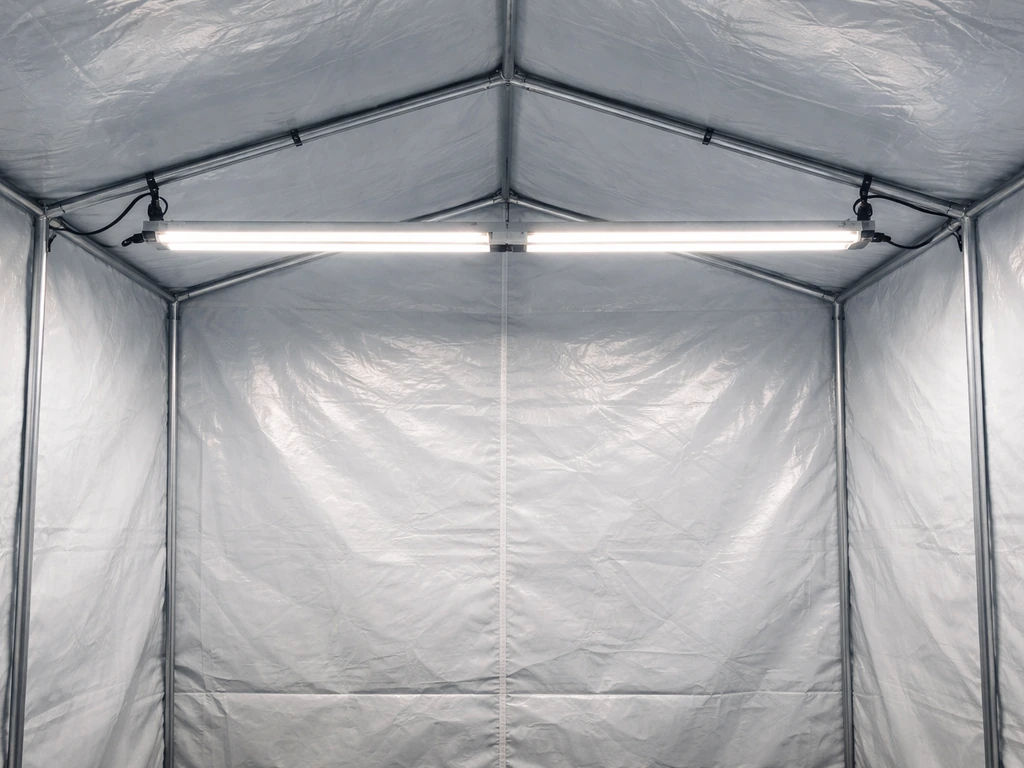
For 5x5 tents or larger, a single 6500K panel often struggles to maintain uniformity at the edges. A two-light configuration using two 300W or 400W bars positioned side by side gives you better uniformity than a single larger panel, because bar lights spread output more evenly along their length. If you're considering a single large fixture, the best 600 watt LED grow light class is worth comparing here, since some of those fixtures are explicitly designed for 5x5 and larger coverage. For 4x8 or 4x4 doubles, a pair of 500 watt LED grow light units often outperforms a single large fixture on uniformity.
Greenhouse supplemental lighting
If you're using a 6500K LED as a supplement to natural sunlight in a greenhouse, the math changes. You're not trying to replace the full solar spectrum, just boost DLI (daily light integral) during low-light periods or extend photoperiod. In this scenario, lower-wattage, high-efficacy bars positioned between rows to minimize shading are typically the right approach. The blue-heavy 6500K character complements natural daylight well during vegetative periods. Just make sure your fixtures are rated for the humidity and temperature swings that greenhouse environments produce.
Spectrum strategy: 6500K-only vs mixed spectrum
Here's where the real decision lives for most growers. A pure 6500K fixture works well for dedicated veg or seedling rooms where you don't need to push flowering performance. The blue-dominant output suppresses stretch, promotes compact foliage, and delivers solid PAR across the visible range. If your grow cycle stays entirely in the vegetative phase, or you're growing leafy greens and herbs that don't have a distinct "bloom" stage, a 6500K or similar cool white light can be your complete solution.
For flowering crops (cannabis, tomatoes, peppers, etc.), you'll want to blend in warmer spectrum either by switching to a full-spectrum or multi-channel fixture, or by adding dedicated red/660nm supplemental lights. A full-spectrum fixture typically combines 3000K to 4000K white LEDs with discrete red (660nm) and sometimes far-red (730nm) diodes. The practical result: you get broad coverage of the PAR window plus peak photosynthesis stimulation from the red bands. This is where 6500K-only setups fall short, because white phosphor-converted LEDs at 6500K have relatively weak output in the deep red compared with intentionally designed full-spectrum or red-supplemented fixtures.
A blended approach that many experienced growers use is running a 6500K or cool-white fixture as the primary veg/structural light and then adding a smaller warm-spectrum or red bar during flowering. This gives you flexibility without buying separate lights for each room. Some fixtures in the best 400 watt LED grow light category now include multi-channel dimming with separate veg (blue-white) and bloom (red) channels on the same fixture, which is a practical compromise if you want one light to do both jobs.
| Spectrum Type | Best For | Weakness | Typical Efficacy (µmol/J) |
|---|---|---|---|
| 6500K white only | Seedlings, clones, leafy greens, dedicated veg | Low in deep red, not ideal for bloom | 2.0 to 2.7 |
| Full-spectrum (3000-4000K + red) | Veg-to-flower crops, mixed use | Slightly less blue punch than pure 6500K | 2.3 to 2.9 |
| 6500K + supplemental red | Two-stage growers, flexible setups | Requires managing two light types | Combined 2.2 to 2.8 |
| Multi-channel dimmable (veg+bloom channels) | Single-room veg and flower cycles | Higher cost upfront | 2.4 to 3.0+ |
The recommendation: if you're only growing leafy greens, herbs, or dedicated veg, a quality 6500K fixture is genuinely the right tool. If you're running a full cycle from seed to harvest on flowering crops, invest in a full-spectrum or multi-channel fixture from the start rather than working around a 6500K-only setup during bloom.
Installation and setup: getting the most from your light
Mounting height and PPFD targeting
Mounting height is the primary control knob you have for adjusting PPFD at canopy without touching the dimmer. Moving a light from 24 inches to 18 inches roughly doubles the intensity (inverse square law). Most manufacturers publish PPFD maps at 18 and 24 inches, which gives you a practical range to work within. For vegetative growth, a target of 400 to 600 µmol/m²/s at canopy is a solid baseline. For seedlings, stay closer to 100 to 300 µmol/m²/s by raising the light or dimming it down. The right approach is to measure actual canopy PPFD with a PAR meter and adjust height accordingly, raising the light as plants grow to maintain consistent intensity rather than a fixed hanging position.
Dimming and ramp-up
If your fixture has a dimmer, use it. Starting seedlings or young transplants at 50 to 60% output and stepping up over a week or two prevents light stress and lets roots establish before the canopy has to process high photon loads. For veg, running at 75 to 85% of maximum output gives you a buffer while keeping efficacy high. Most quality LED drivers maintain good efficiency across a dimming range of 50 to 100%, so you're not sacrificing much µmol/J by running below maximum.
Spacing in multi-light layouts
When running multiple lights, spacing them evenly across the footprint is more important than centering them. Overlapping coverage zones from adjacent fixtures is actually a good thing for uniformity as long as you don't stack them so close that the center gets overdriven. A general rule is to space bar lights at approximately 12 to 16 inches apart for good U80 uniformity across a bench or bed. For panel lights, check the manufacturer's PPFD map to see how far the intensity drops at the edges and position fixtures so those edge values overlap with the adjacent fixture's center values.
Reflectors and room setup
White or Mylar-lined grow tents recapture escaped photons from the edges of your footprint and redirect them back to the canopy. This is not a small effect: in a properly lined 4x4 tent, edge and corner PPFD values can be 20 to 30% higher than in an open room with the same fixture. If you're growing in a bare room or greenhouse, reflective sidewalls or overhead reflectors on the fixtures themselves help recover light that would otherwise be lost. This is one of the cheapest performance upgrades available, and it costs almost nothing.
How to verify whether a manufacturer's claims are real
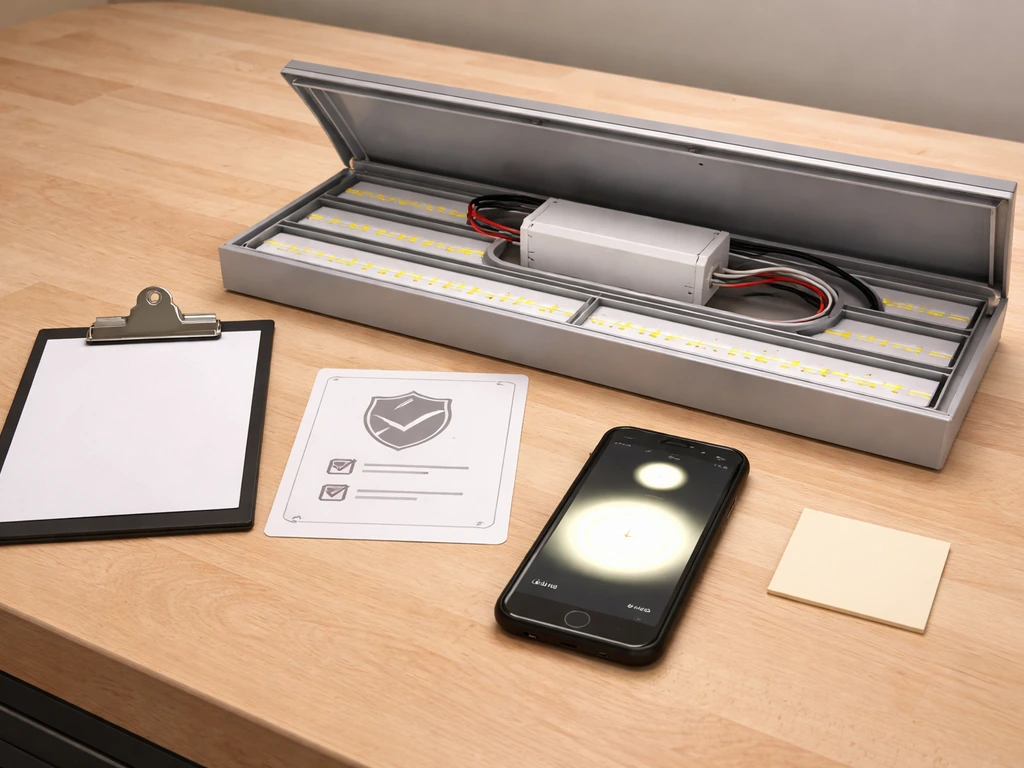
This is where a lot of shoppers get burned. The grow light market is full of wattage inflation, cherry-picked PPFD numbers, and lumen-based claims dressed up as PAR data. Here's how to filter out the noise: first, check whether the manufacturer provides PPFD maps measured at actual mounting heights, not just a single maximum center-point value. A legitimate PPFD map will show a grid of measurements across the footprint, ideally with uniformity data. If the only number you're given is "PPFD 1000 µmol/m²/s," that tells you nothing about what the rest of your canopy is getting.
Second, look for third-party tested or DLC-listed fixtures. The DesignLights Consortium horticultural framework requires reporting of PPF (total output in µmol/s), spectral quantum distribution (SQD), and photosynthetic photon intensity distribution (PPID) under standardized testing conditions tied to ANSI/IES LM-79. A fixture that's been through this process has had its actual photon output verified by an independent lab, not just by the manufacturer's own measurement setup. You can cross-reference fixtures on the DLC qualified product list for horticulture to confirm a fixture has real documented performance.
Third, be skeptical of efficacy claims above 3.5 µmol/J for fixtures under $300. The best commercial fixtures from leading brands are hitting 3.0 to 3.2 µmol/J in 2026. A budget bar light claiming 3.8 µmol/J without independent test data is almost certainly using marketing math rather than LM-79-style measurement. One useful sanity check: divide the claimed PPF (µmol/s) by the actual wattage draw (not the "equivalent" wattage). If the number is suspiciously high, ask for the test report.
It's also worth knowing that PAR meters used for DIY measurements need to be cosine-corrected to give accurate readings, especially at angles. A non-cosine-corrected sensor will underread at high angles and give you misleadingly low edge values. When comparing your own measurements to a manufacturer's map, make sure your instrument is calibrated appropriately, or at minimum use it consistently so relative comparisons between fixtures are valid.
Price tiers, reliability, and what's worth spending on
Budget tier: under $150
Budget 6500K LED grow lights in this range often use lower-bin Samsung or generic white LEDs with basic drivers. Efficacy typically sits between 1.8 and 2.2 µmol/J. They can work fine for seedlings, propagation trays, or small herb gardens where you don't need peak performance. The risks are less consistent PPFD output over time (LED degradation can be faster with cheap thermal management), limited or no dimming, and essentially no meaningful warranty support. Use these for low-stakes applications and don't expect them to replace dedicated veg or flower lighting.
Mid-range: $150 to $400
This is where most hobbyist purchases land, and where the value-to-performance curve is steepest right now. Quality mid-range fixtures are using Samsung LM301B or LM301H white LEDs with Meanwell or similar quality drivers, delivering 2.4 to 2.8 µmol/J and genuine PPFD maps with some third-party validation. Dimming is standard. Thermal design is typically adequate for long-term operation without significant lumen depreciation. If you're fitting out a 4x4 veg space or a dedicated leafy greens setup, this tier delivers real performance. Growers exploring this range might also compare options like the best 300W LED grow lights in this class, which represent a solid entry point with documented output specs.
Premium tier: $400 and up
Premium fixtures in this bracket are pushing 2.9 to 3.2+ µmol/J, often with multi-channel spectral control, full DLC listing, and genuine long-term support. If you're running a commercial leafy greens operation or a serious multi-tent hobby setup where lights run 16 to 18 hours a day, the investment pays back in energy savings and reduced replacement cycles. For UK-based growers evaluating premium options in this space, the best 600W LED grow light UK options are worth reviewing since voltage compatibility and warranty support differ by region. For very large-scale operations, the best 1500W LED grow light class becomes relevant when you're lighting commercial benches or multi-tier racks.
Warranty and safety: non-negotiables
A quality LED grow light should carry at least a 3-year warranty, with 5 years being the standard for reputable brands. Anything less suggests the manufacturer isn't confident in their driver and thermal design. On the safety side, look for UL, ETL, or CE certification for your region. Grow environments are humid, and a fixture without proper certification is a fire and shock risk. Also check that the driver is externally mounted or has adequate airflow, since driver heat is the primary cause of early LED system failure in enclosed fixtures. A well-designed fixture running at 25°C ambient should last 50,000+ hours with less than 10% lumen depreciation, which is roughly 8 to 10 years at 16 hours per day.
Your practical next steps
Start by defining your space size and crop type. If you're in a 4x4 tent growing leafy greens or running a dedicated veg room, a quality mid-range 6500K or cool-white LED in the 300 to 400W range with a published PPFD map is your target. If you're running full-cycle flowering crops, plan for a full-spectrum or multi-channel fixture instead, or budget for supplemental red from the start. Check the PPFD map at your intended hanging height, verify efficacy in µmol/J from the spec sheet, and cross-reference against DLC listings if the manufacturer provides that documentation. If you're scaling up and comparing multiple wattage classes side by side, the best 400 watt LED grow light and the broader wattage comparison guides on this site are good places to calibrate what you should expect from each tier. Match the light to your actual PPFD targets, not to a wattage number on the box, and you'll get consistent results.
FAQ
Does a higher 6500K number (like 7000K) make plants grow better?
No. 6500K describes the white-light color (blue to blue-green dominance), not total output. Two “6500K” fixtures can differ a lot in PPFD and uniformity, so you still need PPF, efficacy (µmol/J), and a canopy PPFD map at your planned hanging height.
If I switch from 6500K to a cooler 7000K light, what changes should I expect?
Often it increases compactness slightly, but past the 6500K “daylight” range you can end up with different phosphor mixes and a weaker deep-red portion. For most growers, the bigger win comes from matching PPFD and uniformity, not chasing a Kelvin number.
When can I use a 6500K light as my only grow light, and when should I supplement?
For leafy greens and vegetative stages, 6500K can be your main light, but you should still watch DLI. If your photoperiod or PPFD is too low, plants will stall even with the “right” spectrum. Use your PPFD map to hit a target DLI for your crop rather than assuming Kelvin alone is enough.
How do I confirm the light intensity at my canopy is actually what the PPFD map claims?
Use the manufacturer’s PPFD map first, then verify with a PAR meter if possible. If you measure, confirm your sensor is cosine-corrected and that you measure at the same canopy height and at multiple points (center and corners). Otherwise, your “it matches the map” assumption can be misleading.
Why does my “high lumen” 6500K grow light not seem as strong as expected?
Don’t. Lumens relate to human vision and can look impressive even when photon output is mediocre. Always prioritize PPF (µmol/s), efficacy (µmol/J), and the PPFD map across the footprint.
What’s the biggest red flag on a grow light spec sheet besides wattage?
Check whether the PPFD map shows multiple heights and includes grid spacing and uniformity. A fixture that only gives a single center value may underdeliver at the edges, causing uneven growth and a “healthy center, struggling corners” pattern.
Can I use the dimmer on a 6500K LED to replace raising and lowering the light?
Usually yes, if you keep dimming within the driver’s intended range and re-check PPFD after changes. Start seedlings at lower output and ramp gradually, but don’t set a fixed percent without validating intensity, because dimmers and optical designs can change the real PPFD curve.
How quickly do 6500K grow lights lose performance, and what should I look for?
It depends on driver quality and thermal design. A fixture can lose output over time, and cheap thermal management often accelerates degradation. If you have long daily runtimes, favor brands with clear warranty length and published performance data rather than the highest marketed µmol/J.
What should I troubleshoot if my seedlings are stretching under a 6500K light?
If your plants show stretched stems while the rest looks fine, that can be spectrum plus intensity. First verify canopy PPFD and uniformity, then reduce height or increase output within your target range. If stretch persists even at correct PPFD, you may need more red or a multi-channel fixture depending on crop stage.
How should I arrange two 6500K lights so coverage is even across the tent?
For multiple fixtures, avoid “guessing” with equal spacing unless you check overlap. You want overlapping zones that raise edge coverage without creating strong center overdriving. The practical approach is to use the PPFD map at your exact height and plan layout so U80 uniformity is high across the used footprint.
Will Mylar-lined tents change the PPFD enough that I need to retune my light settings?
Yes, and it’s often beneficial for uniformity, but it changes effective output. Reflective tents increase edge PPFD compared to open rooms, so you should redo your canopy intensity check after moving into a tent and before locking in your dimmer setting.
Is more PPFD always better for vegetative growth under 6500K?
Not automatically. Overdriving a canopy can slow growth or cause stress, especially for seedlings and clones. Use your target PPFD range for the stage, then use the dimmer or mounting height to stay inside that band rather than aiming for maximum center brightness.
How do I use a 6500K grow light as a supplement in a greenhouse without overdoing it?
For greenhouse use, your job is to boost DLI during low-sun periods or extend photoperiod, not to replace full sunlight. Place bars to reduce shading between rows, and watch for temperature and humidity effects on fixture life since greenhouse conditions can run hotter and wetter.
What warranty and safety details matter most when buying a 6500K LED grow light?
Look for a warranty that matches usage intensity (often 3 years minimum, longer for premium brands) and confirm electrical safety certifications for your region. Also check whether the driver is designed for enclosure placement or if it relies on external airflow, because trapped heat is a common failure cause.
Can I use a 6500K fixture for flowering if I add a red supplement bar?
If the fixture has separate veg and bloom channels, you can sometimes keep the 6500K channel as your structural light and add a red channel during flowering. If it does not, adding an external red bar can be a cost-effective workaround, but you still need to validate that your total PPFD and uniformity remain on target.
Next Articles
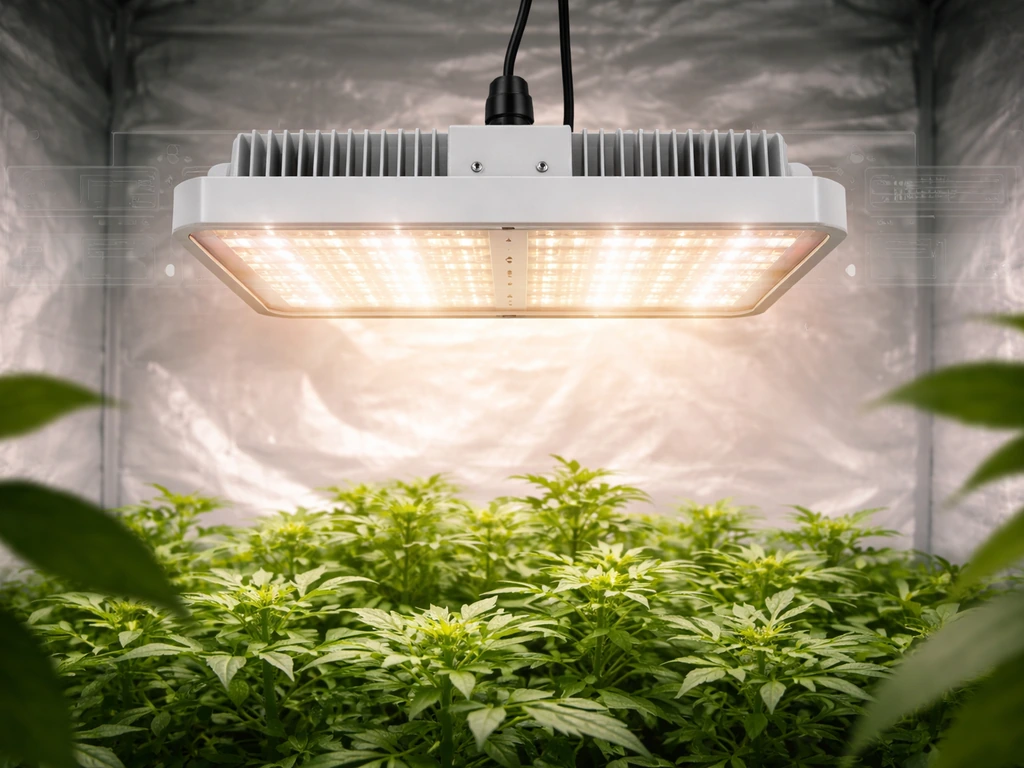
Best 400 Watt LED Grow Light: Top Picks and Buying Guide
Top 400W LED grow lights picked by PPF, spectrum, coverage, drivers, dimming, and heat with setup tips and checklist.
Best 600 Watt LED Grow Light: Buyer Guide and Setup Tips
Compare the best 600W LED grow lights by true power, PPFD coverage, spectra, dimming, and setup height for your tent.
Best 1000 Watt LED Grow Light Guide: Coverage, PPFD, Setup
Choose the best 1000W LED grow light with PPFD, true coverage, setup height, and buying tips for your tent size