The highest-yielding LED grow light is not the one with the biggest wattage number on the box. It is the one that delivers the right amount of photons, at the right spectrum, evenly across your entire canopy, night after night without cooking your plants or your electricity bill. If you want a direct answer: a well-spec'd quantum board or bar-style fixture running around 2.7–3.0 µmol/J efficacy, with a full-spectrum output tuned for your crop stage, and a PPFD map showing a uniformity ratio above 0.85 across your target footprint is what "high yield" actually looks like in hardware terms. The rest of this guide explains exactly how to pick, size, install, and verify one for your specific setup.
Best LED Grow Lights for High Yield: Buyer Guide
Marcus Rutherford
11 Apr 2026
What "highest-yielding" really depends on
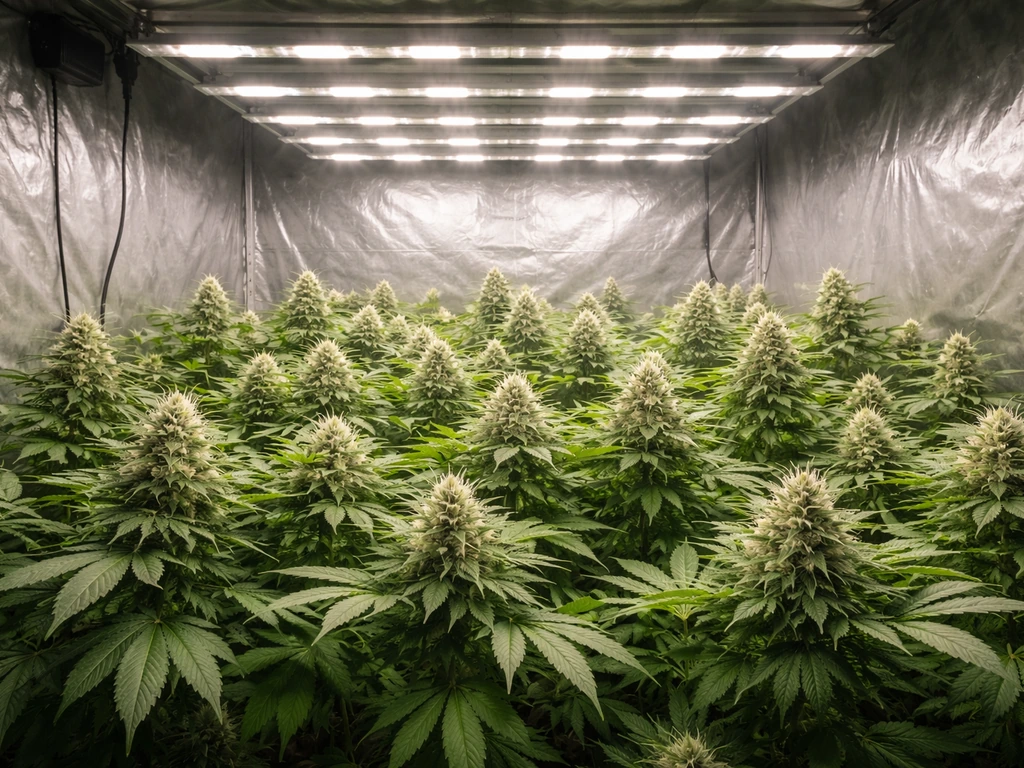
Yield is not a light feature. It is a plant response to how much usable light actually lands on the canopy over the course of a day. The three numbers that drive that response are PPFD (photosynthetic photon flux density, measured in µmol/m²/s at canopy level), DLI (daily light integral, which is essentially PPFD multiplied by hours of photoperiod, expressed as mol/m²/day), and spectrum (which wavelengths those photons are). Marketing wattage tells you about electricity consumption, not about any of those three things.
Research makes the intensity relationship concrete: a controlled-environment cannabis study found that increasing canopy PPFD from 900 µmol/m²/s (DLI 38.87 mol/m²/day) to 1300 µmol/m²/s (DLI 56.16 mol/m²/day) produced the greatest inflorescence and cannabinoid yield measured in the study. That is a roughly 44% jump in photon delivery driving a measurable yield difference. The takeaway is not "crank it to 1300 always", it is that delivered PPFD and its daily accumulation (DLI) are the actual levers you are pulling, and understanding how effective LED grow lights really are at delivering those numbers is what separates a high-yield setup from an average one.
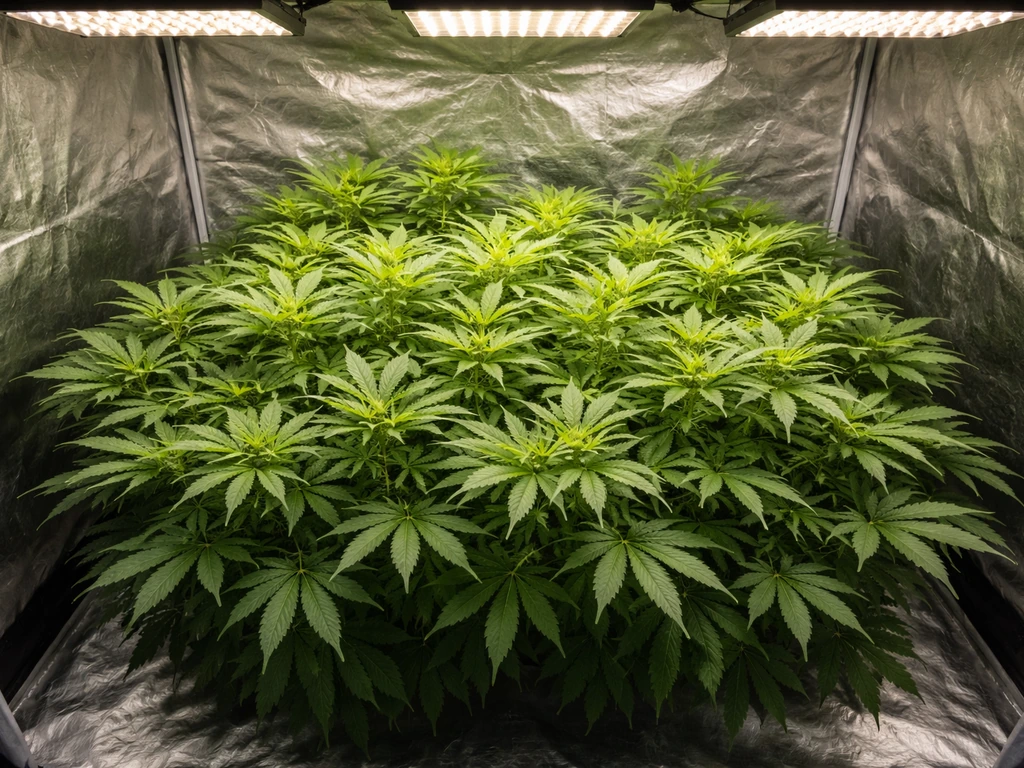
Coverage and uniformity are just as important as peak output. A fixture that hits 2000 µmol/m²/s in the center of a 4x4 tent while the corners sit at 400 µmol/m²/s is not a high-yield light for a 4x4 tent. Those corner plants will be the bottleneck on your harvest. DOE spatial uniformity data shows that "hot spots" and under-lit zones are diagnosed numerically from PPFD maps, and one analysis found that only about 40% of the canopy in a sample setup fell within a ±5% uniformity tolerance when using a fixture with poor optical design. Peak PPFD claims without uniformity data are nearly meaningless for practical yield planning.
Key specs to compare when shopping
The DOE and DesignLights Consortium (DLC) are clear about the correct measurable dimensions for horticultural LEDs: PPF (total photon output of the fixture), PPFD (photon density at canopy), uniformity, spectrum, efficacy, and how the fixture is sized relative to its target area. Lumens, watts, and color temperature are not on that list for a reason. Here is what those specs actually mean when you are reading a product page.
| Spec | What It Measures | What to Look For |
|---|---|---|
| PPF (µmol/s) | Total photons emitted per second by the fixture | Higher is better; compare fixtures of similar wattage |
| PPFD (µmol/m²/s) | Photon density at canopy at a given height | Demand a full map, not just peak; avg 800–1200 for most crops in flower |
| Efficacy (µmol/J) | How efficiently watts become photons | 2.5 µmol/J is decent; 2.7–3.0+ is current high-end |
| Uniformity ratio (min/avg PPFD) | How evenly light is distributed across footprint | Target ≥ 0.85 to avoid uneven canopy growth |
| DLI (mol/m²/day) | Daily photon dose (PPFD × photoperiod in seconds) | Match to crop: ~20–30 for leafy greens, 40–60 for fruiting/flowering |
| Spectrum | Wavelength distribution of emitted light | Full-spectrum (white + red) with tunable far-red for flowering |
| Driver quality | Controls power delivery, efficiency, and dimming | Meanwell or equivalent; IP65+ for humidity; 0–10V or PWM dimming |
The DLC Horticultural program requires efficacy to be reported using the ANSI/IES LM-79 framework, expressed in µmol/J. When a vendor publishes a DLC listing, those efficacy numbers have been third-party tested. When a vendor only quotes watts and lumen output, you should ask why they are not publishing photon flux data. Efficacy above 2.7 µmol/J is widely achievable with modern Samsung LM301B/H or Osram diodes, and several bar-style fixtures are now clearing 3.0 µmol/J. Anything below 2.0 µmol/J in 2026 is inefficient hardware.
Dimming capability matters more than many buyers realize. A fixture that can dim to 50% or lower gives you control over DLI during seedling and veg stages without changing photoperiod, and it protects plants from light stress during hot weather. If you want to explore the best options with built-in control flexibility, check out the top-rated dimmable LED grow lights worth considering for any high-yield setup.
Choosing the right light for your grow space
4x4 tents (the most common home setup)
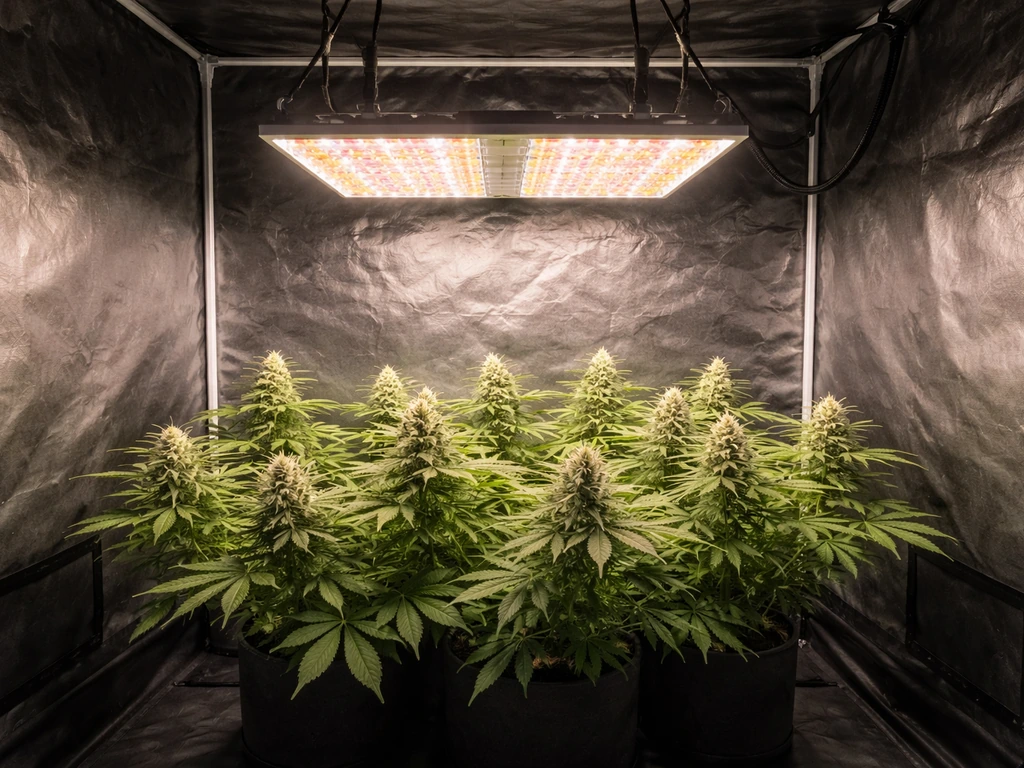
A 4x4 tent covers 16 square feet. For a high-yield flowering setup, you want average canopy PPFD in the 900–1200 µmol/m²/s range, which means you need a fixture delivering roughly 600–800W of actual draw (not "equivalent" watts) at the efficiency levels of current hardware. One popular benchmark is the Mars Hydro FC-6500 EVO, which the manufacturer claims can hit 2117 µmol/m²/s at peak output. That peak number is impressive but only matters if the PPFD map shows even distribution.
Independent PAR testing of the FC-6500 at 41. 5 cm (16. 5 inches) above a test area reported a maximum PPFD of around 1000 µmol/m²/s at that specific height, which is a more grounded figure for realistic 4x4 tent planning. The published 4x4 PAR maps for this fixture do show readings over 1000 PPFD at appropriate heights, which confirms it is a legitimate high-yield candidate for that footprint.
The rule of thumb for evaluating any fixture: look at the PPFD map, not just the peak spec, and check that the edge readings are within 10–20% of the center. That "light fade" figure tells you whether coverage is real.
5x5 and larger tents
A 5x5 adds 9 square feet compared to a 4x4, which changes the math considerably. Most single-fixture designs that are ideal for a 4x4 will underperform at the edges of a 5x5 unless they are purpose-built for that coverage area. The better approach is either one large bar-array fixture rated for 5x5 or two smaller units positioned to overlap coverage. Bar-style fixtures (multi-bar quantum board arrays) tend to have better uniformity over large areas than single-panel designs because the distributed light source reduces the center-hot-spot problem.
Commercial and multi-light rooms
At commercial scale, the calculation flips: you are buying efficacy by the µmol/J and uniformity by the meter, not worrying about whether one light fits a tent. USDA ARS research on non-planar LED arrangements showed that optimized fixture layout increased average PPFD and improved uniformity at canopy level, which means how you arrange multiple fixtures matters as much as which fixture you buy. At this scale, get PPFD mapping done before committing to a layout. Professional cultivation benchmarks recommend achieving at least 75–80% uniformity at canopy level as a procurement standard, and that threshold only comes from proper fixture spacing and row offsets, not just from buying expensive hardware.
Spectrum and control features that affect yield
Spectrum is not just a marketing checkbox. Research comparing different LED spectral compositions on lettuce found that spectral composition altered physiological and morphological responses even under equivalent PPFD levels. A broader review of horticultural crop studies confirmed that both light quantity and light quality jointly affect yield outcomes, meaning you cannot just pile on photons with a narrow spectrum and expect the same results as a full-spectrum fixture at the same PPFD.
For practical purposes, here is how spectrum breaks down for yield: broad-spectrum white LEDs (3000K–4000K phosphor-converted) combined with deep red (660nm) coverage give you a solid baseline for almost all crops. Far-red (720–740nm) supplementation during flowering triggers shade-avoidance responses and Emerson enhancement, which can measurably increase internodal stretch and flower development rate. UV (280–400nm) in small doses promotes terpene and secondary metabolite production. Blue (400–500nm) is critical for vegetative structure and prevents excessive stretching. If you are growing a specialty crop and want to dial in specific spectral responses, look into what a targeted supplemental LED grow light can add on top of your primary fixture.
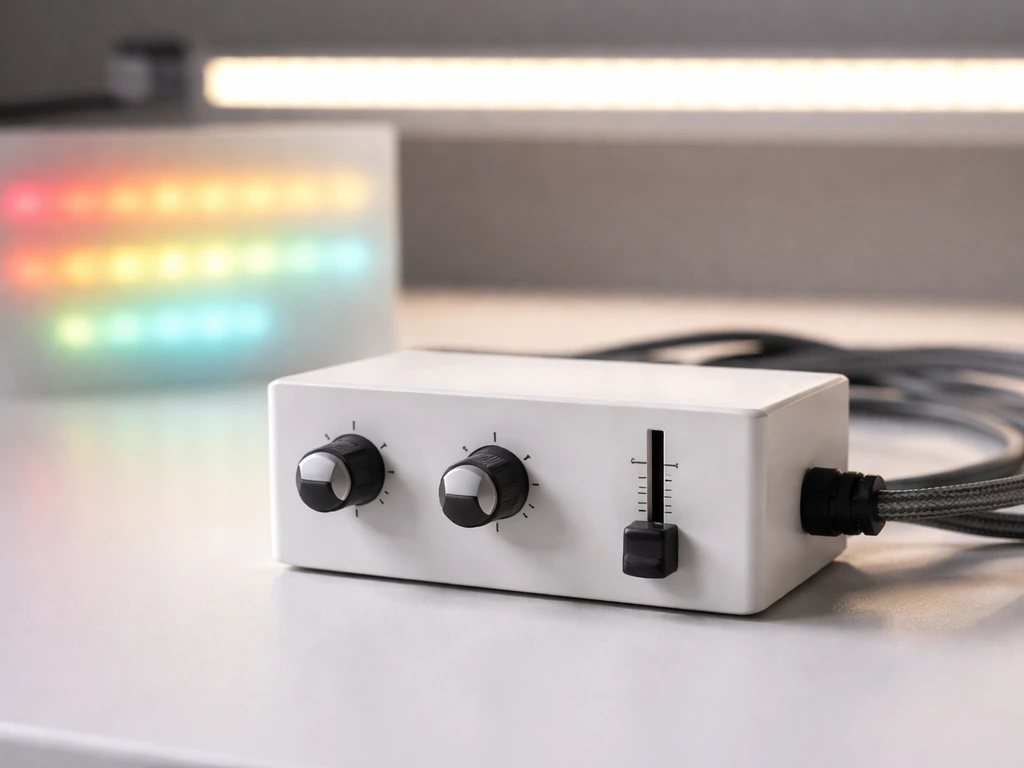
Control features worth paying for: 0–10V or PWM dimming (ideally down to 10% or lower), daisy-chain connectivity for multi-fixture rooms, and programmable sunrise/sunset ramp if your driver supports it. Spectrum control (switching between veg and bloom modes, or full RGB channel control) is a genuine advantage for experienced growers who want to match spectrum to growth stage. For most home growers, a fixed full-spectrum fixture with good dimming is sufficient, the spectrum rabbit hole is deep and the yield gains from stage-specific tuning, while real, are incremental compared to simply hitting your PPFD and DLI targets consistently.
Best options by use case
Rather than a ranked list that will be outdated in six months, here is how to match fixture type to your situation. The grow light market in 2026 has converged around a few reliable form factors, and knowing which one fits your use case is more durable advice than any specific model recommendation.
| Use Case | Best Form Factor | Target Efficacy | Rough Power Draw | Notes |
|---|---|---|---|---|
| 2x2 / 2x4 veg or small grow | Single quantum board panel | ≥2.5 µmol/J | 100–200W | Budget options genuinely compete here; heat is low |
| 4x4 tent flowering | Large quantum board or 6-bar array | ≥2.7 µmol/J | 600–700W | Demand a published PPFD map for the 4x4 footprint |
| 5x5 tent flowering | 8-bar or commercial bar fixture | ≥2.7 µmol/J | 700–900W | Single fixture preferred; verify edge PPFD |
| Linear rows / shelving | LED strip arrays or tube fixtures | ≥2.0 µmol/J | 20–60W per strip | Uniformity is excellent; best for greens and herbs |
| Commercial room / multi-light | High-PPF bar fixtures in grid layout | ≥2.8 µmol/J | 600–1000W per fixture | Layout design matters as much as fixture spec |
| Supplemental lighting | Strip, bar, or side-lighting panels | Flexible | 50–200W | Adds DLI and improves canopy penetration |
For strip-based setups (shelving units, propagation racks, microgreens), the form factor itself drives uniformity because the distributed linear source eliminates center hot spots. If this is your use case, the best LED grow light strips available today are genuinely capable of supporting high-yield propagation and leafy-green production at a fraction of the cost of panel fixtures.
If you are growing strawberries, fruiting crops, or any plant with a specific photoperiod sensitivity, spectrum and DLI matter more than in leafy-green cultivation. The best LED grow lights for strawberries guide goes into that crop-specific detail if you are working with fruiting plants rather than cannabis or greens.
Community resources can also be useful for finding real grower feedback on specific fixtures. Forums like Rollitup have extensive threads comparing light performance across grow cycles, and the discussion around the best LED grow lights on Rollitup reflects genuine field testing rather than spec-sheet comparisons, which is worth reading alongside manufacturer data.
How to install and position LEDs for maximum yield
Installation height is the first variable you control after buying a fixture. Lower height increases PPFD at canopy but reduces coverage area and worsens uniformity (the center-edge gradient gets steeper). Higher height spreads light more evenly but reduces delivered PPFD. The right height for your fixture is wherever the PPFD map shows your target average PPFD with a uniformity ratio at or above 0.85 (min/avg PPFD). Most bar-style fixtures for 4x4 tents hit that balance somewhere between 18 and 30 inches above canopy, but look up your specific fixture's published maps because this varies significantly.
For multi-fixture rooms, stagger your fixture rows rather than aligning them in a grid directly above each plant row. Research on non-planar and offset LED arrangements (from USDA ARS) shows that overlapping light cones from adjacent fixtures fill in the uniformity gaps that aligned grid layouts create. The practical version of this: if you are running two fixtures in a 4x8 tent, offset them slightly from center rather than placing each directly over one half of the tent.
Reflective surfaces matter more than most growers account for. White Mylar or flat-white paint on tent walls can recover 10–20% of peripheral photons that would otherwise be wasted. In a 4x4 tent with a decent fixture, this can meaningfully lift the edge PPFD without changing the light or its position. Seal light leaks, especially if you are running light-sensitive photoperiod crops.
Heat management during installation: LED drivers generate heat even if the diodes themselves run cooler than HPS. Mount drivers outside the tent or ensure adequate airflow around them. A driver running hot throttles output and shortens lifespan. If your fixture runs noticeably warm to the touch on the driver housing, add a small exhaust fan or relocate the driver outside the tent wall.
How to validate and dial in performance
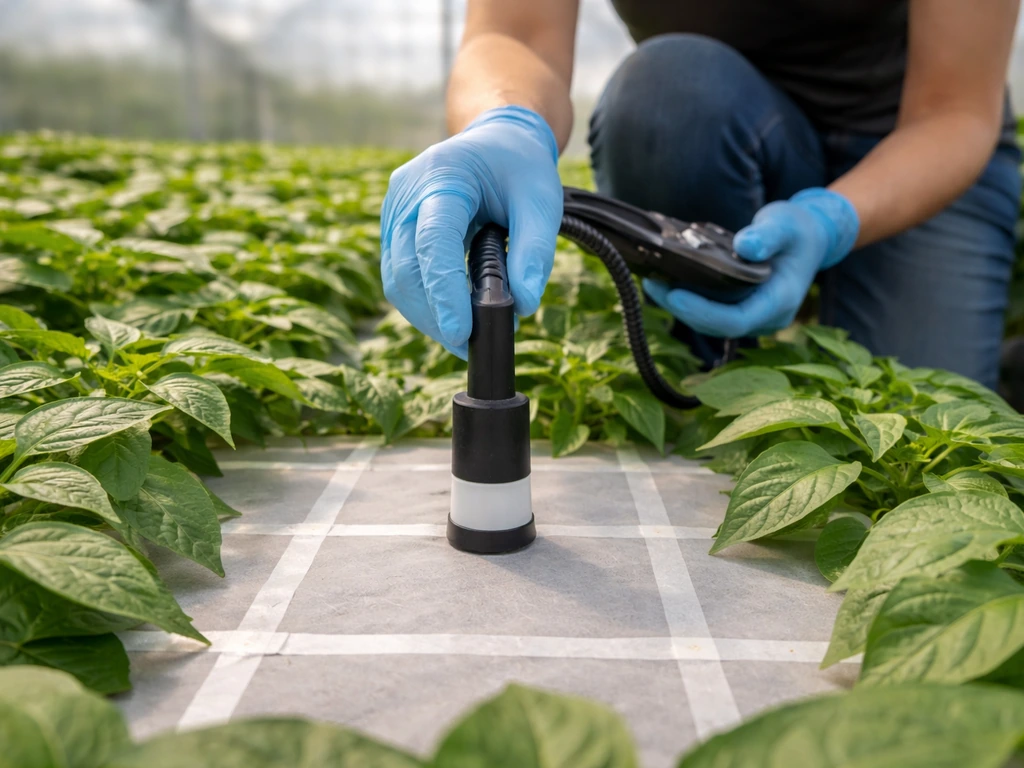
Do not trust your eyes for PPFD. Human vision is poorly calibrated for PAR wavelengths, and a light that looks bright may be delivering far less usable photon energy than a fixture that looks dimmer but has better spectral efficiency. A PAR meter (quantum sensor) is the only way to know what your canopy is actually receiving. Entry-level options like the Apogee MQ-500 or the Photobio sensor run $250–$350 and will pay for themselves on your first full grow cycle by telling you exactly where to position the light.
To do a proper PPFD check: take measurements at canopy height in a grid pattern (minimum 9 points for a 4x4, ideally 25), then calculate the average and the min/avg ratio. If your ratio is below 0.75, you have a uniformity problem that will show up as uneven canopy development. If your average PPFD is below your target for the growth stage, either lower the fixture (if uniformity allows), increase dimmer output, or add a supplemental light source.
DLI calculation is straightforward once you have your average PPFD: multiply it by the photoperiod in seconds, then divide by one million. The daily light integral (DLI) is commonly calculated from constant PPFD using the standard relationship DLI (mol/m²/day) = 3. 6×10⁻³ × PPFD × light-hours [DLI = 3. 6×10⁻³ × PPFD × light-hours](https://en.
wikipedia. org/wiki/Dailylightintegral). For example, 900 µmol/m²/s over an 18-hour photoperiod gives you (900 × 18 × 3600) / 1,000,000 = 58. 3 mol/m²/day.
That is aggressive for most crops but within range for high-PPFD cannabis in flower. For leafy greens, you are typically targeting 17–25 mol/m²/day, which you can hit with much lower PPFD or shorter photoperiods. Research on indoor iceberg lettuce demonstrated exactly this approach: PPFD and photoperiod are adjusted together to hit a stage-specific DLI target, not just set-and-forget.
Common mistakes to avoid once everything is running:
- Running fixtures at 100% from day one: seedlings and young transplants need 200–400 µmol/m²/s, not 1000+. Use the dimmer and ramp up over 2–3 weeks.
- Ignoring VPD when increasing light intensity: higher PPFD drives higher transpiration, which means your humidity and temperature targets shift. Check your VPD chart when you increase light output.
- Accepting vendor PPFD "up to" claims without maps: peak PPFD measured at the center point directly under the fixture at 6 inches tells you nothing useful about 4x4 coverage. Demand average PPFD and uniformity data.
- Chasing wattage instead of efficacy: a 1000W fixture at 2.0 µmol/J delivers fewer photons per dollar of electricity than a 600W fixture at 2.8 µmol/J, and runs hotter besides.
- Skipping the PPFD check after repositioning: every time you change fixture height or add a fixture, re-measure. Overlap patterns and reflection changes can shift your actual delivered PPFD meaningfully.
The goal of all this measurement and tuning is simple: you want every plant in your canopy receiving enough photons every day, consistently, from seedling through harvest. Quantitative light management through PPFD and DLI is the foundation of any high-yield indoor setup, and the fixture you buy is just the starting point. Get the numbers right, verify them with a PAR meter, and adjust from there. That is how you actually get the yield the marketing promises.
FAQ
What’s the best way to tell if a light’s PPFD is actually uniform for my tent size?
A fixture that is “strong in the middle” can still be the wrong buy if your plants are the ones living in the corners. Use the vendor PPFD map (or better, measure) and reject lights where edge readings are far below center, since those under-lit zones become the harvest bottleneck.
Do I measure PPFD at the hanging height or at plant canopy level?
For PAR verification, you want readings taken at true canopy height, not the hanging height or a mid-air distance. If your canopy height changes during growth, re-measure after major height shifts, otherwise your calculated DLI will drift even if the light stays the same.
My PPFD map looks uneven, what should I adjust first before buying another light?
If your measured uniformity is low, the fastest fixes are mechanical, not purchasing new hardware. Lower height (to increase center overlap) helps some issues but can worsen edge fade, so the best approach is to adjust height and dimming together, then re-check min/avg.
Can I have good PPFD but still miss “high yield” goals?
PPFD can be fine and still result in poor yield if your photoperiod and total daily photons are off. DLI ties the day length to PPFD, so confirm both, especially if you changed timers, reduced ramping, or run different schedules by stage.
When I dim a high-end LED, will the PPFD and spectrum stay consistent?
Dimming impacts both photon delivery and the spectrum delivered by your specific driver and diode mix. If the vendor does not provide a dimming PPFD curve or PPFD maps at common dim levels, measure at the dim setting you plan to run.
How can heat from the driver affect long-term output and yield?
Yes, because drivers can become a limiting factor when they run hot, which may reduce output over time. If the driver housing is noticeably warm and output is dropping during a long run, improve airflow or relocate the driver outside the tent, then re-check PPFD.
Is upgrading to Mylar or white paint worth it if I already bought a good LED?
Reflective materials mainly help with the “wasted light” that otherwise bounces into the room. If your tent is already optimized and sealed, the biggest gains usually come from fixture spacing and height, but adding reflective walls can still improve edge PPFD by recovering peripheral photons.
Do I really need to stagger multiple lights, or can I place them in a grid?
Staggering helps because overlapping light cones fill gaps that a straight grid leaves. In practice, offsetting by a small fraction of bar length (and not placing fixtures perfectly centered over plant rows) often improves min/avg uniformity without changing total lamp count.
If only the edges lag, what else besides the light could be causing it?
Corners can be the limiting factor, but the cause may be height, fixture spacing, or even airflow and canopy thickness. After you confirm PPFD, also check canopy-level temperature and leaf density, since plants that are even slightly light-stressed often show slower growth and later canopy closure.
Why can PAR meter readings differ between sensors or between measuring attempts?
Yes, especially with photosensors that are not perfectly calibrated for horticultural spectra or when the sensor is misoriented. Use the same sensor position and orientation across all points, and avoid measuring during times when the canopy is being shaded by moving leaves.
How many measurement points do I need for a reliable min/avg uniformity calculation?
A quick rule is to measure using enough points to confidently capture the worst-case area. For a 4x4, that means at least a 3x3 style grid is a minimum, and 5x5 is better, since min/avg is very sensitive to whether you actually sampled the low corner zones.
What’s the best way to manage PPFD and DLI across veg to flower transitions?
For stage changes, the safest method is to lock your target DLI range and adjust PPFD using dimming and height, then re-measure. A fixed “set and forget” PPFD often fails when you thin the canopy in veg, then thicken it in flower, changing what the sensor sees.
How should I compare two lights if one has better efficiency but worse uniformity on paper?
Your electricity cost is driven by actual draw (watts), but yield is driven by delivered photons (PPFD and DLI). The “best led grow lights for high yield” choice is the one that gives the required uniformity and DLI at the lowest real watt draw, so compare µmol/J along with uniformity targets.
What should I do if the light looks bright in the tent but my PPFD meter says it’s under target?
If the light looks bright but PPFD is low, it often means poor photon efficiency for your spectrum, incorrect assumptions about distance, or uneven distribution. A PAR meter is the tie-breaker, especially when mixing different diode channels and when running at very low or very high dim settings.
If I hit the PPFD/DLI numbers, why might yield still be low?
Start by correcting the light first, then ensure the “light-response” bottlenecks are not limiting. If your DLI is on target but growth is still uneven, verify irrigation, nutrients, and canopy management, since nutrients and water can create uneven uptake that looks like a light problem.
Next Articles
Best Supplemental LED Grow Light: How to Choose the Right One
Choose the best supplemental LED grow light with coverage, PPFD targets, spectrum, efficiency, mounting and a shopping c
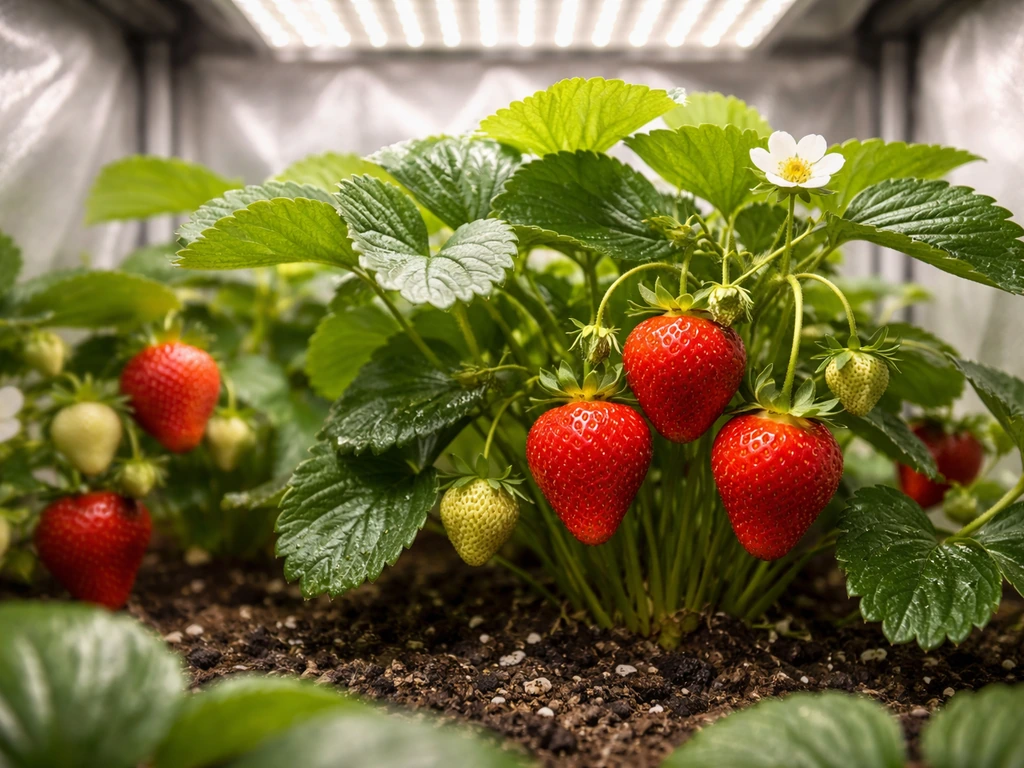
Best LED Grow Lights for Strawberries: Buy Guide
Choose the best LED grow lights for strawberries with coverage, intensity, spectrum, spacing, and setup tips to boost fr
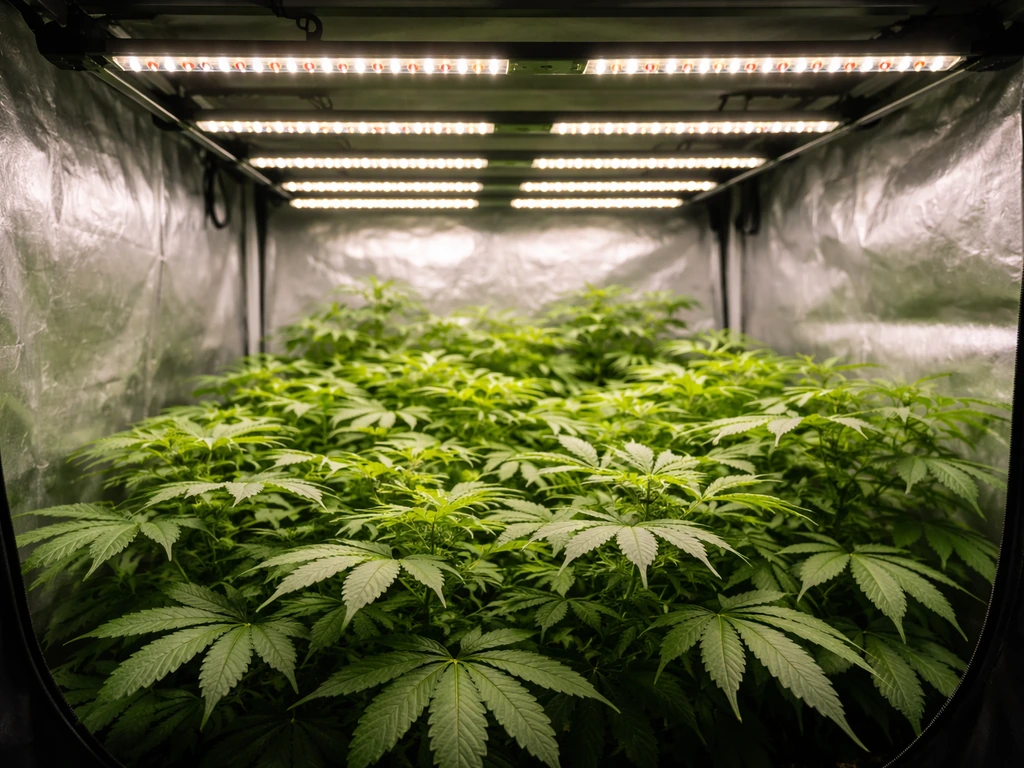
Best LED Grow Light Strips: Buyer’s Guide for Full Spectrum
Buyer guide to the best LED grow light strips, with full spectrum checks, sizing, setup, safety, and setup tips.