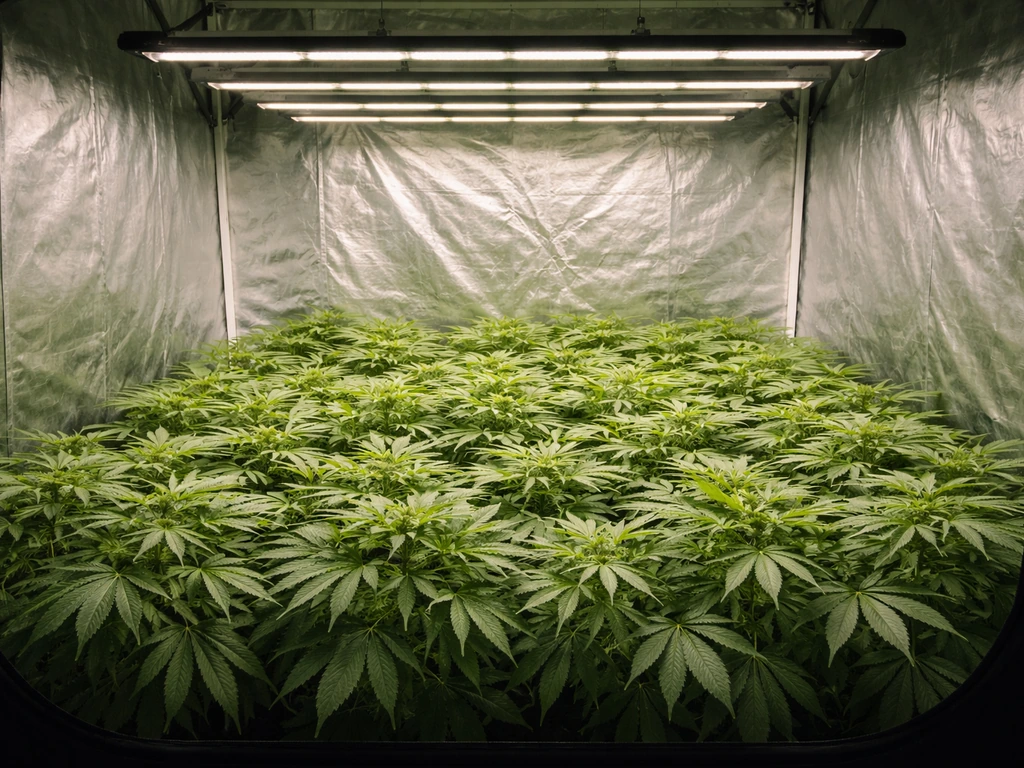
Not every strain performs equally under LEDs, and that gap matters more than most growers expect. Some genetics that thrive under HPS struggle under the tight, full-spectrum output of a modern LED, showing excessive stretch, slow flowering, or light stress at canopy. Others absolutely love it. Picking the right strain for your LED setup is just as important as dialing in your PPFD or getting your mounting height right, and if you get both sides of that equation correct, the results are genuinely impressive.
Best Strains for LED Grow: Pick by Goal and Space
Marcus Rutherford
18 Apr 2026
How to pick LED-friendly strains for your setup
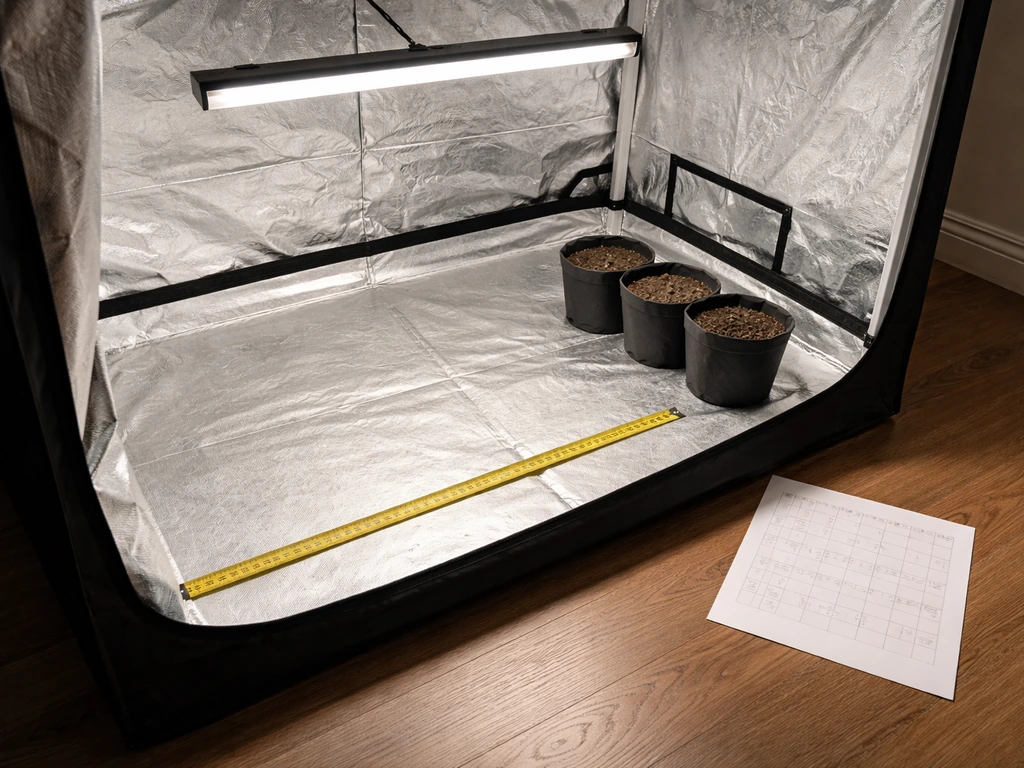
Before you pick a strain, lock down three things: your tent size, your grow stage priority (veg, flower, or both in a perpetual setup), and your primary goal. Those three variables filter out more candidates than any marketing copy will.
In a 4x4 tent, which is the most common footprint among home growers, you're working with roughly 16 square feet of canopy. A quality LED in that space should be delivering 500 to 1000 µmol/m²/s PPFD across that footprint at canopy height, with a max reading around 950 to 1000 µmol/m²/s when properly calibrated.
If you also want to know what to buy, your starting point is matching LED drivers, wattage, and output to your grow space and target PPFD what leds to use for grow light. That intensity range rewards strains with moderate to compact internodal spacing. Very stretchy sativas or lanky equatorial genetics will race toward the light, create an uneven canopy, and force you to constantly adjust your fixture height just to keep pace.
For veg-focused grows, you want strains with predictable, manageable growth rates so you can actually use the full PPFD output without constantly fighting overgrowth. For flowering, dense-budding photoperiod indicas and indica-dominant hybrids tend to respond best to the full-spectrum output of modern LEDs because they pack tighter internodal sites that soak up photons evenly. If you're running a perpetual setup with separate veg and flower tents, you have more flexibility to match strains to each chamber's intensity.
Also think about your ceiling height. LEDs obey the blank" rel="noopener noreferrer">inverse-square law hard: doubling your distance from the fixture to the canopy cuts PPFD by roughly four times. In a tent with a low ceiling, a tall-stretching strain will close that distance fast, especially during the first two to three weeks of flower when plants can push four to six inches of vertical growth per week. That's not a hypothetical. That's a real problem that can burn your tops and waste your lower canopy.
Best LED strains for beginners vs intermediate growers
Beginner picks: reliability and forgiveness first
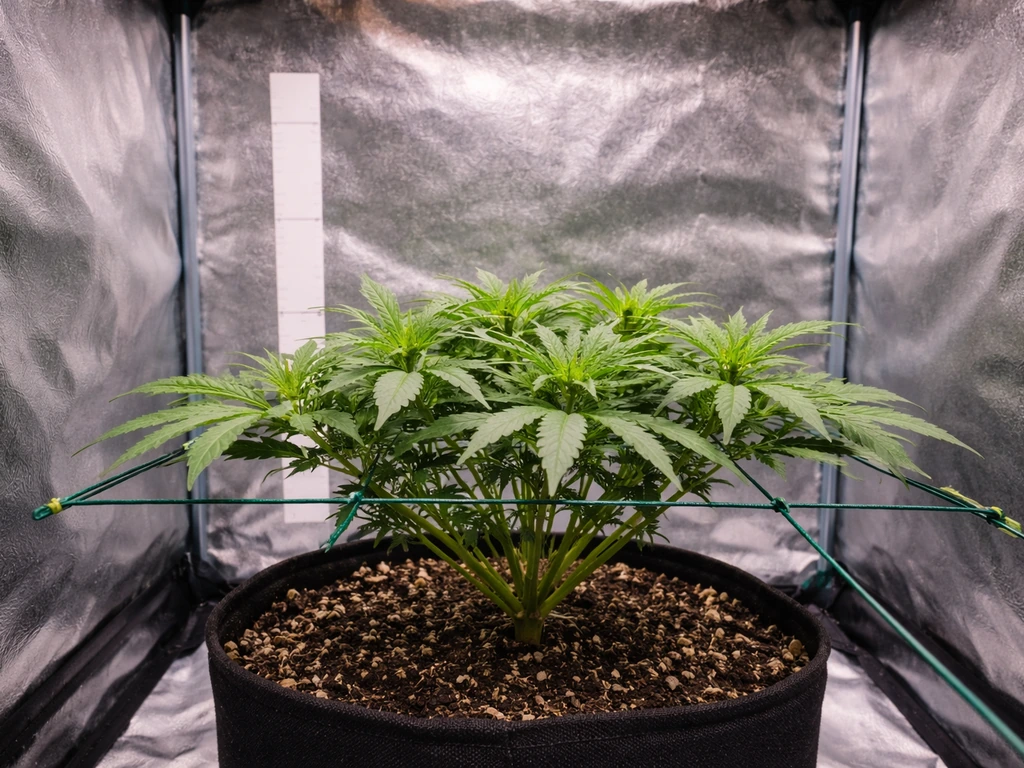
If you're new to LED growing, you want genetics that forgive small intensity miscalibrations and don't punish you for minor environmental swings. The best beginner strains for LEDs are indica-dominant autos or compact photoperiod hybrids that stay short, flower fast, and have a wide tolerance window for PPFD variance.
- Northern Lights (photoperiod): Stays compact at 60 to 90 cm, tolerates a wide PPFD range without stress, and produces tight dense buds that reward full-spectrum LEDs. It's forgiving enough to learn on and productive enough to be satisfying.
- Blue Dream (photoperiod): A reliable indica-dominant hybrid with moderate height and a wide feeding/intensity tolerance. Responds well to screen of green (SCROG) training, which suits 4x4 LED builds perfectly.
- Auto-flowering Zkittlez or Auto Blueberry: Compact autos tend to stay under 80 cm, reducing the stretch-under-LEDs problem entirely. They finish in 70 to 80 days from seed, so you get fast feedback on whether your setup is dialed.
- Wedding Cake (feminized): Short to medium height, dense bud structure, and above-average resin production. One of the most consistently reported LED-performer genetics from home growers.
- Critical Mass: Ultra-compact, fast flowering at around 45 to 50 days, and handles lower-intensity coverage areas in a tent without stalling. Great for beginners worried about edge coverage uniformity.
The common thread with beginner picks: compact structure, predictable canopy height, and tolerance for PPFD variation across the tent footprint. Because even a well-dialed LED will have some hotspots and edges, forgiving genetics reduce the risk that a slightly under-lit corner ruins a whole plant.
Intermediate picks: pushing performance with better canopy strategy
Once you've run a couple of cycles and have a feel for your fixture's actual PPFD map (ideally measured with a light meter or quantum sensor), you can push harder genetics that reward a flat, uniform canopy.
- Gorilla Glue #4 (GG4): A heavy yielder with moderate stretch. Under LEDs it responds extremely well to LST and SCROG to keep the canopy even. Expect dense, resinous buds when PPFD stays consistently above 700 µmol/m²/s through mid to late flower.
- Gelato 41 or Gelato 33: Tighter internodal spacing than most hybrid lines, handles higher-intensity LEDs well, and delivers exceptional bud density and terpene production. Best suited to full-spectrum broad-band LEDs rather than blurple fixtures.
- Bruce Banner #3: Higher stretch than pure indicas but responds well to topping and SCROG. One of the stronger performers for raw yield per watt under LED when canopy is managed.
- Purple Punch: Stays compact, heavy resin, finishes fast (around 50 days flower). Excellent choice when you want to run two to four plants in a 4x4 and pull consistent quality.
- Runtz (multiple phenotypes available): Phenotype variation is real with Runtz, so intermediate growers who can run a pheno hunt will get the most out of it. The best phenos under LED show exceptional color development and dense bud formation.
Best LED strains by performance goal
| Goal | Top Strain Picks | Why It Works Under LED |
|---|---|---|
| Max yield (g/m²) | GG4, Bruce Banner #3, Blue Dream (SCROG) | Responds to high PPFD (800–1000 µmol/m²/s) across a trained flat canopy; rewards full-tent light coverage |
| Fast harvest (speed) | Auto Zkittlez, Critical Mass, Auto Gorilla Glue | Finishes in 60–80 days; autoflowering removes photoperiod timing variables; compact size suits LED intensity bands |
| Dense buds | Northern Lights, Purple Punch, Wedding Cake | Tight internodal spacing uses full-spectrum LED output efficiently; bud sites are distributed where PPFD is highest |
| Potency/quality | Gelato 41, Runtz (top phenos), Wedding Cake | Full-spectrum LEDs enhance terpene and cannabinoid expression in quality genetics; needs consistent DLI through late flower |
| Beginner ease | Northern Lights, Auto Blueberry, Critical Mass | Wide PPFD tolerance, low stretch, predictable structure, short finish time for faster learning cycles |
If yield per run is your primary goal, train your plants hard. GG4 or Bruce Banner in a SCROG across a full 4x4 footprint, with your LED delivering a calibrated 800 to 1000 µmol/m²/s at canopy, is one of the highest-returning setups you can run at home. If you're optimizing for bud quality, terpene-rich genetics like Gelato or Runtz pay off more under a quality full-spectrum LED than under older HPS or blurple LED setups, because those strains are more sensitive to the completeness of the spectrum.
Matching your strain to spectrum and growth stage
This is where LED grows have a real edge over HPS: you can adjust spectrum (or at least optimize mounting height and DLI targets) per growth stage, and your strain choice interacts with that directly.
During veg, most strains want a cooler color temperature emphasis, roughly 5000 to 6500K equivalent, with PPFD in the 400 to 600 µmol/m²/s range. Full-spectrum LEDs deliver this without a fixture swap. Compact indica strains like Northern Lights or Purple Punch stay manageable during veg even at slightly higher intensities. Stretchier genetics like Gorilla Glue or Blue Dream need more active canopy management during late veg to prevent them going into flower already tall.
At the flip to flower, you want to shift toward a warmer spectrum bias if your fixture allows it (more red, around 620 to 680nm), and ramp PPFD up toward the 700 to 1000 µmol/m²/s target. This is also when stretch is the biggest LED-specific risk: as noted, some genetics push four to six inches of vertical growth per week in the first two to three weeks of flower, and your fixture height needs to move with them. Dense indica strains are much easier to manage here because they stretch less aggressively.
By mid-flower (weeks 4 to 6), you want your DLI dialed in consistently per your target PPFD and photoperiod schedule. This is where quality genetics like Gelato and Runtz really differentiate under LEDs: consistent DLI through mid to late flower, combined with the broad full-spectrum output of a good LED, drives higher terpene and cannabinoid density than you'd get under narrower-spectrum lights. If your fixture has spectrum controls or independent channel dimming, late flower is the stage to lean on the red and far-red channels.
It's worth noting that spectrum matching and the right red-to-blue ratio are ongoing calibration decisions throughout the grow, not a set-and-forget choice. Getting that balance right for each growth stage is a separate topic worth exploring in detail, and it has a direct impact on how well any given strain expresses itself under your specific fixture.
Practical grow guidance: training, canopy, and environment
The single biggest practical difference between LED growing and HPS growing is how much more uniform your light distribution needs to be to get peak results. HPS has a wide, diffuse spread with a lot of side light. LED footprint PPFD drops off faster at the edges, and fixture layout directly affects which plants perform. This means canopy uniformity is more important under LED, and your training methods should reflect that.
Training methods that suit LED grows
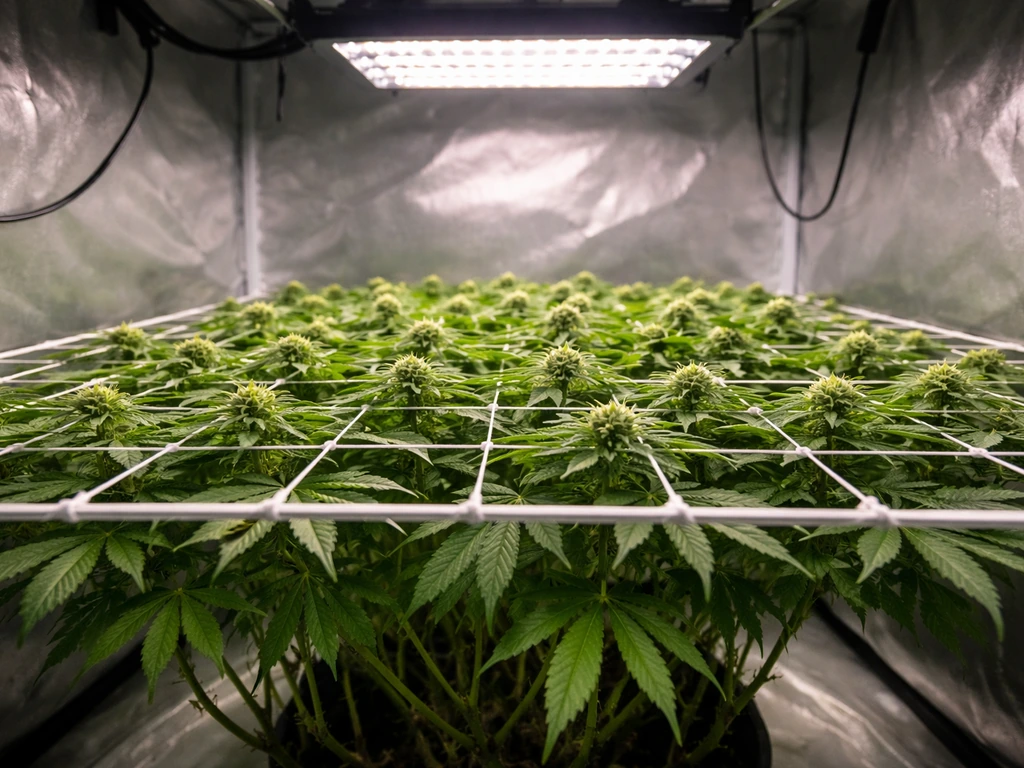
- SCROG (Screen of Green): Best method for maximizing the PPFD coverage of a single LED in a 4x4. Train plants through the screen so all bud sites are at the same height and within the optimal PPFD band. Works especially well with GG4, Bruce Banner, and Blue Dream.
- LST (Low Stress Training): Ideal for beginners and compact strains. Tie down main branches during veg to open the canopy and keep plant height controlled before the flip. Works with nearly any strain listed here.
- Topping and FIM: Effective with stretchy hybrids (GG4, Bruce Banner) to limit vertical growth and multiply main colas. Time your last top at least two weeks before the flip to avoid stress during early flower stretch.
- Defoliation: Under LED, strategic defoliation at flip and again around day 21 of flower improves light penetration to lower bud sites. Compact strains like Northern Lights or Critical Mass benefit less, but taller hybrids see real yield gains.
Environmental control alongside strain management
LEDs run cooler than HPS, but that's a double-edged sword. You don't get the radiant heat at canopy that some strains were dialed in to expect, so you need to manage ambient temperature more actively. Aim for 75 to 82°F (24 to 28°C) during lights-on in veg, dropping to 68 to 78°F (20 to 26°C) during flower. VPD (vapor pressure deficit) targeting is more impactful under LED than most growers realize, particularly for terpene-heavy genetics.
Hydro Lab's interactive VPD calculator gives example target VPD ranges, such as about 0. 8, 1. 2 kPa for growth and about 1. 2, 1.
6 kPa for flowering depending on stage target VPD ranges for growth and flowering. Keep VPD in the 0. 8 to 1.
2 kPa range during flower for Gelato, Runtz, and Wedding Cake.
One tool that pays for itself quickly is an IR thermometer pointed at leaf surfaces. Light stress often shows up as leaf temperature increases before you see any visible bleaching. If your leaf surface temperature is running more than 3 to 5°F above ambient air temperature, you need to either raise your fixture or reduce intensity. This is critical for high-PPFD grows with genetics that are less tolerant of intensity (like some Runtz phenos or lighter-colored Gelato cuts).
Common LED grow problems by strain and how to fix them
Excessive stretch (stretchy hybrids and sativa-leaning genetics)
Strains like Bruce Banner, Amnesia Haze, or any sativa-dominant line can stretch aggressively in the first two to three weeks of flower. Under LED, this is compounded because the plants are responding to the full-spectrum signal to mature. Fix: top or LST before the flip, raise your fixture proactively each week during early flower, and consider a short-duration light interruption (or reduce photoperiod to 11/13 temporarily) to slow the stretch signal. If stretch is already out of control, super-cropping the tallest main colas is a faster solution than trying to raise the fixture past its optimal hang height.
Slow or stalled flowering
Some genetics, particularly older landrace-influenced lines, can stall or flower inconsistently under full-spectrum LED compared to HPS. This often happens because the red spectrum output of the LED isn't tuned heavily enough to trigger aggressive flowering in those genetics. Fix: if your fixture has spectrum controls, increase the red channel (620 to 680nm). If it doesn't, check that your dark period is a full 12 hours with zero light leaks. Even a small amount of ambient light during dark can disrupt photoperiod-sensitive strains under LED. Supplementing far-red (730nm) at lights-off, if your fixture supports it, can also accelerate flowering onset via the Emerson effect.
Light stress and bleaching
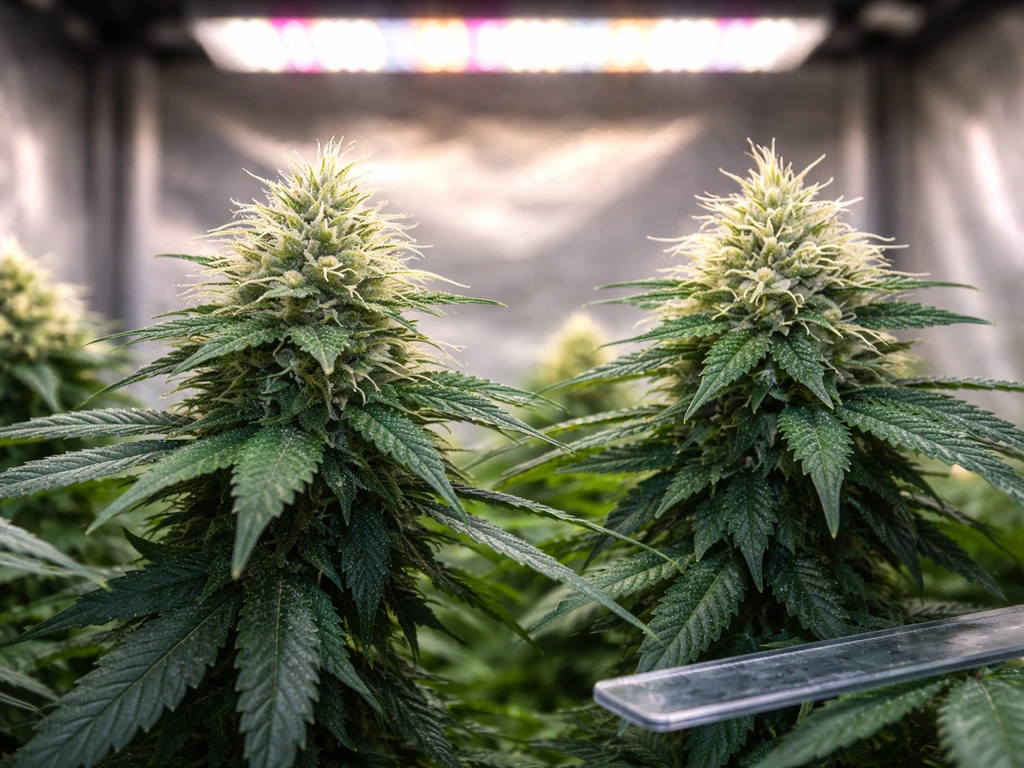
Bleaching at the tops of colas is almost always a distance problem, not a strain problem. If your PPFD at the canopy exceeds 1100 to 1200 µmol/m²/s consistently, even tolerant strains will start showing bleached white tips on their uppermost buds. Genetics with lighter calyx coloring (some Gelato phenos, certain Runtz cuts) show this earlier than dark-phenotype indicas. Fix: raise your fixture until your maximum PPFD reading at canopy drops back into the 950 to 1000 µmol/m²/s range. Use a quantum sensor or PAR meter to verify, not just eyeball estimates.
Uneven canopy and inconsistent yields
This is a fixture coverage issue as much as a strain issue, but some genetics amplify it. Taller plants in a tent will inevitably receive higher PPFD than shorter plants at the same light height, causing faster development and potentially stressing the taller ones while under-feeding the shorter ones. Fix: train all plants to the same canopy height before the flip, or use SCROG across the whole tent footprint. Verify your fixture's PPFD map across the tent at canopy height, not just at the center. Edge plants in a 4x4 often receive 30 to 40% less PPFD than center plants with many fixtures, and compact strains tolerate that variance better than stretchy hybrids.
How to trial strains, track results, and know when to switch
The most useful thing you can do right now is run two to three strains simultaneously in your tent rather than committing your whole space to one. Fill your 4x4 with, say, two Northern Lights, one GG4, and one Wedding Cake. Run the same training approach, the same nutrients, the same watering schedule. To keep results consistent across strains while you dial in your LED, also follow the same feeding guidance from the best nutrients for led grow.
In practice, the best nutrients for LED grow focus on keeping EC and feeding schedules consistent as canopy PPFD and DLI change through veg and flower. If you are also choosing upgrades, compare your lighting approach with the best glasses for led grow lights before dialing in any strain trial. The differences you see in growth rate, stretch, bud density, and final yield are then attributable to genetics, not environment. That's real data.
Track these specific metrics per plant, per cycle:
- Height at flip and height at end of stretch phase (week 3 of flower): tells you how much vertical growth to expect next run
- Canopy uniformity: note which plants needed the most adjustment to stay level with others
- First visible signs of flower development: slower-starting genetics under LED are often the ones to drop from your lineup
- Estimated yield per plant at harvest: wet weight is fine for comparison purposes even if you don't track dry
- Bud density score (subjective 1 to 5): looser airy buds are often a sign that strain needs more PPFD at flower sites, not necessarily a bad strain
- Any stress events: bleaching, light burn, or slow development noted by week and plant
After two or three cycles, you'll have enough data to identify your top one or two performers under your specific LED and tent setup. That's the strain (or two) to fill the tent with going forward. At that point, if you're running photoperiod genetics, consider running multiple phenotypes of your top performer to find the best pheno for your conditions. Seed banks sell multiple phenos of Gelato, Runtz, and Wedding Cake specifically because phenotype variation is real, and the best pheno for LED in your 4x4 might not be the same one that performs best under HPS or in a different tent size.
Finally, know when to swap. If a strain consistently disappoints after two runs, with excessive stretch, slow flowering, or mediocre density despite good technique, it's the genetics, not you. The best part of LED growing is that the controlled, measurable environment makes it easier to isolate strain performance from setup variables. Once your PPFD is calibrated, your environment is stable, and your training is consistent, the strains that underperform under those conditions are simply not the right fit. Move on to the next candidate. The genetics pool is large enough that finding your ideal LED strain usually takes three to five cycles of deliberate testing, not dozens.
FAQ
Can I run a sativa under LED, or do I need an indica for best results?
Yes, but match your goal to your “LED sweet spot.” For high-PPFD, LED-compatible dense budders tend to outperform tall stretchy lines, because they tolerate edge drop-off and won’t force constant fixture-height changes. If you do want a sativa-leaning plant, plan a tighter training system (earlier LST or topping) and expect more canopy management during the first 2 to 3 weeks of flower.
How do LED-friendly strains change if my room humidity or VPD control is inconsistent?
Pick the strain after you know whether you can actually hold a stable canopy temperature and VPD. LEDs shift more stress into the air-management side (less radiant canopy heat), so genetics that are sensitive to humidity and VPD swings often need more precise control. If your environment runs hot and dry, prioritize more forgiving compact hybrids, and reserve finicky terpene-focused cuts for when you can keep VPD consistent.
What if my LED can’t adjust spectrum, can I still grow terpene-heavy strains well?
If your fixture has no spectrum controls, you lose one of the main “tuning knobs” for photoperiod response and mid-to-late flower terpene expression. In that case, choose strains that naturally finish cleanly under full-spectrum LEDs without needing extra red (620 to 680 nm) emphasis. You should also be stricter about the light leak check, because photoperiod genetics are more likely to stall or flower inconsistently when the dark is contaminated.
How can I tell whether a strain is being light-stressed before bleaching shows?
Don’t use top-leaf appearance as your only warning system. Leaf-surface temperature is often the earliest stress indicator under LED, so use an IR thermometer to compare leaf temperature to ambient. If the leaf surface consistently runs about 3 to 5°F (1.7 to 2.8°C) hotter than the air, back off intensity or raise the fixture even if you don’t see bleaching yet.
Why do my plants at the edges look worse even when the light is “set” correctly?
Yes, and it’s a common trap. Taller plants in the same tent receive higher PPFD at the same fixture height, which can speed flowering and increase stress on the tallest individuals while shorter plants lag behind. The practical fix is to train to a level canopy before the flip and then verify the PPFD map at canopy height across the whole footprint, not just at the center.
Is it smart to run multiple strains in the same LED tent at the same time?
Mixing strains can work, but only if they share similar stretch timing and overall flowering pace. If one strain finishes early and another is slower, the faster one may be ready for harvest while the slower one still needs its late-flower light and VPD targets. Run mixed trials only when you can support a unified flip date, training method, and environmental schedule, or harvest in staggered cycles if they truly differ.
What’s the best way to prevent LED-induced cola bleaching during early flower?
You should plan your fixture height strategy around stretch, not around veg height. For many photoperiod sativas and haze-type genetics, the early flower stretch window can be rapid enough that “set it once” fixture height becomes wrong. A practical approach is to pre-top or LST before the flip, then adjust hang height weekly during the first 2 to 3 weeks of flower, keeping tops below your PPFD threshold.
Do LED-suitable strains still need different humidity and airflow management than HPS grows?
Not automatically. Even with the same PPFD setpoint, canopy airflow and leaf wetting dynamics can change how a strain tolerates intensity. Dense-budding indica hybrids with tight canopies can trap humidity, increasing disease risk and subtly reducing performance. Prioritize airflow and pruning decisions that match the strain’s canopy density, and don’t assume LED suitability alone guarantees easy disease management.
How do I know whether to blame my setup or the strain itself if yields are disappointing?
If a strain repeatedly underperforms after your PPFD, training, and dark-period are consistent across cycles, it’s a strong sign the genetics are a mismatch for your specific LED output and your tent’s uniformity. Before abandoning it, verify three non-negotiables: your PPFD map across the canopy, no light leaks during dark, and stable VPD. If those are correct and results stay poor, switching strains is usually the most efficient move.
Are there quality-focused LED strains, or is it mostly the light settings?
Yes, especially when you want terpene expression and consistent cannabinoid density. If your goal is bud quality, prioritize VPD stability and a consistent mid-to-late flower DLI approach, not just early veg performance. Choose genetics known to respond well to full-spectrum conditions and then validate with a few cycles, because pheno differences can make the “best strain” look different even within the same cultivar.
What makes a strain “beginner-friendly” specifically for LED grows?
For beginners, the “forgiving” category usually means compact structure and shorter, more predictable flowering under LED intensity. The practical criteria are: manageable height without constant fixture moves, lower sensitivity to minor PPFD variance across tent edges, and reliable dark-period behavior. If you’re still learning to calibrate PPFD maps and VPD, prioritize these traits over chasing the highest-yield hype strains.
Next Articles
Best Glasses for LED Grow Lights: What to Buy
Learn if you need grow light glasses and how to buy the best lenses for full-spectrum LED glare and comfort.
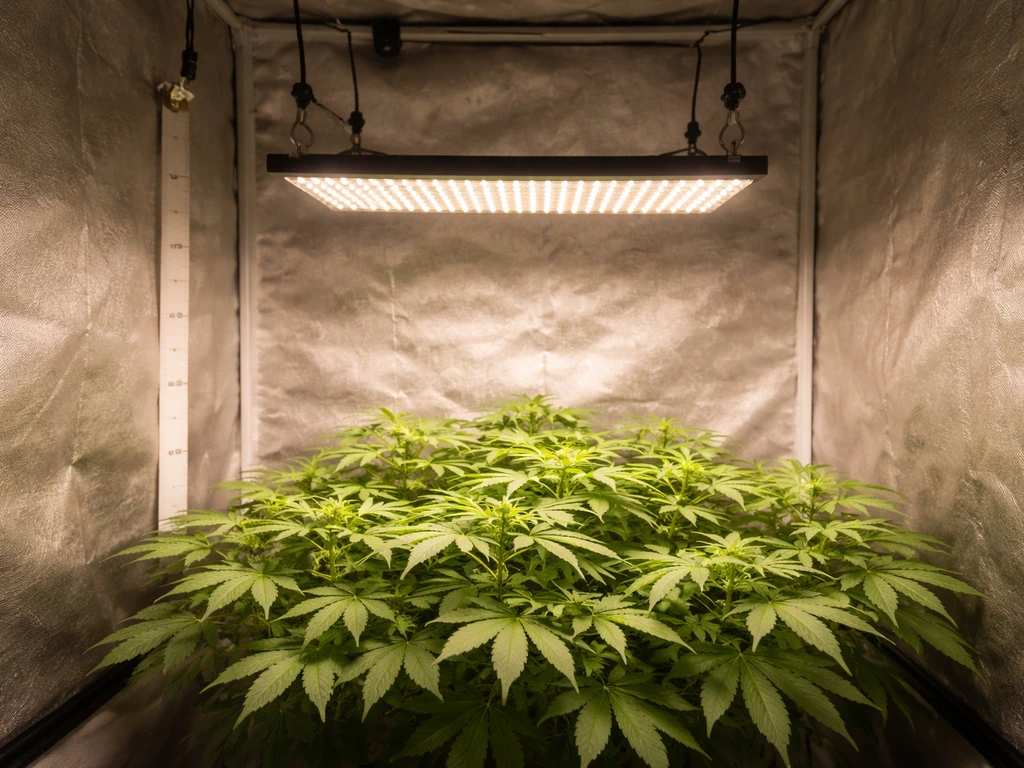
Best Height for LED Grow Lights: Distance Guide to Avoid Burn
Set the best height for LED grow lights with rules and PPFD measuring to prevent burn and get even coverage.
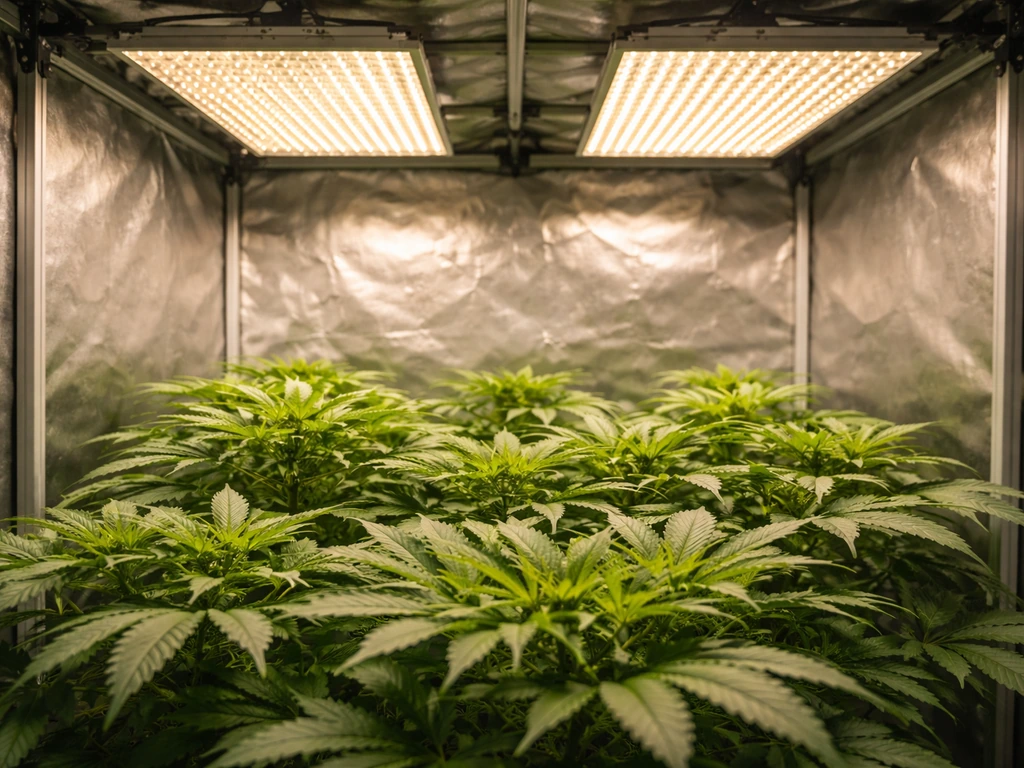
What LEDs to Use for Grow Lights: A Practical Guide
Learn which LED types power grow lights and how to choose the right spectrum, coverage, and specs for your setup.