LEDs change your feeding game more than most growers expect. When you swap from HPS to a quality LED and push the PPFD up, your plants can process nutrients faster, burn through calcium and magnesium quicker, and show deficiencies that would have stayed hidden under softer light. The short answer: under high-intensity LED, you need to feed smarter, not necessarily more. That means dialing in your EC and pH by growth stage, watching your calcium and magnesium closely, and adjusting as your DLI climbs. Here's exactly how to do that.
Best Nutrients for LED Grow: Feed by Stage and PPFD
Marcus Rutherford
22 Apr 2026
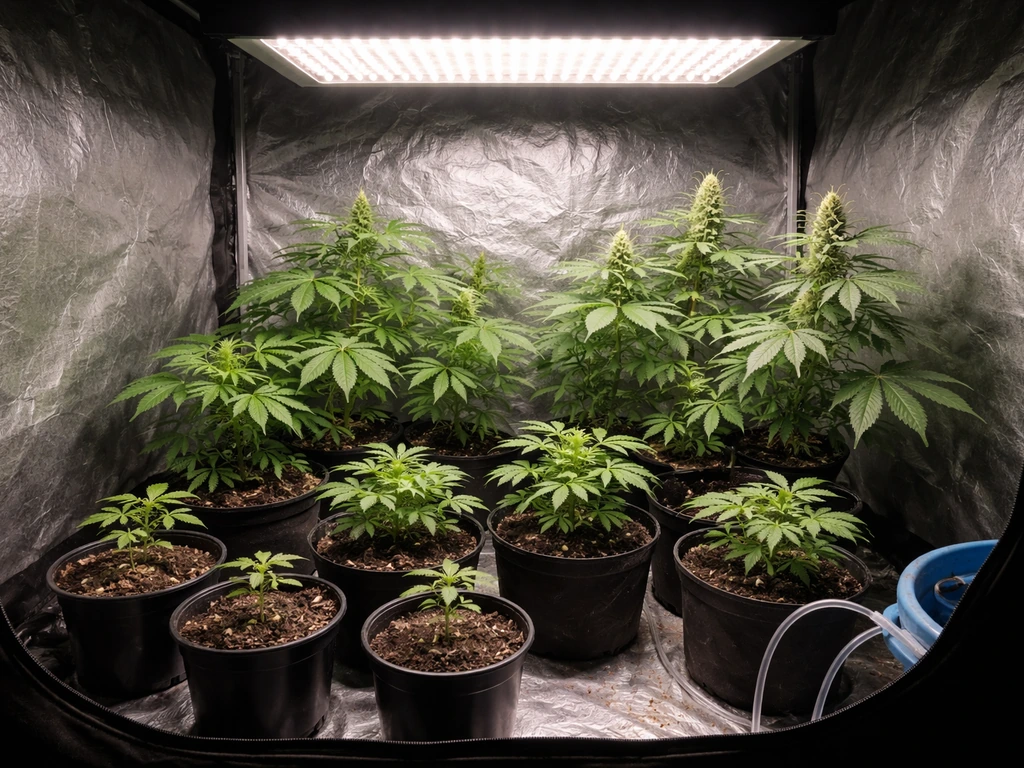
Why LEDs make nutrient management different
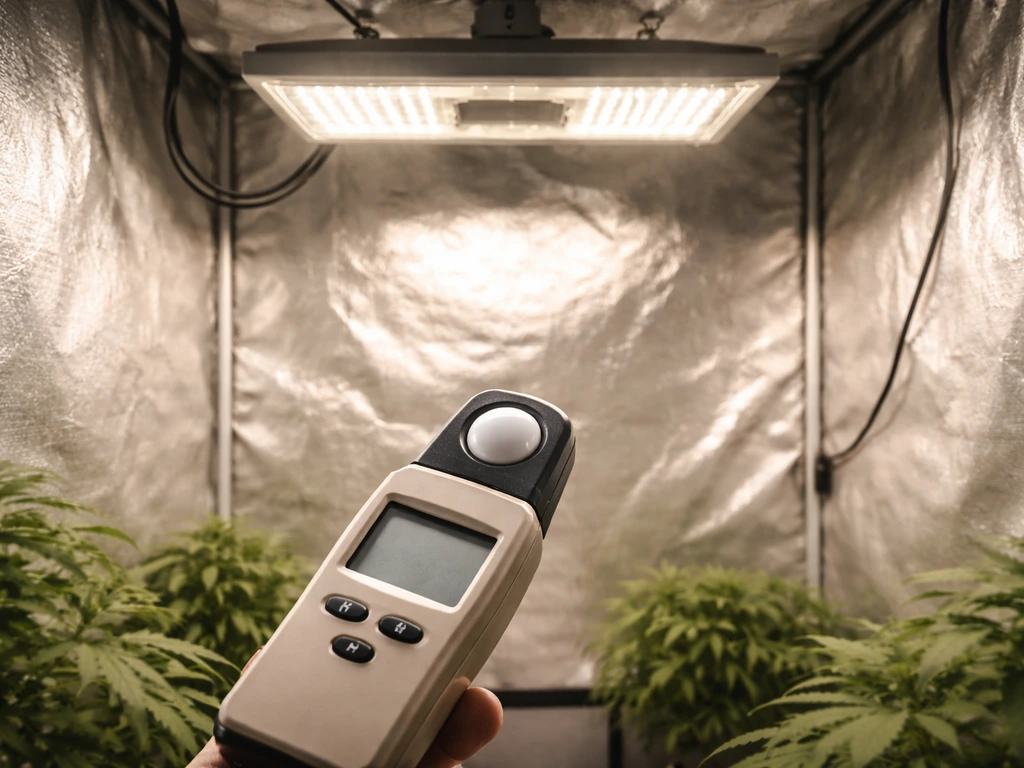
The core issue is photosynthetic demand. A well-tuned LED running at 600–900 µmol/m²/s PPFD in a 4x4 tent is delivering a DLI that can hit 30–40 mol/m²/d over an 18-hour photoperiod. That's a lot of photosynthate being produced, and your plant's root system has to keep up with the demand for building blocks: nitrogen for proteins and chlorophyll, phosphorus for energy transfer, calcium for cell walls, and so on. Research on lettuce grown at increasing DLI levels (7.49, 14.92, and 22.41 mol/m²/d) confirmed that as intensity rises, photosynthetic performance scales up, and so does the plant's throughput of key nutrients.
Spectrum matters here too. Modern full-spectrum LEDs deliver usable blue and red wavelengths far more efficiently than HPS, and that blue-heavy component drives stomatal opening and transpiration. More transpiration means more water and nutrient uptake through mass flow, which sounds great until your substrate dries out faster than expected and your salt load concentrates. Some greenhouse comparison studies have also noted that plants under LED can show lower tissue nutrient concentrations than those grown under HPS in certain conditions, which suggests LEDs don't automatically give you better nutrition, they give you a faster-moving system that requires more active management.
Photoperiod is another lever. Extending your light hours at a fixed PPFD increases your daily light integral without cranking intensity, and research on lettuce showed that longer photoperiods interact with nutrient solution concentration to affect mineral content and nutritional quality. The practical takeaway: if you're running 20-hour photoperiods to maximize vegetative growth, your feeding concentration and frequency need to reflect that elevated metabolic activity, not the lower baseline you'd use under 16 hours.
The nutrients that actually matter under LED
Macronutrients (N, P, K)
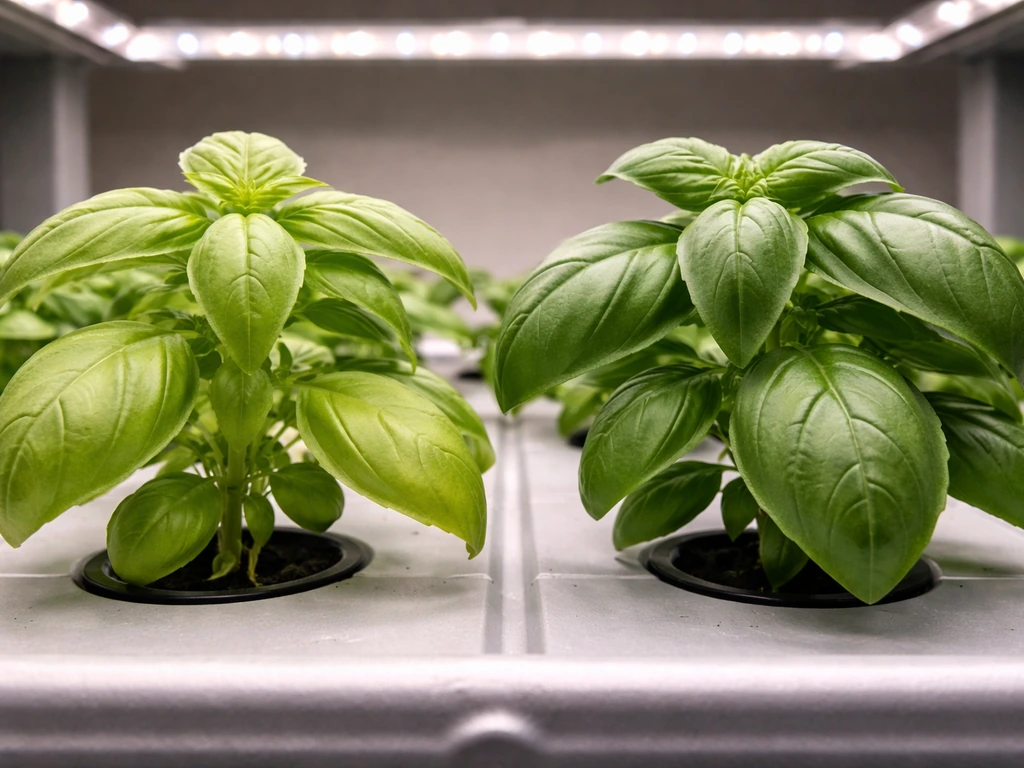
Nitrogen is still king during vegetative growth. Under high LED intensity, leaf area expands rapidly and chlorophyll synthesis is ongoing, both of which are nitrogen-hungry processes. Aim for nitrogen-forward formulas in veg, roughly a 3:1:2 N:P:K ratio by weight as a starting point. In flower, you scale nitrogen back and push phosphorus and potassium up, something like 1:3:2 to support energy transfer (ATP), carbohydrate transport, and terpene/essential oil production. Potassium also directly supports stomatal regulation, which becomes critical when your LEDs are pushing high light and your canopy is transpiring hard.
Calcium, magnesium, and sulfur
These three get lumped together because they're the most commonly underfed secondary nutrients in LED grows. Calcium is essential for cell wall integrity and tip burn prevention, and under high PPFD it's consumed fast. Magnesium sits at the center of every chlorophyll molecule, so when your light intensity drives rapid chlorophyll turnover, magnesium demand spikes. Sulfur supports enzyme function and protein synthesis. In practice, most LED growers using RO or soft water need a dedicated CalMag supplement on top of their base nutrients. A standard addition is 1–2 ml/gallon of a CalMag product in early and mid-cycle, bumped to 2–3 ml/gallon if you're running high PPFD or coco.
Micronutrients worth watching
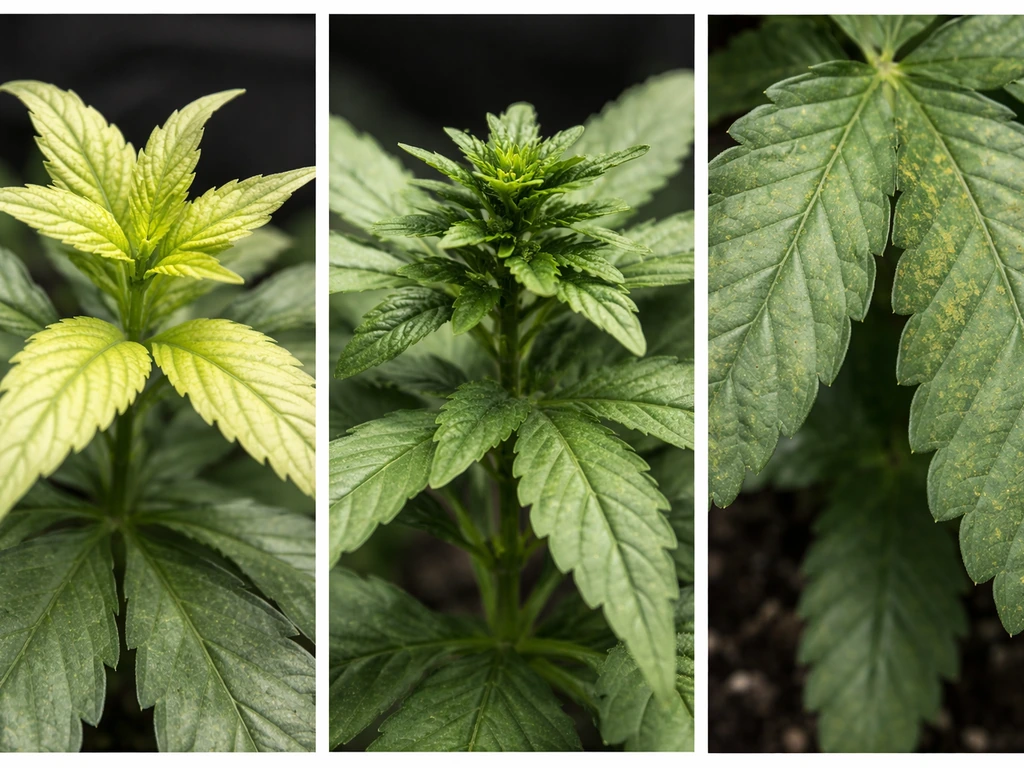
Iron, manganese, zinc, copper, boron, and molybdenum are all needed in small amounts but cause visible problems fast when they're deficient or locked out. Iron is the most commonly implicated under LED grows, partly because high-intensity light accelerates growth and iron demand, and partly because pH creep can lock it out. UMass research on iron-inefficient greenhouse crops recommends maintaining pH in the 5.5–6.0 range specifically to keep iron available. For iron supplementation in fertigation, chelated forms matter: Fe-DTPA remains effective up to about pH 7.5, while Fe-EDDHA is the better choice when pH exceeds 7.5. For typical indoor LED grows targeting pH 5.8–6.5, Fe-DTPA is the standard and practical choice.
Feeding targets by growth stage
The numbers below are practical starting points, not hard rules. Your actual plant response, runoff EC, and visual health should always take precedence over any schedule.
| Stage | EC Target (mS/cm) | PPM (500 scale) | pH Target | N:P:K Emphasis |
|---|---|---|---|---|
| Seedling (days 1–14) | 0.4–0.8 | 200–400 | 5.8–6.3 | Low, balanced |
| Early veg (weeks 2–4) | 1.0–1.4 | 500–700 | 5.8–6.3 | Nitrogen-forward (3:1:2) |
| Late veg (weeks 4–6) | 1.4–1.8 | 700–900 | 5.8–6.3 | Nitrogen-forward (3:1:2) |
| Early flower (weeks 1–3) | 1.6–2.0 | 800–1000 | 6.0–6.5 | Transitioning to P/K |
| Mid-late flower (weeks 4–8) | 1.8–2.2 | 900–1100 | 6.0–6.5 | P/K dominant (1:3:2) |
| Flush/final week | 0.0–0.4 | 0–200 | 6.0–6.5 | Water or plain rinse |
Seedlings need almost nothing. Overfeeding at this stage is one of the most common LED-grow mistakes because the light is intense and new growers assume the plant needs more fuel. It doesn't. Keep EC below 0.8 mS/cm and let the seedling establish roots before you push nutrients. Once you hit a defined vegetative canopy with multiple node sets and healthy root development, you can start stepping up EC in 0.2–0.3 mS/cm increments every 5–7 days, watching runoff EC to make sure you're not stacking salts.
For leafy greens like lettuce, basil, or spinach grown under LED, you essentially stay in a permanent vegetative feeding profile and never need the high P/K bloom formula. Keep EC in the 1.2–1.8 mS/cm range with nitrogen dominance throughout, and pH in the 6.0–6.5 range. Oklahoma State University extension guidelines for hydroponic lettuce confirm EC 1.2–1.8 mS/cm and pH 6.0–7.0 as the target range, which aligns with practical grow experience.
Soil, coco, and hydro require different approaches
Soil
Soil buffers aggressively. A quality potting mix has cation exchange sites that hold onto calcium, magnesium, and potassium and release them gradually, which means you can get away with less-frequent feeding and have more forgiveness on pH swings. Target soil pH of 6.0–7.0, with a sweet spot around 6.3–6.8 for most flowering crops. Under high LED intensity, soil grows can dry out faster than expected, so check media moisture daily during peak veg and flower. Overwatering is still the bigger risk than underfeeding in soil, and wet-dry cycling is key to healthy root oxygenation.
Coco coir
Coco behaves more like hydro than soil. Its cation exchange capacity (CEC) is around 10–30 meq per 100g, which gives it some buffering, but it's nowhere near soil. Critically, coco has a high affinity for calcium and magnesium ions, meaning it will pull these from your solution and hold them in the substrate rather than making them available to roots, especially when fresh or improperly buffered. You must pre-buffer new coco with a CalMag solution before use, and you need to maintain elevated calcium and magnesium levels throughout the grow. Cornell's coco nutrient management guidelines suggest targeting root-zone pH of 5.5–6.0, while blank" rel="noopener noreferrer">CANNA's official recommendation for their coco nutrient system is pH 5.)5–6.2 with EC in the 0.8–1.8 mS/cm range (assuming near-zero EC source water). Hydrobuilder's practical guidance targets input pH 5.8–6.2 with a runoff EC of 0.4–0.6 mS/cm as a pre-harvest flush marker. Feed-to-runoff every irrigation (aiming for 10–20% runoff) to prevent salt accumulation, which is amplified under high LED intensity because plants transpire hard and concentrate the remaining salts faster.
Hydroponics (recirculating and DWC)
In a recirculating system, your nutrient solution is always in contact with roots and constantly cycling, which means any imbalance compounds quickly. Under LED, especially high-intensity fixtures, monitor your reservoir EC and pH daily. pH drift is normal and typically climbs as plants consume nutrients (particularly nitrate) and alkalinity builds. Target pH 5.5–6.5 for most recirculating systems, adjusting daily as needed. General Hydroponics recommends maintaining pH at 5.5 for their Flora Series line in hydro, which is a reasonable floor. Solution temperature is also critical: keep reservoir water at 65–72°F (18–22°C) to prevent root rot and maintain dissolved oxygen. In hydro under high DLI, plants can consume a significant fraction of your reservoir volume daily, so top off with fresh pH-adjusted water to avoid EC spikes between full reservoir changes.
A practical feeding recipe: EC, pH, and mixing
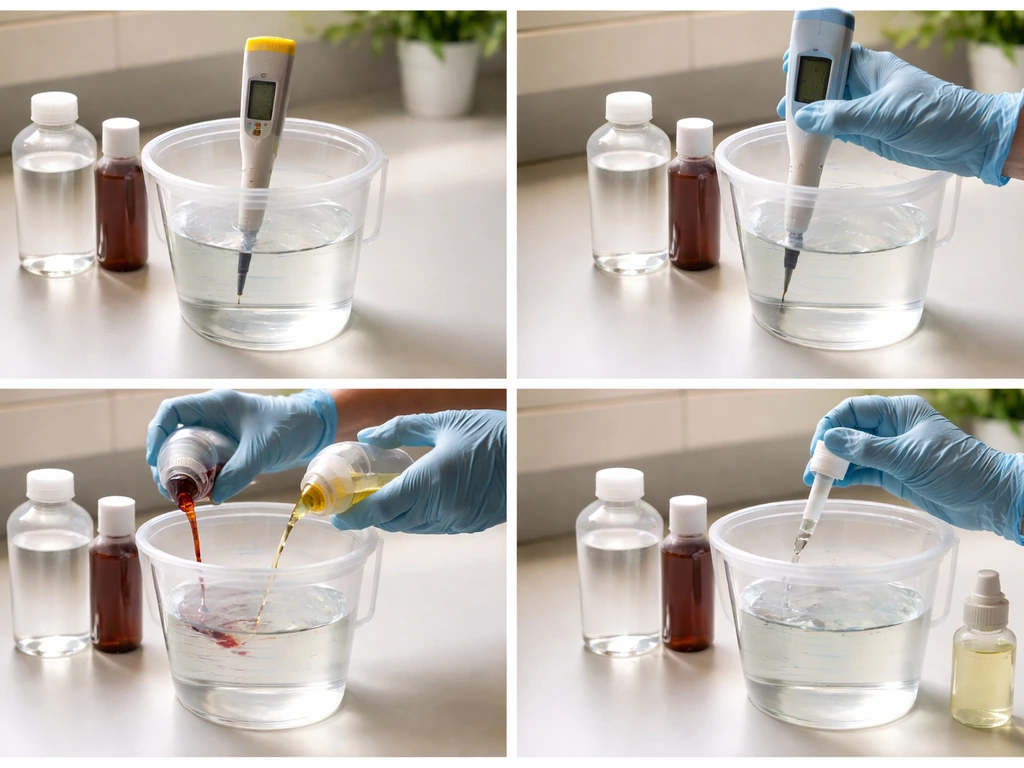
For most LED growers in coco or hydro, a two-part or three-part base nutrient system is the most practical approach. Three-part systems like General Hydroponics FloraSeries (FloraGro, FloraBloom, FloraMicro) give you independent control of growth, bloom, and micronutrient delivery, and GH publishes feedcharts that stage the ratios across the full cycle. Here's a practical mid-veg mixing workflow for a 5-gallon reservoir in coco or hydro:
- Start with your base water and test EC. If source EC is above 0.4 mS/cm, account for that in your target.
- Add FloraMicro first (always add micro first to avoid precipitation), then FloraGro, then FloraBloom. Stir between each addition.
- Add CalMag at 1–2 ml/gallon if using RO or soft water.
- Mix thoroughly and test EC. For mid-veg, target 1.4–1.6 mS/cm (700–800 PPM on 500 scale).
- Adjust pH to 5.8–6.2 for coco/hydro, or 6.2–6.8 for soil. Use pH down (phosphoric acid) or pH up (potassium hydroxide) in small increments.
- Wait 5 minutes and retest pH, as it can drift slightly after initial adjustment.
- Feed and check runoff EC after the first irrigation. If runoff EC is more than 0.5 mS/cm above your input EC, you have salt accumulation and need a plain-water flush cycle.
Cornell's salt management guidelines give a useful quantitative leaching framework: when the EC of your applied solution exceeds 2.0 dS/m, use a leaching fraction of about 30%; at EC above 1.5 dS/m, target 20% runoff; below 1.0 dS/m, 10% runoff is sufficient. These numbers translate directly to how much water you push through per irrigation relative to container volume. Under high LED intensity with fast drying cycles, the lower end of these leaching fractions tends to be insufficient, and 20–30% runoff on each feed is a safer baseline in coco.
Deficiency and toxicity symptoms in LED grows
LED grows show deficiencies faster and more dramatically than HPS grows because the high light intensity accelerates growth and makes visual contrast in leaf color more obvious. Here are the most common problems and what to do about each.
| Symptom | Most Likely Cause | Immediate Fix |
|---|---|---|
| Yellowing of lower/older leaves, progressing upward | Nitrogen deficiency | Increase base nutrient EC by 0.2–0.3 mS/cm; ensure pH is in range |
| Interveinal chlorosis on older leaves, green veins remain | Magnesium deficiency | Foliar spray with 1–2 ml/L Epsom salt (MgSO4); increase CalMag in feed |
| Interveinal chlorosis on new/young leaves, green veins remain | Iron deficiency (pH lockout most common) | Lower pH to 5.5–6.0; check chelate form; flush and rebalance |
| Yellow-gold spots on young leaves, veins remain green | Manganese deficiency | Lower pH if above 6.5; ensure micronutrient package includes Mn |
| Brown, crispy leaf tips, especially on new growth | Calcium deficiency or tip burn | Add CalMag; increase airflow to canopy; check pH isn't locking Ca |
| Leaf tips curling down (clawing), dark green or purple tones | Nitrogen toxicity or overfeeding | Flush with plain pH'd water; reduce EC by 30% and resume feeding |
| Purple stems, especially in seedlings or early veg | Phosphorus deficiency or temperature stress | Check root zone temp; ensure pH allows P uptake (6.0–7.0 in soil) |
| Leaf burn at tips and margins, bleached new growth | Nutrient burn or EC too high | Flush thoroughly; reduce EC; check runoff EC before resuming |
| Sudden widespread yellowing in hydro | Solution pH crash or major imbalance | Test and correct pH immediately; refresh reservoir if pH is below 5.0 |
Iron deficiency deserves extra attention in LED grows. High photosynthetic rates and rapid growth increase iron demand, and iron is highly pH-sensitive. A pH of 6.8 or higher in your root zone can lock out iron almost entirely in hydro and coco systems. The symptom (interveinal chlorosis on young leaves with veins staying green) is distinctive, and the fix is almost always a pH correction before you add more iron. Only reach for additional Fe-DTPA or Fe-EDDHA supplementation after pH is confirmed in range.
Magnesium deficiency shows up on older leaves first because magnesium is a mobile nutrient, meaning the plant will cannibalize lower leaves to support new growth when supply is short. Under LED with high transpiration, this can look dramatic within a few days of the problem starting. A diluted Epsom salt foliar spray (1 gram per liter, applied to leaf undersides in lights-off or low-light period) gives rapid correction while your root-zone adjustment takes effect.
Adjusting nutrients when you change light settings
This is where most growers get tripped up. You dial in your nutrients for one light intensity, then crank the dimmer up or drop the fixture height to boost PPFD, and suddenly you start seeing deficiencies or tip burn. To dial in the best height for LED grow lights, start by targeting the canopy PPFD you want, then measure at plant level and adjust height until you hit that number consistently. Choosing the best glasses for LED grow lights can also help you protect your eyes while you dial in intensity and monitor your canopy safely. The relationship is direct: more light means more photosynthesis, more growth, more transpiration, and more nutrient demand. To choose the right LEDs for your grow, focus on output and coverage by targeting the PPFD and DLI you need for your plant stage what leds to use for grow light. You have to match your feeding to your light output, not set it once and walk away.
A practical dial-in workflow when increasing light intensity: bump PPFD up no more than 100–150 µmol/m²/s at a time, then hold for 5–7 days. Monitor your plant daily, check runoff EC, and watch for early deficiency symptoms. If plants are responding well (healthy new growth, no tip burn, runoff EC staying stable), you can step up nutrients by 0.2–0.3 mS/cm. If you see tip burn or leaf edges browning, your calcium demand may have outpaced supply before your feeding adjustment caught up, which is the most common transition problem in LED grows. If you see pale new growth or interveinal chlorosis, iron or magnesium may be falling behind.
Prevention is easier than correction. When stepping up light, proactively increase your CalMag dose before symptoms appear, not after. Keep a spray bottle of diluted CalMag on hand for a quick foliar application if you see early signs during a light transition. Running a consistent pH logging habit, even just a daily note of your reservoir or runoff pH, lets you catch drift before it becomes a lockout problem. Salt buildup is the other silent killer: schedule a full flush or nutrient solution refresh every 10–14 days in recirculating hydro, and include a plain-water irrigation every 4–7 days in coco during high-intensity periods to reset the salt gradient.
One thing worth noting: if you're also experimenting with light spectrum ratios (blue-heavy for veg versus red-heavy for flower), spectrum changes can subtly shift stomatal behavior and transpiration rate, which feeds back into how fast your medium dries and how concentrated nutrients become. If you also want the right spectrum, start with the best red to blue ratio for LED grow lights for your stage so your nutrients get used efficiently best red blue ratio for LED grow light. The same principle applies if you're adjusting fixture height, since lowering your LED increases intensity at the canopy and effectively raises your DLI. Any significant change to your light setup is a trigger to reassess your feeding strategy, not just a physical adjustment.
The bottom line is that LEDs reward growers who pay attention to numbers: PPFD at the canopy, EC in and out, pH daily, and visual inspection every visit. Once you have those habits in place, feeding under LED is actually more predictable and controllable than under HPS because you're not fighting heat stress and you have more precise control over your light inputs. Get your pH dialed, match your EC to your growth stage, keep calcium and magnesium stocked, and step up both light and nutrients together rather than independently, and you'll get the most out of everything a quality LED can deliver. If you are still deciding what to buy, review the best strains for led grow as a practical baseline for how different cultivars respond under high-intensity LED feeding.
FAQ
Should I flush nutrients when switching light intensity on an LED grow?
Yes, but only if you treat it as a pH and salt-management step, not a nutrition boost. In hydro or coco, use the flush water at your target pH (within the same range you feed), and keep EC very low to prevent further salt accumulation. After a flush, re-start at the previous EC or slightly lower (about 10 to 20%) for 1 to 2 irrigation cycles, then step back up based on new-growth color and runoff EC trends.
What should I do if my runoff EC keeps rising during high-PPFD weeks?
If runoff EC climbs steadily for 2 to 3 feedings, your feed is outpacing plant uptake and the medium is accumulating salts. In that case, increase leaching fraction first (aim for the higher end of your coco range, typically 20 to 30% runoff), verify your pH is in range, and confirm your CalMag level. Avoid adding more base nutrients as the first move, because the root zone likely needs dilution more than additional strength.
Can I rely on foliar feeding to fix LED nutrient problems faster?
For LED grows, the safest “rule of thumb” is to foliar only for quick correction and keep root-zone pH and base nutrition doing the heavy lifting. Use diluted Epsom salt for magnesium only as a spot fix, apply in the dark period, and stop foliar feeding once the new growth color improves. For micronutrients like iron, foliar can help, but it does not replace pH lockout correction if your root zone is too high.
What if I correct pH and still see tip burn after increasing PPFD?
When pH is already within range, the next-most-common cause is nutrient ratio imbalance or calcium depletion from fast transpiration. Check for ion competition, especially calcium versus magnesium and potassium. If tip burn or edge browning appears, increase CalMag and slightly reduce K-heavy or bloom-strength additions until symptoms stabilize, then resume stage-appropriate ratios.
How often should I re-measure PPFD and at what plant height for accurate feeding?
Measure PPFD at the exact leaf height, after the plants have settled at that height (or re-measure immediately after you change fixture height or dimmer). Use a consistent measurement time because operating conditions (dimmer ramp, fan load, warm-up) can slightly shift output. Most LED “feeding mismatch” comes from measuring at canopy height incorrectly or assuming intensity stays constant after adjustments.
What monitoring schedule is realistic and most important for LED nutrient stability?
Start using a simple logging cadence: check reservoir or runoff pH and EC at least daily during light transitions (when you first raise PPFD) and then every other day once things stabilize. Also record solution volume changes (how much you top off) because faster consumption means EC can rise between top-offs, especially in recirculating hydro.
Could my nutrient deficiency symptoms be caused by light settings instead of the nutrient formula?
Not always. LEDs can reveal deficiencies faster, but sometimes the “fix” is correcting the growth rate mismatch, not changing the nutrient recipe. If plants are underpowered (too low PPFD for the EC you are feeding), they may look hungry even at correct chemistry. Confirm your canopy PPFD and DLI first, then adjust feeding only after light is consistent for 5 to 7 days.
How can I tell whether coco pre-buffering was enough or if I need mid-grow CalMag changes?
In coco, pre-buffering matters, but ongoing calcium and magnesium maintenance matters even more under high LED intensity. If your symptoms show up after a few weeks, don’t assume the substrate is still the problem, re-check your root-zone pH and confirm you are maintaining CalMag at the level used during that stage. Also ensure you are feeding to a meaningful runoff percentage to prevent ions from being trapped in the medium.
Next Articles
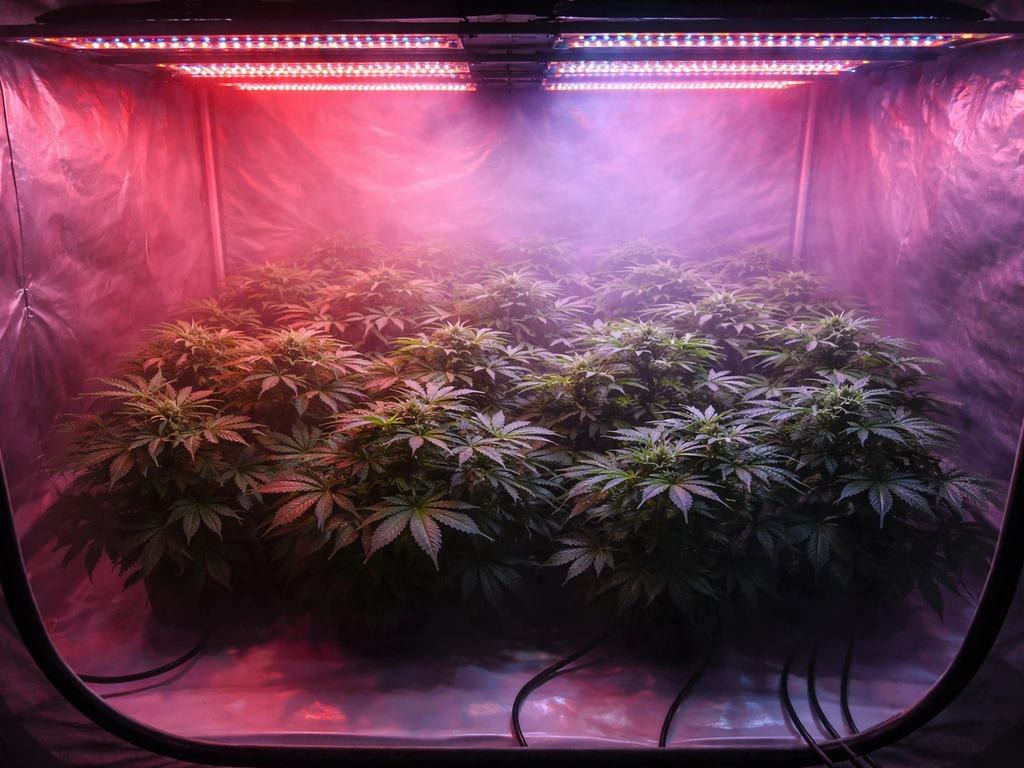
Best Red Blue Ratio for LED Grow Lights by Stage
Practical red to blue LED ratio by growth stage, with spectrum details, setup tips, and how to dial in brightness
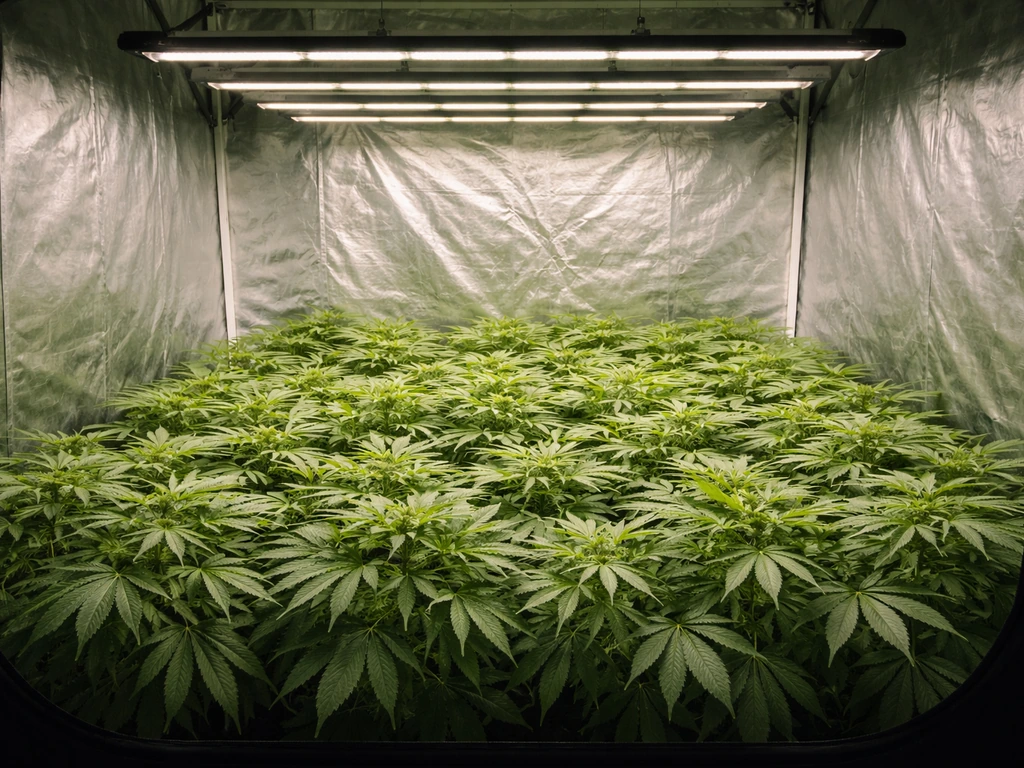
Best Strains for LED Grow: Pick by Goal and Space
Choose the best strains for LED grow by space and goal, with growth, yield, stretch control, spectrum tips, and troubles
Best Glasses for LED Grow Lights: What to Buy
Learn if you need grow light glasses and how to buy the best lenses for full-spectrum LED glare and comfort.